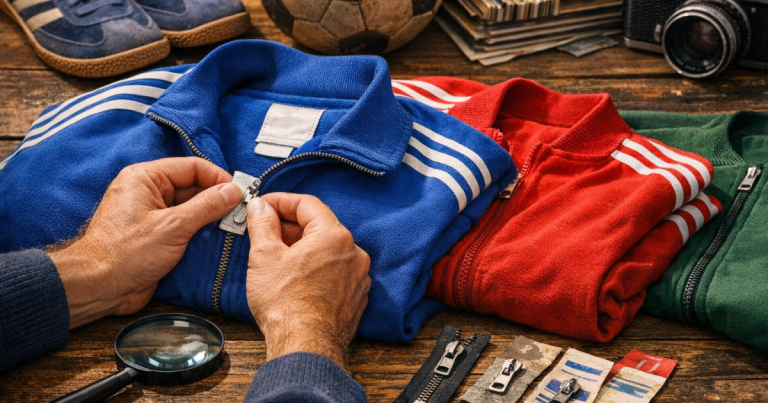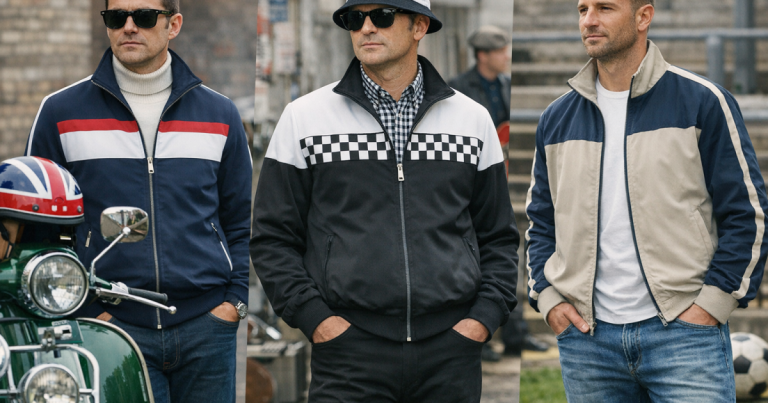
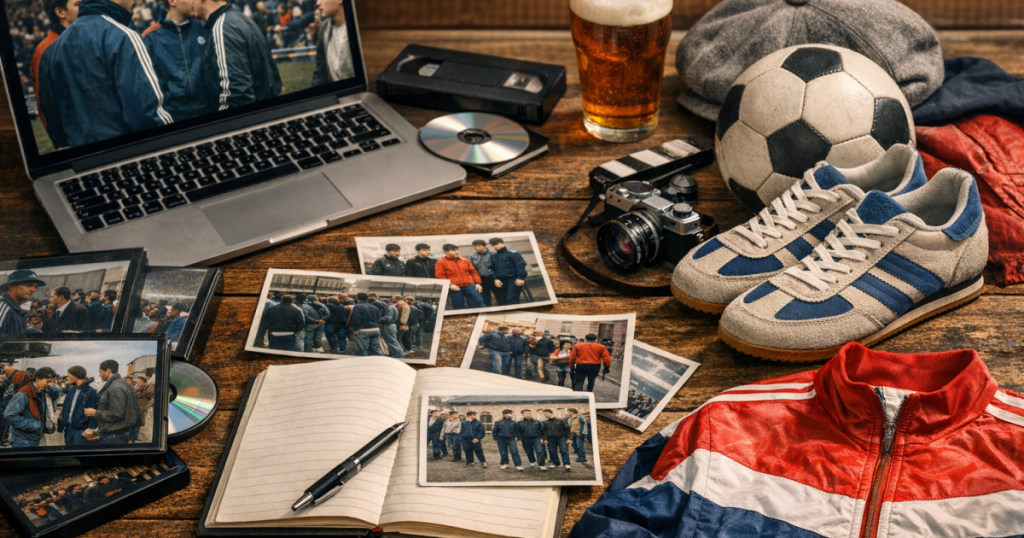
Films can be a brilliant way into sportswear history, but they need handling carefully. The smartest way to use British football films is to treat them as cultural evidence, not as a perfect wardrobe archive.
That means watching beyond the obvious tracksuit, trainer or badge. Look at setting, class cues, regional identity, matchday behaviour, music, pubs, transport and the difference between what the film shows and what the period itself can support.
At a glance
- Use football films as a starting point, then cross-check against photographs, books, fanzines and period media.
- Separate the year a film was made from the year it is set, because costume departments often filter the past through later taste.
- Record garments by silhouette, colour, fabric finish, branding, layering and how they are worn, not just by label.
- Pay attention to location: Merseyside, London, the Midlands, Yorkshire, Glasgow and the North East did not all dress identically.
- Avoid copying a screen outfit too literally; research should help you understand the code, not turn the look into costume.
Step 1: Decide what you are actually researching
Before pressing play, set a narrow question. “Tracksuit culture” is too broad on its own. A better research aim might be: how were track tops layered with denim and knitwear, how did sportswear appear around away travel, or how did films show the shift from 1980s Italian tenniswear to later logo-heavy casualwear?
This matters because films about football culture often mix several visual languages: terrace wear, pub wear, clubwear, workwear, designer labels and dramatic shorthand for masculinity or menace. If you only write down “tracksuit”, you miss whether the item is being used as a status symbol, a uniform, a disguise, a comfort garment or a visual cliché.
For the broader cultural frame, it helps to revisit what terrace style actually means, because not every sporty outfit in a football film is terrace style. Some scenes show mainstream leisurewear. Others show highly coded casual dress. The difference is the point.
Step 2: Separate production date from story period
A film made in the 2000s and set in the late 1970s is not the same kind of evidence as a film made during the 1980s. Contemporary films capture background details unintentionally: cuts of jeans, hair, coats, street furniture, pub interiors, police clothing, scarves, bags and the ordinary sportswear worn by extras. Period films are more deliberate. They can be useful, but they are also shaped by nostalgia, budget, available garments and the director’s visual taste.
Alan Clarke’s The Firm from 1989, for example, is valuable because it sits close to the culture it depicts. I.D. from 1995 gives a later view of football violence, policing, identity and casual dress around a different moment. Awaydays, released much later but set around the late 1970s, is better read as interpretation: strong on mood and myth, but still worth checking against period photographs and first-hand accounts. The Football Factory reflects the early 2000s screen language around hooliganism as much as it reflects terrace clothing itself.
Write the production year and the setting year at the top of your notes. If those two dates differ, be stricter with any clothing claim you make from the film.
Step 3: Watch each film in three passes
One viewing is rarely enough. A useful method is to watch the film in layers.
First pass: story and setting
Ignore brand-spotting at first. Note the city or region, the clubs implied, the transport routes, whether scenes happen at home, in pubs, on trains, near grounds or in nightclubs. Tracksuit culture was never just about garments; it was about where they were worn and what they signalled in that space.
Second pass: clothing and styling
Now slow down. Look at track tops, full tracksuits, cagoules, knitwear, polos, jeans, trainers and outerwear. Record colours and shapes rather than jumping straight to labels. Is the top slim, boxy, shiny, matte, ribbed, zipped to the neck, worn open, tucked under a coat, paired with cords or denim? Those details tell you more than a blurred logo.
Third pass: behaviour and hierarchy
Who gets the sharpest gear? Who wears the loudest colours? Who is deliberately understated? Football films often use clothing to map status within a group. The flash track top may sit on a character trying to project confidence, while the quieter dresser may carry more authority. This is where culture research becomes more interesting than outfit copying.
Step 4: Build a scene-note template
Keep your notes consistent so you can compare films without relying on memory. A simple scene log works well:
- Film title, production year and story period.
- Scene location: pub, train, terrace, estate, high street, club, home or coach.
- Garment type: track top, full tracksuit, shell jacket, polo, knit, denim, coat or trainer.
- Visible details: colour blocking, stripes, piping, chevrons, crest, zip, collar, cuff and fabric sheen.
- Fit: close, regular, oversized, cropped, high-waisted trousers or loose track pants.
- Social cue: matchday, away day, nightlife, confrontation, status display, everyday wear or comic exaggeration.
- Confidence level: direct visual evidence, plausible interpretation or uncertain.
That final line is important. A blurry sleeve stripe is not proof of a specific brand. A scene that looks convincing is not automatically accurate. Good research keeps uncertainty visible.
Step 5: Cross-check with photographs and print sources
Films become far more useful when placed beside documentary evidence. Street photography, local newspaper archives, club fanzines, programme adverts, music press and personal photo collections can confirm whether a screen look reflects a real pattern or a stylised version of one.
Gavin Watson’s work is especially useful because it captures young people, casual dress and social life with an eye for the everyday rather than the costume rack. Our review of Gavin Watson’s A Casual Look photodiary explains why those images matter when you are trying to understand 1980s clothing in context.
When checking film scenes against photography, do not just ask whether the same jacket appears. Ask whether the same type of wearing appears: the same collar stance, the same layering, the same trainers with the same trouser break, the same tension between sportswear and smart-casual dressing.
Step 6: Read regionally, not generically
One of the easiest mistakes is treating football casual culture as a single national uniform. Films can encourage that because they compress subculture into recognisable symbols. Real style moved unevenly through ports, cities, music scenes, away followings, market stalls, sports shops and European travel.
A Liverpool-set story, a London estate scene and a Midlands away-day sequence may all include track tops, but the references can differ. Italian tenniswear, German trainers, French sportswear, British knitwear and later outdoor labels entered the mix at different speeds and with different meanings. Your job as a researcher is to ask where the look is coming from, not just what it resembles.
If you want to sharpen that side of the work, the method for mapping regional tracksuit style from away-day photos pairs well with film research. Use the film for narrative and movement; use still images to test whether the details hold up.
Step 7: Spot costume shortcuts
Costume shortcuts are not failures; they are part of how films communicate quickly. The problem comes when researchers treat them as direct proof. Watch for these signals:
- Every character in a group wearing an overly coordinated version of the same look.
- Period scenes where garments look too clean, too available or too perfectly sized.
- Modern grooming, modern fits or contemporary trainer shapes appearing in a supposedly older setting.
- Logos used as instant shorthand for class, danger or nostalgia rather than as believable personal choice.
- Scenes where the clothing is more visually dramatic than the social context would suggest.
Those clues do not make a film useless. They simply tell you to label the scene as stylised evidence. Sometimes stylisation is revealing in its own right, because it shows how later Britain wanted to remember football culture.
Step 8: Turn research into wearable understanding
The aim is not to dress like an extra from a fight scene. The best research helps you understand proportion, restraint and context. If a film makes you notice a zip-neck track top under a plain jacket, ask why it works: perhaps the colour is muted, the fit is relaxed but not baggy, and the trainers sit in the same era without screaming for attention.
For modern wear, translate principles rather than copying outfits. A vintage-inspired track jacket can sit with straight denim and low-profile trainers. A full tracksuit needs more restraint elsewhere: plain outerwear, minimal accessories and a fit that looks worn-in rather than theatrical. Film research gives you the mood; real-world styling needs editing.
Common questions
Which football films are most useful for tracksuit research?
The Firm, I.D., Awaydays and The Football Factory are useful starting points, but for different reasons. Treat contemporary films as closer visual evidence and later period films as interpretation to cross-check.
Can you identify exact tracksuit brands from film scenes?
Sometimes, but be cautious. Lighting, motion, costume substitutions and blurred logos can mislead. Record visible details first, then verify against catalogues, adverts or period photos.
Are hooligan films reliable sources for terrace style?
They are useful but incomplete. Many emphasise conflict and group identity, so they can exaggerate clothing codes. Balance them with everyday photographs, matchday images and non-fiction accounts.
Should research focus on full tracksuits or track tops?
Both matter, but track tops often reveal more about terrace dressing because they were layered with jeans, polos, knitwear and jackets. Full tracksuits can be more context-specific.
How do you avoid turning the look into fancy dress?
Use films to learn proportion, colour and context, then simplify. Avoid copying a whole character outfit. One strong sportswear piece usually reads better than a head-to-toe recreation.
Main lessons
Football films are strongest when you use them as moving cultural documents: they show how bodies, clothes, streets, pubs, trains and group codes interact. They are weakest when treated as catalogues of exact garments.
The best method is simple: define your question, separate production date from story period, watch in passes, keep structured notes and cross-check every strong claim. Do that, and screen style becomes more than nostalgia. It becomes a practical route into understanding how British tracksuit culture was worn, remembered and continually reinterpreted.