Tracksuits in Britain have never been just about warm-up gear. British tracksuit culture grew where class identity, Saturday football, imported sportswear and music scenes overlapped, creating a look that could signal pride, taste, belonging and defiance without saying a word.
The point is not to reduce it to one tribe or decade. The sharper story is how different groups borrowed the same garments for different reasons, then left behind codes that still shape terrace-inspired style now.
In brief
- Class mattered because sportswear offered visible status without needing tailoring, private-school codes or traditional menswear approval.
- Football terraces turned brands, colours and trainers into social signals, not just clothing choices.
- Music scenes helped tracksuits move beyond matchday, from ska and mod-adjacent sharpness to rave practicality and Britpop-era nostalgia.
- the best modern terrace looks understand the references without copying them too literally.
Class: why the tracksuit carried more than comfort
In Britain, clothing has long been read through class. A suit, a Barbour jacket, a pair of loafers or a tracksuit can all say something before the wearer speaks. The tracksuit’s particular power came from being both accessible and aspirational. It belonged to sport, leisure and the street rather than boardrooms or old institutions.
For many working-class young men, especially from the late twentieth century onwards, sportswear offered a way to look sharp without dressing like the people who controlled the rules of respectability. A good track top, clean trainers and the right jacket could show effort, knowledge and pride. It was not scruffy by default; it was its own form of discipline.
That is why the distinction between “sports kit” and “clobber” matters. The garment itself might be casual, but the way it was chosen, cleaned, paired and worn gave it meaning. A creased nylon top, battered trainers and mismatched colours told one story. A carefully kept zip-through, tapered bottoms and box-fresh creps told another.
Football made sportswear a language
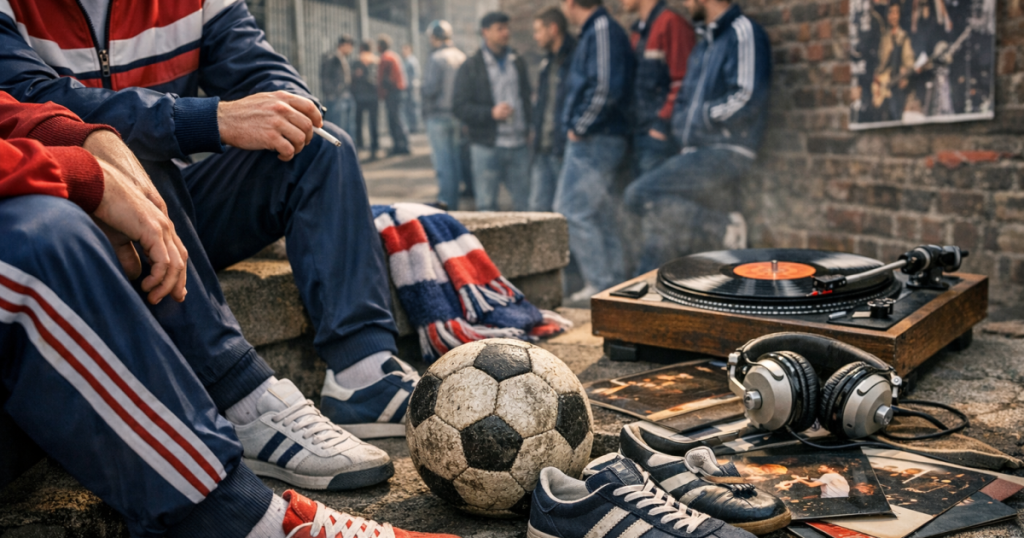
Football terraces gave tracksuit culture its public stage. Matchday was not only about the ninety minutes; it was a weekly gathering where lads from different towns, estates and scenes measured one another through chants, numbers, loyalty and clothes. Sportswear became part of that competitive display.
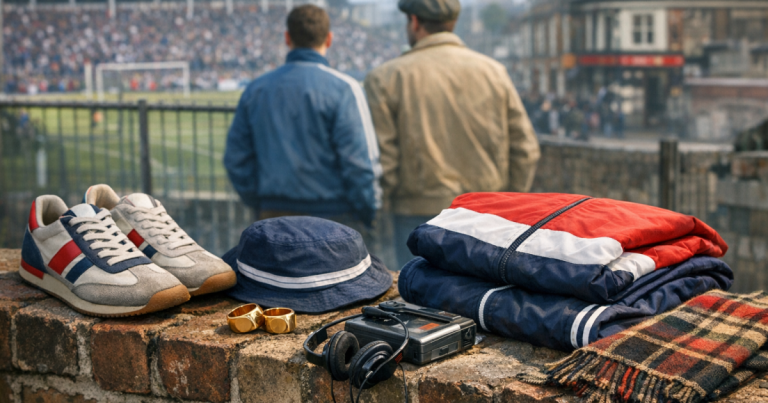
The football casuals did not simply wear tracksuits because they were comfortable. They chased labels, cuts and imports that separated the informed from the ordinary. Italian tennis brands, German trainers, French sportswear and American-influenced pieces could all become terrace currency when they were difficult enough to find, distinctive enough to notice, and subtle enough to avoid looking like a club scarf.
That subtlety was crucial. Much of the look worked because it stepped away from obvious replica shirts. A track top in the right colourway could nod to a club, a city or a crew without becoming fancy dress. If you want the longer timeline, the era-by-era shifts are covered in more detail in how football casuals shaped retro tracksuit style.
Brands became badges without being uniforms
The best-known labels did not all mean the same thing. Adidas carried deep football and trainer credibility, particularly through terrace staples and indoor silhouettes. Sergio Tacchini, Fila and Ellesse brought a different flavour: tennis court glamour repurposed for concrete steps, away days and town-centre pubs. Lacoste, Diadora, Kappa, Nike and Puma all had moments where the right piece could fit the code, depending on region, era and crowd.
What made these brands powerful was the gap between origin and use. A tennis tracksuit was not designed for a cold platform after an away match, but that recontextualisation made it interesting. Wearing sportswear outside its intended setting turned it into style rather than kit.
Sergio Tacchini is a perfect example because its clean lines, colour blocking and continental feel helped it travel from elite sport into terrace folklore. The wider story is explored in Sergio Tacchini’s journey from tennis courts to terraces, and it shows how a brand can gain new meaning once fans adopt it for themselves.
Music kept changing the rhythm of the look
Football gave the tracksuit its terrace grammar, but music kept changing its accent. Ska and two-tone culture sharpened the relationship between sportswear, polos, Harringtons, loafers and clean monochrome contrasts. It was not always tracksuit-heavy, but it shaped the appetite for neatness, rhythm and group identity.
Mod influence added another layer: precision, fit, scooters, parkas, knitwear and a suspicion of anything too sloppy. When that attitude met sportswear, the result was often cleaner than outsiders imagine. The point was not to look like you had just left PE; it was to look intentional.
Rave and acid house shifted the function again. Tracksuits, shells and trainers suited long nights, movement, warehouses, service stations and muddy fields. Bright colours, loose fits and synthetic fabrics made practical sense in a scene built around dancing and travel. Then Britpop and lad culture pulled football, music and retro sportswear back into a more visible mainstream, sometimes celebrating the look and sometimes flattening it into caricature.
Why the same clothes meant different things in different places
There was never one national uniform. Liverpool, Manchester, Glasgow, London, Birmingham, Leeds, Newcastle and smaller football towns all developed their own preferences and reference points. Local shops, European trips, boot sales, older brothers, music venues and club rivalries shaped what people saw as desirable.
That regional variation is why blanket statements about “the casual look” often feel wrong. In one place, the key might be Italian sportswear and low-profile trainers. Somewhere else, a technical jacket, darker palette and different footwear would carry more weight. Even colour choices could shift depending on club associations, local rivalries and whether someone wanted to blend in or stand out.
Understanding those local codes makes modern styling better. It stops the look becoming a costume assembled from stereotypes: bucket hat, loud jacket, random track top, done. Real terrace style usually works through restraint, memory and proportion.
The class debate is still uncomfortable
Tracksuit culture is often romanticised, but it has also been policed. In Britain, the tracksuit has repeatedly been used as shorthand for moral panic: youth disorder, council-estate stereotypes, “chav” sneering, hooligan headlines and lazy assumptions about taste. That baggage matters because it shows how class prejudice can attach itself to clothing.
At the same time, it would be dishonest to pretend football violence and intimidation played no part in the history. Some terrace clothing codes developed partly because they helped groups identify one another while avoiding obvious club colours. The culture contains style, wit, pride and craft, but also contradictions. Taking it seriously means holding all of that at once.
This is where British tracksuit culture becomes more than nostalgia. It reveals how people turn mass-produced clothing into identity, how working-class taste gets mocked and copied, and how football can turn a jacket or pair of trainers into a social document.
How to read the look without overdoing it
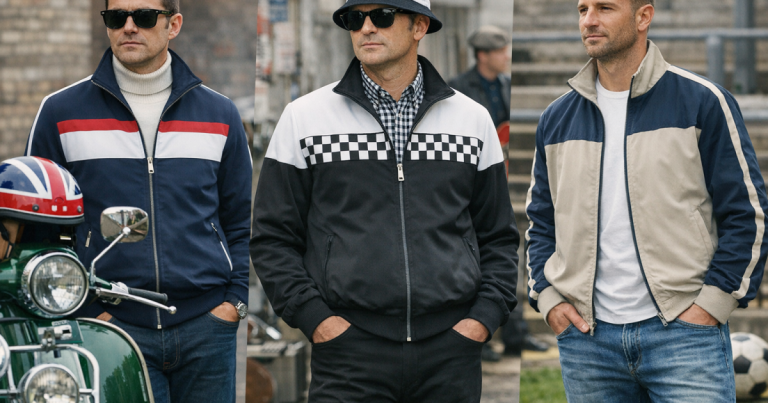
For anyone wearing terrace-inspired tracksuits now, the most useful lesson is restraint. Start with one strong reference: a retro track top, a clean pair of trainers, a colour palette linked to an era, or a jacket that sits naturally over sportswear. Do not pile every signifier into one outfit.
Fit matters more than logos. A track jacket that sits neatly at the waist, sleeves that do not swamp the hands, and trousers that work with the trainer shape will look more convincing than a head-to-toe outfit bought purely for branding. Colour matters too: navy, bottle green, burgundy, cream, red, sky blue and black all carry different associations depending on club, era and brand.
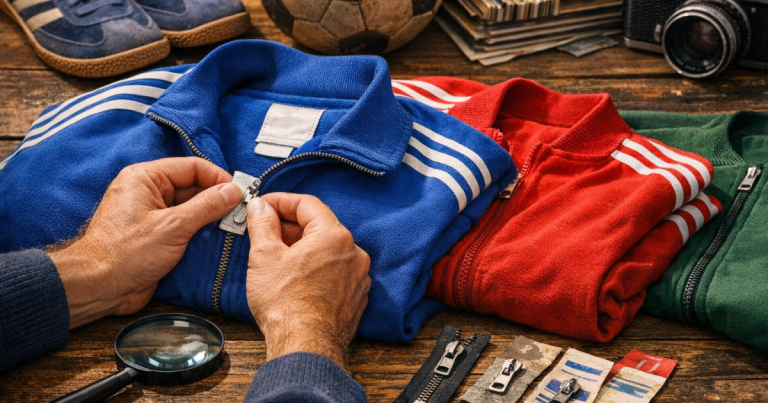
Care is part of the culture as well. Synthetic sportswear can look tired quickly if it is overheated, badly stored or washed without attention to the care label. Keeping zips clean, avoiding harsh heat, and drying pieces properly helps preserve the crispness that makes old-school sportswear work.
Words, codes and inherited knowledge
One reason this world remains fascinating is the language around it. Words such as casuals, creps, clobber, trackie, trabs and terrace do not just describe clothes; they describe attitude and belonging. They also help separate lived culture from surface imitation.
For newer readers, getting the vocabulary right makes the history easier to understand. The key terms are unpacked in the British tracksuit culture glossary, which is a useful companion if you are trying to read old photos, interviews or forum discussions without missing the nuance.
Helpful questions
Was tracksuit culture only a football casual thing?
No. Football casuals were central, but music scenes, local youth culture, dance floors, gyms, television, film and everyday working-class leisure all helped shape how tracksuits were worn and understood.
Why were tennis brands popular on football terraces?
They offered clean design, continental status and a sense of difference from standard football kit. Once adopted by fans, tennis labels gained a second life as terrace clothing.
Is wearing retro tracksuits today cultural cosplay?
It can be if the outfit is too literal. It works better when you understand the reference and wear one or two elements naturally with modern proportions.
Which sources help explain the culture beyond stereotypes?
First-hand photography, supporter memoirs and interviews are useful. The Football Casuals: A History is one recognisable starting point, but it is worth reading around the subject rather than relying on one account.
What stands out
The British tracksuit story is really a story about who gets to define taste. Football gave the look a stage, music gave it movement, and class gave it tension. That is why a track top can still feel loaded in a way most casual clothing does not.
Worn well today, the influence does not need shouting. Clean trainers, considered colours, a track jacket with the right shape, and an understanding of the references will usually say more than the loudest logo in the room.