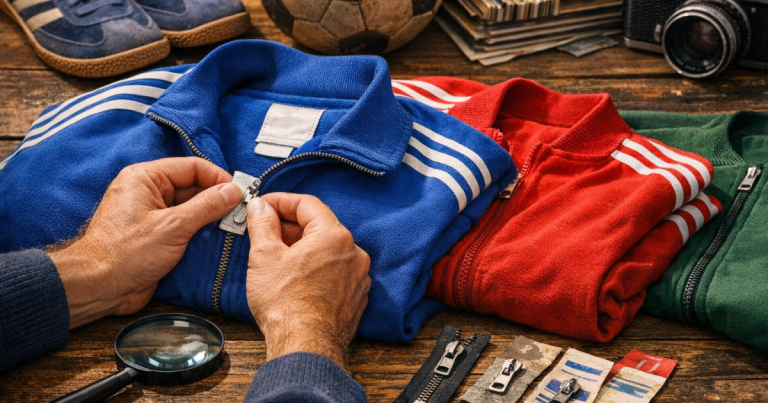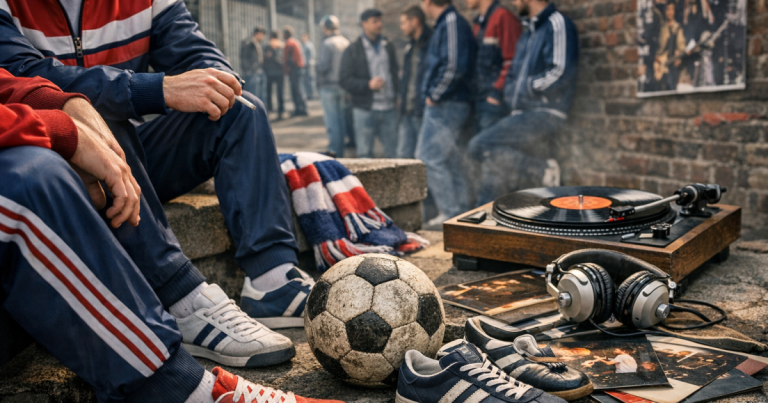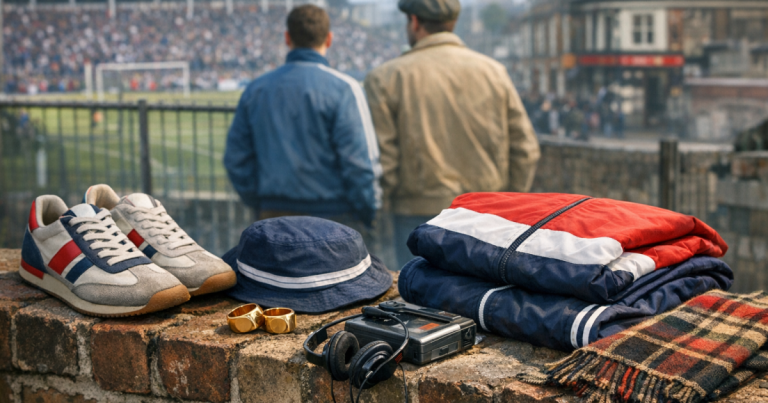
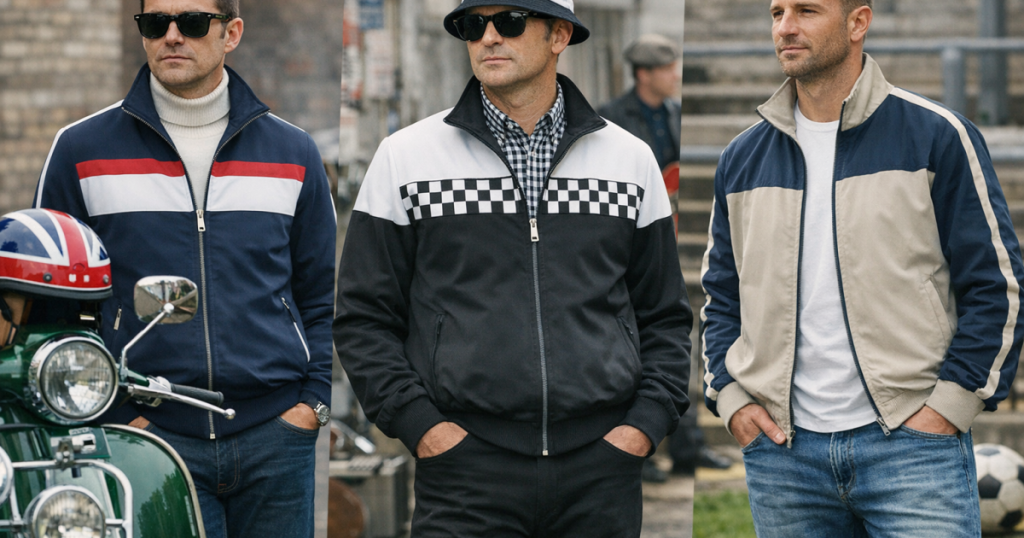
The quickest way to read mod ska casual tracksuits is to stop looking only at the logo and start reading the whole outfit: cut, cloth, colour, footwear and attitude. These influences often overlap in British street style, but each has its own visual grammar. Once you know the clues, a navy track top, a monochrome shell jacket and an Italian-branded full set stop looking interchangeable.
None of this is about policing what people wear. It is about understanding the reference points so you can spot whether an outfit leans sharp and mod, rhythmic and ska, or terrace-minded and casual.
What to know first
- Mod influence usually shows through clean lines, neat proportions, controlled colours and a dressed-up approach to sportswear.
- Ska influence is easier to spot through monochrome contrast, checkerboard details, pork pie and Harrington references, and a slightly sharper performance feel.
- Casual influence is rooted in football terraces, away-day status dressing, European sportswear labels, technical fabrics and trainer culture.
- Most real outfits mix influences, especially in the UK, where music, football, youth clubs and high-street availability all fed into the same wardrobes.
Step 1: Start with the silhouette
Mod-leaning tracksuit style tends to look tidy before it looks loud. Think shorter track tops, zipped neatly, sleeves sitting cleanly, and trousers that do not pool heavily over the shoe. It borrows from the mod preference for precision: slim polos, button-down shirts, narrow trousers, Harrington jackets and a general feeling that sportswear should still look composed.
Ska influence can look similarly sharp, but usually with more graphic punch. A ska-informed tracksuit outfit might use a close-fitting black track top, white piping, a cropped jacket shape or narrow trousers. It often feels more stage-ready than purely athletic, reflecting the visual world of 2 Tone, rude boy styling and British-Jamaican cultural crossover.
Casual influence is the most overtly sportswear-led of the three. It does not need to be baggy, but it usually has a more athletic ease: full tracksuit sets, zip-neck tops, shell jackets, track pants, cagoules and trainers doing serious visual work. The silhouette often says “terrace” before it says “dancefloor” or “scooter run”.
Step 2: Read the colour palette
Colour is one of the fastest tells. Mod influence generally favours disciplined colour: navy, burgundy, bottle green, black, white, cream and occasional racing stripes. It can use colour, but it usually avoids looking chaotic. If a track top looks like it could sit under a Harrington or over a polo without fighting the rest of the outfit, there is a good chance it carries a mod edge.
Ska influence is more direct. Black and white is the obvious starting point, especially when checkerboard details appear on cuffs, bags, caps or footwear. Red, green and gold can appear too, but in a UK ska context the 2 Tone monochrome code is the easiest reference to recognise. The key is contrast: light against dark, graphic against plain, rhythm against restraint.
Casual influence opens the palette wider. Terraces absorbed colour-blocking, bright nylon, pastel panels, jewel tones, club-adjacent brights and sponsor-era sports graphics. A royal blue, red and white shell top or a teal-and-purple track jacket may feel more casual or rave-adjacent than mod. If you want the broader label context, the guide to brands that defined British retro tracksuit culture helps place the big names in their proper subcultural lanes.
Step 3: Check the fabric and finish
Fabric tells you a lot because each influence arrived through different routes. Mod styling often works best with smoother, flatter fabrics: cotton-rich jersey, fine knit, piqué-like textures, matte track tops and pieces that sit neatly rather than rustle. A track jacket with a modest sheen can still work, but the overall effect should feel polished rather than ravey.
Ska-influenced tracksuit details often depend on contrast trims, striped ribbing, monochrome panels and crisp edges. The fabric can be synthetic, but it usually helps if the piece has structure. A floppy oversized shell top with neon panels may be brilliant, but it is unlikely to read as ska unless the rest of the outfit is deliberately pulling it back into that world.
Casual influence is where nylon, polyester, tricot, velour and shell fabrics become central rather than incidental. The fabric story is tied to sports retail, football travel, European labels and later rave crossover. For a deeper read on why cloth changes the meaning of an outfit, see the era-by-era guide to tracksuit fabrics from velour to nylon.
Step 4: Look at what is worn with it
A tracksuit rarely tells the full story by itself. The surrounding pieces are often more revealing than the jacket. Mod styling will usually pull a track top towards polos, fine knits, button-down collars, desert boots, loafers or very clean trainers. The point is controlled neatness: even when casual, it looks deliberate.
Ska styling often brings in Harrington jackets, pork pie hats, checkerboard accessories, narrow trousers, Dr. Martens-style boots, brogues or loafers. A tracksuit top in this setting becomes part of a sharper, music-coded outfit rather than a pure sportswear set. The danger is going too literal: too many checkerboards, braces, hats and monochrome cues at once can turn a wearable nod into fancy dress.
Casual styling is more likely to orbit trainers, track pants, zip-neck tops, polo shirts, technical jackets, caps and cross-body bags. Terms like “creps”, “clobber” and “casuals” carry specific cultural baggage, so it is worth using them carefully. The British tracksuit culture glossary is useful if you want the vocabulary without flattening everything into stereotypes.
Step 5: Place the outfit in its cultural setting
Mod influence points back to scooters, soul, sharp tailoring, youth-club precision, revival scenes and a belief that detail matters. When it appears in tracksuits, it usually tones sportswear down: cleaner logos, neater fits, less bulk, more polish.
Ska influence points towards dance halls, 2 Tone graphics, British-Jamaican exchange, anti-racist youth culture, monochrome design and performance energy. It can share sharpness with mod, but it has a more graphic and rhythmic character. If mod says “pressed and precise”, ska often says “sharp, high-contrast and ready to move”.
Casual influence points towards football travel, status labels, European sportswear, trainer knowledge and the codes of being seen without looking like you tried too hard. It can be colourful or understated, expensive-looking or battered-in, but it usually carries a sense of brand literacy and terrace memory.
Quick field checks
- Is the outfit neat, narrow and restrained? It is probably leaning mod, especially with polos, Harringtons or smart footwear.
- Is the outfit monochrome, checker-accented and music-coded? Ska influence is likely, particularly with sharp shoes or pork pie references.
- Is the outfit built around sports labels, trainers and technical fabric? That is usually casual territory.
- Is the track top worn like a smart jacket? That often suggests mod thinking.
- Is the full set the main statement? That usually points towards casual, sportswear or rave crossover rather than classic mod.
- Are there too many obvious signifiers? Strip one away. Good subcultural styling usually works through confidence, not costume.
Common crossover looks
The mod-casual blend
This is common and very wearable: a clean track jacket, polo shirt, tapered trousers and low-profile trainers. The mod side gives the neatness; the casual side gives the sportswear credibility. Keep logos modest and colours controlled if you want the balance to hold.
The ska-casual blend
Here, a black or navy track top with white piping can sit with dark trousers, clean trainers and a hint of checkerboard. The casual side stops it becoming stage costume; the ska side gives it bite. One graphic cue is usually enough.
The rave-casual overlap
This is where people often misread things. Bright nylon, oversized shell shapes and bold panels may come from later casual and rave crossovers rather than ska. If the palette is neon, the fit is loose and the fabric rustles, you are probably moving away from mod and ska references into late terrace, club and rave territory.
Common questions
Can a tracksuit be mod?
Yes, but usually through styling rather than the tracksuit alone. A neat track top with a polo, slim trousers and restrained colours can carry mod influence without pretending to be a 1960s outfit.
Is checkerboard always ska?
Not always, but in British subcultural clothing it is one of the strongest ska and 2 Tone signals. Use it sparingly if you want a subtle reference.
Are casual tracksuits always football-related?
No. Football terraces shaped the look heavily, but casual sportswear also crossed into music, nightlife, travel and everyday street dressing.
What is the easiest mistake to avoid?
Do not rely on one detail. A logo, colour or trainer choice can mislead you. Read the whole outfit: fit, fabric, footwear, layers and cultural cues.
Main lessons
Mod, ska and casual influences are not sealed boxes. British tracksuit culture has always borrowed, remixed and argued with itself. The useful skill is learning which clues carry the most weight.
For mod, look for discipline: sharp fit, restrained colour and sportswear treated almost like tailoring. For ska, look for contrast: monochrome graphics, checkerboard touches and dancefloor energy. For casual, look for terrace literacy: sports labels, technical cloth, trainers, full sets and the relaxed confidence of someone who knows exactly what their clobber is saying.