A tracksuit on the terraces was never just gym kit with a badge on the chest. It solved a practical problem for young football lads moving between away days, pubs, stations, clubs and estate streets, while also carrying the right kind of signal. That is the core of tracksuit terrace culture: comfort, movement, status and belonging wrapped into one recognisable silhouette.
The look became powerful because it worked in real life. It was easy to travel in, easy to layer, visible without being formal, and loaded with brand meaning for people who knew how to read the codes.
At a glance
- Tracksuits fitted the rhythm of British football days: trains, coaches, pubs, grounds, clubs and home again.
- They offered a middle ground between sportswear, streetwear and smart casual clothing.
- Brand knowledge mattered: adidas, Fila, Sergio Tacchini, Ellesse, Kappa, Lacoste and Diadora all carried different associations.
- Music scenes helped move tracksuits beyond matchday, especially through rave, jungle, hip-hop and regional club culture.
- The uniform effect came from repetition, recognition and small details rather than one fixed outfit.
The terrace needed clothes that could move
British football culture has always had a strong relationship with movement: across town, across the country, from working week to Saturday, from the ground to the pub and sometimes on to a club. Tracksuits suited that pattern better than heavy tailoring or delicate clothing. A full set or track top could handle a long day, still look deliberate, and not feel out of place in mixed settings.
That practicality matters. Terrace dressing was not only about posing. It was about surviving weather, crowds, cramped transport and constant motion while keeping a sharp line. A zipped track top offered ventilation and layering. Synthetic fabrics dried quicker than many heavier casual pieces. Elasticated waists and cuffs made sense for travel. The cut had energy: not formal, but not scruffy when worn with confidence.
There is also a useful distinction between the broader football casual story and terrace style as it is worn and referenced now. The two overlap, but they are not identical. For a clearer breakdown, the difference between football casuals and terrace style helps explain why the modern version can borrow the look without copying every part of the old scene.
Why sportswear became a status language
One reason tracksuits became terrace uniforms is that they allowed status to be shown without traditional luxury signals. On the terraces, a label, stripe, colourway or cut could say as much as a designer suit might say elsewhere. The point was not always expense in a simple sense; it was awareness. Knowing which brand, which era, which fit and which combination carried weight became part of the culture.
Importantly, the codes were not static. In some circles, Italian tennis and leisure brands suggested continental sharpness. In others, adidas carried football heritage and training-ground credibility. Fila and Sergio Tacchini could suggest a sharper 1980s look. Kappa and Ellesse brought strong visual identity. Lacoste and Fred Perry moved easily between sportswear, polos and casual smartness. Diadora and PUMA added trainer and track heritage that could feel quieter but still knowledgeable.
That is why the story cannot be reduced to one brand. The deeper picture is about how football lads, music crowds and street-level tastemakers turned sportswear labels into social signals. The wider lineage is covered well through the brands that built British retro tracksuit culture, because the uniform was really a shared language made from many accents.
The full set looked unified without looking formal
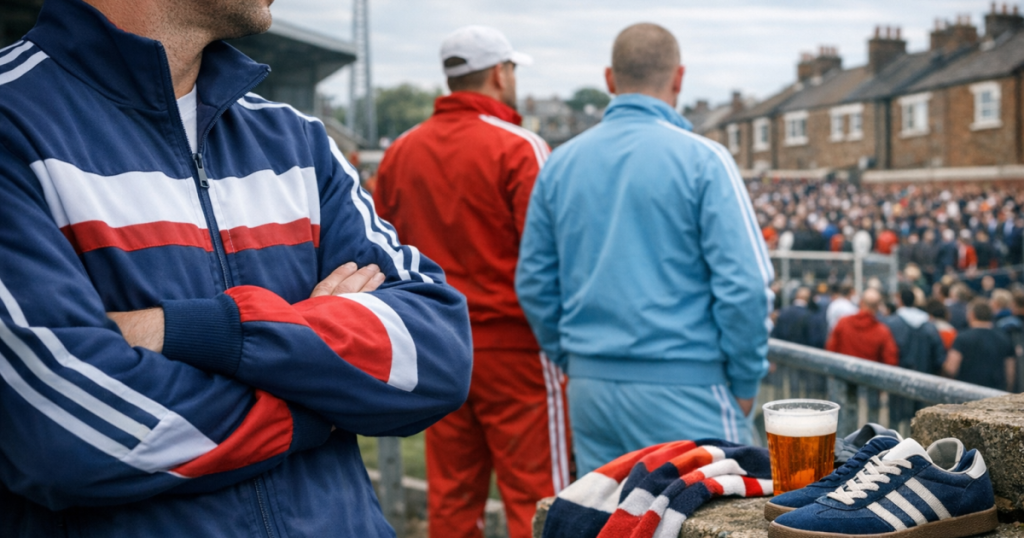
A tracksuit has one obvious advantage over separates: it creates instant cohesion. Matching top and bottoms gave a clean silhouette, especially when worn with the right trainers. On a crowded terrace, that mattered. You could spot colour blocks, stripes, piping and logos from a distance. It was practical visibility, but it also created group identity.
At the same time, the tracksuit was flexible. Some wore the full set. Others used only the track top with jeans, cords, a polo or a plain T-shirt. The uniform was not a strict regulation; it was a set of recognisable cues. A stand collar, ribbed cuffs, side stripes, a neat trainer choice, a confident colour combination and a certain restraint could all point towards the same tradition.
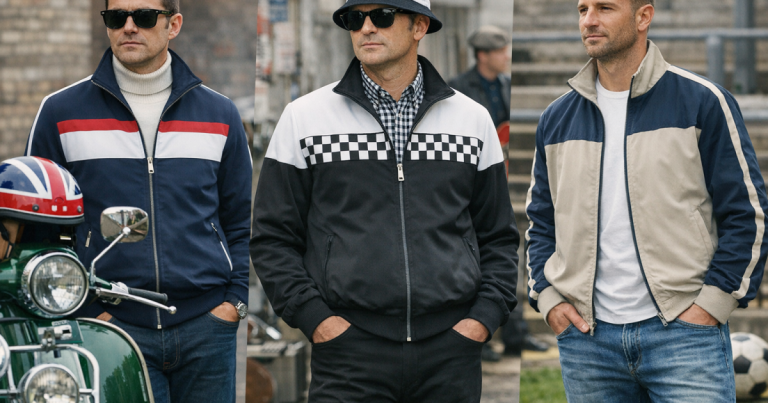
This is why modern terrace-inspired outfits work best when they avoid fancy dress. The aim is not to dress as a museum version of an away-end lad. It is to understand the grammar: one strong sportswear piece, clean trainers, sensible layers, and a balance between archive reference and everyday wearability.
Music pushed the tracksuit beyond matchday
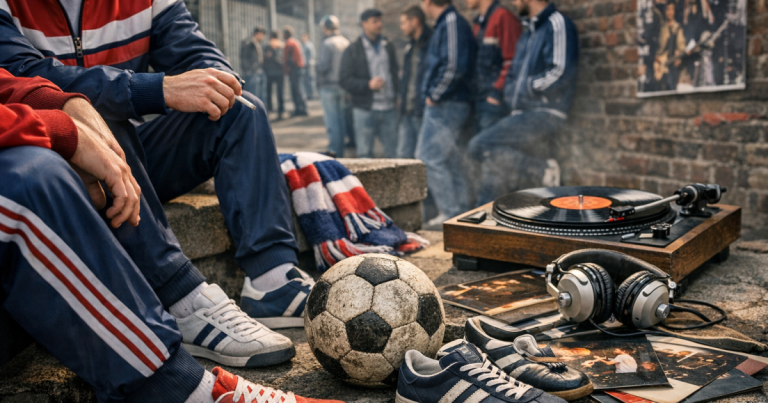
Football explains a lot, but not everything. Tracksuits also crossed into British music culture because they suited dancing, travelling and being out late. Rave and jungle scenes, in particular, gave sportswear a different kind of energy. The same garments that worked on trains and terraces also worked in clubs, warehouses, pirate radio circles and street-level youth culture.
By the 1990s, the tracksuit had multiple meanings at once. It could look athletic, casual, rebellious, practical, regional, stylish or anti-fashion depending on context. Jungle culture sharpened that connection through radio, MCs, flyers, clubs and local crews, where sportswear was not an accessory to the scene but part of its visual rhythm. The link between sound system energy and synthetic sportswear is explored in more detail through these jungle-era tracksuit codes.
This crossover matters because it explains why the terrace uniform did not stay trapped inside football. It moved through youth culture. It appeared in music videos, local high streets, estate courtyards, record shops and late-night bus stops. The tracksuit became a British street uniform because it could belong to several worlds at once.
Not every explanation is about hooliganism
Outside observers often flatten terrace sportswear into a single story about trouble. That misses the nuance. Football violence is part of the wider historical conversation and should not be romanticised, but the clothing itself carried many meanings beyond confrontation. For many people, the appeal was style, belonging, aspiration, music, comfort, travel and local identity.
There is a competing view that tracksuits became popular simply because they were comfortable and widely available. Comfort helped, but it does not explain the precision of the codes. If comfort were the whole story, any cheap leisurewear would have done. Instead, certain brands, silhouettes and colour combinations gained status while others did not.
Another view is that it was purely a fashion cycle. Again, fashion mattered, but terrace adoption was more active than passive. Lads did not simply receive trends from magazines. They interpreted sportswear, remixed it with trainers and outerwear, and gave it meaning through repetition in real places: grounds, stations, pubs, clubs and local streets.
How the terrace uniform reads today
In 2026, the tracksuit’s terrace meaning is still readable, but it has softened and broadened. Many people now wear retro track tops and full sets for nostalgia, comfort and style rather than any direct link to matchday culture. Reissues and archive-inspired pieces make the look easier to access without hunting vintage rails or worrying about fragile older fabrics.
The best modern interpretations usually keep one foot in the original codes and one in the present. A track jacket with plain trousers can feel sharper than a full set in some settings. A full tracksuit can still work, but it needs confident styling: clean trainers, good proportions, and a colourway that feels intentional rather than novelty. Polos, lightweight jackets, caps and simple T-shirts can all soften the look while keeping the terrace reference alive.
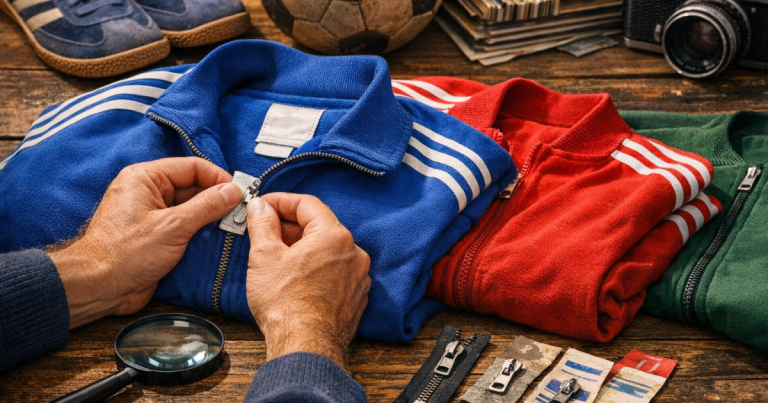
Care also matters more than people admit. Synthetic sportswear can quickly look tired if it is overheated, misshapen or stored badly. Gentle washing, avoiding harsh heat, and hanging pieces properly will preserve shape and colour better than treating them like disposable gym kit. That practical respect is part of why original terrace clothing still attracts attention: the best looks were worn, but they were not careless.
Why it became a uniform rather than just a trend
A trend comes and goes because it looks new. A uniform lasts because it solves a social problem. The tracksuit helped people signal where they belonged, what they knew, how they moved and what they valued. It sat between sport and street, comfort and status, local pride and continental aspiration.
It also worked visually. A terrace is a mass of bodies, colours and movement. Tracksuits cut through that noise with strong lines and recognisable branding. They were easy to read from a distance and easy to personalise up close. That combination is rare: group identity without total sameness.
The British terrace tracksuit became iconic because it was never only about the garment. It was about the route to the match, the music on the way, the trainer choice, the brand literacy, the weather, the mates, the pub, the club after, and the memory attached to it all. That is why the look still carries weight long after the original moments have passed.
Questions people ask
Were tracksuits only worn by football casuals?
No. Football casuals helped give tracksuits terrace meaning, but the look also spread through rave, jungle, hip-hop, local streetwear and everyday British leisurewear.
Which brands mattered most on the terraces?
adidas, Fila, Sergio Tacchini, Ellesse, Kappa, Lacoste, Diadora and PUMA all had moments of influence. The exact hierarchy changed by era, region and crowd.
Is a full tracksuit still wearable now?
Yes, but it looks strongest when the fit, trainers and colourway feel deliberate. For a subtler nod, wear the track top with plain trousers or denim.
Why did Italian sportswear become important?
Italian tennis and leisure brands offered a sharper continental feel that stood apart from ordinary British sports kit. That sense of difference made them desirable.
How do you avoid looking costume-like?
Keep the outfit grounded: one strong retro piece, clean trainers, simple layers and no overloading of logos. The cues should feel lived-in, not staged.