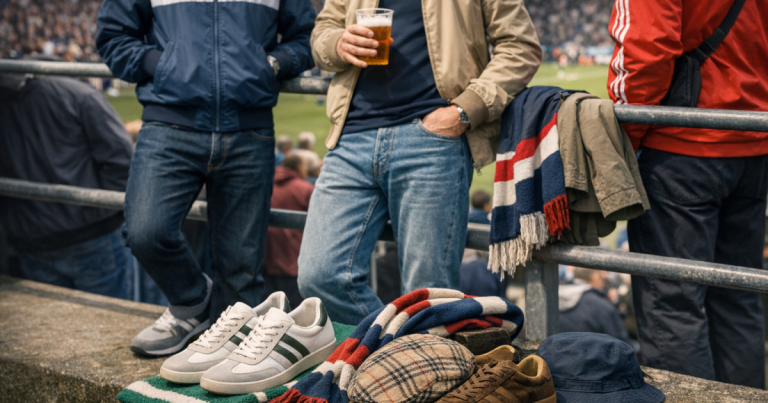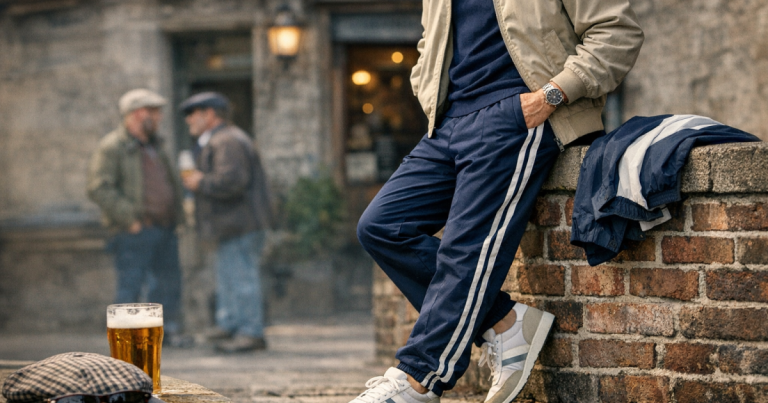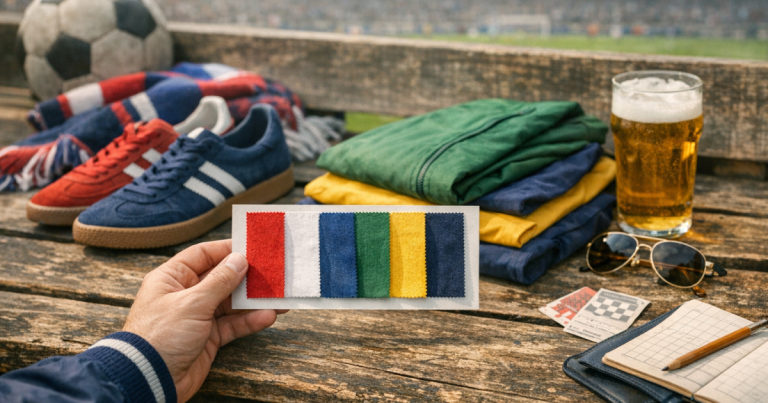
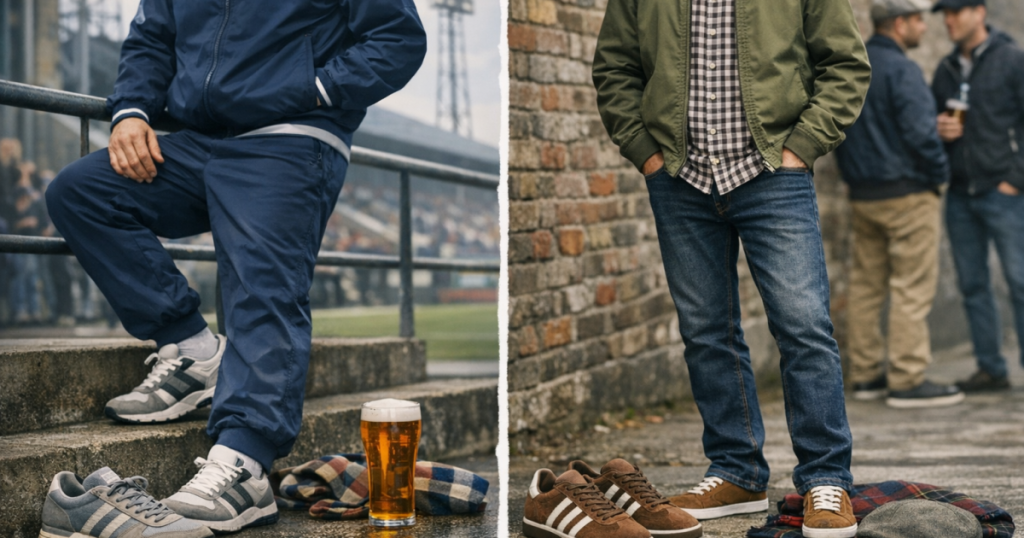
On a match day concourse, in a vintage sportswear shop, or scrolling through old casuals photography, it is easy to treat football casuals vs terrace style as the same thing. They overlap heavily, but they are not identical. One is rooted in a specific football subculture with its own codes, risks, myths and regional history. The other is a broader way of dressing that borrows from that world, mixing archive sportswear, trainers, polos, knitwear and outerwear into something wearable now.
That distinction matters because it changes how you read the clothes. A track top is not automatically casual. A pair of suede trainers does not make an outfit terrace-ready. Context, silhouette, restraint and the way pieces are combined do most of the work.
The big picture
Football casuals refers to a youth and football subculture that gathered force around British grounds, away days and European trips. It was never just a list of brands. It involved travel, rivalry, status, secrecy, music, local identity and the constant hunt for gear that looked sharp without looking like standard club merchandise.
Terrace style is the clothing language that grew from that culture and later widened out. It can include the look of casuals, but it also includes Britpop-era sportswear, 1990s indie references, rave-adjacent jackets, modern adidas Originals reissues, Italian court heritage, golf knits, wax jackets and clean everyday trainers. You can wear terrace style without claiming to be part of the old casual scene.
So the simplest distinction is this: football casuals is the culture and social history; terrace style is the dress code that has travelled beyond it.
Where football casuals came from
The casuals story is usually tied to late 1970s and 1980s football culture, when British fans returning from European trips brought home sportswear and trainers that were hard to find on UK high streets. The appeal was part style, part status and part subterfuge. Looking smart in a rare track top or Italian knit could separate you from scarf-and-replica-shirt crowds, and at times it also helped avoid easy identification by police or rival groups.
That history is complex. It includes brilliant street-level taste, working-class ingenuity and a sharp eye for continental sportswear. It also includes violence and reputation-building that should not be romanticised away. Anyone interested in the culture should treat it as social history rather than just an outfit board. For a grounded reading route, Cass Pennant’s account is worth approaching through this review of The Football Casuals: A History, which helps separate memoir, mythology and cultural record.
Different regions had different cues. Liverpool, Manchester, Glasgow, London and the Midlands did not all dress the same, and the details shifted between clubs, crews and eras. Some looks were clean and European. Others became brighter, baggier or more visibly sportswear-led as the decades moved on. That regional texture is why reducing casuals to one brand list misses the point.
What terrace style means now
Modern terrace style is less about belonging to a firm and more about understanding the visual grammar. It is the neat track jacket with straight denim. The polo under a lightweight jacket. The clean trainer that looks considered rather than box-fresh for the sake of it. The colour-blocked top worn with restraint, not fancy dress.
It also reaches beyond the match. In Britain, terrace references have passed through indie nights, Britpop nostalgia, pub culture, festival fields, record shops and everyday city dressing. A vintage-inspired track top can sit next to a Barbour-style wax jacket, a pair of Diadora or PUMA trainers, and a plain tee without the wearer trying to reconstruct an exact 1980s away end.
That flexibility is the point. Terrace style can be worn by people who love the clothes, the music, the books, the photography and the archive sportswear, without pretending the harder edges of the original scene are just a styling theme.
The main differences at a glance
- Culture versus aesthetic: football casuals describes a subculture; terrace style describes a clothing influence that has become broader.
- Timeframe: casuals are strongly tied to late 1970s, 1980s and early 1990s football culture; terrace style keeps evolving through reissues, streetwear, Britpop revival and everyday menswear.
- Intent: casual dress was often about status, rarity and group codes; modern terrace dressing is usually about heritage, shape, confidence and taste.
- Setting: casuals are inseparable from football grounds and away days; terrace style works at the match, the pub, gigs, weekends and casual city wear.
- Authenticity: casuals authenticity comes from lived context; terrace style authenticity comes from proportion, restraint and knowing what the references mean.
How the clothes tell different stories
A full tracksuit can read in several ways. On one person it might nod to 1980s sportswear and European football trips. On another it might feel more Britpop, rave, or modern streetwear. The clothes alone do not settle the question.
Football casual dressing historically prized certain signals: rare trainers, imported labels, neat outerwear, sharp knitwear and a refusal to look like everyone else outside the ground. Terrace style borrows those signals but softens the rules. A current adidas track top can work if the shape is right and the rest of the outfit is calm. A Fred Perry Twin Tipped Polo Shirt can add a cleaner mod-adjacent note. A PUMA Palermo Trainer can bring suede terrace sharpness without tipping into costume.
The key is not to stack every reference at once. Track jacket, bucket hat, retro trainers, stonewash denim, logo tee and football scarf can quickly become a caricature. One or two strong references usually look better than a head-to-toe reenactment.
Reading the cues without getting lost in stereotypes
Good terrace dressing depends on reading small details. Fit, colour, fabric, branding scale and footwear all change the message. A slim navy track top with white piping feels different from a glossy oversized shell jacket. Gum-soled court trainers feel different from chunky running shoes. A plain polo feels different from a loud graphic tee.
Photography is useful here because it shows clothes in lived settings rather than brand lookbooks. If you want to sharpen your eye, reading A Casual Look for terrace style cues is a good way to notice posture, proportions, layering and the quiet details that made the original looks work.
It is also worth avoiding lazy shorthand. Not every track jacket is a casuals piece. Not every football-influenced outfit is hooligan cosplay. Not every retro trainer has terrace credibility. The best modern looks take influence without flattening the culture.
How to wear the influence in 2026
The most wearable approach is to start with a clean base and add one heritage sportswear piece. Straight or relaxed denim, a plain T-shirt, a polo, or simple track trousers can all work. Keep colours controlled: navy, bottle green, burgundy, off-white, black and cream are easier to wear than loud primary blocking unless the jacket is the whole point.
Track tops are still the easiest entry point. They carry the terrace reference clearly but do not demand a full set. The adidas Firebird shape, for example, has that recognisable sportswear line while still working with jeans or casual trousers; our adidas Originals Firebird Track Top review looks at why that kind of piece has everyday range beyond nostalgia.
Footwear should anchor the outfit rather than shout over it. Suede and leather court-style trainers often sit more naturally with terrace references than overly technical running silhouettes. Think low profile, clean colourways and a shape that works with denim or track pants. If the trainers are bright, keep the jacket quieter. If the jacket is loud, let the shoes do less.
Outerwear is where modern terrace style can become more grown-up. A lightweight shell, Harrington-style jacket, wax jacket or understated parka can make the look feel less like a sportswear set and more like a proper outfit. That matters if you want the influence to work outside match days.
Vintage, reissue or modern inspired?
Original vintage has romance, but it is not always the smartest route. Older synthetic sportswear can have pulls, tired elastic, fading, damaged zips or a fit that feels awkward by modern standards. If you want a collector’s piece, check condition carefully and accept that you may be buying history as much as wearability.
Reissues and archive-inspired pieces are often easier for daily wear. They tend to be simpler to size, easier to replace and less precious in bad weather. The trade-off is that they may lack the rarity and exact feel of an original. Modern inspired pieces sit somewhere else again: they borrow the line, colour or branding attitude without trying to reproduce a particular era.
The sensible choice depends on your aim. If you are building a personal archive, vintage can be rewarding. If you want something for the pub, the commute, the match and weekends, reissue or modern heritage sportswear is usually less stressful.
Common mistakes that make it look forced
- Wearing too many logos: one clear sportswear mark is often enough. Competing badges can make the outfit feel assembled rather than natural.
- Ignoring fit: terrace style relies on proportion. Too tight can look novelty; too baggy can lose the sharpness.
- Mixing eras without control: 1980s track top, 1990s rave shell and modern chunky trainers can work, but only if the colours and shapes make sense together.
- Chasing stereotypes: the culture is richer than aggressive poses and tabloid imagery. The quieter looks are often the most convincing.
- Forgetting care: old and new sportswear both benefit from gentle washing, air drying and careful storage, especially synthetic jackets and embroidered details.
So, which term should you use?
Use football casuals when you are talking about the subculture, its history, its people, its football setting and its codes. Use terrace style when you are talking about the wider look: the track tops, trainers, polos, jackets and practical wardrobe ideas that carry the influence into the present.
There is no need to police the terms aggressively, but the distinction shows respect. It recognises that a lived subculture is not the same as a Pinterest board, while still allowing the clothes to have a life beyond their original moment.
FAQ
Are football casuals and terrace style the same thing?
No. They overlap, but football casuals refers to a specific football subculture, while terrace style is the broader clothing influence that came from it and evolved beyond it.
Can you wear terrace style if you are not part of football casual culture?
Yes, as long as you approach it with awareness rather than costume energy. Focus on good proportions, restraint and an understanding of the references.
Is a tracksuit automatically terrace style?
No. The shape, brand heritage, colour, footwear and styling all matter. A tracksuit can look terrace-influenced, streetwear-led, gym-focused or purely nostalgic depending on how it is worn.
Which pieces are easiest for beginners?
A clean track top, low-profile trainers, a plain polo, straight denim and a simple outer layer are easier to wear than a full retro set straight away.
Does terrace style have to be match-day clothing?
No. Match days are part of the heritage, but the modern look works just as well for pubs, gigs, weekends and everyday casual dressing.
What to remember
Football casuals gave the look its roots: football grounds, away travel, rare sportswear, sharp codes and regional pride. Terrace style is what happens when those visual cues move into a wider wardrobe. The best modern interpretation is informed but not performative: one strong track top, clean trainers, considered layers and enough restraint to let the references breathe.
If you want to build the look properly, start by understanding the culture, then choose clothes that fit your own life rather than copying an old photograph line for line.