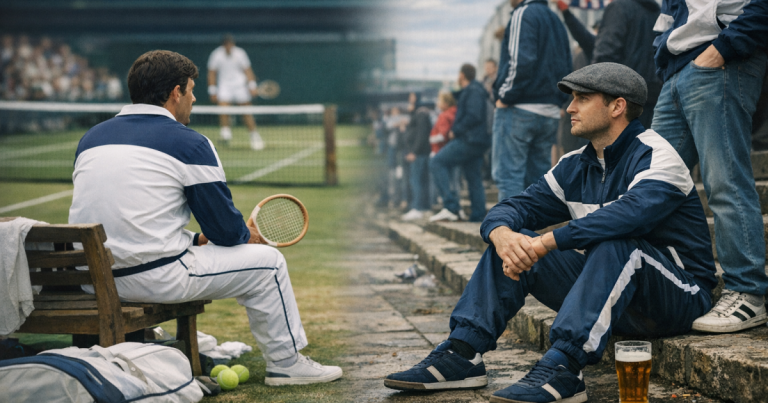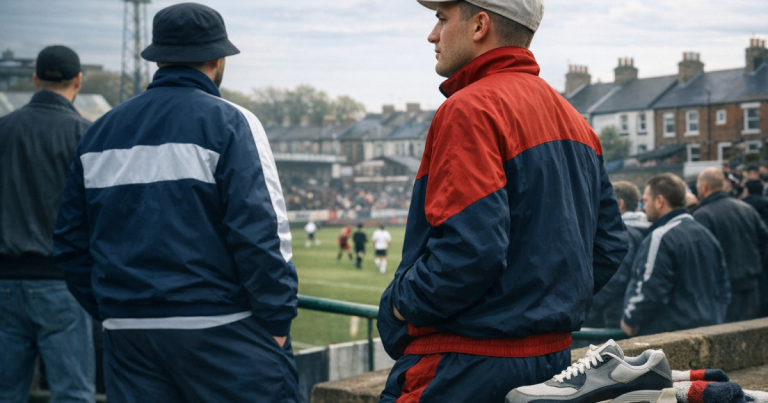
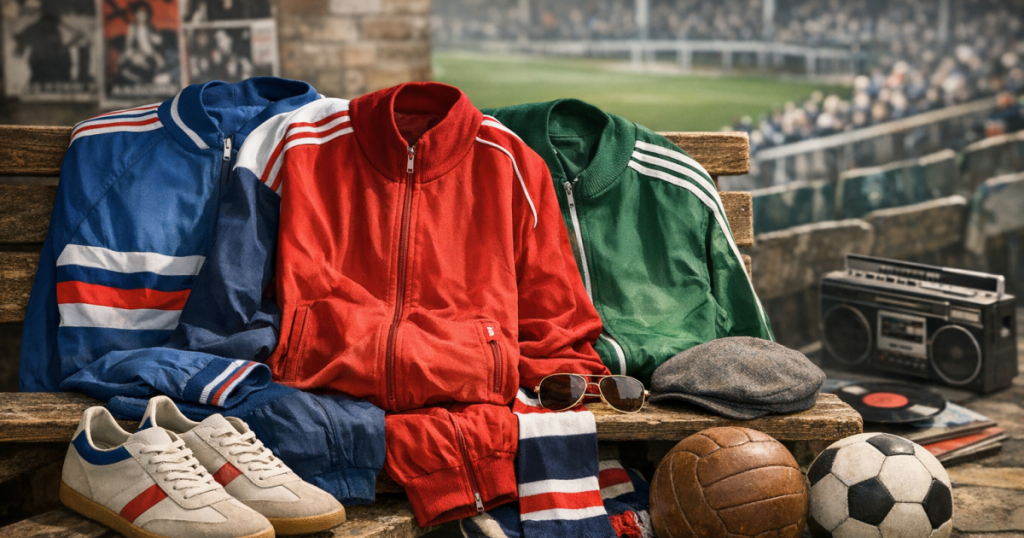
British retro tracksuit culture was not built by one label, one stand, or one decade. It came from a mix of European tennis gear, German football training kit, Italian leisurewear, British subculture, away-day shopping, music, and the very particular way lads in the UK turned sportswear into status.
The short version: adidas gave the look its training-ground backbone; Sergio Tacchini, Fila and Ellesse brought Italian court glamour; Diadora added understated trainer credibility; Kappa sharpened the silhouette; Lacoste and Fred Perry bridged sportswear with smarter casual dressing. The culture made those brands feel bigger than sport.
The short version
The brands that mattered most were not always the loudest. A full tracksuit could signal allegiance to an era, a city, a music scene, or a type of football-casual confidence. The real skill was in knowing what looked authentic without making the outfit feel like fancy dress.
For a cleaner distinction between the subculture and the clothing shorthand, it is worth reading the difference between football casuals and terrace style. That difference matters here because brands carried different meanings depending on whether they were worn as match-day currency, club-night kit, or everyday retro sportswear.
- adidas: the most recognisable training and terrace foundation, from Trefoil branding to track tops and indoor trainers.
- Sergio Tacchini: tennis-born polish with a strong UK casual afterlife.
- Fila and Ellesse: Italian sportswear that turned court colours and bold panels into style signals.
- Diadora: quieter, more connoisseur-coded, especially through trainers and court heritage.
- Kappa, Lacoste, Fred Perry and Puma: supporting characters that added fit, logos, polos, outerwear and trainer options to the wider wardrobe.
adidas: the training-ground backbone
No brand sits more naturally at the centre of British terrace sportswear than adidas. The Trefoil, the three stripes, the football training connection and the constant presence of indoor trainers gave adidas a language that worked from the pitch to the pub without much translation.
For many UK wearers, adidas did not need to shout. A sharp track top, neat trainers and the right proportions could say enough. That is why pieces such as the Adidas Originals Firebird Track Top still make sense now: the shape is familiar, the branding is legible, and it can be worn with jeans, track pants or a plain tee without turning the whole outfit into a museum piece.
The important thing with adidas is proportion. A modern reissue can look superb when the shoulders, sleeve length and hem sit cleanly, but it can drift into costume territory if everything is oversized, over-branded and paired with too many matching references at once. If you are buying current adidas Originals pieces, check the product images for how the jacket hangs when zipped and unzipped, and read the fabric and care details before assuming it will feel like an older archive piece.
Sergio Tacchini: tennis polish adopted by the terraces
Sergio Tacchini came from tennis, but in Britain its afterlife became strongly tied to casual style. The appeal was obvious: clean collars, confident colour blocking, court heritage and a slightly continental feel. It looked more refined than basic training kit, yet still carried a sporty edge.
The brand worked because it offered an alternative form of status. It was not simply about wearing a logo everyone recognised from football. It suggested taste, travel, and a knowledge of sportswear beyond the obvious. That made it powerful in the casual wardrobe, especially when worn with simple denim, trainers and a jacket that did not fight for attention.
Modern Tacchini pieces can still deliver that effect, but the detail matters. The best examples tend to look crisp rather than novelty. A track top such as the Sergio Tacchini Orion Track Top is useful to compare because it shows how court heritage can feel wearable in a modern terrace-inspired outfit. For a closer look at that balance, see the site’s Sergio Tacchini Orion Track Top review.
Fila and Ellesse: Italian colour, panels and confidence
Fila and Ellesse brought something different to British retro tracksuit style: a louder, warmer, more leisure-led energy. Where adidas often felt rooted in football training and Sergio Tacchini in tennis neatness, Fila and Ellesse made colour blocking, contrast panels and chest branding feel desirable.
That Italian sportswear look fitted perfectly into a UK culture that loved imported, recognisable kit. It also translated well into music and club settings. A Fila Settanta-style jacket or an Ellesse Rimini-style top could carry the outfit on its own, which made the rest of the look important. Too many competing logos and the effect weakens; one strong jacket with plain layers usually lands better.
When assessing modern Fila or Ellesse reissues, do not judge only by nostalgia. Check whether the ribbed cuffs sit firmly, whether the zip line looks clean, whether the colours suit what you already wear, and whether the fit is boxy, slim or relaxed. These brands often work best when the jacket is the statement and the trainers are kept relatively simple.
Diadora: quiet court credibility
Diadora has always suited the reader who likes understatement. It does not carry the same mainstream terrace shorthand as adidas, but that is part of the appeal. The brand’s Italian football and tennis roots give it credibility without making every outfit feel obvious.
In trainer terms, Diadora often works beautifully with track jackets because it softens the look. A pair such as the Diadora B. Elite can sit under denim, cords or track pants without competing too heavily with the top half. The result is less “full kit” and more considered casual dressing.
If you are building a wardrobe rather than chasing a single nostalgic image, Diadora is worth keeping in the mix. It is also a useful reminder that terrace style was never only about the most visible label. Sometimes the best choice is the one that looks informed rather than loud. For more on that quieter side, the Diadora B. Elite trainer review gives a focused look at how court heritage fits modern terrace wear.
Kappa, Lacoste, Fred Perry and Puma: the wider wardrobe
The culture was never made from track tops alone. Kappa brought slim silhouettes, taped branding and a sharper continental sportswear feel. Lacoste connected tennis, polos and clean casual dressing. Fred Perry carried mod, music and football associations in a way that made a polo feel just as relevant as a jacket. Puma added trainers, hoodies, track jackets and football-adjacent pieces that fitted naturally into the same landscape.
These brands matter because British retro sportswear is layered. A terrace outfit might start with a track top, but it is finished by the polo underneath, the trainer shape, the cap, the denim wash, the jacket thrown over it, and the decision not to overdo the references. That is why the most convincing outfits often mix one hero piece with quieter support.
For example, a Lacoste-style polo under an Italian track jacket creates a different mood from a bold logo T-shirt under an adidas top. A Puma trainer changes the feel again. None of these choices is automatically right or wrong; the question is whether the outfit reads as lived-in rather than assembled from a mood board.
What made these brands status symbols in Britain?
Several things came together. Football travel exposed people to different shops, labels and looks. Tennis and football on television made European sportswear familiar. Youth culture turned clothing into code. Music scenes gave tracksuits a second life away from the terraces. Then reissues and vintage collecting kept the references alive for people who discovered the look later.
The key point is that the brands were not adopted passively. British wearers remixed them. A tennis jacket became a football-casual marker. A training top became a night-out layer. A running shoe became a pub-to-ground staple. That act of reinterpretation is what made the culture distinctive.
It also explains why authenticity is not only about owning old gear. A vintage original can be brilliant, but a modern reissue can be smarter if you want easier care, cleaner sizing information and a less fragile everyday piece. The best choice depends on how you actually dress, how often you will wear it, and whether you enjoy maintaining older synthetic fabrics.
How to judge a modern retro tracksuit piece
When buying a current reissue or archive-inspired piece, the name on the chest is only one part of the decision. The more useful checks are practical:
- Shape: look at the shoulder line, sleeve volume and body length. A good track top should sit with intention, not just hang.
- Colour: classic navy, red, green, cream, black and royal blue are easier to wear than very bright novelty colourways.
- Branding: one strong logo or stripe detail usually works better than multiple competing statements.
- Fabric and care: check the care label before buying, especially with synthetic blends and contrast panels.
- Condition: for vintage, inspect zips, cuffs, bobbling, staining, print cracking and lining wear.
- Wardrobe fit: ask whether it works with the trainers, denim, polos and outerwear you already own.
The safest starting point is usually one strong heritage track top, a plain T-shirt or polo, straight or relaxed trousers, and trainers from the same broad era rather than the exact same brand. That gives you the reference without making the outfit feel too themed.
Things readers ask
Which brand is most important to British terrace tracksuit style?
adidas is the most recognisable foundation because of its football training heritage, Trefoil branding and trainer culture. But Italian labels such as Sergio Tacchini, Fila, Ellesse and Diadora gave the look much of its character.
Are vintage originals better than modern reissues?
Not always. Vintage pieces can have more period character, but reissues are often easier to size, wear and care for. Check condition, fabric feel and return options before choosing.
Can you wear a full retro tracksuit without looking costume-like?
Yes, but keep the rest restrained. Clean trainers, minimal accessories and a jacket that fits properly help a full set look deliberate rather than over-styled.
Which brands are best for a subtler terrace-inspired outfit?
Diadora, Lacoste, Fred Perry and lower-key adidas pieces are good routes into a quieter look. They give the reference without relying on oversized logos or loud colour blocking.
What to remember
The brands that built the look succeeded because British wearers gave them new meanings. adidas supplied the everyday sportswear backbone. Sergio Tacchini, Fila and Ellesse added court-side glamour and imported confidence. Diadora rewarded the detail-minded. Kappa, Lacoste, Fred Perry and Puma filled out the wardrobe around the tracksuit.
The best modern approach is not to copy one old photograph head to toe. Take the brand language, understand why it mattered, and build a wearable version around fit, proportion, colour and restraint. That is where retro tracksuit culture still feels alive rather than preserved behind glass.