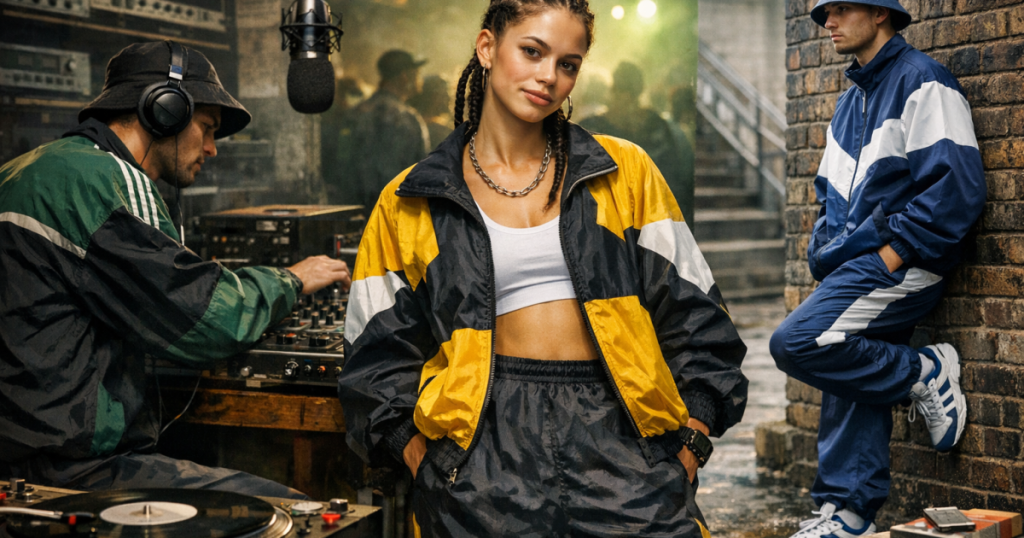
By the time jungle was rattling through pirate-radio sets, record shops and club systems, sportswear had already become part of the signal. 1990s jungle tracksuit style was not just about wearing a matching set; it was about movement, sound, locality and a sharp sense of not looking too dressed up. The look sat between rave practicality, street status and the wider British habit of turning sports kit into social language.
What to know first
The jungle tracksuit look was built around ease: loose tops, zip-up jackets, track bottoms, caps, trainers and outer layers that could handle late nights, warm rooms and travel across town. It was less polished than classic terrace dress and more functional than fashion-magazine sportswear. The key is not one brand or one silhouette, but a set of codes: volume, mobility, contrast, logo awareness and a relaxed kind of presence.
It also varied by place. London is central to the jungle story, but the clothes were never locked to one postcode or one uniform. Regional rave scenes, football culture, market stalls, sports shops and imported streetwear all fed into the wider picture.
The scene that shaped the clothes
Jungle came out of a dense British mix: breakbeat hardcore, reggae sound-system culture, hip-hop, dub, techno, soul, pirate radio and inner-city club life. The clothes reflected that mixture. A night could involve buses, trains, queues, overheated venues, stairwells, after-parties and a long journey home. Tracksuits made sense because they were comfortable, recognisable and expressive without needing to look formal.
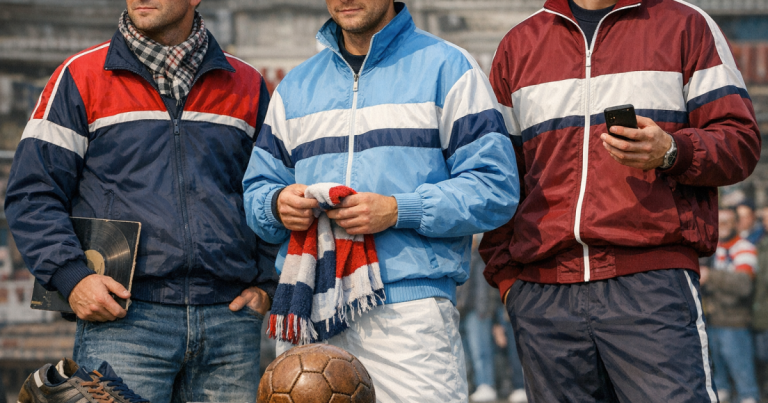
Pirate radio mattered because it made style audible. DJs, MCs and crews created names, phrases and loyalties that moved through tower blocks, car stereos and bedrooms. The same logic applied to clothing: a jacket, cap or pair of trainers could say something before anyone spoke. This is where jungle style overlaps with terrace style, but it is not identical. For a sharper breakdown of that distinction, our guide to football casuals versus terrace style is the useful next read.
Why tracksuits worked so well in rave culture
The tracksuit had already crossed from sport into British street culture before jungle fully took shape. In a rave context, it gained extra purpose. A track jacket could be worn open over a T-shirt in a hot room, zipped up outside, or layered under a heavier coat. Track bottoms gave ease without the stiffness of jeans. Nylon and polyester finishes caught light on the dancefloor and gave the outfit a technical, urban feel.
There was also a psychological element. The best jungle-era sportswear had a casual confidence: not scruffy, not formal, not obviously trying to impress. It suited a scene that valued energy, knowledge and presence. You could look ready to move, ready to travel, and ready to stand your ground without looking like you had dressed for a shop window.
The silhouette: loose, mobile and slightly oversized
Modern retro sportswear often gets styled too neatly. The jungle-era shape was usually more relaxed. Jackets sat with room in the body. Sleeves had movement. Track bottoms were rarely skinny. T-shirts could be oversized, especially under a jacket or shell. This gave the outfit a looseness that matched the music’s momentum.
The aim now is not to wear everything two sizes too big. It is to avoid the narrow, over-tailored version of retro sportswear that loses the period’s attitude. A good modern interpretation might use a relaxed track top, a plain or graphic tee, straight-leg track pants or loose denim, and trainers with enough weight to balance the upper half.
Colour, logos and the art of not overdoing it
Jungle style could be loud, but it was not random. Strong colour-blocking, contrast piping, embroidered logos, panelled jackets and bright shells all had a place. So did darker combinations: black, navy, forest green, burgundy and grey. The most convincing outfits usually had one dominant statement rather than five competing ones.
Think of the jacket as the main signal. If the track top has strong colour panels or bold branding, keep the rest more grounded. If the jacket is plain, a graphic T-shirt or cap can carry more weight. The point is rhythm, not costume.
- Bright jacket, quiet base: a panelled track top with dark track bottoms or loose jeans.
- Dark tracksuit, sharper accessories: black or navy sportswear with a cap, chain or clean trainers adding the detail.
- Shell layer over cotton: a lightweight outer jacket over a tee for a more rave-leaning feel.
- Full set with restraint: matching top and bottoms can work if the fit is relaxed and the footwear is simple.
Streetwear codes beyond the tracksuit
The tracksuit was important, but the wider code included caps, bags, trainers, outerwear and the way items were worn. Baseball caps and bucket hats softened the sportswear shape. Cross-body bags and small holdalls made sense for travel, tapes, flyers and everyday carry. Bomber jackets, puffers and leather outerwear could sit over a track top when the weather turned.
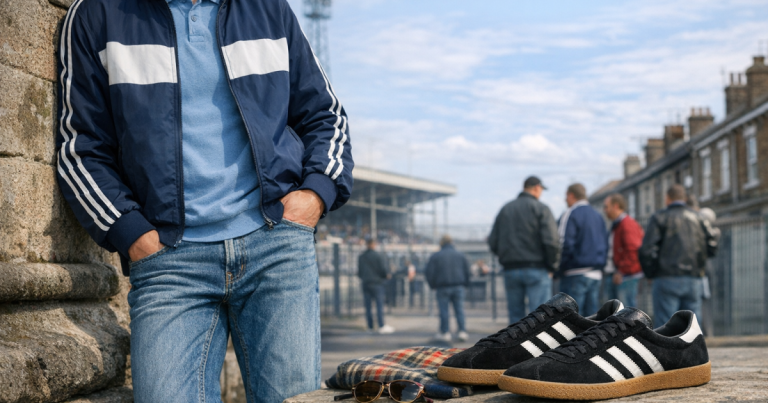
Footwear depended on tribe, taste and access. Some looks leaned towards running trainers; others pulled from court shoes, basketball shapes or casual football-adjacent trainers. The important point is proportion. A very slim trainer can look lost under a loose track bottom, while a heavily built pair can overpower a cleaner terrace-inspired outfit.
Visual literacy helps here. If you want to understand why one old photo looks authentic and another modern outfit feels forced, study posture, proportion and context as much as labels. Our piece on reading casual-look style cues is useful because the same method works for rave and jungle references: look at fit, setting, repetition and the small details people chose when nobody was styling them for a campaign.
How to wear the influence now
The strongest modern jungle-inspired outfits borrow the language without turning into reenactment. Start with one period cue and build around it. That might be a roomy track jacket, a shell top, a dark full tracksuit, a cap, or a bold trainer. Then bring the rest of the outfit back to everyday wear.
A track jacket without the fancy-dress feeling
Wear a relaxed track jacket over a plain white, black or grey T-shirt. Pair it with straight-leg jeans, dark cargos or track bottoms with a clean line. Avoid stacking too many retro signals at once: tinted glasses, loud jacket, bucket hat, vintage bag and oversized bottoms can tip from reference into costume very quickly.
A full tracksuit that still feels current
A full set has the strongest period energy, but it needs confidence and restraint. Darker colours are easier to wear day to day. Brighter sets work better when the footwear is simple and the accessories are minimal. If you want a current reference point for full-set terrace energy, the Adidas Originals Superstar Tracksuit shows how a recognisable sportswear shape can still feel wearable rather than theatrical.
Mixing rave and terrace without muddying the look
Terrace styling often values neatness, brand knowledge and controlled sharpness. Jungle styling gives you more room for looseness, graphics and club practicality. A good mix might be a tidy polo or knit under a track jacket, or a clean trainer with a looser shell top. The trick is to decide which side leads. If both are shouting, the outfit loses its code.
Vintage, reissue and modern alternatives
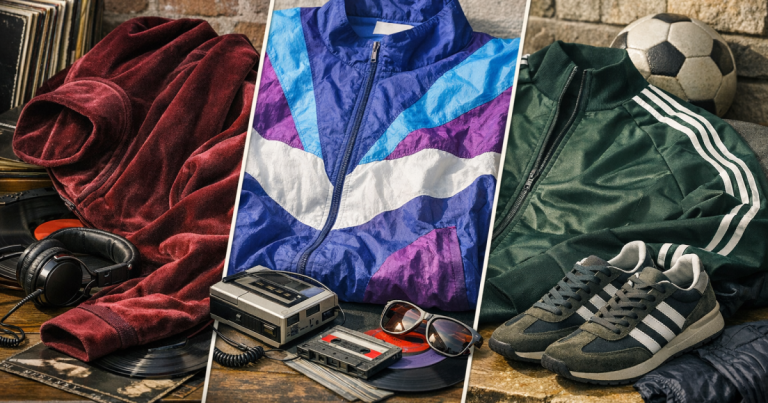
Original 90s sportswear can have brilliant character, but it needs careful checking. Zips, elastic, lining, fading, peeling prints and tired cuffs can affect wearability. Nylon and polyester pieces may look strong in photos but feel clammy or fragile in person. Always check close-up images, label condition and measurements in centimetres rather than relying on the size tag, because older fits vary widely.
Reissues and modern archive-inspired pieces are often easier to wear. They can give the right outline while being simpler to care for and easier to replace. The trade-off is authenticity: a new track top may capture the mood, but it will not carry the same fabric ageing, label detail or lived-in history as an original piece. Neither route is automatically better. Vintage suits collectors and people who enjoy the chase; reissues suit regular wearers who want the reference without the maintenance worry.
Care and upkeep for synthetic sportswear
Most track jackets and bottoms need gentler care than heavy cotton. Wash cool, avoid overloading the machine, and let pieces air dry where the care label allows. Heat can be unkind to prints, coatings and old elastic. For creases, steaming is usually safer than pressing directly with a hot iron, especially on nylon-rich pieces. If a garment has flocking, reflective detail or delicate printed panels, treat those areas with extra caution.
Storage matters too. Hanging a heavy jacket on a thin hanger can distort the shoulders. Folding old nylon in the same hard crease for months can leave stubborn lines. If you collect vintage pieces, rotate them, air them and avoid damp spaces.
Why 1990s jungle tracksuit style still matters
The appeal lasts because it captures a distinctly British way of dressing: practical, coded, local and music-led. It was never only about nostalgia. It was about moving through the city, recognising your people, and using sportswear as a language before streetwear became a mainstream category.
For today’s wardrobe, the lesson is simple: use the mood, not the museum piece. Keep the shape relaxed, respect the music and culture behind the look, and let one or two strong details do the work. A jacket with presence, a good pair of trainers, a plain tee and the right proportions will say more than a pile-up of references.
Helpful questions
Was jungle style the same as rave style?
No. Jungle came from the wider rave ecosystem, but its style had its own edge: more urban, more sound-system influenced, and often closer to streetwear than the day-glo stereotype of early rave.
Did everyone in the jungle scene wear tracksuits?
No. Tracksuits were common and culturally important, but the scene also included denim, leather jackets, puffers, caps, sports tops, graphic tees and smarter casual pieces depending on location and crowd.
Which colours work best for a modern jungle-inspired outfit?
Black, navy, grey, burgundy and forest green are the easiest base colours. Add brighter panels, piping or a cap if you want the outfit to nod more clearly to the 90s.
Can you wear the look without looking like you are going to a themed night?
Yes. Keep the fit relaxed rather than exaggerated, limit the number of obvious retro items, and balance a strong track jacket with simple trousers, trainers and a plain T-shirt.
Is vintage always better than a reissue?
No. Vintage has character, but reissues are often easier for regular wear. Choose vintage for detail and history; choose modern archive-inspired pieces for comfort, consistency and easier upkeep.