
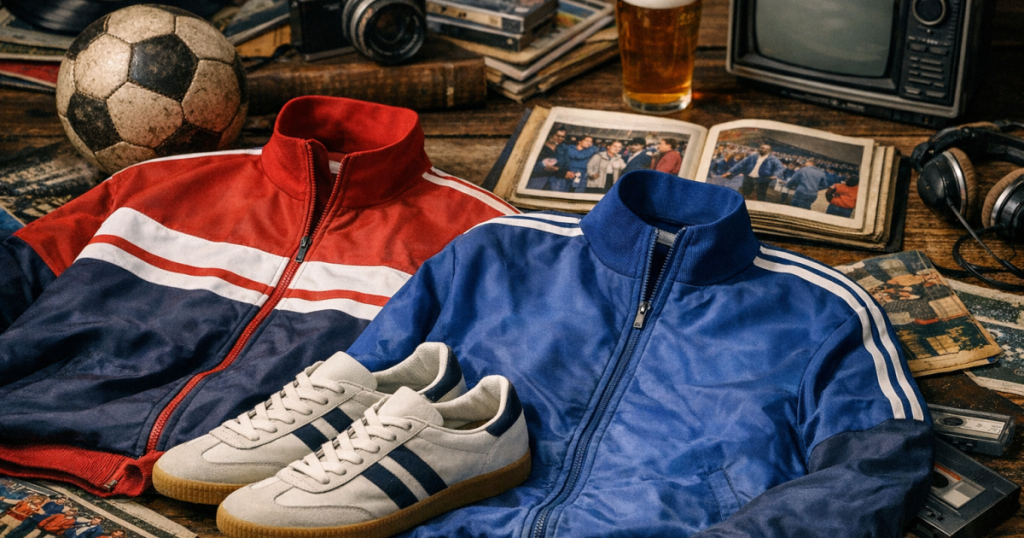
Plenty of labels can print a contrast stripe and call it heritage, but credibility comes from more than nostalgia. A retro tracksuit brand earns trust when its archive, cultural footprint and modern output all point in the same direction: real sporting roots, real subcultural adoption and clothes that still make sense on British streets.
The big picture
A credible label usually has five things: an identifiable archive; documented sporting use; adoption by a scene; design signatures that remained recognisable across eras; and modern reissues that respect the spirit of the originals. The strongest names are not credible because every old piece is rare or expensive. They are credible because a collector, a match-going casual and a modern wearer can all recognise why the clothes mattered.
That distinction matters if you are buying today. A tracksuit can look vaguely vintage and still have no meaningful link to the culture. Equally, a quiet reissue from a historically important label may be more convincing than a loud logo piece from a brand chasing the look.
Archive depth: proof beyond a logo
The first test is whether the brand has an archive worth talking about. Not every old garment is important, but historically credible labels tend to have recognisable periods, recurring silhouettes and design language that can be traced through catalogues, advertising, team issue pieces, shop stock and surviving vintage examples.
Look for repeatable evidence: collar shapes, sleeve striping, chest branding, pocket construction, waistband styles, fabric hand-feel and period-correct colour blocking. A label with genuine depth will not rely on one famous badge alone. You should be able to compare pieces across eras and see how the brand changed without losing its identity. If you are trying to separate late 1970s, 1980s, 1990s and 2000s details, it is worth learning how to date original tracksuits more confidently before paying archive prices.
At the buying end, the most credible retro tracksuit brand is not always the one with the loudest logo. It is the one whose archive details can be checked, compared and worn without the garment feeling like a costume.
Sporting roots still matter
Most of the important names in retro tracksuit culture began with sport rather than fashion. Tennis, football training, athletics, skiing and general leisurewear all fed into the look. That original purpose matters because it explains why certain shapes exist: high collars for warmth, ribbed cuffs for movement, easy zip fronts, nylon shells, brushed tricot, elasticated waists and contrast panels designed to be seen at a distance.
The British terrace scene did not invent these garments, but it changed their meaning. Imported Italian tenniswear, French sportswear, German training kit and British outerwear became part of a visual code around status, travel, loyalty and taste. To understand why one track top feels casual in the terrace sense while another just feels retro, it helps to understand the wider matchday codes behind terrace style.
A brand with credible sporting roots does not need every reissue to be a museum copy. But the modern clothes should still show some relationship to the original use: good movement, proper layering potential and details that feel functional rather than decorative.
Subcultural adoption: worn, not merely advertised
Credibility grows when clothes leave the campaign shoot and become part of real life. In Britain, that usually means a brand was picked up by football casuals, music scenes, club culture, scooter lads, students, estate kids or weekend dressers who gave it local meaning. A label can have sporting history and still feel flat if it never had that second life.
This is why Sergio Tacchini, Fila, Ellesse, adidas, Kappa, Diadora, Le Coq Sportif and Lacoste Sport sit differently from brands that only imitate their colours. Their credibility is not identical, and each has its own route into British wardrobes, but they all have a recognisable link between sport, leisure and scene adoption. The story of Sergio Tacchini’s move into British casual culture is a good example of how tenniswear became something more loaded once it appeared on terraces and high streets.
Photographic evidence matters here. Old away-day photos, casual culture books, fanzines, music videos and family albums can be more revealing than brand-approved archive posts. They show what people actually wore together: track tops with denim, trainers with cords, polos under zip jackets, caps, cagoules and the occasional piece that looks brilliant precisely because it was not styled too perfectly.
Design codes that survive reissues
A strong reissue should not simply repeat a logo on a modern blank. It should carry enough of the original proportion, colour discipline and material character to feel connected to the archive. That might mean a short body length on a track top, a ribbed hem that sits properly, a collar that stands rather than collapses, or colour blocking that looks period-correct without being garish.
Some pieces make useful reference points. The Fila Settanta Track Jacket shows how a clean tennis-derived shape can still look sharp with jeans or track pants. The Diadora B. Elite is a reminder that footwear history often reinforces the same casual language as the clothing. Books such as A Casual Look: A Photodiary of the 1980s Casual, Terrace and Football Scene are useful because they place garments back into real outfits rather than treating them as isolated collectables.
Modern wearability is part of credibility too. If a reissue is so flimsy, overbranded or badly proportioned that it cannot be worn with normal clothes, it may satisfy nostalgia but fail as terrace sportswear. The best versions let you build an outfit rather than announce a theme.
What weakens historical credibility?
There are a few warning signs that a brand is trading on the idea of heritage without much substance behind it.
- No visible archive: if there are no old catalogues, period garments, team links or consistent design references, the story may be thin.
- Generic vintage styling: stripes, piping and retro colours are not enough on their own. Plenty of brands can imitate surface details.
- Overclaimed cultural relevance: phrases such as “terrace classic” should be backed by evidence, not just marketing copy.
- Poor reissue judgement: huge logos, awkward fits and cheap-feeling fabric can dilute an otherwise strong heritage name.
- Era confusion: mixing 1970s tennis cues, 1990s rave colours and modern streetwear proportions can work creatively, but it is not the same as historical accuracy.
This does not mean newer labels have no value. A modern brand can make good retro-inspired clothing. It simply should not be confused with a label that has decades of sporting and subcultural evidence behind it.
How to assess a brand before buying
Start with the garment, not the hype. For vintage, check the label, zip, stitching, fabric, country of manufacture, proportions and condition. Ask for measurements in centimetres rather than relying on tagged size, because older tracksuits often fit differently from current sportswear. Look closely at cuffs, hems and underarms, where wear is harder to hide.
For reissues, check whether the design refers to a known archive period or simply borrows retro mood. Compare the collar, sleeve shape, branding scale and colour palette with original examples where possible. Also think about how you will actually wear it. A historically interesting full tracksuit may be less useful than a single track top you can wear with denim, cords, clean trainers and a plain T-shirt.
If you want a wearable British terrace look rather than fancy dress, restraint matters. Navy, stone, burgundy, bottle green, off-white and deep red often age better than loud novelty colourways. The aim is not to cosplay an old away end. It is to understand the references well enough to make them work now.
Where credibility meets the modern wardrobe
Historically credible brands give you better building blocks. A good track jacket can sit under a wax jacket, over a polo, with straight-leg denim or with matching track pants if the cut is clean enough. Trainers should support the era rather than fight it: court shoes, gum soles, suede terrace trainers and simple leather runners usually feel more convincing than oversized modern silhouettes.
The sweet spot is confidence without theatre. One archive-led piece is often enough. Pair an Italian tennis-style track top with simple trousers and understated trainers, or wear a French or German sportswear jacket with a plain hoodie and cap. The result should look lived-in, not like a themed night.
That is the practical value of historical credibility: it helps you buy fewer, better pieces. You are less likely to be seduced by a weak retro copy and more likely to spot garments with real design lineage, cultural weight and day-to-day usefulness.
FAQ
Does a brand need to be old to be credible?
Not necessarily. A newer label can make excellent retro-inspired clothing, but historical credibility usually belongs to brands with a documented archive, sporting roots and real adoption by wearers over time.
Are vintage originals always better than reissues?
No. Originals have character and collectable value, but reissues can be easier to wear, easier to size and less fragile. The best choice depends on condition, fit, budget and how often you plan to wear it.
Which brands are most associated with UK terrace tracksuit culture?
adidas, Sergio Tacchini, Fila, Ellesse, Kappa, Diadora, Le Coq Sportif and Lacoste Sport all have strong relevance, though their importance varies by era, region and scene.
How can I avoid looking like I am wearing fancy dress?
Keep the outfit grounded. Wear one obvious archive-led piece, choose calmer colours, avoid head-to-toe logos, and pair the track top with normal wardrobe staples such as denim, cords or simple trainers.
Is rarity the same as credibility?
No. Rarity can increase collector interest, but credibility comes from design lineage, cultural use and recognisable history. A rare but awkward piece is not automatically more stylish or meaningful.
Key takeaways
A historically credible tracksuit label has evidence behind it: archive garments, sporting purpose, subcultural adoption and design details that still work today. The best brands do not just sell nostalgia. They give you a way to connect football, music, leisurewear and personal style without losing sight of how the clothes actually fit into everyday British life.