The difference between a strong terrace tracksuit outfit and fancy dress is restraint: fewer costume signals, better proportions, and pieces that look lived-in rather than staged. The aim is to nod to football-casual heritage without dressing like you have walked straight out of a themed night or a period drama.
Terrace style has always been about recognition as much as clothing. The brands matter, but so do the codes: how the jacket sits, whether the trainers make sense, how much colour you carry, and whether the whole thing works in a pub, on a train platform or outside the ground in 2026.
At a glance
- Start with one clear reference point: a track top, a full set, a trainer era or a colour palette.
- Avoid stacking every casual signifier at once: bucket hat, scarf, retro jacket, vintage trainers and oversized logos can tip into parody.
- Keep the fit modern enough to wear now: relaxed, not sloppy; sharp, not skin-tight.
- Let the trainers do quiet work. They should support the outfit rather than shout over it.
- use outerwear and plain layers to break up the tracksuit if a full set feels too theatrical.
Step 1: Decide which terrace reference you are actually using
The easiest way to look like fancy dress is to mix too many signals without intent. A 1970s-style track jacket, 1980s colour blocking, 1990s rave trousers, a football scarf and box-fresh modern trainers can all be good individually, but together they can feel like a mood board rather than an outfit.
Pick one anchor. That might be a slim vintage-style track top, a full polyester set, a muted navy and white palette, or a pair of classic trainers. Once that anchor is chosen, everything else should calm it down or support it. If the jacket is loud, keep the T-shirt plain. If the trousers are unmistakably retro, keep the cap and trainers simple.
For a broader sense of where the codes come from, the site’s guide to tracksuit culture from sportswear to terrace style is useful background. It helps explain why the look is not just about wearing old sports kit, but about how football, music and local taste reshaped it.
Step 2: Get the fit right before worrying about labels
Fit is what separates wearable terrace style from a costume. Originals and reissues can vary a lot, so do not assume that a familiar badge automatically gives the right shape. The jacket should sit cleanly at the shoulder, with enough room for a T-shirt or polo underneath. Sleeves can have a slight break, but if they swallow the hands completely the look becomes sloppy rather than relaxed.
Track trousers are where many outfits go wrong. Too long, and they bunch heavily over the trainer; too narrow, and they lose the easy sportswear feel. A slight taper or straight leg usually works best for a modern terrace-influenced look. The hem should meet the trainer rather than hide it. If you are wearing a full set, make sure the top and bottom look like they belong together in proportion, even if they are not the exact same make.
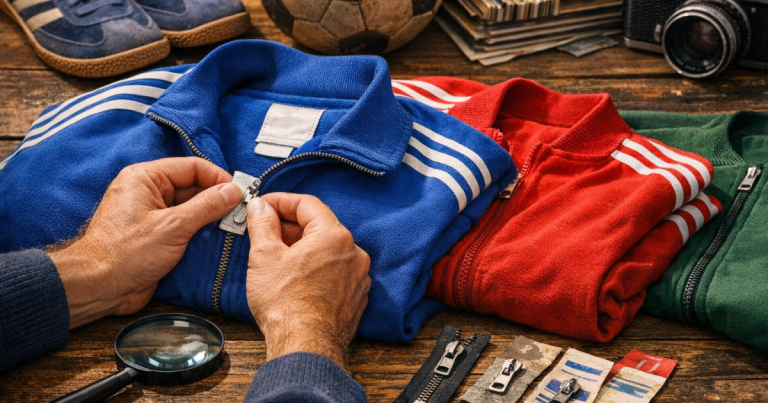
With vintage pieces, check the waistband, cuffs and zip before relying on them for regular wear. Old elastic can relax, synthetic fabrics can shine unevenly, and white panels can yellow. None of that is a problem if it looks honest, but it becomes distracting when the rest of the outfit is trying too hard to look pristine.
Step 3: Keep the colour story believable
Classic terrace clothing was not always subtle, but the best outfits usually have a clear colour logic. Navy, bottle green, burgundy, cream, white, red and royal blue all sit naturally in the world of retro sportswear. What matters is how many of them you use at once.
A simple rule: let one piece carry the colour, then let everything else echo or soften it. A red and navy track top works well with dark track pants or jeans. A green jacket can sit over a white T-shirt with neutral trainers. A full bright tracksuit can work, but it needs calm styling around it: no novelty accessories, no exaggerated football props, no extra badges for the sake of it.
For a more archive-leaning look, off-white often feels better than bright white. It softens the outfit and makes older shapes easier to wear. Black can work too, especially in wet British weather, but all-black tracksuit styling can drift away from terrace references into gymwear unless the jacket cut, trainers or layering bring the heritage back.
Step 4: Choose trainers that match the era, not just the brand
Trainers are the outfit’s grounding point. They do not need to be rare, expensive or immaculate, but they should make sense with the tracksuit. Slimmer suede or leather styles tend to sit naturally with neat track tops and tapered trousers. Chunkier running silhouettes can work with later 1990s and 2000s references, especially if the tracksuit has a looser cut.
If the outfit is already strongly retro, avoid trainers that look too futuristic. Equally, avoid making the shoes look like museum pieces unless the rest of the outfit is very plain. A slightly worn-in pair often feels more convincing than a pair that looks as if it has never left the box.
Good reference points include terrace-friendly silhouettes such as the Nike Air Max 90 for a more modern sportswear edge, or the terrace style guide to brands, fits and matchday codes if you want the trainer choice to sit within the wider look rather than feel bolted on at the end.
Step 5: Break up a full tracksuit when it feels too obvious
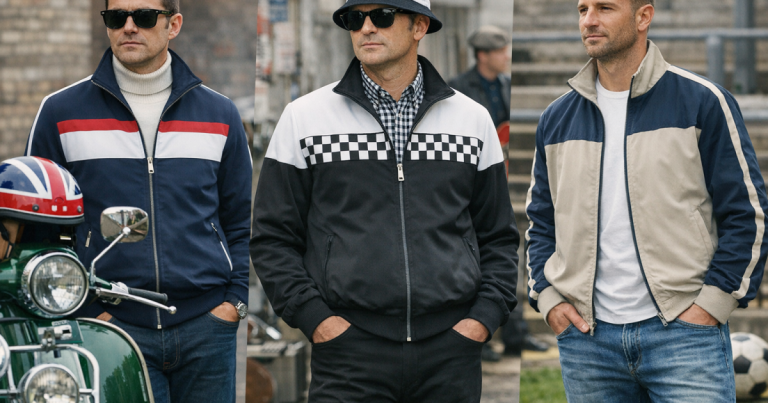
A full matching tracksuit can look excellent, but it is also the quickest route into fancy dress if the styling is too literal. The trick is to break the set visually. Wear the track top with straight-leg denim, cords or plain technical trousers. Or wear the track pants with a knitted polo, overshirt or understated jacket.
If you do wear a full set, avoid loading every other element with heritage references. A plain T-shirt under the jacket is usually enough. A simple cap can work, but the shape matters: a curved-peak cap reads more casual and current than something that looks deliberately theatrical. The New Era 9Forty Cap is a useful example of a recognisable curved-peak shape, though the colour and logo size still need to suit the rest of the outfit.
Outerwear can also help. A wax jacket, lightweight shell or plain overcoat changes the tone immediately. It makes the tracksuit feel like part of a real wardrobe rather than the whole performance. In Britain, this is practical as well as stylistic: a track top on its own rarely covers you for drizzle, wind and a late train home.
Step 6: Keep logos in proportion
Logos are part of terrace sportswear, but too many of them flatten the look. One strong badge is often enough. A large chest logo, branded sleeve stripes, a cap logo and a trainer logo can be fine in isolation, but together they can make the outfit feel more like a brand collage than a personal style choice.
Balance is the aim. If the jacket is heavily branded, keep the lower half quiet. If the tracksuit is plain, a recognisable trainer or cap can add the reference. A piece like the Adidas Originals Superstar Tracksuit carries an obvious sportswear identity, so the rest of the outfit should be kept clean rather than piled with extra visual noise.
Think of logos as punctuation, not the whole sentence. Terrace style has always involved status and recognition, but the best versions rarely need to explain themselves too loudly.
Step 7: Avoid costume cues that make the look too literal
The danger signs are usually easy to spot. If the outfit looks like it has been assembled for a themed party, take one thing off or swap one piece for something plain. The goal is not to erase the reference; it is to make the reference wearable.
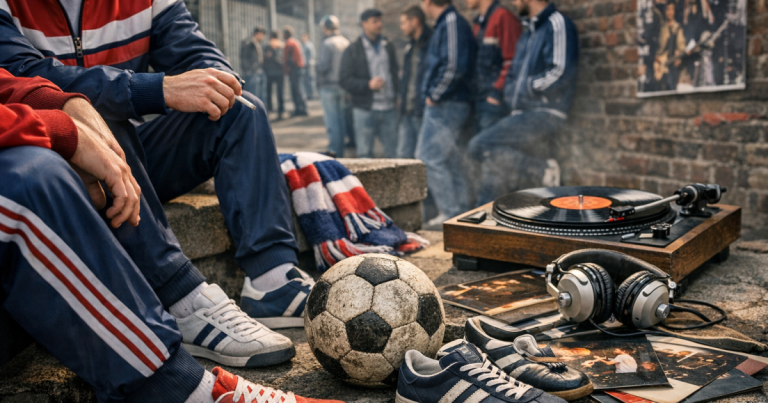
- Avoid wearing a football shirt, scarf and full tracksuit together unless you are genuinely dressing for the match and it makes sense in context.
- Do not overdo period styling. Hair, sunglasses, jewellery and accessories can push the outfit into imitation.
- Be careful with novelty retro colours. Some archive shades look great; others read as costume when worn head to toe.
- Keep the condition believable. Everything box-fresh can look staged, while everything battered can look neglected.
- Use one modern element, such as a plain heavyweight T-shirt, clean overshirt or current-cut trousers, to bring the look back into the present.
Step 8: Test it in a real British setting
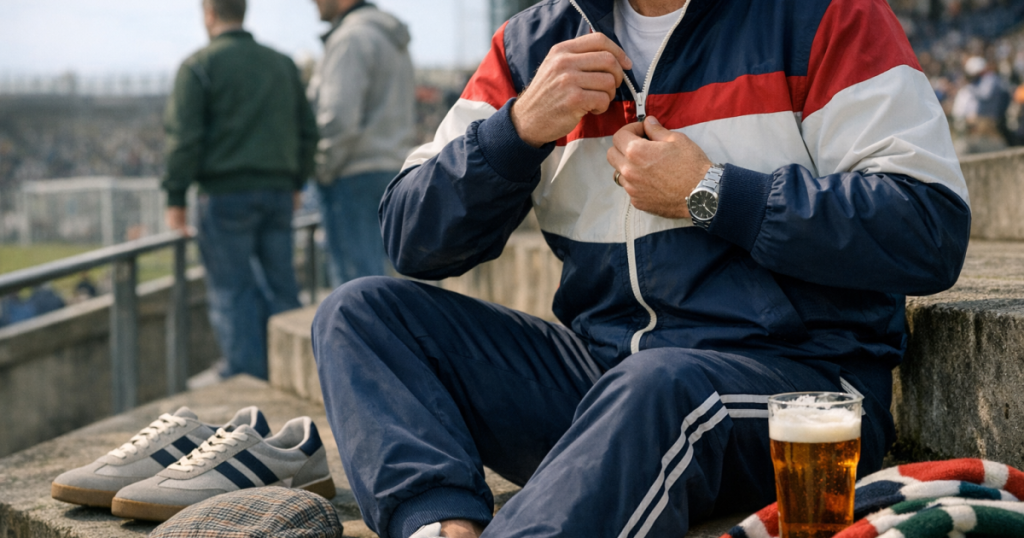
A terrace-inspired outfit has to survive normal life. Before wearing it out, ask whether it works beyond the mirror. Would it look natural in a local, on the concourse, in town on a Saturday afternoon, or on public transport? If the answer is only yes in a photo, it may need toning down.
This is where restraint matters most. British terrace style has always carried local nuance: club culture, music scenes, regional taste and the weather all shape the way the clothes are worn. A strong outfit should look like you understand that world, not like you are quoting it from a distance.
If you are drawn to the 1980s influence in particular, the guide to 1980s casuals style, tracksuits and terrace codes gives useful context on why certain combinations still carry weight.
Common questions
Can you wear a full matching tracksuit without looking like fancy dress?
Yes, but keep the rest of the outfit quiet. Plain T-shirt, sensible trainers, minimal accessories and a clean fit will make a full set feel intentional rather than theatrical.
Are jeans acceptable with a terrace track top?
Absolutely. Straight-leg or relaxed denim can make a retro track top easier to wear day to day. Avoid jeans that are too skinny if the jacket has a boxier vintage shape.
Should the trainers match the tracksuit colour?
They do not need to match exactly. It is usually better if they connect subtly through one colour, material or era. Exact matching can look too styled.
Is vintage better than reissue for terrace style?
Not automatically. Vintage can have character, but reissues are often easier to wear and care for. The better choice is the one with the right fit, condition and proportion.
How do you stop retro sportswear looking like gym kit?
Add context through layering and footwear. A plain polo, casual jacket, suede trainer or structured cap can move the outfit away from gymwear and back towards terrace style.
What stands out
The best terrace tracksuit outfit does not rely on shouting the loudest. It works because the fit is right, the colours are controlled, the trainers make sense and the references are edited. Start with one strong piece, remove anything that feels like a prop, and let the clothes look as if they belong in your actual life.
That is the difference between dressing with terrace influence and dressing as a caricature of it. The heritage matters, but so does the present tense: what you can wear now, in Britain, without the outfit wearing you.