Terrace language can be confusing because it mixes football, fashion, music and regional slang. A terrace style glossary helps separate a track top from a shell, a casual reference from a costume, and genuine matchday shorthand from social-media myth. The words matter: they tell you which era a piece nods to, how it should fit, and whether it belongs with trainers, denim, cords or a proper tracksuit bottom.
None of these terms are fixed by committee. They shift by town, club, generation and scene. A lad who grew up around late-80s away days may use different language from someone whose reference points are Britpop videos, 2000s grime, or modern archive reissues. Treat the glossary below as a working map rather than a rulebook.
What to know first
Terrace style is not simply “wearing a tracksuit to football”. At its best, it is a layered British sportswear language: club culture without always wearing club colours, outdoor practicality without looking like hillwalking kit, and brand literacy without turning into a walking billboard.
The key is context. A nylon track top reads differently with straight-leg jeans and suede trainers than it does with matching bottoms and a cap. A retro Umbro piece can nod to football heritage, while a Sergio Tacchini or Fila top may carry a more continental casual association. If you want the broader outfit logic, the guide on how to build a terrace wardrobe that looks authentic is the natural next step.
Tracksuit and garment terms
Track top
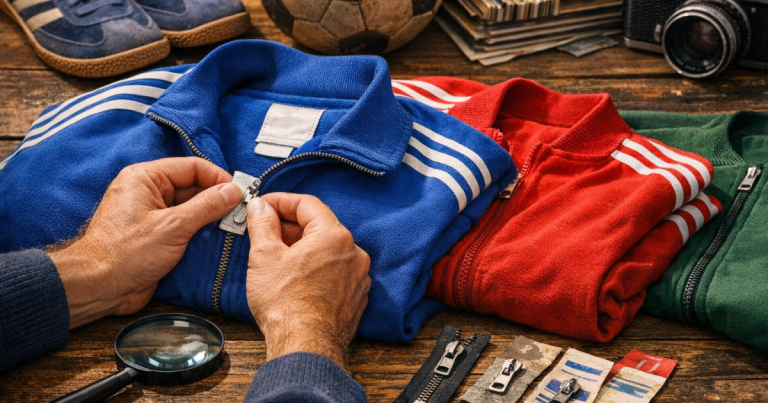
A track top is the zip-up upper half of a tracksuit. It can be nylon, tricot, polyester jersey, velour or a modern blend. In UK terrace language, “track top” often sounds sharper than “tracksuit jacket” because it suggests the piece can be worn separately with jeans, cords or casual trousers.
Track bottoms
The trousers from a tracksuit, usually with an elasticated or drawcord waist. Older cuts may have zipped hems, press-stud details or a looser leg. Modern terrace styling often depends on getting the break right: too long and they stack awkwardly over trainers; too slim and they lose the relaxed sportswear line.
Full set
A matching track top and track bottoms. Wearing a full set can look strong when the cut, colour and trainers are right, but it can also tip into fancy dress if every other detail is overdone. Understated trainers, a plain tee and no unnecessary accessories usually help.
Shell suit
A shiny nylon or polyester tracksuit associated with late-80s and early-90s sportswear, rave-era colour and high-street memory. The term can be used affectionately or mockingly, depending on who is saying it. Not every nylon tracksuit is a shell suit, and not every shell suit belongs on a terrace-inspired outfit.
Tricot
Tricot is a knitted synthetic fabric with a smooth outer face and soft reverse. It is strongly associated with classic sports tracksuits. It tends to drape differently from crisp nylon, which is why a tricot top can feel more casual and pub-ready than a noisy windbreaker.
Nylon
Nylon is linked with lightweight sportswear, training tops, windbreakers and some shell-era pieces. It can look sharp in block colours but can also feel loud and costume-like if the colours, fit and accessories are all shouting at once.
Velour
Velour has a softer pile and a more lounge-led feel. In British tracksuit culture it sits slightly aside from classic football casual references, but it still belongs in the wider sportswear story. It needs confidence and restraint: clean trainers, simple layers and no novelty styling.
Piping, taping and colour blocking
Piping is the thin contrast trim that runs along seams or panels. Taping refers to repeated branding or stripe detail along sleeves and legs. Colour blocking means using large panels of contrasting colours. These details often reveal the era a piece is referencing, so they are worth noticing before calling something “retro”. For a deeper breakdown of materials and silhouettes, see the site’s guide to tracksuit eras explained.
Brand language you will hear
adidas Originals
In terrace terms, adidas is usually associated with the Trefoil, three stripes, track tops and suede terrace trainers. The word “Originals” matters because it points towards heritage and archive-inspired sportswear rather than current performance kit. Classics such as the Adidas Originals Firebird Track Top are often used as reference points for accessible retro styling, though the exact cut and fabric should always be checked before assuming it has an old-school fit.
Nike
Nike sits across running, football, basketball and casual wear, so the meaning changes by piece. A Swoosh windrunner has a different cultural feel from a football training top or a pair of visible-air trainers. In a terrace outfit, Nike often works best when it is treated as one part of the look, not the whole identity.
Umbro
Umbro carries a distinct British football charge because of its long association with kits, training wear and grassroots memory. The double diamond can feel more local and club-connected than some continental casual brands. For more context, the piece on Umbro’s football heritage explains why the brand still lands so naturally in UK sportswear.
Sergio Tacchini, Fila and Ellesse
These Italian-linked labels often carry a tennis, leisure and European casual association in Britain. On the terrace, that continental feel became part of the appeal: smarter than basic sports kit, but still relaxed enough for travel, pubs and standing around outside a ground.
Diadora, Kappa and Lacoste
Diadora is often discussed through trainers and Italian sportswear lines. Kappa brings bold logo taping and a more graphic sportswear presence. Lacoste crosses from tennis and polos into casual layering, especially when worn under track tops or lightweight jackets. The point is not to collect logos, but to understand what each logo suggests.
Matchday language and terrace shorthand
Terrace
Historically, the terrace refers to standing areas at football grounds. In style language, “terrace” has become shorthand for a particular football-adjacent way of dressing: practical outerwear, sharp trainers, sportswear references and a sense of local identity. It does not automatically mean aggressive behaviour, despite lazy stereotypes.
Casual
“Casual” can mean someone connected to the football casual tradition, or simply the style itself. The word is loaded, so use it carefully. In clothing terms it usually points towards designer sportswear, quality trainers, understated branding and a reluctance to look like a replica-shirt tourist.
Away day
An away day is travelling to watch your club play away from home. In clothing terms, away-day dressing is about weather, comfort and visibility. You may be on trains, in pubs, walking long distances and standing in the cold. That is why lightweight jackets, caps, layers and trainers with decent comfort matter in real life, not just in mood-board images.
Colours
“Colours” usually means obvious club colours: a scarf, shirt, hat or anything that clearly identifies the team. Some terrace dress avoids colours entirely, while other matchday looks include them proudly. The choice depends on club culture, occasion and personal preference.
Home end and away end
The home end is the section dominated by home supporters; the away end is for travelling fans. The phrase matters because clothing can carry signals in football settings. A neutral jacket and trainers may say less than a bright club scarf, but style still has social meaning around grounds.
Garms, clobber and kit
“Garms” is a casual word for clothes, often heard in streetwear and youth culture. “Clobber” is older and broader, meaning your gear or outfit. “Kit” can mean a football strip, but in everyday talk it can also mean the clothes you have on. The same word may land differently depending on age, region and tone.
How to read a terrace outfit without overdoing it
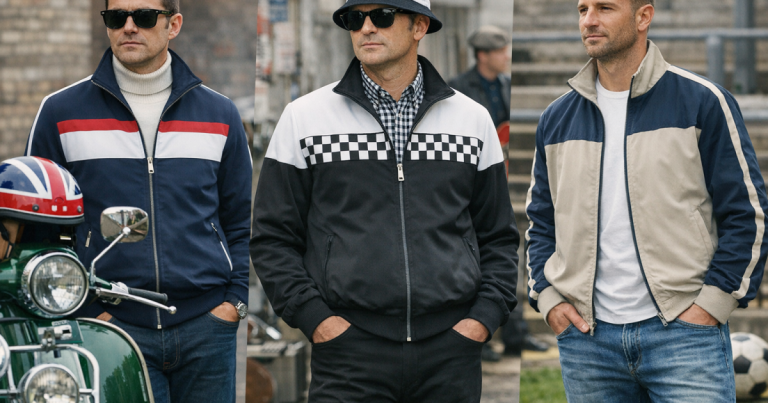
The strongest looks usually have one clear reference and a few quiet supporting pieces. A nylon top, relaxed denim and terrace trainers can say enough. Add a logo cap, a scarf, a loud bag, matching bottoms and a vintage football shirt, and the outfit may start reading like costume.
Fit is just as important as brand. Many older track tops were cut shorter and boxier than modern sportswear. Some modern reissues are neater through the body. If you are buying vintage, check measurements in centimetres rather than relying on the size label. If you are wearing current pieces, judge the shoulder line, sleeve length and hem position before worrying about whether the badge is “correct”.
Condition also changes the message. A gently worn track top can look lived-in; a badly bobbled, stained or misshapen one can simply look tired. With synthetic sportswear, gentle washing, air drying and avoiding excessive heat are usually safer than treating it like heavy cotton. Always follow the garment care label rather than assuming every retro top behaves the same.
Where the culture overlaps with music and film
Terrace clothing did not stay inside stadiums. It moved through dancefloors, indie videos, rave photographs, pub culture and British cinema. That is why one person might see a bright shell top and think of acid house, while another sees a dark track jacket and thinks of away coaches, rainy platforms and Saturday football.
Books and photography help separate genuine reference from vague nostalgia. Cass Pennant’s The Football Casuals: A History is often cited in discussions of the scene, while Gavin Watson’s A Casual Look gives a visual record of clothing, faces and attitude rather than polished catalogue styling. Use sources like these to sharpen your eye, not to copy an outfit exactly.
Common questions
Is terrace style the same as football casual style?
They overlap heavily, but they are not identical. Football casual style is tied more directly to supporter culture, while terrace style is now also used for football-adjacent sportswear outfits worn away from matchdays.
Can you wear terrace-inspired clothing without going to football?
Yes, provided the look is handled naturally. Focus on good sportswear, simple layers and honest references rather than pretending to belong to a scene you have no connection with.
Are replica football shirts part of terrace style?
They can be, but classic casual dressing often avoided obvious club colours. A shirt changes the mood immediately, making the outfit more supporter-led than quietly terrace-inspired.
Which brands should beginners understand first?
Start with adidas, Nike, Umbro, Sergio Tacchini, Fila, Ellesse and Diadora. They give you a useful spread across British football, continental casualwear, trainers and retro tracksuit culture.
Is vintage always better than a reissue?
No. Vintage can have better period feel, but reissues are often easier to wear and care for. Check cut, condition, fabric and measurements before treating age as proof of quality.
What to remember
Terrace language is useful because it gives shape to a culture that can otherwise look like a pile of logos and old tracksuits. Learn the difference between materials, recognise what brands signal, and understand matchday phrases in their proper British football context.
The best approach is informed restraint. Let one garment carry the reference, keep the rest wearable, and avoid turning subculture into costume. That is where terrace style still feels alive: not trapped in nostalgia, but translated into clothes you can actually wear now.