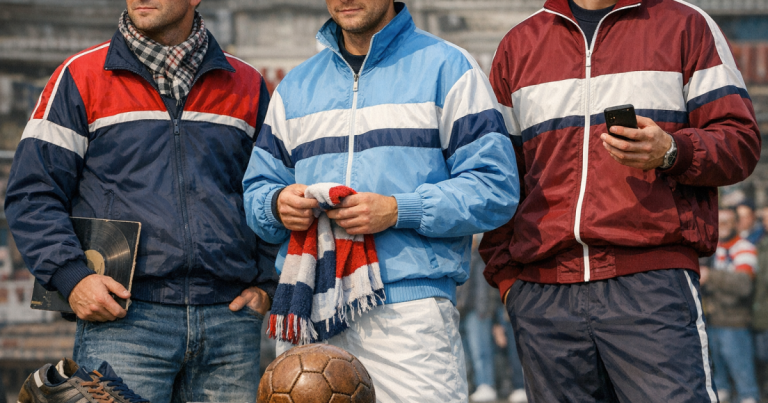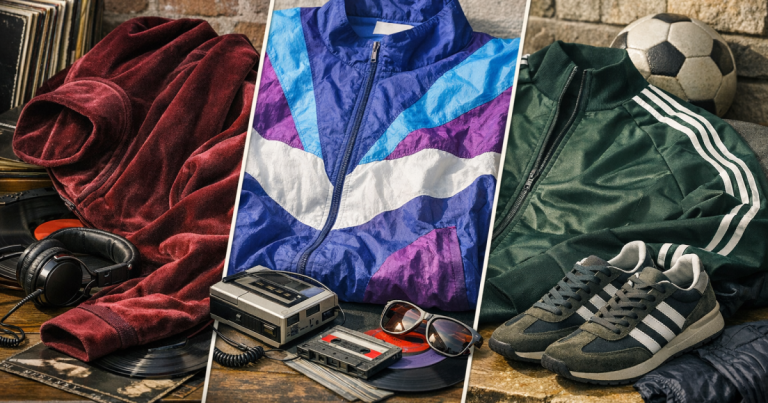
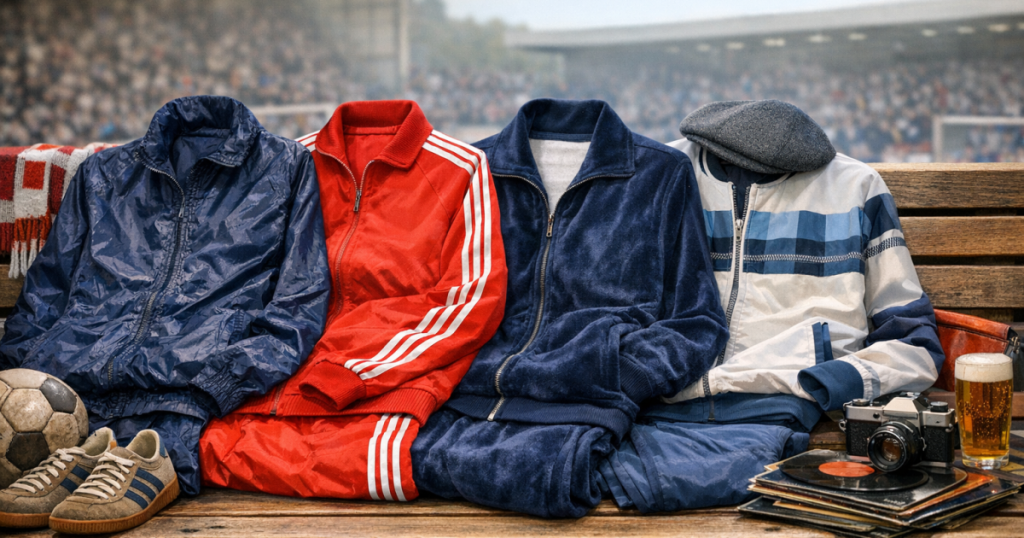
Getting tracksuit eras explained properly is less about memorising dates and more about reading fabric, fit and context. Nylon, tricot and velour each carry different signals: school sports kit, continental casualwear, nightclub flash, rave looseness, Sunday league practicality or full terrace intent. Once you know the cues, a vintage track top stops being just “retro” and starts telling you where it belongs.
The useful bit is that these eras can still be worn now without looking like fancy dress. The trick is knowing which details to keep, which to soften, and where modern trainers, outerwear and proportions can make an old reference feel wearable on a British high street, train platform or matchday walk to the ground.
Main points
- Nylon usually reads sharper, shinier and more weather-minded, with strong links to football training gear, casual outerwear and late 80s into 90s sportswear.
- Tricot gives a softer, heavier drape and is often the easiest fabric to style for classic terrace looks.
- Velour brings a more glamorous, leisure-led feel; it can work brilliantly, but it needs restraint.
- Terrace fit is not only about brand names. Shape, layering, trainer choice and confidence matter just as much.
- Modern reissues are often easier to wear than true vintage, but archive originals can carry better subcultural detail if condition and sizing are right.
Why fabric tells you the era before the badge does
Badges get most of the attention, but fabric often gives the game away first. A crisp nylon shell suggests movement, rain, training pitches and outer-layer practicality. A polyester tricot track top feels more settled: zipped, collared, slightly heavier, made for wearing with jeans, cords or matching track pants. Velour changes the mood entirely, taking the tracksuit away from the touchline and towards leisure, nightlife and status.
That matters because British tracksuit culture is built on borrowing. Football lads borrowed from tennis, skiing, running, European travel, hip-hop, rave, gym kit and Saturday television. The same garment could look different in Liverpool, Manchester, Glasgow, Birmingham or London depending on what it was worn with and who was wearing it. For a wider timeline of subcultural signals, the site’s guide to retro tracksuit eras and UK subculture cues is a useful next step.
Nylon: shine, movement and wet-weather energy
Nylon tracksuits and shell suits are often remembered through caricature, but the better pieces are more interesting than that. They reflect a period when sportswear became louder, more technical-looking and more visible in everyday dress. The fabric could rustle, catch the light and hold bold colour blocking, which made it perfect for football training tops, running jackets and late-century leisurewear.
In a UK terrace context, nylon works best when it is treated as an outer layer rather than a full costume. A nylon track jacket over a plain T-shirt, knit polo or sweatshirt can look sharp. A full shiny set needs more care, because it can tip quickly into stag-do nostalgia if the cut is too ballooned or the colours are too novelty. The strongest versions tend to have a recognisable sportswear shape: zip necks, elasticated cuffs, panelled sleeves, high collars and controlled volume.
How to wear nylon now
- Keep the base layer simple: white, navy, grey or black usually lets the fabric do the talking.
- Balance shine with matte textures such as denim, cotton jersey or suede trainers.
- Avoid stacking too many loud references at once. Bright jacket, bright cap, patterned socks and neon trainers can feel overworked.
- Check condition carefully on vintage pieces. Nylon can snag, delaminate, lose coating or hold old odours, so inspect seams, lining and zip function.
For a modern reference point, archive-inspired lightweight shell jackets sit in the same conversation without requiring a full period look. The point is not to recreate a school playground from memory; it is to use nylon’s energy in a cleaner way.
Tricot: the terrace workhorse
Tricot is probably the most forgiving tracksuit fabric for anyone building a wearable retro sportswear wardrobe. It has enough weight to hang properly, enough texture to avoid looking like gym kit, and enough structure to work with jeans, cords, track pants or casual trousers. It is the fabric many people picture when they imagine a classic zip-up track top: ribbed cuffs, stand collar, contrast stripes or piping, and a slightly relaxed but not shapeless body.
This is where continental sportswear and British football casual culture overlap neatly. A tricot track top can nod to tennis, football, athletics or leisurewear depending on the colours and cut. It also suits the British climate better than people expect: light enough under a jacket, warm enough for a dry spring day, and easy to layer under a wax jacket, cagoule or rain shell.
Pieces such as the adidas Originals Beckenbauer Track Top, Sergio Tacchini’s archive-style track tops and Ellesse designs with Italian sportswear influence help show why tricot remains so central. They are not interchangeable, though. Some read cleaner and more minimal; others lean bolder, more continental or more obviously casuals-coded.
Tricot styling cues that still work
- Go for a zip-up track top with a hem that lands around the hip rather than hanging long like a modern training jacket.
- Pair navy, bottle green, burgundy, cream or off-white with muted trainers for a more authentic feel.
- Use track pants carefully. Matching sets can work, but separating the jacket often feels easier day to day.
- Keep logos proportionate. Oversized branding can make a good silhouette feel like a costume.
If you are building from scratch, tricot is usually the safest starting point. It gives you the strongest bridge between sportswear history and everyday terrace style without demanding that every other part of the outfit be vintage.
Velour: leisure, flash and controlled confidence
Velour sits apart because it is less about performance and more about texture, leisure and display. It catches light differently from nylon and drapes differently from tricot. In the wrong cut it can look heavy or theatrical; in the right colour and proportion it has a relaxed confidence that feels closer to club culture, travel wear and status dressing than to training ground kit.
In Britain, velour tracksuits have moved through several meanings: plush leisurewear, music-video luxury, post-pub comfort, streetwear revival and ironic nostalgia. That range makes them harder to style, but not impossible. The best approach is to make velour the main event and calm everything else down.
Where velour earns its place
- Deep colours work better than novelty brights: navy, chocolate, forest green, burgundy and black tend to age well.
- Use clean trainers rather than overly technical running shoes, unless you are deliberately leaning into a later streetwear look.
- A velour track top with straight-leg trousers can feel more wearable than a full matching set.
- Watch the fit around the shoulder and thigh. Too tight looks forced; too baggy can feel like loungewear rather than style.
Velour is not the first fabric to buy if you want a foundational terrace wardrobe, but it is excellent once you already understand proportion. It rewards restraint and punishes clutter.
The terrace fit: not slim, not sloppy
Terrace fit is one of those phrases people use loosely, but the visual rules are fairly clear. The silhouette should look practical, mobile and intentional. It is rarely skin-tight, but it is not shapeless either. Track tops should allow a layer underneath without pulling across the chest. Trousers should break cleanly over trainers. Jackets should add weather protection without swallowing the outfit.
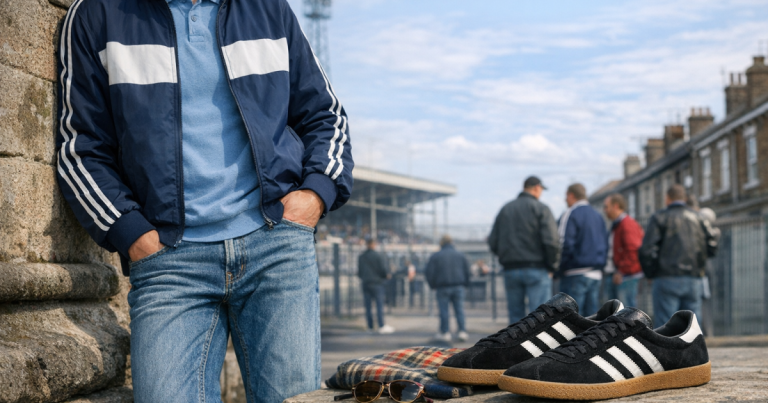
A big part of authenticity is avoiding the mistake of making every item shout at once. The best terrace looks often have one heritage sportswear piece, one grounding layer and one strong footwear choice. That might mean a tricot track top with straight jeans and suede terrace trainers, or a nylon shell with dark track pants and a plain crew neck. For more detail on proportion, layering and matchday practicality, read the terrace fit guide to silhouettes and layers.
Trainer choice can shift the decade immediately. Gum soles and low-profile suede styles push the outfit towards a classic casuals feel. Chunkier running silhouettes pull it later. Bright technical trainers can make nylon feel more rave or 90s sportswear. There is no single correct answer, but the footwear should support the era rather than fight it.
Era cues by decade
Late 1970s into early 1980s
This period is less about full tracksuit uniform and more about imported sportswear, knitwear, polos, tennis influence and early casual experimentation. Tricot track tops work well here, especially in restrained colours. The look is sharper when paired with straight denim, clean trainers and a jacket that does not look too modern.
Mid to late 1980s
Colour becomes louder, sportswear becomes more visible, and nylon starts to dominate the eye. Acid house, football travel and leisurewear all feed into the mix. A nylon jacket can be brilliant here, but modern styling should avoid cartoonish colour piles unless you are deliberately building a rave-inspired outfit.
1990s
The 90s broaden the tracksuit language. Shell fabrics, football training gear, oversized tops, branded sweatshirts and running trainers all sit in the frame. This is where a piece like the Sergio Tacchini Damarindo Track Top can suggest heritage without looking like a museum item, depending on colour and styling.
2000s revival and beyond
Velour, full sets, larger logos and streetwear crossovers become harder to ignore. Some looks are now coming back through a more selective lens: better proportions, cleaner trainers and less reliance on novelty. The smartest modern outfits borrow one 2000s cue rather than recreating the whole decade.
For a more chronological view of how the decades connect, the British tracksuit style by decade guide adds useful context.
Vintage original or modern reissue?
There is no automatic winner. Vintage originals can carry better labels, rarer colourways and genuine period character. They can also come with tired elastic, damaged linings, awkward sizing and fabrics that have not aged evenly. Modern reissues are easier to find, easier to size and often simpler to care for, but they may smooth out the quirks that made the archive piece interesting.
- Choose vintage when condition is strong, the cut suits your body, and the details genuinely matter to the look.
- Choose a reissue when you want reliable wear, easier returns, modern sizing and less maintenance anxiety.
- Be cautious with full sets if you are new to the style. Separates are usually more flexible.
- Check care labels before steaming, washing or storing synthetic sportswear. Heat and old coatings do not always mix well.
Care is part of the culture. A handheld garment steamer such as the Philips 3000 Series Handheld Garment Steamer can be useful for reducing creases in some modern sportswear, but always test gently and follow the garment label, especially with older synthetic fabrics.
How to avoid looking like you are in costume
The difference between reference and costume is usually restraint. Start with one era cue and let the rest of the outfit support it. If you wear a shiny nylon jacket, keep the trousers calmer. If you wear velour, avoid piling on chains, oversized sunglasses and novelty trainers unless that is genuinely your style. If you choose a bold tricot top, let the colours lead rather than adding more branding.
British terrace style has always been about selection. The best looks suggest knowledge without announcing it. A clean collar, the right trouser break, a well-kept pair of trainers and a jacket that suits the weather will usually say more than a head-to-toe archive recreation.
FAQ
Which tracksuit fabric is easiest to wear today?
Tricot is usually the easiest. It has a classic sportswear feel, layers well under jackets, and works with jeans, casual trousers or matching track pants.
Are nylon tracksuits only a late 80s and 90s thing?
No, but that is where many people place the strongest visual association. Nylon also appears in running, football training and lightweight outerwear across several periods.
Can velour work in a terrace-inspired outfit?
Yes, but it needs control. Use darker colours, cleaner footwear and simple layers so the texture feels intentional rather than fancy dress.
Should a terrace tracksuit fit oversized?
It can be relaxed, but it should not look careless. Aim for room through the chest and leg, with hems and sleeves sitting cleanly.
Is vintage always better than a modern reissue?
No. Vintage can have better character, but reissues are often easier for sizing, condition and everyday wear. The better choice depends on how often you will wear it.
What to remember
Once you can read nylon, tricot and velour, tracksuit eras explained as style cues become much easier to use. Nylon brings movement and weather-ready attitude. Tricot gives the most reliable terrace foundation. Velour adds leisure and swagger, but only when handled with restraint. Fit then ties it all together: not too slim, not too sloppy, and always shaped by the trainers, layers and setting around it.