From nylon warm-up sets outside grounds to glossy garage-era full zips, British tracksuit style is really a story of class, music, football travel and local pride. Each decade changed the proportions, the brands and the way a tracksuit was read: sometimes sporty, sometimes aspirational, sometimes defiant, and often all three at once.
The useful bit today is not copying a decade head to toe. It is knowing which details carry the mood: a tapered track pant, a bold chest logo, a high-collar jacket, a pair of gum-soled trainers, or a cap that shifts the outfit from retro costume to believable everyday wear.
In brief
- 1970s: slim warm-up shapes, nylon and early polyester, with a practical sports-club feel rather than full casual uniform.
- 1980s: football casuals, European sportswear, brighter colour blocking and the rise of the tracksuit as status language.
- 1990s: looser fits, Britpop, rave, hip-hop influence and big-brand sportswear worn beyond the match.
- 2000s: garage and grime made the tracksuit sharper, darker, flashier and more tied to urban music identity.
- 2026: the strongest looks borrow one era cue at a time and balance it with modern fit, clean trainers and careful layering.
1970s: sportswear before the casual code hardened
The 1970s British tracksuit was not yet the fully loaded terrace statement it would become. It sat closer to athletics, school PE, boxing gyms, Sunday league football and televised sport. Jackets were often neater through the body, trousers straighter or lightly tapered, and fabrics had that crisp synthetic swish associated with early mass-market sportswear.
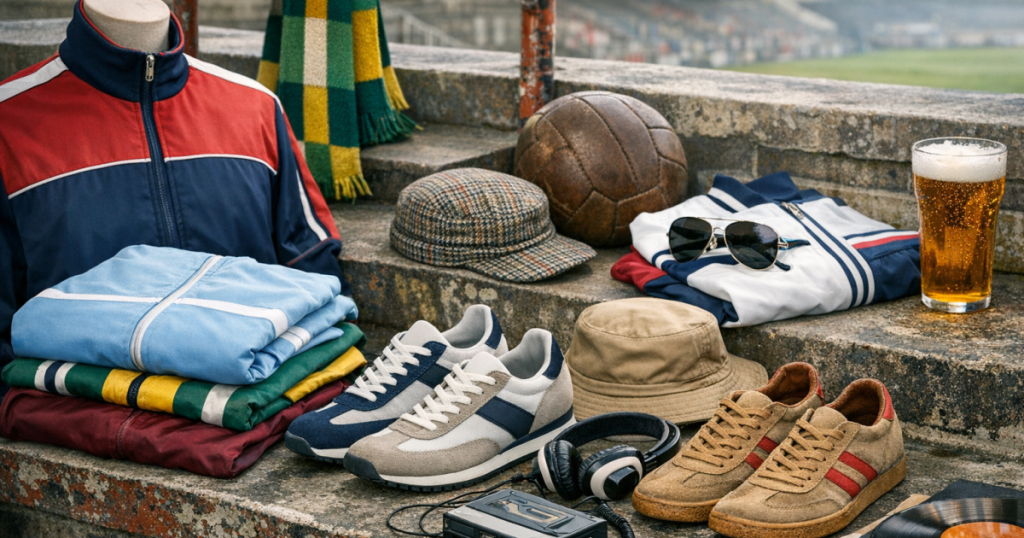
Colour was important, but it was rarely as maximal as the following decade. Navy, royal blue, red, bottle green and white piping did a lot of the work. Branding was present, though not always oversized. The effect was clean, functional and slightly austere: a look that now suits anyone who wants retro without the peacocking.
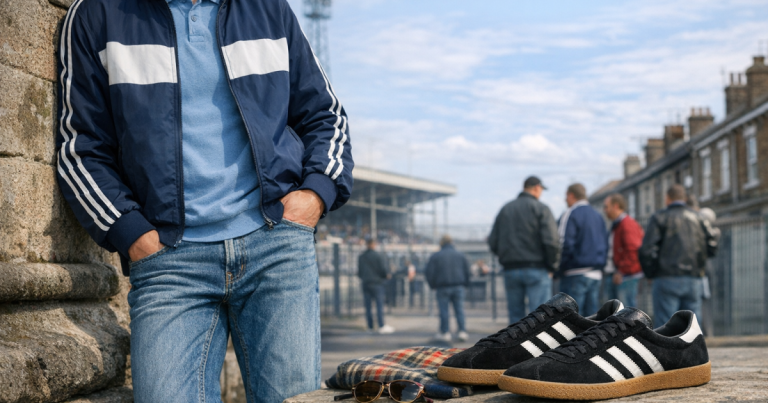
To wear the 1970s influence today, keep the silhouette narrow and the footwear simple. A low-profile court trainer, plain white T-shirt and a track top worn zipped halfway give the nod without turning the outfit into fancy dress. Avoid overloading the look with too many period signals at once.
1980s: the terrace turns sportswear into a language
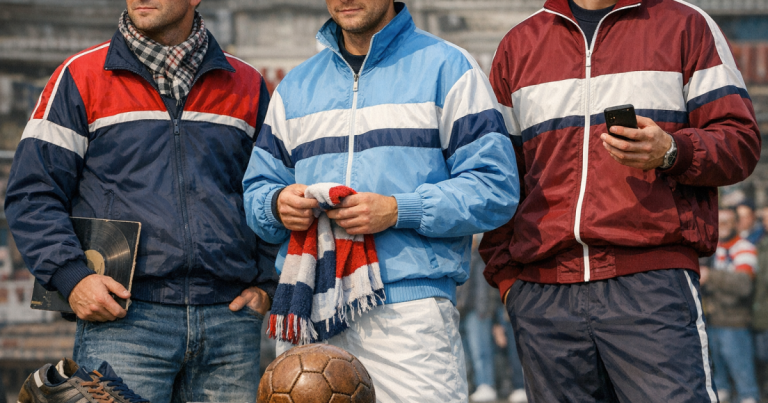
The 1980s is where the British terrace relationship with tracksuits becomes impossible to separate from football casual culture. Supporters travelling domestically and into Europe helped make imported and continental sportswear desirable. The tracksuit was no longer just kit-adjacent clothing; it became a way of showing taste, access and knowledge.
Adidas, Fila, Sergio Tacchini, Ellesse, Kappa, Diadora and Lacoste Sport all have a place in the wider story, though different cities and groups had their own preferences. The important detail is not simply the logo. It is the mix of colour blocking, collar height, sleeve stripe, taper and how confidently the wearer understood the reference.
The Adidas Beckenbauer shape is one of the clearest examples of how a neat, athletic silhouette became a terrace reference point. For a deeper look at that specific strand, read why Adidas Beckenbauer tracksuits became terrace icons in Britain.
Modern 1980s-inspired dressing works best when the track top has structure. Look for a jacket that sits at the waist or upper hip rather than hanging like a hoodie. Trousers should have some line to them, not a puddled break. If you are wearing a full set, keep the trainers clean and understated so the outfit feels considered rather than theatrical.
1990s: rave, Britpop and the bigger sportswear silhouette
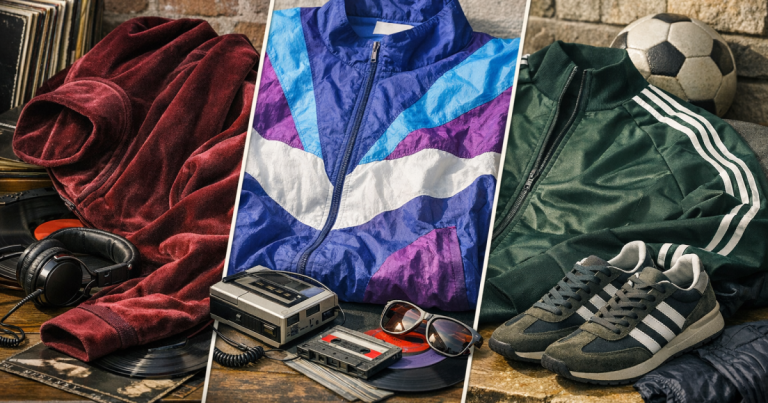
By the 1990s, sportswear had moved further into everyday British youth dress. The football link remained, but rave, indie clubs, hip-hop videos, gym culture and high-street availability all broadened the tracksuit’s meaning. Fits became roomier. Logos grew. Shell suits, track jackets and branded sweatshirts carried different signals depending on region, scene and age.
The decade is easy to parody because the loudest versions are so memorable: shiny fabrics, big colour panels, baggier trousers and trainers with more visual weight. But the best 1990s references are subtler. A slightly oversized track jacket, relaxed joggers, a cap and a pair of chunky trainers can say enough without tipping into stag-do nostalgia.
Footwear matters here. A trainer like the Nike Air Max 90 belongs naturally in conversations about 1990s British street and sportswear influence, but the styling around it decides whether it feels sharp or lazy. Keep the trouser hem controlled, avoid dragging fabric over the shoe, and let one bold item lead.
2000s: garage, grime and the tracksuit as street uniform
The 2000s made the tracksuit feel faster, sharper and more urban in the British imagination. Pirate radio, music television, tower-block videos, youth clubs, shopping centres and inner-city football cages all shaped the look. Garage often leaned into sleeker, club-ready sportswear, while grime gave the tracksuit a harder, more functional edge.
Dark full sets, zip-through jackets, baseball caps, white trainers and branded sportswear became part of a recognisable visual code. This was not just about comfort. It was about movement, identity and being seen in a way that made sense to the scene. For more on the music-specific reference points, see our guide to 2000s grime tracksuit style.
Today, the 2000s influence is wearable if you clean up the proportions. A full black or navy tracksuit can still look strong, but fit is everything. The jacket should not balloon through the middle, and the trousers should stack lightly rather than swallow the trainer. A curved-brim cap or plain tee can help, but heavy chains, oversized logos and too many retro cues can make it feel like costume.
2010s to 2026: revival, reissues and cleaner proportions
The current revival is more self-aware. People know they are referencing terrace culture, grime, rave, Britpop or classic football casuals, and brands know it too. Reissues, archive-inspired track tops and retro trainer releases have made the look more accessible, but also easier to get wrong by over-styling.
The safest modern approach is to decide which decade is doing the talking. If the jacket is a bold 1980s-style colour-block track top, keep the rest quieter. If the trainers are chunky and 1990s-leaning, use a simpler top half. If the outfit nods to the 2000s, sharpen the fit and keep the palette tight.
A full set such as the Adidas Originals Trefoil Tracksuit can be a useful reference for current retro sportswear, but readers should still check sizing, fabric feel, trouser cut and whether the jacket length suits their build. The label alone will not make the outfit work.
How to borrow decade cues without looking dressed up
- Start with silhouette: 1970s and 1980s references usually look better neater; 1990s and 2000s cues can take more volume, but still need shape.
- Use one dominant era: Mixing a 1980s tennis-style track top with 2000s grime styling and 1990s chunky trainers can work, but it takes restraint.
- Control the trouser break: The hem should meet the trainer cleanly. Too much pooling makes even good pieces look untidy.
- Layer like you live in Britain: A polo, knitted crew neck, overshirt or wax jacket can make a track top feel natural in colder months.
- Check fabric care: Vintage synthetics and modern recycled polyester can respond differently to washing, heat and steaming. Read labels before treating them.
If your main issue is proportion rather than era knowledge, the terrace fit guide to silhouettes, layers and matchday proportions is the better next step.
Where the references are worth studying
Old photographs are often more useful than brand lookbooks because they show how people actually wore the clothes: jackets half-zipped, collars sat awkwardly, trousers altered by wear, trainers scuffed from the street. That lived-in detail is what modern replicas often miss.
Books help too. The Football Casuals: A History by Cass Pennant is often referenced in discussions around casual culture, while A Casual Look: A Photodiary of the 1980s Casual, Terrace and Football Scene by Gavin Watson is valuable because its images are grounded in real people rather than polished styling. Use sources like these for proportion, attitude and context, not as rigid outfit manuals.
Questions people ask
Which decade is easiest to wear now?
The 1980s is usually the easiest starting point because the sharper track tops, simple trainers and clean trouser lines translate well into modern terrace style.
Are full tracksuits still wearable in Britain?
Yes, but fit and setting matter. A clean full set works for casual weekends, travel, matchdays and everyday wear, but avoid overly shiny fabrics or exaggerated logos if you want it to feel current.
Should vintage tracksuits be sized up?
Not automatically. Vintage sizing can be inconsistent, and older pieces may have shorter jackets or narrower sleeves. Check actual measurements in centimetres rather than relying on the label size.
What trainers work across most eras?
Low-profile terrace trainers in suede or leather are the most flexible. Gum soles, navy, black, white, burgundy and green colourways tend to work across several decades without dominating the outfit.
How do you avoid looking like you are wearing a costume?
Limit the outfit to one strong retro signal, keep grooming and outerwear modern, and avoid copying a decade too literally from head to toe.
Main lessons
The strongest British tracksuit style is not about owning the loudest archive piece. It is about understanding what each decade changed: the 1970s gave the base sportswear shape, the 1980s turned it into terrace code, the 1990s widened the silhouette, and the 2000s sharpened it through garage and grime.
For 2026, the best approach is selective. Choose the era, control the fit, keep the trainers intentional and let the clothes look lived in. That is how a tracksuit keeps its cultural weight without becoming museum dressing.