The appeal of 1980s casuals style is not just nostalgia for old track tops and suede trainers. It is a language: what you wore, how you wore it, where you wore it, and how much you seemed to know without announcing it. The sharpest looks were rarely loud from head to toe. They were built on fit, brand knowledge, restraint and a very British mix of football, music, travel and one-upmanship.
In brief
- The look centred on premium sportswear, especially track tops, knitwear, polos, jeans, cords and selected trainers.
- Brands mattered, but so did timing. Wearing the right label before it became obvious was part of the code.
- Terrace style was not uniform. Liverpool, Manchester, London, Glasgow and other scenes developed their own details.
- Modern wearers should focus on one or two era references rather than copying a full museum-piece outfit.
- Original vintage has character, while reissues and archive-inspired pieces are often easier to wear and care for.
Where the casual look came from
The casual movement grew out of football travel, youth culture and a hunger for clothes that felt sharper than standard matchday gear. Supporters returning from away trips brought back continental sportswear, rare trainers and labels that were not yet common on British high streets. The point was not to dress like a player. It was to look informed, mobile and just ahead of the crowd.
That is why the era still matters. It sits between working-class ingenuity, post-punk and early rave energy, designer sportswear, and the social theatre of the terrace. For a wider breakdown of the roots, codes and modern fit, the site’s guide to what terrace style means is the natural next step.
It is also worth saying plainly: the clothes can be discussed without glamourising violence or lazy stereotypes. The enduring interest is in the style literacy, the regional differences and the way sportswear became a status language in Britain.
The tracksuit was sharp, not sloppy
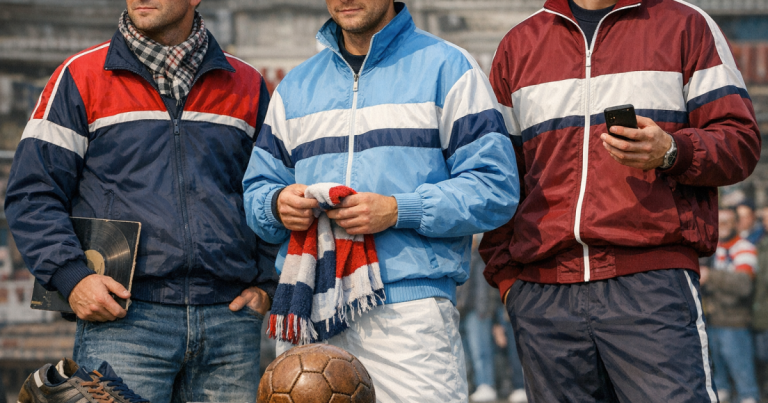
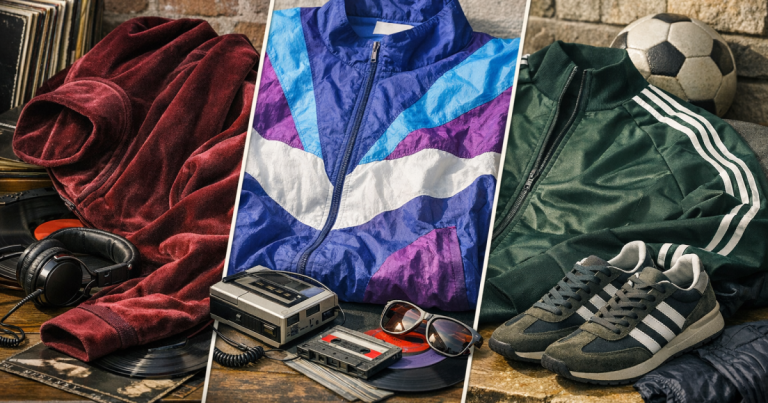
The 1980s casual track top was often the hero piece. Think clean lines, contrast piping, stand collars, chest logos and colour blocking that looked deliberate rather than gym-bag casual. A full tracksuit could work, but the strongest terrace outfits often broke the set up: a track top with straight-leg denim, cords, a polo, or a light knit underneath.
Brands such as adidas, Sergio Tacchini, Fila, Ellesse, Diadora, Kappa and Lacoste all sit within the broader conversation, but they did not all signal the same thing. Some looks were tennis-influenced, some football-led, some had a sharper resortwear feel, and some were valued because they were hard to get hold of in Britain at the time.
Fit made the difference
The period fit was generally neater than many people imagine. Track tops were not usually worn like oversized modern streetwear. Shoulders sat cleanly, sleeves had shape, and the hem worked with jeans or track pants rather than drowning them. For a modern version, avoid going too tight or too baggy. A slightly relaxed track top over a plain T-shirt or polo usually reads better than a costume-like full set.
Colour needed discipline
Red, navy, cream, bottle green, royal blue and white all belong in the conversation, but the code was control. A bold panelled top works best when the rest of the outfit is quiet. If the jacket is doing the talking, let the trousers and trainers support it rather than compete with it.
Trainers: the quiet status symbols
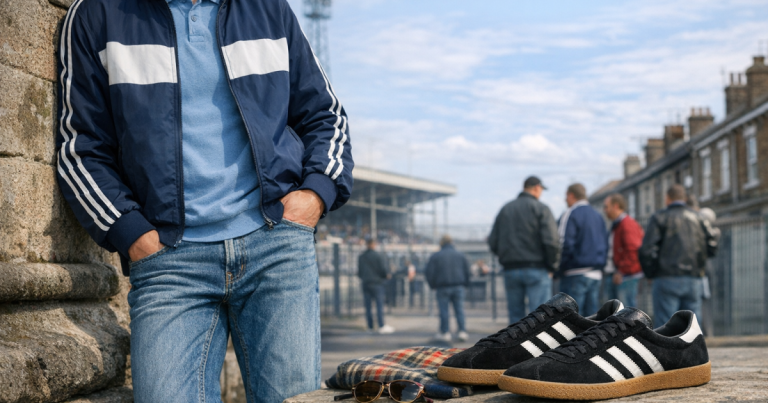
Trainers were never an afterthought. The right pair could carry the outfit, particularly when they were scarce, imported or simply not what everyone else had. Gum soles, suede uppers, slim profiles and court or handball heritage all fit the mood better than bulky performance shapes.
- adidas Gazelle Indoor gives a strong indoor-court reference and works well with denim, cords and track pants.
- adidas Handball Spezial suits the suede-and-gum-sole side of the look without feeling too dressed up.
- Diadora B. Elite brings in the Italian tennis influence that runs through a lot of casual dressing.
The modern terrace trainer does not have to be an exact archive replica. What matters is whether the shape, materials, colour and silhouette make sense with the rest of the outfit. For a contemporary example placed in that lineage, our Lacoste L003 Neo Shot review looks at how a modern trainer can nod to terrace codes without pretending to be a lost 1980s release.
The matchday codes people noticed
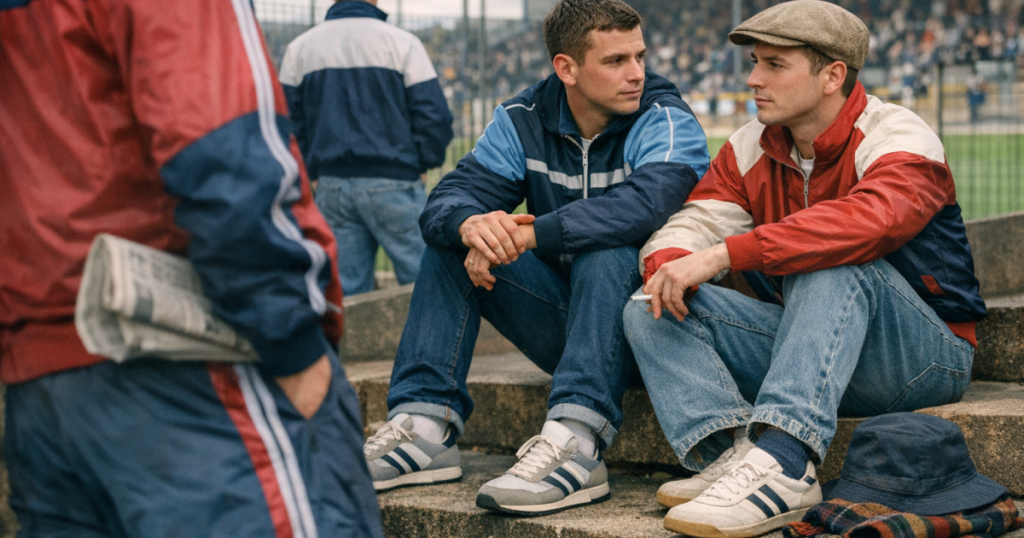
Casual dressing worked because it was readable to those who knew. A new jacket, an unusual trainer colourway, or a label not yet widely seen could say more than a scarf or a replica shirt. That did not mean everyone dressed the same. Regional scenes had their own preferences, and trends travelled quickly through away ends, pubs, record shops and city centres.
- Keep logos selective: one visible heritage logo can look sharp; several at once can feel forced.
- Respect the weather: British matchdays need layers. A track top under a lightweight jacket often looks more natural than pretending every weekend is dry and mild.
- Avoid full fancy dress: bucketloads of period detail can tip into costume. One archive-style top, one trainer reference and modern basics are usually enough.
- Know the difference between influence and imitation: a clean modern outfit inspired by the era is more wearable than copying an old photo exactly.
How to wear the era now
The easiest way into the look is to choose a single focal point. A vintage-style track jacket, a tennis-influenced trainer, or a knitted polo can anchor the outfit. Build around it with simple pieces: straight jeans, relaxed chinos, cords, a plain crew-neck, or a well-cut polo shirt.
For a track top, check the collar, cuffs and zip before committing. A tired zip or stretched hem can make even a great label look poor. For vintage nylon and polyester, inspect pulls, shine, bobbling, loose stitching and staining around the neck and cuffs. Reissues are often more practical for regular wear, but they can look too new if the colours are overly bright or the fit is too fashion-led.
Footwear should be clean but not pristine to the point of looking unused. Suede protectors and gentle brushing help, but heavy cleaning can flatten the character. With older track tops, avoid aggressive heat. Many synthetic fabrics respond better to careful airing, low-temperature washing according to the care label, and drying away from direct radiators.
Original vintage or modern reissue?
Original 1980s pieces have the romance: period labels, older cuts, faded colours and the sense that the garment has lived a life. The downside is condition. Elastic can fail, zips can catch, and sizing can be unpredictable compared with modern UK retail expectations.
Reissues and archive-inspired releases are easier to wear day to day. They are usually simpler to replace, easier to size, and less stressful in bad weather. The trade-off is authenticity. Some reissues capture the spirit well; others borrow a logo and miss the proportions. Look at the collar shape, sleeve volume, waistband, fabric handle and colour balance before treating anything as a faithful throwback.
What to read and watch for context
Style makes more sense when you understand the culture around it. Photography books, football-casual histories and documentaries can help separate real detail from internet mood-board myth. Gavin Watson’s A Casual Look: A Photodiary of the 1980s Casual, Terrace and Football Scene is especially useful because the images show how people actually dressed: imperfectly, regionally, and with far more variation than simplified summaries suggest.
Because this site sometimes earns from qualifying recommendations, the affiliate disclosure explains how editorial links are handled. The aim is to keep the culture useful rather than turning every era reference into a hard sell.
Common questions
Is 1980s casuals style the same as terrace style?
They overlap heavily, but they are not identical. Terrace style is the wider matchday clothing culture, while the 1980s casual look is a key era within it, shaped by football travel, imported sportswear and specific trainer codes.
Do you need vintage pieces to get the look right?
No. Vintage adds authenticity, but modern archive-inspired track tops, polos and trainers can work well if the fit, colour and proportions are right. Wearability matters more than collecting for its own sake.
Which trousers work best with an old-school track top?
Straight-leg denim, cords and relaxed chinos are the safest choices. Track pants can work too, but a full set needs careful styling so it looks intentional rather than like sports kit.
Are football shirts part of the casual look?
Replica shirts were not the main code. Casual dressing often moved away from obvious club colours and into branded sportswear that signalled taste, access and knowledge instead.
How do you avoid looking like you are in costume?
Keep the outfit grounded in modern basics. Use one strong era reference, keep logos under control, and avoid stacking too many period details into one look.
What to remember
The strongest casual outfits were never just about owning the right label. They were about timing, confidence, proportion and reading the room. Tracksuits, trainers and terrace codes all mattered, but the real skill was making the look appear effortless.
That is the lesson worth carrying into 2026: take the intelligence of the era, not just the surface. Choose pieces that fit properly, understand the references, keep the outfit wearable, and let one detail do the work.