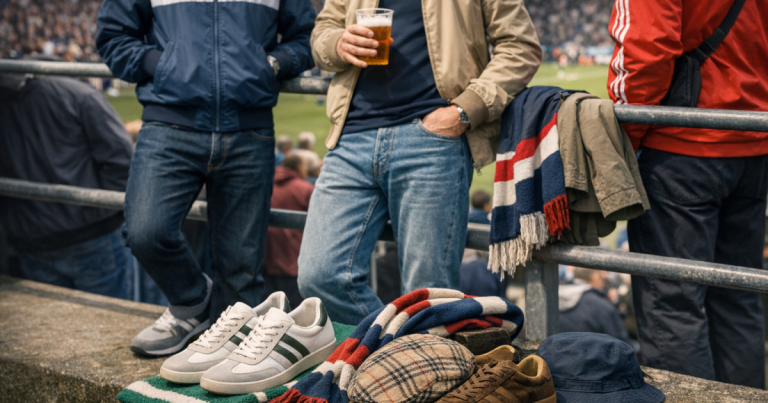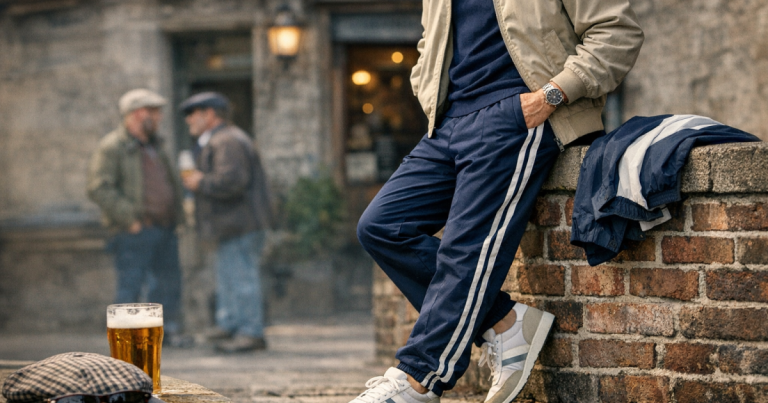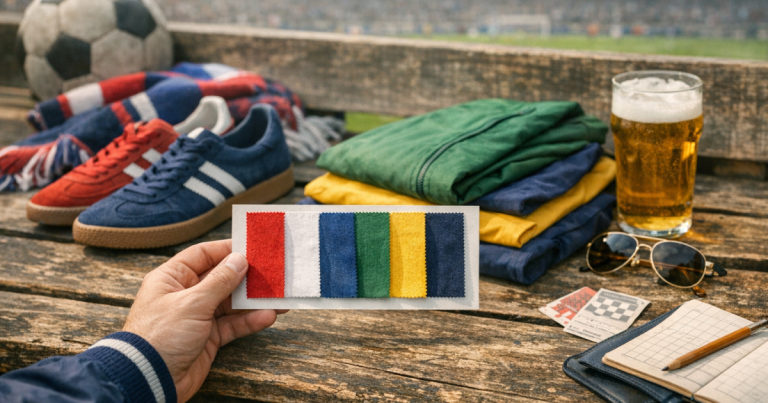
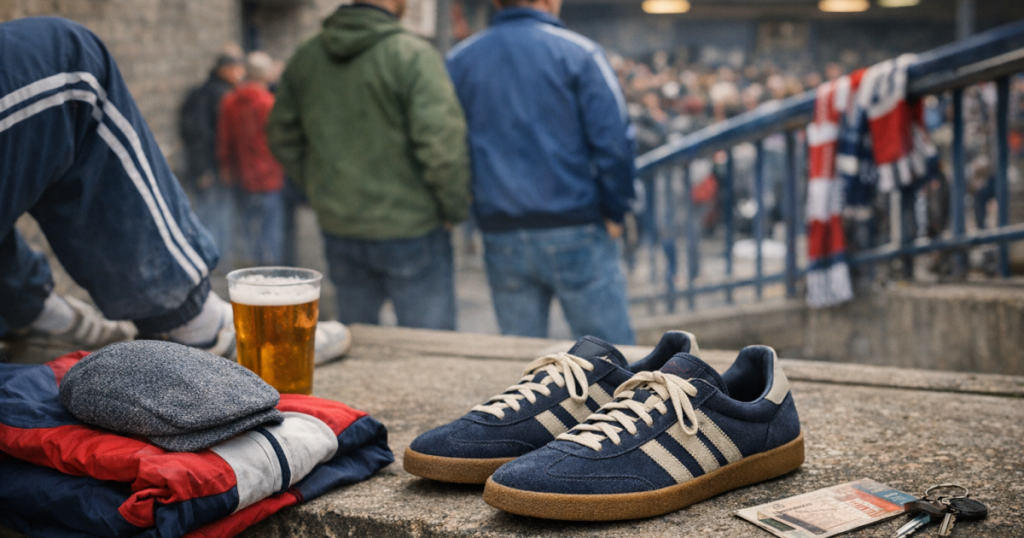
Terrace style is the everyday uniform that grew out of British football grounds, away days and the casual movement: sportswear, sharp trainers, outerwear and small signals that show you know the code. It is less about dressing like a museum piece and more about understanding proportion, colour, context and restraint. Get those right and the look works on a Saturday train, in the pub, or miles from a turnstile.
What to know first
- It is not one fixed outfit. The look shifts between track tops, knits, polos, overshirts, technical jackets, denim, cords and clean trainers.
- The strongest outfits usually have one statement piece and several quiet ones. Too many logos can make it look like fancy dress.
- Fit matters as much as brand. A good casual outfit often sits relaxed but tidy, not sprayed-on and not shapeless.
- Trainers are the anchor. Gum soles, low-profile shapes, suede uppers and archive court styles all carry different signals.
- Matchday codes are about practicality and social awareness: weather, travel, ground rules, pub etiquette and not dressing like you are performing the stereotype.
Where the look came from
The style grew through football travel, import culture, music, clubbing, menswear one-upmanship and the instinct to look sharp without wearing formal clothes. It was never just about comfort. It was about finding the right jacket before everyone else, knowing which trainers worked with which trousers, and carrying a sense of belonging without needing to say much.
That is why the look still has pull. It borrows from sport but is not sports kit. It has working-class roots but was always aspirational. It can be nostalgic, but the best modern versions are wearable rather than theatrical. A vintage track top, a plain polo and a good pair of trainers can say more than a full head-to-toe revival outfit.
Why terrace style still works now
Modern terrace style works because it sits between casualwear and proper menswear. It is comfortable enough for a long away day, but it has more shape and intention than generic athleisure. A track jacket can replace a cardigan. A polo can do the job of a shirt. A lightweight jacket can carry the whole outfit without shouting.
The current appeal is also practical. British weather rewards layers, and the look has always been built around them: polo under knit, track top under jacket, overshirt over T-shirt, shell jacket in the bag. You can dress it up or down without changing the language completely.
The brands that carry the code
Some brands matter because of design; others matter because of what they meant on the terraces, in record sleeves, in pubs and in the high street. Adidas Originals still sits at the centre of the conversation because the trefoil, three stripes and archive trainer shapes are instantly understood. A piece like the Adidas Originals Trefoil Tracksuit gives a clear reference point, but it needs restraint around it: simple trainers, a plain T-shirt and no extra costume details.
Sergio Tacchini, Fila, Ellesse, Diadora and Kappa bring an Italian sportswear feel: colour blocks, tennis and ski influences, smooth track fabrics and a smarter leisure shape. Lacoste sits slightly differently, bridging tennis, polo shirts, knitwear and casual trainers. For a current footwear angle, our Lacoste L003 Neo Shot review looks at how a modern trainer can nod to the scene without pretending to be an archive reissue.
Then there are the wider British codes: Fred Perry polos, Barbour jackets, Clarks, New Balance, Stone Island, CP Company, Berghaus, vintage knitwear and military-leaning outerwear. Not all of these belong in every outfit. The trick is to understand the mood each one brings. A wax jacket feels rural and pub-ready. A technical jacket feels more away-day and weatherproof. A polo keeps things neat. A track top gives the visual punch.
Fits: relaxed, neat and never sloppy
The easiest way to get the look wrong is to chase brand names while ignoring silhouette. Classic casual dressing has movement in it. Trousers should sit comfortably over trainers, not stack heavily or cling too hard. Track jackets look strongest when the hem lands around the hip and the shoulders are natural rather than tight. Polos should skim the body without pulling across the chest.
For a modern fit, think in layers. A boxy track top works well over a plain white or navy T-shirt. A slimmer polo can sit under a Harrington, overshirt or lightweight shell. Straight-leg jeans, cords or relaxed track pants tend to look more authentic than ultra-skinny cuts. If you are wearing a full tracksuit, keep the rest pared back: clean trainers, minimal accessories and no novelty extras.
Colour is part of the fit
Colour affects how an outfit feels. Navy, bottle green, burgundy, ecru, brown, black and off-white are easier to wear than loud primary blocks. Bright colour can work brilliantly, especially on a vintage-style track top, but it needs calmer pieces around it. If the jacket is doing the talking, let the trousers and trainers support it.
Trainers: the foundation of the look
Trainers are where many people start, and rightly so. Low-profile terrace trainers make an outfit feel intentional without being precious. Suede uppers, gum soles and indoor-sport shapes sit naturally with track tops, denim and cords. Leather court trainers can look cleaner with polos and smarter jackets. Chunkier runners can work, but they push the outfit towards a different era and need careful balancing.
A pair such as the Nike Air Max 90 brings a more visible, street-level shape than a slim gum-sole trainer. That can be useful with looser trousers or a bolder jacket, but it changes the mood. If you want a purer casual feel, look at lower-profile archive-inspired footwear first, then branch out once the rest of the wardrobe makes sense.
Condition matters. Beaten-up trainers can look lived-in, but dirty suede, collapsed heels and frayed laces rarely help. Use a suede brush, keep spare laces around, and rotate pairs if you wear them often. The look is casual, not careless.
Matchday codes that still matter
Matchday dressing has always been about reading the room. The right outfit for a home pub is not always right for a long rail journey, a wet midweek fixture or a neutral family stand. Good terrace dressing is practical first: weather, walking distance, bag policy, pubs, train changes and where you will be sitting all matter.
- Keep logos balanced: one recognisable piece is usually enough. A big badge, a loud track top and statement trainers can fight each other.
- Dress for the weather: a lightweight shell, overshirt or wax jacket can save the day in typical British drizzle.
- Avoid cosplay: head-to-toe retro can look forced unless you are deliberately styling a period look.
- Respect the setting: football culture has style, humour and history, but dressing to intimidate or mimic hooligan clichés misses the point.
- Keep accessories useful: a cap, scarf or crossbody bag should earn its place rather than act as a prop.
A cap can work when it fits the rest of the outfit rather than sitting on top of it as an afterthought. The New Era 9Forty Cap, for example, is a familiar modern shape, but the colour and logo need to sit comfortably with the jacket and trainers.
How to wear it without looking like a throwback act
The most wearable approach is to choose one anchor and build around it. If the anchor is a track top, keep the lower half simple. If the anchor is a trainer, let the rest of the outfit echo one of its colours. If the anchor is outerwear, avoid competing logos underneath.
For a pub-to-ground outfit, try a navy track top, plain white T-shirt, straight-leg denim and low-profile suede trainers. For a smarter version, swap the track top for a knit or polo under a wax jacket. For a music-led Britpop feel, a casual jacket, polo and relaxed jeans can do more than an obvious costume reference.
Hoodies can fit the look when they are not too bulky. A simple piece such as the Puma Classic Hoodie can sit under an overshirt or casual jacket, but avoid layering a heavy hoodie under a tight track top. The shape should look considered, not squeezed together.
Buying and care notes for a modern wardrobe
You do not need a wardrobe full of rare vintage pieces. Reissues and current archive-inspired lines are often easier to size, easier to wash and less stressful to wear. Vintage still has charm, especially for track tops and jackets, but check zips, elastic, staining, fabric shine and sleeve length before committing. Older synthetic fabrics can hold odours and may need patient airing rather than aggressive washing.
For new purchases, verify sizing on the retailer’s size guide, check return terms, and look closely at fabric composition if you care about drape. Polyester track tops, cotton polos, nylon shells and suede trainers all age differently. If a garment matters to you, wash it inside out on a gentle cycle, avoid high heat, and air dry where possible. A handheld steamer such as the Philips 3000 Series Handheld Garment Steamer can be useful for freshening creased sportswear, but always check the care label first.
As an affiliate publisher, we may earn from relevant retail links where they appear. Our affiliate disclosure explains how that works without changing the editorial view.
Common questions
Is terrace style the same as football casual?
They overlap heavily, but they are not identical. Football casual is the subcultural root; terrace style is the broader clothing language that people now wear on matchdays, in pubs, at gigs and in everyday wardrobes.
Can you wear the look without supporting a football club?
Yes, provided you approach it with respect. The clothes have football roots, but many pieces also belong to wider British sportswear, music and street culture. Avoid pretending to have scene credentials you do not have.
Are full tracksuits still wearable?
Yes, but they need confidence and restraint. Choose a good fit, keep trainers clean and avoid loading the outfit with extra logos. Separates are easier if you want a subtler everyday version.
Which trainers are safest for a first outfit?
A low-profile suede or leather trainer in navy, black, off-white or gum-sole tones is the easiest starting point. It will work with jeans, cords, track pants and most casual jackets.
How do you avoid looking too themed?
Mix one heritage piece with modern basics. A track top with plain denim, a polo under a contemporary jacket, or archive-style trainers with a clean overshirt usually looks more natural than a full retro uniform.
Final thoughts
The appeal of terrace style is that it rewards knowledge without needing to be loud. The brands matter, but so do fit, restraint, weather, footwear and context. Start with pieces you will actually wear, keep the silhouette relaxed but tidy, and let the details build over time.
For more era guides, outfit ideas and brand stories from the same world, browse the Retro Casual Wear blog.