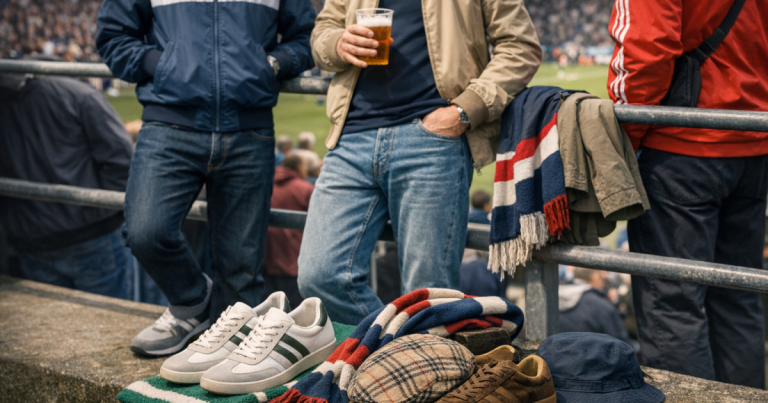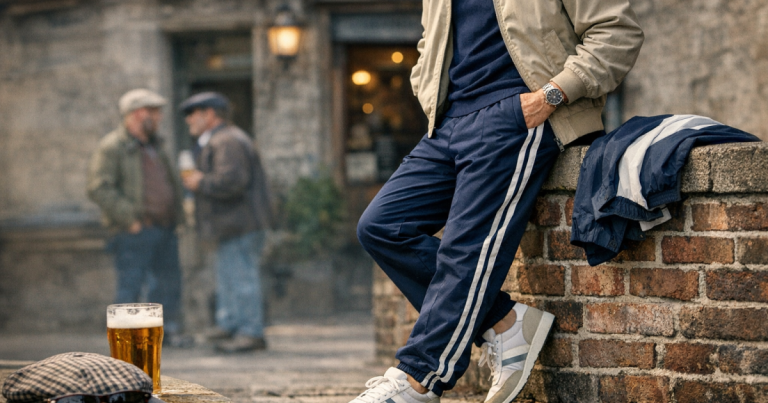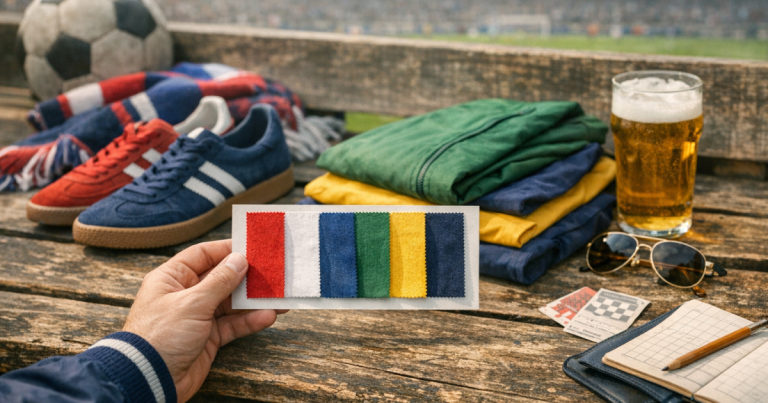
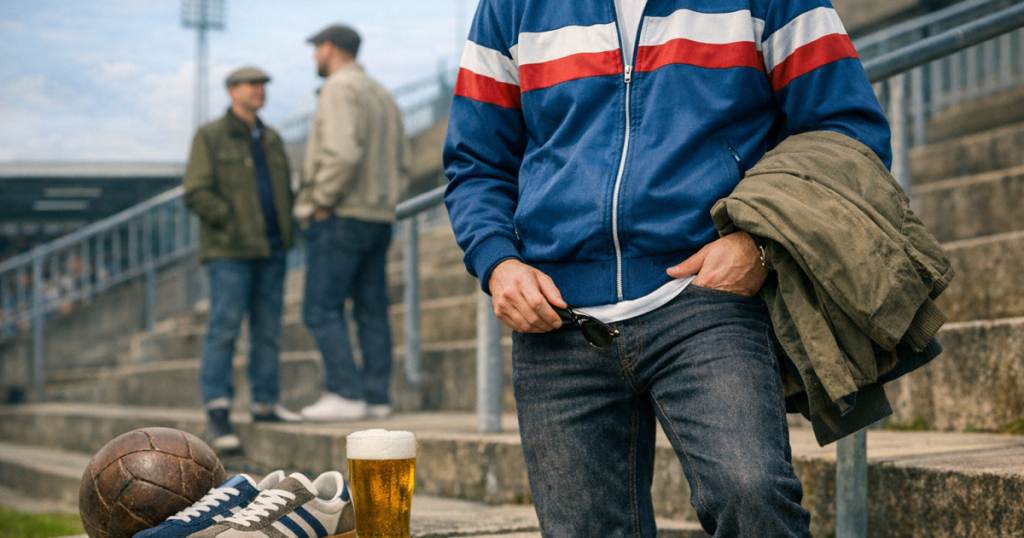
A great terrace outfit rarely looks as if it has been copied straight from an old photograph. The trick with vintage track tops is to keep the cultural signal intact while making the proportions, layers and footwear feel like something you would actually wear to the pub, the match, a gig or a weekend in town.
The short version
Use the old track top as the lead piece, then quieten everything around it. Let one period detail do the talking: a funnel neck, a contrast panel, a sleeve stripe, a woven badge or a certain shade of navy, bottle green, red or cream.
- Keep the fit intentional rather than baggy by accident.
- Pair archive colour with modern neutrals: stone, navy, black, grey, washed denim or off-white.
- Choose trainers that sit naturally with the era without making the outfit look staged.
- Avoid piling on too many retro signals at once: track top, jeans, trainers and one outer layer is usually enough.
- Check condition carefully, because stretched cuffs, stale synthetic fabric and broken zips can spoil the whole look.
Step 1: Work out the era before you style it
Before building an outfit, read the track top like a piece of design history. A slim ribbed collar, neat cuffs and simple stripes can feel very different from a glossy shell-style top with loud panels and oversized branding. The era tells you how far to lean into nostalgia and how much modern balance you need.
Italian sportswear cues often bring colour blocking, contrast piping and a sharper casual feel. British football-casual looks tend to mix imported sportswear with denim, knitwear, polos, wax jackets and suede trainers rather than full athletic kit. If the cues are unfamiliar, a quick skim through UK subculture tracksuit eras helps you spot whether a piece is leaning 70s, 80s, 90s or 2000s.
The useful rule is simple: do not style every detail from the same decade unless you are deliberately going for a period look. A 1980s-style top with present-day trousers and clean trainers feels wearable. The same top with vintage jeans, retro sunglasses, old-school cap and period-correct footwear can tip into costume.
Step 2: Get the proportions right first
Modern terrace dressing is more forgiving than slim mid-2010s menswear, but it still needs shape. A track top can be boxy, cropped, long, slouchy or neat depending on brand, age and fabric. The aim is to make that shape look chosen.
- Hem: The waistband should sit around the trouser waistband or just below it. If it hangs too low, the outfit can look tired rather than relaxed.
- Shoulders: Slightly dropped shoulders can work, but a seam halfway down the upper arm usually looks borrowed unless the rest of the outfit is deliberately oversized.
- Sleeves: Ribbed cuffs should land at the wrist, not swallow the hand.
- Body width: A bit of room is fine. Excess ballooning around the waist is harder to style, especially with tapered trousers.
If you are trying to understand why one outfit looks sharp and another looks shapeless, the site’s terrace fit guide is a useful next step because it breaks down silhouettes, layering and matchday proportions in more detail.
Step 3: Let colour do the heavy lifting
Many vintage track tops are already strong pieces, so the rest of the outfit should give them room. Pick one dominant colour from the top and repeat it quietly elsewhere, or let it contrast against plain neutrals. Navy trousers under a red-and-white top, stone chinos under a green top, or black jeans under a bright blue top all work because they give the eye somewhere calm to rest.
Be careful with white trainers, white socks, white tee and a white-panelled top all at once. It can work, but it needs clean fabrics and a deliberate fit. Off-white, cream and grey are often easier because they soften the contrast.
Texture matters too. A shiny nylon top looks better with matt layers: cotton T-shirts, brushed fleece, wool knitwear or washed denim. A softer poly-cotton top can take a crisper trouser or a sharper outer layer. If you want a modern reference point for how classic colours can still look current, the Adidas Originals Trefoil Tracksuit is a useful visual benchmark, even when you are styling an older, unrelated piece.
Step 4: Choose bottoms that update the whole outfit
The easiest way to modernise a track top is through the trousers. Straight-leg denim, relaxed chinos, clean track pants or understated cargos can all work, but the cut should not fight the top. If the jacket is short and boxy, a straight or relaxed trouser usually feels balanced. If the top is longer and looser, a slightly neater trouser stops the outfit spreading too wide.
Avoid ultra-skinny jeans with a bulky old track top. The contrast can look dated in the wrong way, especially with chunky trainers. Equally, very wide trousers need care: they can look strong with a cropped top, but clumsy with a long hem and loose sleeves.
For a matchday-leaning look, dark straight denim and suede trainers keep things grounded. For a music-influenced look, washed denim, a plain tee and a more relaxed trainer can work. For a smarter casual version, try stone chinos, a tucked or half-tucked tee and a track top worn open.
Step 5: Pick trainers that understand the reference
Trainers carry a lot of the terrace signal. Suede low-profile styles feel natural with 70s and 80s cues. Chunkier runners can nod towards 90s and 2000s sportswear. The point is not strict historical accuracy; it is visual harmony.
A suede terrace trainer keeps the look classic without shouting. A model like the Adidas Originals Handball Spezial works well because it sits low, reads casual rather than gym-focused, and does not overpower most track tops. If the top has 90s or early-2000s energy, a runner such as the Nike Air Max 90 can make sense, provided the trousers have enough width to sit over the shoe properly.
Sock choice matters more than people admit. Bright sports socks can sharpen the look if the colours are controlled. Plain white, navy, grey or black is safer. If your trouser hem stacks heavily over the trainer, adjust the break before blaming the shoes.
Step 6: Layer without turning it into a costume
Layering is where vintage sportswear becomes proper British casualwear. A track top under a wax jacket, Harrington, overshirt, mac or lightweight shell can look excellent because it moves the piece away from pure sports kit. Keep the outerwear plain if the top is loud.
A polo shirt under an open track top gives a tidy pub-to-terrace feel. A plain tee is easier and more relaxed. Hoodies can work, particularly with 90s and 2000s references, but watch the bulk around the neck. If the track top already has a high collar, a hood can make the upper half look crowded.
Accessories should be restrained. A simple cap, a plain crossbody bag or a scarf in club-adjacent colours can work, but do not stack every casual reference at once. A New Era 9Forty Cap can sit naturally with modern terrace outfits, though it should support the look rather than become the loudest part of it.
Step 7: Check the old piece before relying on it
Condition is part of style. A rare top with sagging elastic, shiny worn elbows, a stiff zip and a trapped storage smell will not look better because it is old. Before wearing it out, check the cuffs, waistband, zip pull, lining, stitching, badge and any flocked or printed details.
Labels and construction details can also tell you whether the piece is original, later reissue or simply vintage-inspired. That matters because it affects how carefully you treat it and how much wear you expect from it. For label cues, zips and detail checks, use the guide on dating a vintage tracksuit before making assumptions.
Wash with caution. Many older synthetic tops dislike heat, harsh spin cycles and aggressive stain treatment. Air drying is usually kinder than tumble drying. A handheld steamer can help with creases, but avoid holding heat too long over printed panels, bonded details or delicate badges.
Three outfit formulas that usually work
1. The clean 80s casual nod
Wear a colour-blocked track top open over a plain white or off-white tee. Add straight dark denim, suede terrace trainers and a simple outer layer if needed. This keeps the heritage obvious but avoids looking like a museum display.
2. The Britpop-weekend version
Take a bolder top, preferably with strong colour or sleeve detail, then pair it with stone or navy chinos and a relaxed trainer. Keep the hair, accessories and jacket modern. The mood is familiar without becoming parody.
3. The 2000s-influenced update
Use a looser track top with clean track pants or relaxed denim, then add a plain tee, cap and chunkier trainers. Keep colours tight: black, grey, navy and one brighter accent. Too many logos will make the outfit look busy rather than considered.
Key checks before you leave the house
- One hero piece: If the track top is loud, make the rest quieter.
- Collar control: Zip it fully for a sharper look, half-zip for relaxed, open for layering.
- Hem balance: The trouser break should work with the trainer shape.
- Badge count: Several visible logos can look messy unless they share a clear era or palette.
- Weather reality: A thin retro top may need a proper outer layer for a British evening.
- Condition check: Clean cuffs and a working zip matter more than rarity.
Common questions
Can I wear a vintage track top with jeans?
Yes. Straight or relaxed jeans are usually the safest choice. Dark denim feels more terrace; washed denim gives a more music-led, weekend look.
Should the track top be zipped up or worn open?
Both work. Zipped up looks sharper and more graphic. Open is easier for layering and makes a bold piece feel less intense.
Are full vintage tracksuits too much?
Not always, but they are harder to wear casually. If the set is bright or glossy, modern trainers and a plain outer layer help stop it looking like fancy dress.
What trainers suit vintage track tops best?
Low suede terrace trainers are the most versatile. Chunkier runners work better with 90s or 2000s tops and trousers with a little more width.
How do I stop the outfit looking dated?
Use modern proportions, clean footwear and restrained colours. Keep one vintage focal point and let the rest of the outfit feel current.
Main lessons
Mixing old sportswear with modern terrace style is about control. Respect the era, but do not dress head to toe as if you are recreating it. Get the fit right, ground the colour, choose trainers that make sense, and keep the supporting layers clean. Done well, vintage track tops bring the best kind of casualwear detail: recognisable to people who know, wearable to everyone else.