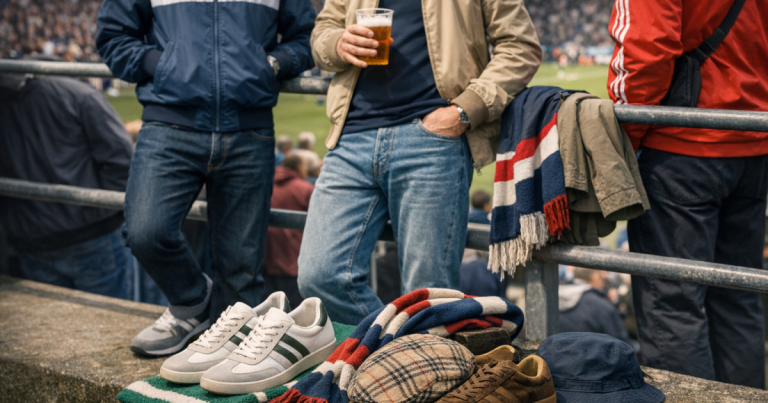
A clean hem can make a pair of terrace trainers look intentional rather than accidental. Getting the trouser break for terrace trainers right is about how the fabric meets the shoe: enough shape to feel casual, not so much that it hides the trainer or pools over the laces.
On British terraces, that detail matters because the trainer is rarely an afterthought. The whole look is built on proportion: jacket length, leg shape, hem movement and whether the footwear still gets its moment.
The short version
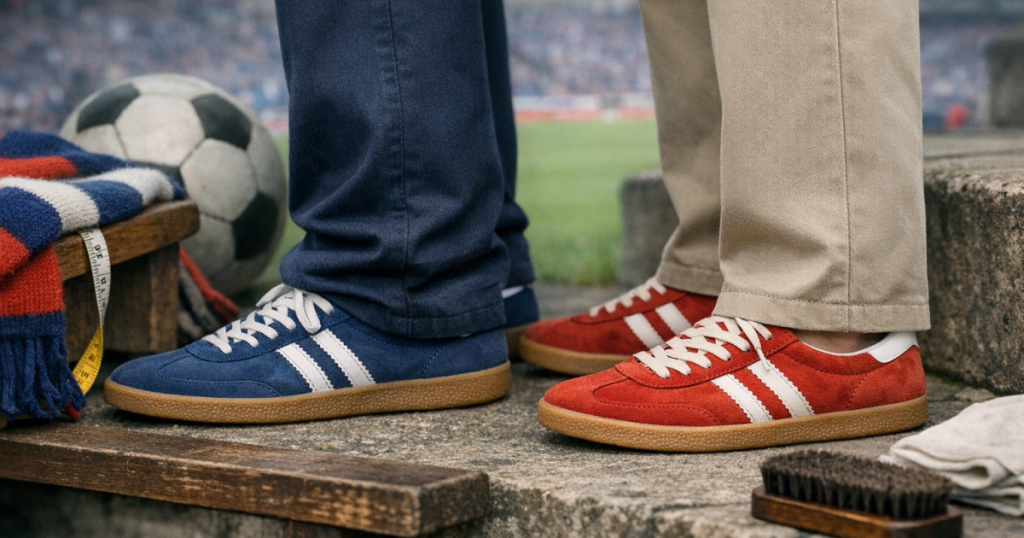
For most terrace outfits, aim for no break or a slight break. The trouser should skim the top of the trainer, show the shoe shape clearly, and avoid heavy folds over the tongue.
- No break: the hem finishes just above the trainer or only touches it lightly. Clean, modern and good with tapered trousers.
- Slight break: a small crease appears where the trouser meets the trainer. This is the safest everyday terrace option.
- Half break: more fabric sits on the shoe, creating a visible fold. It can work with wider trousers but needs careful balance.
- Full break: fabric stacks heavily over the trainer. Usually too sloppy for low-profile terrace trainers unless the whole outfit is deliberately loose.
Why trouser break matters in terrace style
Terrace style has always been about recognition without shouting. The right track top, cagoule, polo or trainer carries a message, but the fit decides whether it looks lived-in or lazy. A brilliant pair of suede trainers loses half its effect if the trouser leg collapses over the upper.
The hem also changes the era reference. A neat, slight break can feel late 70s and early 80s casual, especially with straight denim, cords or track pants. A looser stack can lean more 90s or 2000s, but it needs intent. If the trousers look as if they are simply too long, the outfit stops reading as casual culture and starts reading as poor tailoring.
That is why break sits alongside brand, fit and matchday meaning. If you want the wider codes behind track tops, matching sets and away-day signals, the guide to terrace tracksuit codes gives useful context before you fine-tune the hem.
Start with the trainer profile
The best trouser break for terrace trainers depends first on the shoe shape. Low-profile trainers need less fabric over them. Chunkier trainers can handle a little more length, though they still look better when the hem does not swallow the top line.
Low-profile suede trainers
Trainers in the Handball Spezial, Gazelle Indoor, Palermo or terrace-style indoor court family tend to sit low and slim. With these, aim for no break or a slight break. The hem should let you see the toe shape, side stripes or side form, and part of the tongue when standing naturally.
If you like the classic low-slung look, a trainer such as adidas Handball Spezial works best when the trouser does not bunch at the front. For more outfit-specific ideas, the piece on wearing adidas Handball Spezial with terrace style shows how the shoe changes with different leg shapes.
Chunkier runners and bulkier soles
Chunkier runners can cope with a slightly longer trouser because the shoe has more height. Even then, the fabric should sit on the trainer rather than drown it. If you are wearing a heavier runner with a wider leg, check the side view as well as the front. A clean front with a messy heel stack still looks off.
Leather casual trainers
Leather trainers with a rounder toe usually prefer a tidy slight break. Too short can make them look formal or school-shoe adjacent; too long can make the leather crease point disappear. Keep the hem relaxed, not razor sharp.
Pick the break by trouser type
Different trousers behave differently. A break that looks tidy on denim might look untidy on shiny polyester track pants, because fabric weight and drape change how the hem falls.
Track pants
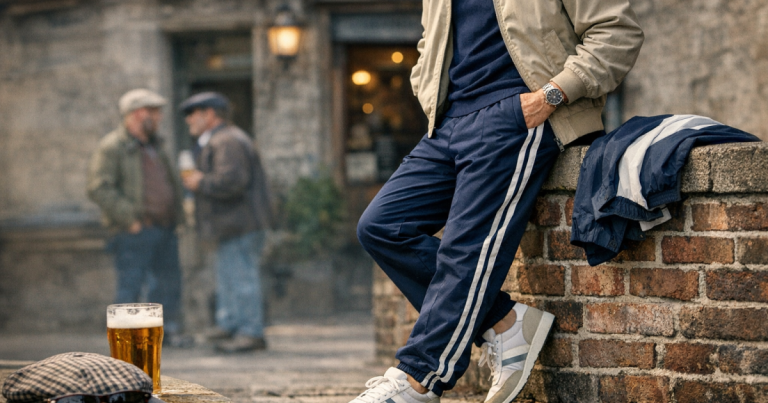
Open-hem track pants are the hardest to get right because the fabric can flare or puddle. The hem should just meet the trainer, with little to no stacking. If the leg has a zip opening, make sure the zip does not kick the hem out awkwardly over the shoe.
Cuffed track pants are simpler: the cuff should sit just above the trainer or lightly on it. If the cuff rides halfway up the calf when walking, the leg is too short for the look. If it sits under the heel, it is too long or too loose.
Jeans
Straight or gently tapered jeans are forgiving. A slight break is usually ideal, especially with suede trainers. If you cuff them, keep the turn-up narrow and even. A large roll can look more workwear than terrace unless the rest of the outfit supports it.
Chinos, cords and smarter casual trousers
With chinos, cords or Sta-Prest-style trousers, the break needs to be sharper. Aim for no break or a very slight break, particularly if the trouser has a centre crease. Too much fabric at the ankle fights the cleaner line of the trouser.
Use this step-by-step fitting check
The quickest way to judge trouser length is to test it with the trainers you actually wear. Different soles change the result by enough to matter.
- Put on the real trainers. Do not judge the hem barefoot or in socks. A terrace trainer with a slim sole will sit differently from a bulkier runner.
- Wear the trousers at your normal waist. Pulling them higher for the mirror gives a false reading. Let them settle where you actually wear them.
- Stand naturally. If the hem covers most of the laces or folds heavily over the tongue, it is too long for a clean terrace look.
- Check the side and back. The front may look fine while the rear hem drags near the heel. That is common with wider legs.
- Walk a few steps. Good length holds its shape in movement. If the hem keeps catching under the sole, shorten it or narrow the opening.
- Sit down briefly. Trousers always rise when seated. If they shoot too high and expose too much sock for your taste, you may have gone too cropped.
How much ankle should show?
For UK terrace style, a flash of sock can work, but cropped-for-cropped’s-sake often looks too fashion-led. The sweet spot is usually a small reveal when walking or sitting, not a permanent gap that makes the trouser look shrunken.
White socks, ribbed sports socks and darker socks all change the effect. White socks sharpen a retro sportswear look but draw attention to ankle length. Dark socks soften the transition between trouser and trainer. If the outfit already has a loud track top, cap or colour-blocked jacket, a calmer sock-and-hem line usually looks better.
Common mistakes and how to fix them
- The trouser hides the trainer: shorten the hem or choose a narrower leg opening. Low-profile trainers need space to be seen.
- The trousers look too cropped: wear them slightly lower if that is natural, or choose a longer inseam next time. Avoid forcing a cropped look with classic terrace pieces.
- The hem flares out: the leg opening may be too wide for the shoe. A slight taper can help, especially on jeans or chinos.
- The cuff looks bulky: reduce the turn-up size. One clean narrow cuff usually beats a thick double roll.
- The track pant pools at the ankle: try a different size, a shorter length if available, or a cuffed style. Polyester drape is less forgiving than denim.
Seasonal details that change the break
British weather affects trouser break more than style guides admit. In dry spring weather, a no-break hem with suede trainers can look crisp. On wet winter pavements, hems that touch the ground will pick up water, dirt and salt, especially around stations, concourses and matchday queues.
For colder months, slightly heavier trousers can work, but keep the break controlled. If you are layering with a parka, waterproof shell or wax jacket, a clean ankle line stops the outfit becoming bottom-heavy. The guide to dressing terrace style through the British football season is useful when you are balancing trainer choice, outerwear and weather.
When a looser break actually works
A full or stacked break is not automatically wrong. It can work if the whole outfit is built around a looser silhouette: roomy track top, relaxed denim, substantial trainer, maybe a cap or technical jacket. The key is consistency. A slim Harrington, neat polo and heavily stacked trousers will usually fight each other.
Looser breaks also suit some 90s and 2000s references, particularly if you are leaning into garage, Britpop or casual sportswear rather than early casual minimalism. Even then, keep the trainer visible. The shoe should anchor the outfit, not disappear beneath it.
A simple break guide by look
- Classic terrace: straight jeans or track pants with a slight break over low-profile suede trainers.
- Sharper casual: chinos or cords with no break or a tiny break, worn with clean leather or suede trainers.
- Retro tracksuit: open-hem track pants just touching the trainer, or cuffed pants sitting cleanly above it.
- 2000s-inspired: relaxed trousers with controlled stacking, but only if the trainer has enough shape to hold the look.
- Rainy matchday: avoid hems that skim the pavement. A slightly shorter break is more practical and stays cleaner.
Questions people ask
Should terrace trousers touch the trainers?
Usually, yes, but only lightly. A slight touch or small crease looks relaxed. Heavy folds over the laces tend to make the trousers look too long.
Is no break too short for terrace style?
Not if the trouser shape is right. No break works well with tapered trousers and low-profile trainers, but avoid an exaggerated cropped gap unless that is the look you want.
Can I cuff jeans with terrace trainers?
Yes. Keep the cuff narrow, even and casual. A thick roll can distract from the trainer and may push the outfit away from terrace style.
Do track pants need hemming?
Sometimes. Open-hem track pants can run long or pool at the ankle. If the fabric sits under the heel or hides the trainer, the length is working against you.
What socks work best with a clean break?
Plain sports socks are the safest choice. White socks feel more retro and visible; darker socks make the ankle line quieter and easier to wear.
What to remember
The right break is not about copying one fixed rule. It is about making the trainer, trouser and era reference work together. For most terrace outfits, a no-break or slight-break hem gives the cleanest result: enough ease to feel casual, enough precision to show you meant it.
When in doubt, judge the hem with the trainers on, from the front, side and back. If the shoe shape is visible and the fabric moves cleanly when you walk, you are in the right place.