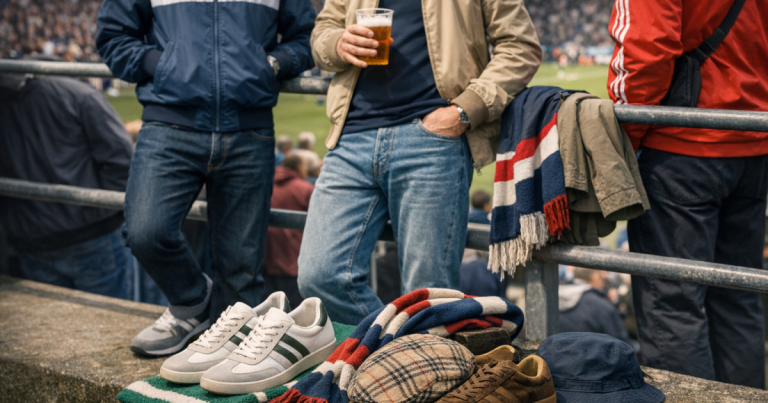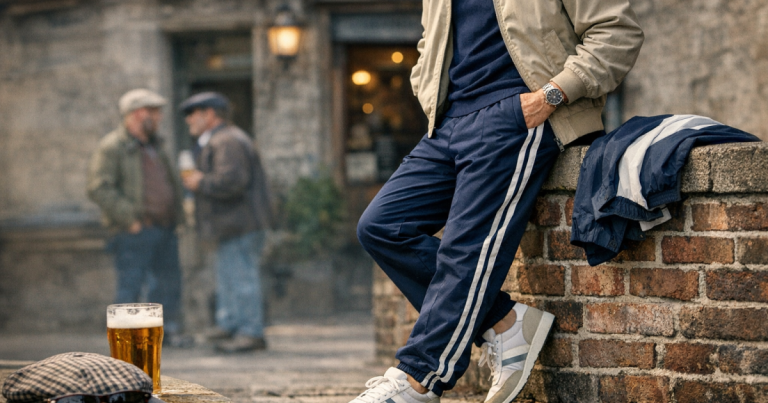
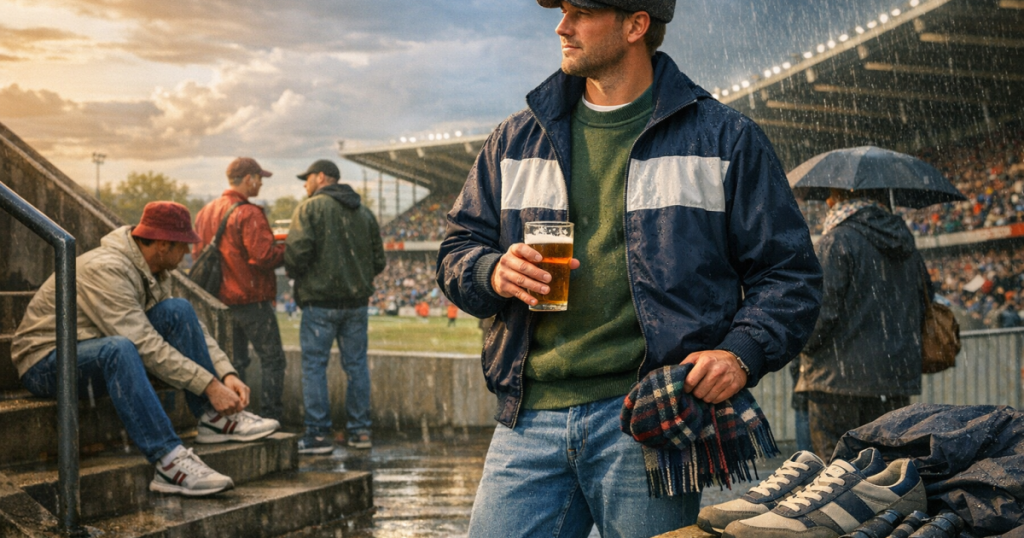
British matchdays ask more from your wardrobe than most style guides admit: cold platforms, warm pubs, sudden showers, windy away ends and the odd sunny afternoon that still turns chilly by full time. Dressing terrace style through the season is less about costume and more about reading the weather, the fixture and the era you are nodding to.
The strongest looks usually come from restraint: one good track top, clean trainers, useful outerwear and colours that feel connected rather than copied from a fancy-dress rail. The aim is to look like you understand the codes, not like you have put every reference on at once.
The short version
- Start with the fixture and forecast: home Saturday, wet Tuesday away and Boxing Day derby all need different layers.
- Keep one piece as the focal point: a track jacket, shell, polo, knit or pair of trainers.
- Use club colour carefully: a hint works better than dressing like unofficial merchandise.
- Choose trainers you can actually stand and travel in, especially for long train days and concrete concourses.
- Look after synthetics, nylon and vintage pieces properly, because creasing, bobbling and over-washing can ruin the effect.
August and early autumn: light layers, clean trainers, no overthinking
The first run of fixtures often tempts people into full tracksuit mode too early. In Britain, August can still mean warm trains, crowded pubs and plenty of walking, so a heavy set can feel wrong before kick-off. A lightweight track top over a plain T-shirt is usually enough, with track pants only if the fabric is breathable and the fit is relaxed rather than baggy.
This is where late 70s and early 80s sportswear cues work well: zip track tops, small logos, short collars, neat hems and trainers that look good with straight-leg trousers. If you are building from scratch, avoid mixing too many periods at once. A sharp Italian tennis-style top, slim dark denim and low-profile trainers can say more than a full archive set worn in the wrong conditions.
For the cultural side of those choices, the deeper guide to terrace tracksuit codes is useful because it explains how brand, fit and matchday meaning became part of the language.
October into November: the proper layering begins
Once the evenings draw in, the outfit has to work harder. The trick is to build layers that can be removed without the whole look falling apart. A track top under a lightweight jacket is more flexible than one thick coat over a weak base layer. It also gives you options when you move from the street to the stand to the pub.
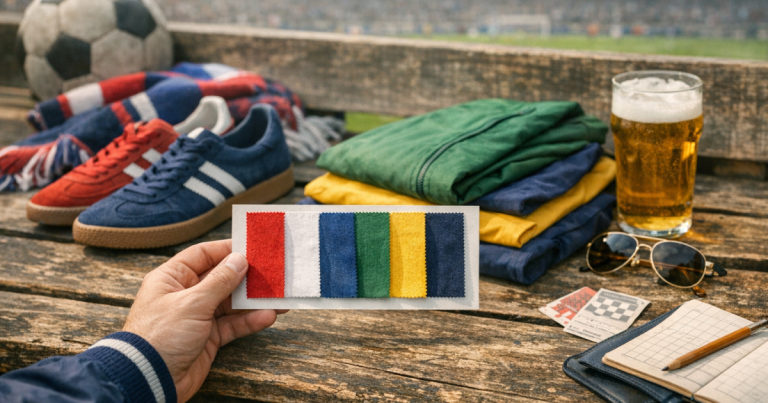
A good autumn setup might be a plain T-shirt, heritage track jacket, overshirt or cagoule, straight-leg jeans or track pants, and weather-sensible trainers. The colours should sit together: navy with white and red, forest green with cream, burgundy with grey, black with royal blue. Too much colour blocking can look forced, especially if the jacket and trainers are both shouting.
Three pieces worth using as reference points are the Adidas Originals Firebird Track Top for classic zip-through sportswear shape, the Fila Settanta Track Jacket for a sharper tennis-to-terrace feel, and the Diadora B. Elite if you want a trainer with an Italian casuals connection rather than another obvious adidas choice.
Winter matchdays: warmth without losing the silhouette
Winter is where many terrace-inspired outfits go wrong. The instinct is to pile on a huge coat and bury the good pieces underneath, but the better move is to keep the silhouette clean. Think thermal base layer where it cannot be seen, knitted polo or sweatshirt, track top or fleece, then a practical outer layer that suits the weather.
For very cold fixtures, a beanie or cap, scarf and gloves matter more than another bulky mid-layer. A wool scarf in muted club colours can work without becoming too literal. If you are going near vintage nylon or delicate archive pieces, keep them away from rough bag straps and heavy outerwear that can snag or flatten collars.
Footwear is the hardest winter decision. Suede trainers look excellent but can be unforgiving in rain, salt and mud around stations and away grounds. Leather or coated uppers are easier to clean, while darker colourways hide more of the day. If you insist on pale suede, use them on dry home fixtures rather than wet midweek travel.
Spring: brighter pieces, but keep the discipline
Spring football brings false confidence. One minute you are warm on the walk to the ground; the next you are in a cold stand with a wind cutting through your track top. This is the season for packable layers, zip necks, light shells and track jackets that can carry the outfit without needing a heavy coat.
It is also the best time to bring in brighter colours. Sky blue, red, bottle green, cream, yellow and white can all work, but use them as accents rather than a full traffic-light arrangement. A bold track top needs quieter trousers. Bright trainers need a calmer jacket. A cap can finish the look, but if the rest of the outfit is already loud, keep it plain.
Spring is also when Madchester, Britpop and 90s references start to feel natural again: looser shapes, bucket-hat adjacent attitudes, track tops over T-shirts, and trainers that look ready for both the match and the record shop. The point is not to dress as a period character; it is to borrow the attitude and make the fit current.
Choosing the right track top for the fixture
A track top is often the anchor, so pick it according to the day rather than the logo alone. For a home match with a short journey, you can take more risks with colour, vintage fabric or a boxier cut. For an away day with hours of travel, comfort and durability matter more. For a pub-heavy day, avoid anything so precious that every spilled pint becomes a crisis.
Zip-through classics
Zip-through track tops are the most versatile because they can be worn open, zipped to the neck or layered under a jacket. Ribbed cuffs and hems give shape, while a stand collar brings that clean sportswear line. They work with jeans, cords, track pants and smarter casual trousers.
Full tracksuits
A full tracksuit can look brilliant when the fit is right, but it is unforgiving when it is too shiny, too tight or too novelty. Keep the trainers grounded and the outerwear simple. If the set already carries strong stripes, piping or contrast panels, avoid adding a loud cap and scarf on top.
Shells and cagoules
Lightweight shells are very British in spirit because they answer the weather without pretending the weather is glamorous. They work especially well over a track top, sweatshirt or polo. The risk is looking too modern and outdoorsy, so balance them with heritage trainers, a plain knit or a classic sportswear colour palette.
Trainers: the detail people notice first
On the terraces, trainers are rarely an afterthought. They set the era, the sharpness and sometimes the credibility of the outfit. Gum soles, suede uppers, indoor court shapes and low-profile silhouettes all sit naturally with retro sportswear, but they are not equally useful across the whole season.
For dry autumn and spring fixtures, suede court trainers are hard to beat. For winter, darker leather or easier-clean materials make more sense. For long away days, comfort matters more than chasing the most delicate pair in the rotation. If you want a focused trainer reference, the guide on how adidas Handball Spezial works with terrace outfits covers colour, trousers and proportion in more detail.
Club colours without looking like a walking flag
Football identity is part of the appeal, but subtlety matters. A navy jacket with a claret stripe, a red trainer detail, a green polo collar or a scarf in traditional colours can be enough. The strongest outfits often feel club-adjacent rather than club-branded.
Be careful with rival colour combinations if that matters to your matchday routine. It sounds fussy, but regulars do notice. Equally, do not let colour rules ruin a good outfit: neutral navy, black, grey, stone and cream give you a safe base when club colour politics get awkward.
Vintage, reissue or modern inspired?
Original vintage has the romance: old labels, unusual cuts, faded colours and the sense that the garment has lived a bit. It also comes with compromises. Elastic can be tired, zips can be fragile, sizing can be unpredictable and fabric may not handle heavy rotation.
Reissues and modern archive-inspired pieces are usually easier to wear across a real football season. You get the shape and nostalgia without worrying quite as much about damaging a rare piece on a wet concourse. The trade-off is that some reissues can feel too clean or too widely worn, so the styling has to do more work. Pair them with less obvious trousers, a vintage scarf or trainers outside the usual rotation.
Care between fixtures
Most matchday clothing does not need aggressive washing after every wear. Air track tops properly, brush off surface dirt, and follow the care label before washing synthetics, embroidered logos or delicate panels. Over-washing can fade colour, weaken trims and leave older pieces looking tired.
A garment steamer can be useful for easing creases from synthetic sportswear, but avoid blasting heat directly onto prints, badges or fragile vintage fabric. For a realistic view of whether a handheld option makes sense for track tops, the Tefal Access Steam Easy review looks at the steamer from a retro tracksuit angle.
Things readers ask
Can you wear a full tracksuit to the match without looking overdone?
Yes, but keep everything else calm. Choose a well-fitting set, simple trainers and minimal accessories. If the tracksuit is bright or heavily branded, avoid adding more statement pieces.
What is the safest colour palette for British matchdays?
Navy, black, grey, stone, cream and bottle green are easy foundations. Add club colour through stripes, piping, scarves or trainer details rather than making the whole outfit shout.
Are suede trainers a bad idea in winter?
Not always, but they are risky for wet away days, muddy routes and long station walks. Darker suede is more forgiving, while leather or coated uppers are easier to clean.
How do you make retro sportswear look current?
Get the fit right and reduce the costume signals. One archive-inspired piece, clean trousers, good trainers and modern grooming usually look sharper than copying an old photo head to toe.
Key takeaways
Dressing for the British football calendar is about judgement. The best outfits understand the fixture, the weather and the culture behind the clothes. Start light in late summer, layer intelligently through autumn, protect the silhouette in winter and bring colour back carefully in spring.
Above all, wear the pieces as clothes rather than props. Terrace dressing works because it carries memory, music, football and regional taste into something practical. Get the layers, trainers and care right, and the look will survive more than one season.