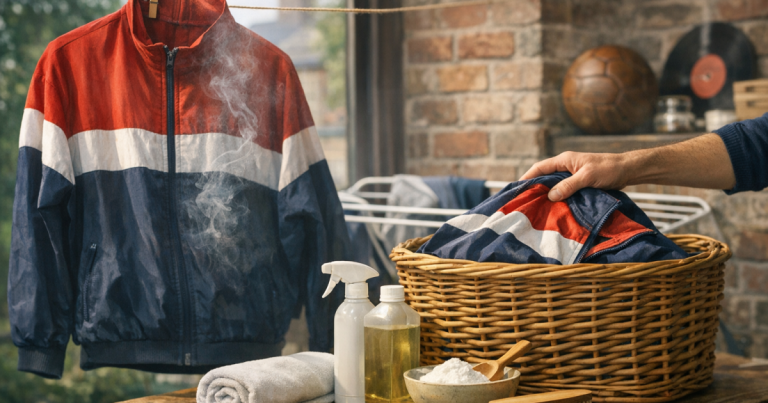
A proper wash routine is the difference between a vintage terrace piece that keeps its sharp shape and one that starts looking tired after two spins. If you wash a vintage track top with too much heat, friction or detergent, bobbling usually follows quickly.
Most older track tops are not fragile museum pieces, but they do need a calmer approach than modern gym kit. Think low temperature, low agitation, careful drying and no rough mixed loads.
In brief
- Turn the track top inside out and fasten every zip, popper or Velcro tab before washing.
- Use a cool, gentle cycle, ideally 20°C or 30°C, unless the care label says otherwise.
- Wash it with similar lightweight synthetics, not towels, denim or heavy cotton sweats.
- Use a small amount of mild liquid detergent and avoid overloading the drum.
- Air dry it away from direct heat; do not use a tumble dryer unless the care label clearly allows it.
Why bobbling happens on old track tops
Bobbling, or pilling, happens when loose fibres work their way to the surface and tangle into small balls. On vintage sportswear, the main causes are friction, heat, heavy spinning and abrasive laundry companions. A classic shiny tricot top, a brushed inner collar, ribbed cuffs and embroidered branding can all react differently in the same wash.
Terrace labels from adidas, Sergio Tacchini, Fila, Ellesse, Diadora and Lacoste often used synthetic fabrics designed for sport and leisure, not endless harsh washing. Many still wear brilliantly, but the surface finish can suffer if you treat a 1980s-style track top like a bath towel.
Age matters too. Elastic can weaken, lining can become more delicate, and old zips may feel rougher than new ones. Before you even get to the machine, check the fabric, trims and stitching so you know what you are dealing with.
Step 1: Check the label, fabric and weak points
Start with the care label if it is still readable. It will not tell you everything, especially on older or imported pieces, but it gives you the safest first clue on temperature, drying and ironing. If the label is missing, assume caution: cool wash, gentle movement and air drying.
Look closely at the usual stress areas:
- Ribbed cuffs and hem, where bobbling often appears first.
- Underarms and side seams, where friction builds during wear.
- Zip tape and pockets, which can rub against the main fabric.
- Printed, flocked or embroidered logos, which may dislike heat and scrubbing.
- Collars, especially if they have a brushed or textured inner face.
If you have just picked up a vintage top online, measure and photograph it before the first clean. That gives you a record of sleeve length, chest width and overall fit in case the garment relaxes or tightens slightly after washing. For a reliable measuring method, use the same approach covered in measuring a track top before buying online.
Step 2: Remove surface dirt before the wash
Do not throw a muddy or dusty track top straight into the drum and hope for the best. Loose grit increases abrasion, which is exactly what encourages bobbling. Shake the garment outside, brush off dried dirt with a soft clothes brush, and use a lint roller if the surface has picked up fluff.
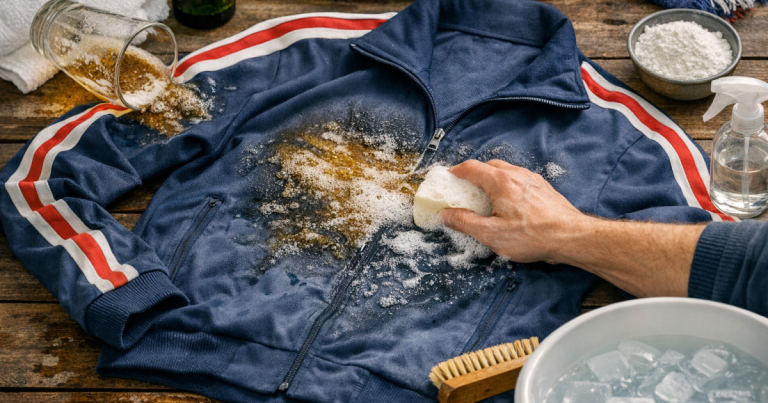
For small marks, spot clean first rather than increasing the intensity of the full wash. Dab the area with cool water and a tiny amount of mild detergent. Avoid scrubbing in circles, as that can roughen the fibres and create a fuzzy patch. Work gently from the outside of the mark towards the centre, then rinse with a clean damp cloth.
Oil, food and old deodorant marks may need more patience. Treat them lightly, leave the detergent to sit for a short period, then wash as normal. Do not use bleach on coloured vintage sportswear, and be careful with aggressive stain removers on contrast panels, piping and older logos.
Step 3: Prepare the track top properly
Preparation reduces friction more than most people realise. Fasten the main zip, close pocket zips and secure any poppers. A loose zip pull can scrape the fabric while the drum turns. Turn the track top inside out so the outer face, stripes and branding are less exposed to rubbing.
If the piece is rare, loosely woven, heavily embroidered or already starting to pill, place it in a mesh laundry bag. The bag will not make it invincible, but it reduces contact with the drum and other garments. Do not cram it in tightly; the top still needs room for water and detergent to move through the fabric.
Wash one or two track tops at a time with similar lightweight items. Avoid towels, jeans, heavyweight hoodies and anything with rough hardware. A soft football shirt or another synthetic track jacket is a better companion than a pile of cotton sweatshirts.
Step 4: Choose the right machine settings
For most vintage synthetic track tops, a 20°C or 30°C gentle cycle is the sensible starting point. Use the delicate, wool, sportswear or easy-care setting if your machine has one, but do not rely on the name alone. The important details are low temperature, moderate drum movement and a reduced spin.
A fast spin can press creases into synthetic fabric and increase stress on ribs, seams and trims. If your machine allows it, choose a lower spin speed, or stop the programme before the final high-speed spin and gently press out water by hand. Never wring the track top like a towel; twisting can distort cuffs, hems and zip lines.
Use less detergent than you would for a full normal load. Too much detergent can leave residue, making the fabric feel stiff and attracting more lint. A mild liquid detergent usually disperses better in cool water than powder. Fabric conditioner is best avoided on many synthetic sportswear pieces because it can coat the fibres and change the handle of the cloth.
Step 5: Hand wash when the top is delicate or uncertain
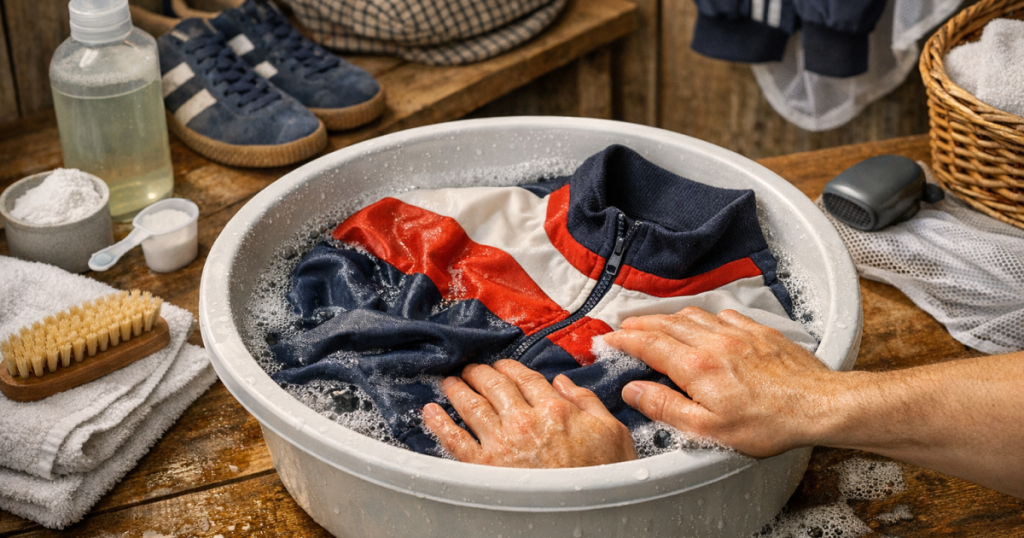
Hand washing is useful for older, scarce or sentimental pieces, but it still needs restraint. Fill a clean basin with cool water, add a small amount of mild detergent, and let the track top soak briefly. Gently press the water through the fabric instead of rubbing panels together.
Pay attention to cuffs, collar and underarms, but do not attack them with a nail brush. If an area needs extra work, use your fingertips and light pressure. Drain the water, refill with clean cool water, and rinse until the water runs clear. Lift the garment with both hands so the wet weight does not pull on the shoulders.
To remove excess water, lay the top flat on a clean towel, roll the towel up, and press gently. This is much kinder than wringing and helps the garment dry faster without putting strain on the fabric.
Step 6: Dry it without creating fuzz, creases or shape loss
Drying is where many good washes are ruined. Avoid radiators, direct strong sunlight and tumble drying unless the label clearly permits it. High heat can affect synthetic fibres, encourage shine in the wrong places and weaken old elastic.
Lay the track top flat on an airer or dry it on a broad hanger that supports the shoulders. Thin wire hangers can leave points in damp fabric, especially on heavier tops. Smooth the sleeves, zip line, collar and hem while the garment is still damp so it dries in the right shape.
In a typical UK home, drying can be slow in winter. Use airflow rather than heat: open a window slightly when practical, leave space between garments, or place the airer in a well-ventilated room. Do not leave the top bunched up, as trapped moisture can create odours and extra creasing.
Step 7: Deal with existing bobbles carefully
If the track top already has bobbling, remove it only when the garment is completely dry. A fabric comb can work on sturdier ribbed cuffs or thicker knit areas, but use very light strokes. On smooth tricot, embroidery or printed panels, be far more cautious because it is easy to snag the surface.
Electric fabric shavers can help on some garments, but they are risky on thin, shiny or uneven vintage fabrics. If you use one, test on a hidden area first and keep the blade head flat. Do not chase every last bobble; over-shaving can thin the fabric and make the problem worse over time.
The best fix is prevention. Once a surface has been abraded repeatedly, it will usually pill more readily in the same areas. That is why separating rough laundry, lowering spin speed and drying carefully matter more than any aftercare tool.
Aftercare between washes
You do not need to wash a track top after every wear unless it is genuinely dirty or sweaty. Air it after use, brush off lint, and hang it where the fabric can breathe. This is particularly useful for pieces worn over a T-shirt or polo, where the inner layer takes most of the body contact.
Store vintage tops on broad hangers or folded flat in a drawer, depending on the fabric and shoulder structure. Keep sharp zips, badges and hook-and-loop fastenings away from smoother pieces. If you rotate several track tops, the fibres get more recovery time and each garment needs fewer washes.
Footwear care matters too because dirty trainers can transfer grit onto hems and cuffs when you store or pack outfits together. If suede terraces are part of the same rotation, the cleaning principles are different, so follow a separate method for cleaning suede terrace trainers without ruining them.
Common mistakes that cause bobbling
- Washing with towels or denim, which creates heavy abrasion.
- Using a hot cotton cycle because the top looks sturdy.
- Leaving zips open so the teeth rub against the fabric.
- Overdosing detergent, which can leave residue and stiffness.
- Scrubbing stains aggressively rather than dabbing and rinsing.
- Using a tumble dryer on older synthetic fabric without checking the label.
- Shaving bobbles too often, which can weaken the surface.
Helpful questions
Can I wash a vintage track top in the washing machine?
Yes, if the fabric, stitching and trims are sound. Use a cool gentle cycle, turn it inside out, close all zips and wash it with similar lightweight garments.
Is 40°C too hot for an old track top?
Often, yes. Some labels may allow it, but 20°C or 30°C is usually safer for vintage synthetics, printed details, ribbed cuffs and older elastic.
Should I use fabric conditioner?
It is usually better to skip it. Fabric conditioner can coat synthetic fibres, affect the feel of the material and sometimes make residue or lint problems worse.
How often should I wash it?
Wash only when it needs it. Airing after wear, spot cleaning small marks and brushing off lint will reduce full washes and help prevent bobbling.
Can I iron a vintage track top?
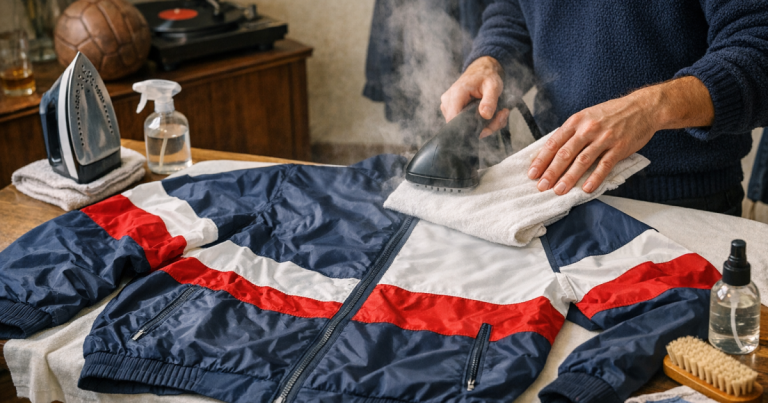
Only if the care label allows it, and even then use low heat with a cloth between the iron and garment. Avoid direct heat on prints, badges and shiny panels.
Why it matters
A vintage track top is not just another layer; it carries the look of a particular era, club trip, holiday photo, rave flyer or Saturday afternoon memory. Keeping it clean without bobbling means it stays wearable rather than becoming something you are afraid to take out of the wardrobe.
Once the top is fresh and sitting properly again, styling becomes easier too. For a classic archive shape with modern wearability, the same care mindset pairs naturally with outfit ideas like styling the adidas Originals Firebird Track Jacket: keep the fabric sharp, avoid overcomplicating the layers, and let the cut and colour do the work.
The simple rule is this: reduce friction at every stage. Cool water, mild detergent, gentle movement, careful drying and sensible storage will do more for a vintage track top than any miracle laundry hack.