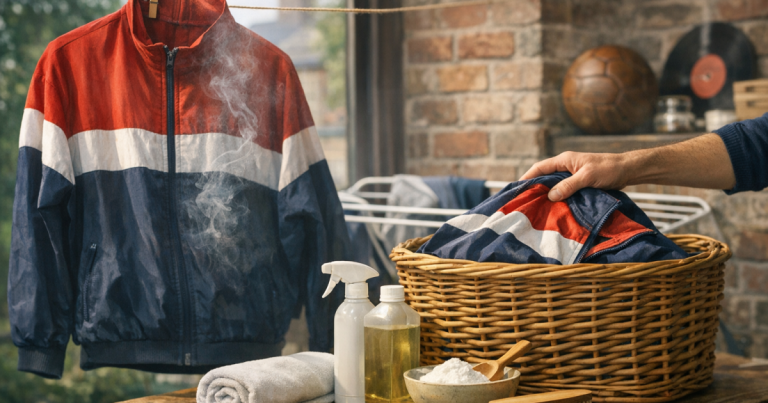
A pint over the sleeve can make a good track top look tired fast, but the first few minutes matter more than the washing machine. Getting beer spills out of a track jacket is mostly about lifting sugar and smell without roughing up nylon, polyester, ribbed cuffs or printed logos.
Think terrace practicalities: cold treatment first, gentle movement, no panic-scrubbing, and no heat until you know the mark has gone.
The short version
- Blot the spill straight away with a clean cloth or paper towel; press, do not rub.
- Flush the mark from the back of the fabric with cold water.
- Use a small amount of mild liquid laundry detergent on the stained area.
- Wash according to the care label, usually on a cool, gentle cycle if the label allows.
- Air dry only, then check the fabric in daylight before storing or wearing.
Why beer is awkward on track jacket fabric
Beer looks harmless compared with curry sauce, red wine or mud, but it brings three problems: sugar, yeast smell and moisture. Left in the fibres, it can dry slightly sticky, attract grime around cuffs and seams, and leave that stale pub scent that reappears when the jacket warms up on the train home.
Retro and terrace-style track jackets often use shiny polyester tricot, nylon shells, cotton-blend ribbing, embroidered badges, contrast piping and printed branding. Each part responds differently. The main body might rinse clean quickly, while the cuff holds odour or the chest logo dislikes aggressive scrubbing. If you are not sure what you are dealing with, it helps to understand how different weaves and finishes behave; the fabric notes in our guide to choose a retro tracksuit fabric for British weather are useful beyond buying decisions.
Step 1: Blot the spill before it spreads
Act while the jacket is still damp. Lay it flat if you can, put a clean towel under the marked area, then press from the outside with another clean cloth or plain paper towel. Do not grind the cloth into the fabric; that pushes beer deeper into the weave and can rough up the surface.
If the spill is on the sleeve or front panel, work from the edge of the wet patch towards the middle. That helps stop a larger tide mark forming. On ribbed cuffs or collar fabric, pinch gently with the towel rather than dragging across the ribs.
Step 2: Flush with cold water from the reverse
Turn the jacket inside out and run cold water through the back of the stain. This pushes the beer out the way it came in, rather than driving it further through the face fabric. Keep the flow gentle; a sink tap is enough.
Avoid hot water at this stage. Heat can make odour and residue harder to shift, and it is not kind to some older synthetic finishes. If the jacket has a large embroidered badge, flock print or bonded detailing, keep the water focused on the stained cloth rather than soaking the whole panel for longer than necessary.
Step 3: Pre-treat with mild detergent
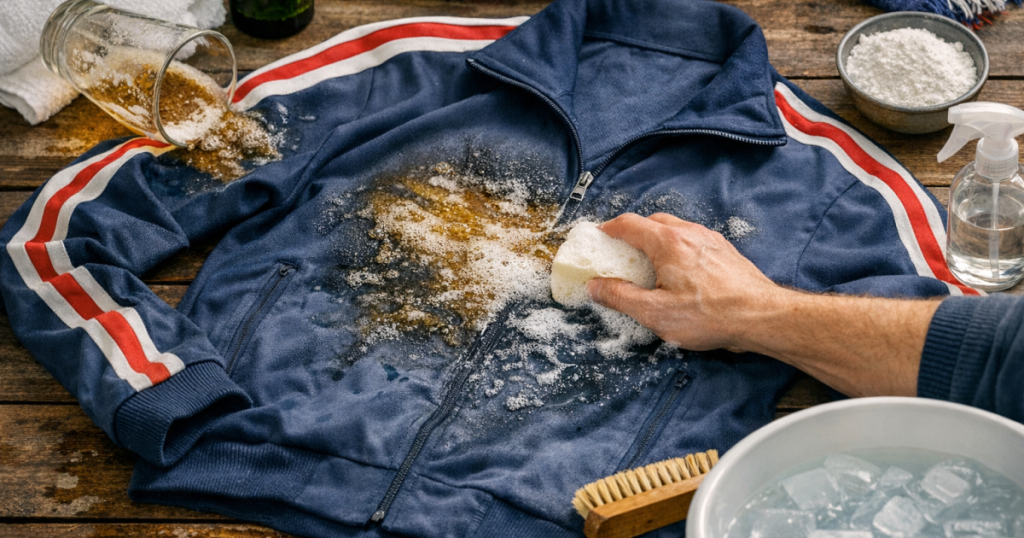
Put a small amount of mild liquid laundry detergent on your fingertip, then tap it into the damp stained area. You are trying to loosen sticky residue, not create a foam bath. Leave it for around 10 to 15 minutes, keeping the area damp.
For a fresh pale lager spill, this may be enough. For darker ale, stout or mixed drinks, inspect the colour of the mark carefully before washing. Darker drinks can leave a more visible shadow on light jackets, especially white, cream, sky blue or pale grey panels.
- On plain polyester: gentle fingertip movement is usually safer than a brush.
- On ribbed cuffs: squeeze detergent through the ribbing, then rinse well.
- On printed logos: treat around the print rather than rubbing directly over it.
- On embroidered badges: blot and rinse, but avoid lifting threads with friction.
Step 4: Wash it properly, not aggressively
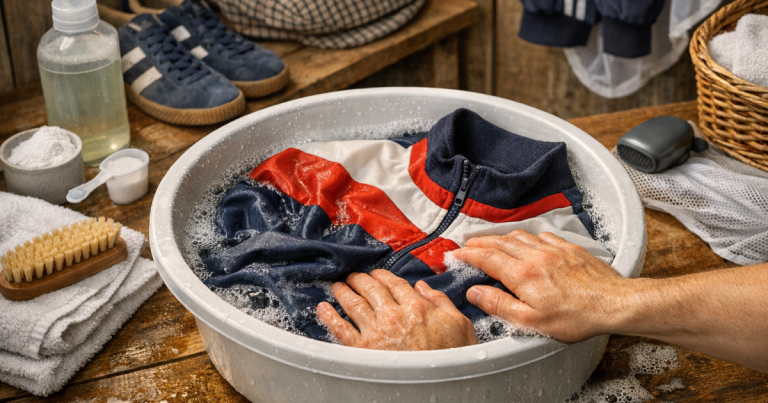
Check the care label before choosing a setting. If the label permits machine washing, close the zip, turn the jacket inside out, and wash it with similar colours. A cool cycle at 30°C is often a sensible starting point for modern synthetic sportswear when the label allows it, but the label takes priority.
Use a modest amount of detergent. Too much can leave residue that makes shiny fabric look dull or stiff. Avoid fabric conditioner on synthetic track tops if odour is the issue, as it can leave a coating that traps smells rather than clearing them.
If the jacket is vintage, rare, or already prone to bobbling, treat it more cautiously. A laundry bag, low spin speed and smaller wash load can reduce abrasion. For broader care habits, including how to protect older surfaces, see our advice on how to wash a vintage track top without bobbling.
Step 5: Air dry and inspect before applying heat
Once washed, do not tumble dry it just to get it ready for the next matchday. Hang it on a broad hanger or lay it flat on a clean towel, away from direct radiator heat. Heat can set any remaining shadow or smell, and it can also distort cuffs, collars and older synthetic trims.
Check the area in natural light once dry. Beer stains can vanish indoors and then show as a faint ring outside. Smell the cuff, hem and zip placket as well as the main stain; those thicker areas often hold residue longer than the body fabric.
If the spill has already dried
A dried beer mark needs rehydrating before washing. Dampen the area with cold water, then repeat the mild detergent pre-treatment. Let it sit for around 15 to 20 minutes, rinse from the reverse, and wash according to the label.
If the jacket still smells after one wash, do not keep increasing the heat or detergent. Re-rinse the affected area, then wash again on a cool suitable cycle. Persistent odour usually means residue remains in a seam, cuff or lining, not that the jacket needs harsher treatment.
What not to do
- Do not scrub a shiny track jacket with a stiff brush; it can leave a fuzzy or flattened patch.
- Do not use neat bleach on coloured sportswear, badges or contrast panels.
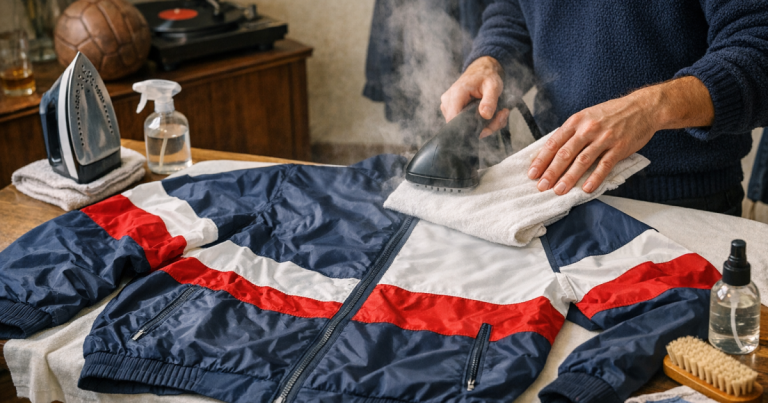
- Do not iron over a stained area, printed logo or flock detail.
- Do not tumble dry until the stain and smell are fully gone.
- Do not leave the jacket balled up in a kit bag, car boot or washing basket overnight.
Handling pale, dark and colour-blocked jackets
Light jackets show tide marks; dark jackets hide stains but can hold smell. Colour-blocked styles need extra care because different panels may release dye differently, especially on older garments. Before using any stain remover, test it on a hidden seam or inside hem and check for colour transfer on a white cloth.
For white or cream panels, patience matters. Several gentle passes are safer than one heavy-handed attack. For navy, black, burgundy or forest green jackets, inspect the surface from different angles after drying; shiny fabrics can reveal rubbed patches more than stains.
Matchday damage control when you are not near a washing machine
If the spill happens at a pub, ground, gig or train station, you can still reduce the damage. Blot with plain napkins, then use cold tap water on a clean cloth to dab the mark. Avoid hand dryers, hot air, scented soap and vigorous rubbing in public toilets; they can make the problem worse.
When you get home, do the proper cold rinse and pre-treatment rather than assuming the quick dab has solved it. The aim outside the house is only to stop the beer drying deep into the fabric.
Keeping the jacket wearable afterwards
Once the stain is out, give the jacket space before storing it. Hang it somewhere airy until fully dry, then fasten the zip so the shape is not dragged out of line. If you are wearing it as part of a full set, a clean top makes the whole outfit sharper; the same discipline behind stain removal also helps when you want to make a full tracksuit look sharp, not sloppy.
Do a final check on the cuffs, neck and zip tape before the jacket goes back in the wardrobe. Beer residue left in those areas can encourage mustiness, especially in a British winter when outerwear often dries slowly indoors.
Main points
- Speed matters: blot first, rinse cold, then pre-treat.
- Heat is the enemy until the stain has completely lifted.
- Ribbing, embroidery and printed logos need gentler handling than plain panels.
- Older track tops deserve lower friction, lower spin and more patience.
- If smell remains, repeat a cool wash rather than using harsher treatment.
FAQ
Can I use washing-up liquid on a beer stain?
A tiny amount can help in an emergency, but rinse it thoroughly. For the proper wash, mild liquid laundry detergent is usually the cleaner choice because it is made for fabric.
Will one wash remove the smell?
Often, yes, if you rinsed and pre-treated quickly. If the smell remains, focus on cuffs, seams and zip tape, then repeat a cool wash rather than using heat.
Is it safe to use stain remover on a vintage track jacket?
Only after checking the care label and testing a hidden area. Vintage dyes, prints and trims can react unpredictably, so start with cold water and mild detergent first.
Should I dry clean a beer-stained track jacket?
Most washable sportswear does not need dry cleaning for a normal beer spill. If the label says dry clean only, or the jacket is rare and fragile, follow the label rather than experimenting.
Does cider need different treatment?
Treat cider much the same way: blot, cold rinse, mild detergent and cool washing. Its sugar content can leave stickiness, so do not let it dry into cuffs or seams.