A retro track top can pick up cigarette, vape lounge, bonfire or pub-garden smoke surprisingly quickly, and older synthetic fabrics tend to hold the stale edge longer than a cotton hoodie. The safest way to remove smoke smells is to air it properly, lift surface residue, wash gently if the care label allows, then dry it slowly in fresh air rather than blasting it with heat. Treat the smell as a fabric-care problem, not a perfume problem.
That matters with terrace gear because the details are often the whole appeal: ribbed cuffs, contrast piping, embroidered badges, flocked logos and old zip pulls. A heavy-handed wash might shift the smell, but it can also flatten the shape, cloud a sheen or weaken decoration on a piece that has survived years of wear.
Main points
- Start with dry airing before adding water or detergent.
- Check the care label, fabric, lining and trims before washing.
- Use cool water, a mild detergent and a low-agitation cycle for washable synthetics.
- Avoid hot tumble drying, radiator drying, bleach and strong solvent sprays.
- Repeat gentle stages rather than trying one aggressive treatment.
Step 1: Work out what kind of smoke you are dealing with
Not every smoke smell behaves the same. Cigarette smoke tends to leave a stale, oily film that clings to collars, cuffs and underarms. Bonfire smoke can smell sharper and woodier, often sitting in the outer face of nylon or polyester. Pub-garden smoke may be mixed with deodorant, food smells and damp air, which can make the track top seem worse once it is warm indoors.
Before doing anything, hang the track top somewhere neutral for half an hour and smell it again. A room full of cooking smells, damp coats or air freshener can confuse your judgement. If the smell is strongest at the collar, cuffs and zip placket, you are probably dealing with residue as well as trapped odour. If the whole garment smells evenly smoky, airing and a gentle full wash are more likely to help.
Step 2: Inspect the track top before treatment
Retro sportswear is rarely just “a jacket”. It might be polyester tricot, shiny nylon, lined shell fabric, cotton-blend ribbing or a mix of panels. Vintage and second-hand pieces can also have weakened stitching, faded care labels or decoration that has already been through too many hot washes.
Check these areas before you start:
- Care label: look for the washing temperature, whether tumble drying is allowed, and any dry-clean-only instruction.
- Logos and prints: raised, rubberised or flocked branding needs a lighter touch than embroidery.
- Zip and metal trims: corrosion or rough edges can snag fabric during washing.
- Ribbed cuffs and hem: older elastic can lose shape if soaked for too long.
- Lining: a lined shell may trap odour between layers and take longer to dry.
If the garment is a recent reissue, the label should give you a clearer route. If it is an older terrace piece picked up from a market, auction site or mate’s wardrobe clear-out, treat it as fragile until it proves otherwise. Smoke smell is common with pre-owned sportswear, so the same caution applies when you are following wider second-hand checks such as those in buying a second-hand Kappa tracksuit without regrets.
Step 3: Air it properly before washing
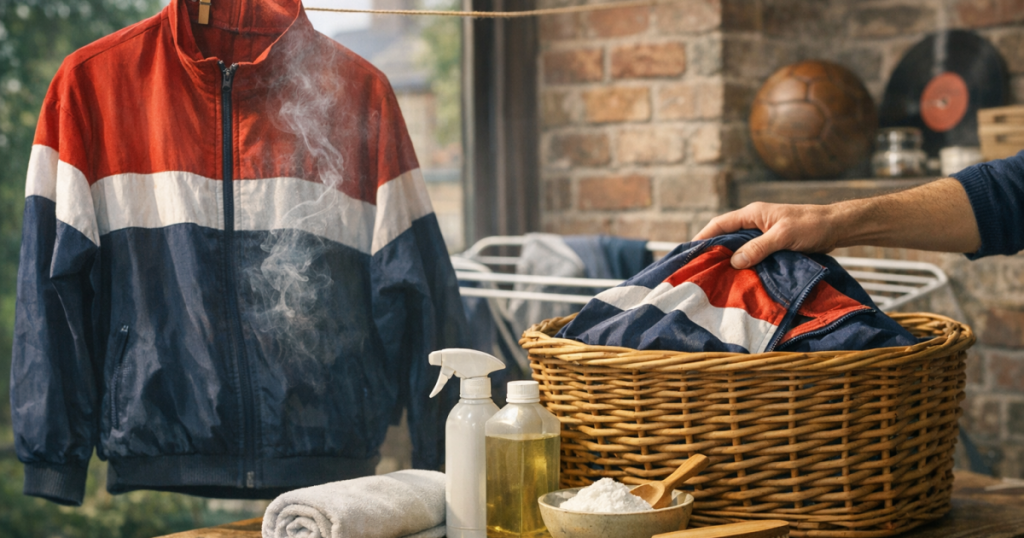
Airing is not just hanging it over a chair for ten minutes. Put the track top on a broad hanger, fasten the zip halfway to support the shape, and hang it outside in shade or in a well-ventilated room with a window open. Avoid harsh direct sun, especially on navy, red, bottle green or black pieces, because strong sunlight can fade older dyes and make shiny fabrics look tired.
Leave space around the garment so air can pass through the sleeves and body. If it is safe to do so, turn it inside out halfway through the airing period. Smoke often sits inside the collar and upper back, particularly if the track top has been worn zipped up at a match, gig or night out.
For light smoke, several hours of steady airflow may make a noticeable difference. For a stronger smell, air it overnight indoors near ventilation, then reassess in the morning. Do not spray it heavily with fragrance at this stage. Scented sprays often mask smoke for a few hours, then leave you with smoke plus perfume.
Step 4: Use bicarbonate carefully for dry odour lifting
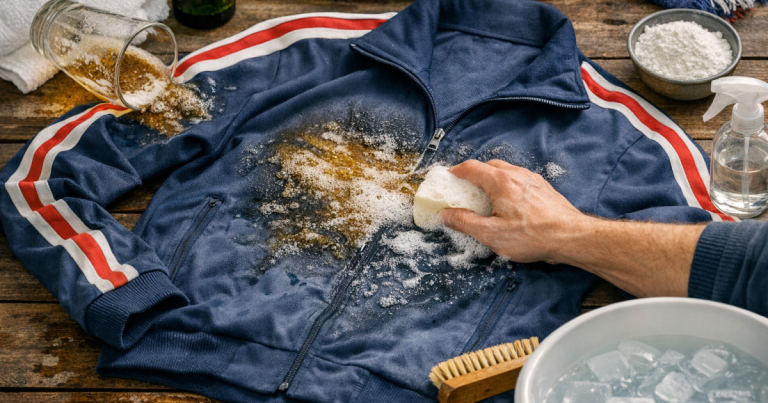
Bicarbonate of soda can help absorb stale odours, but it should not be rubbed aggressively into delicate decoration. Lay the track top flat on a clean towel, sprinkle a light amount around the inside body, underarms and collar area, and leave it for a few hours. Keep it away from raised logos, old prints and any damp patches.
Afterwards, shake the garment outside and use a soft clothes brush to remove residue. Do not use a stiff brush on shiny nylon or tricot, as it can roughen the surface. If the fabric has a deep weave or towelling-style lining, make sure no powder is trapped before washing.
For a valuable vintage piece, test a small hidden area first. Bicarbonate is mild, but residue left in seams or dark ribbing can show as pale dust. The aim is to reduce the odour load before washing, not to scrub the top into submission.
Step 5: Wash only if the label and condition allow it
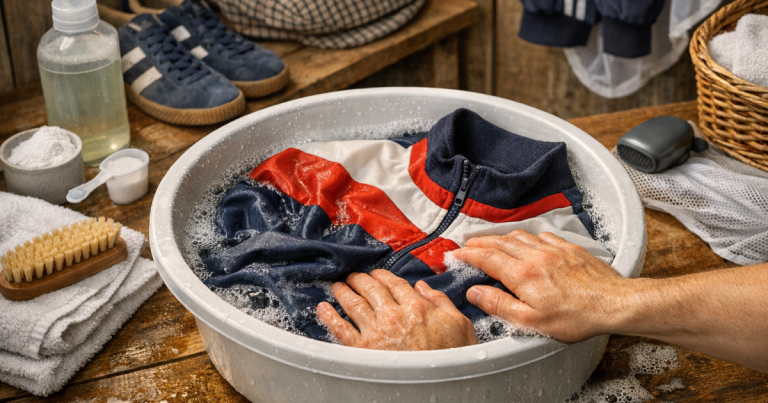
When you need to remove smoke smells from a washable retro track top, use a cool, gentle wash rather than a hot, heavy cycle. A typical safe starting point for many modern polyester or nylon sportswear pieces is 30°C, but the care label always takes priority. Turn the top inside out, zip it up, and place it in a mesh laundry bag if you have one. This reduces abrasion against the drum and helps protect piping, badges and zip pulls.
Use a mild liquid detergent and avoid overloading the machine. Too much detergent can leave residue, which holds odours and makes synthetic fabric feel clammy. Fabric conditioner is not usually helpful here; it can coat fibres and dull the clean feel you want from a track top.
If the smoke smell is stubborn, a laundry odour additive designed for washable clothing may help, but check that it is suitable for the fabric and colour. Avoid chlorine bleach, strong stain removers and anything intended for white cotton bedding rather than coloured sportswear. A cream Fila-style top, a navy adidas-inspired track jacket and a bright red nylon shell will not all tolerate the same treatment.
Step 6: Rinse well and dry slowly
Smoke residue and detergent residue both become more obvious when a garment dries badly. If your washing machine has an extra rinse option, it can be useful for smoky clothing, especially if you used an odour additive. Keep the spin moderate rather than punishing; older seams and elasticated hems do not benefit from being twisted hard.
After washing, reshape the track top while damp. Smooth the sleeves, align the zip, pat the collar into place and lay it flat on a drying rack or hang it on a broad hanger. Dry it in moving air, away from radiators and high heat. Tumble drying can shrink ribbing, crease synthetics and stress old logos, even when the main fabric appears robust.
If the top dries and still smells faintly smoky, do not panic. Synthetic garments can release trapped odour in stages. Air it again, then repeat a gentle wash only if the fabric still feels sound. One calm repeat is safer than one brutal wash.
Step 7: Steam with restraint if the smell lingers
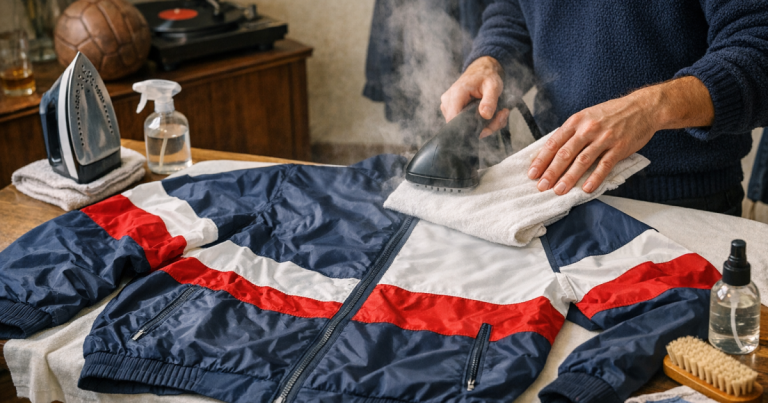
Steam can help freshen synthetic sportswear, but it is not a magic reset and it should be used carefully. Keep the steamer moving, avoid pressing the head directly onto prints, and do not saturate the fabric. The goal is to relax fibres and release stale odour, not to soak the track top.
This is particularly useful when the smell sits around the collar or sleeve creases after washing. Hang the garment, steam lightly from a short distance, then let it air fully before putting it away. Never steam over unknown stains, as heat can set some marks.
If creasing is part of the problem as well as smell, the principles are similar to those used when you remove creases from a nylon track jacket without damage: low heat, patience, movement and no direct ironing on vulnerable trims.
What not to do
Most ruined track tops are damaged by impatience rather than smoke. Avoid these common shortcuts:
- Do not soak overnight by default: long soaking can weaken old elastic, loosen adhesives and encourage dye bleed.
- Do not use neat vinegar on trims: diluted white vinegar is sometimes used in laundry, but direct application can affect finishes and leave its own smell.
- Do not drown it in deodorising spray: masking products can build up on synthetic fabric.
- Do not iron the smell out: heat can lock in odours and damage logos.
- Do not store it while even slightly damp: trapped damp creates a musty smell that is harder to shift than light smoke.
When the smell is from storage, not just smoke
Sometimes a track top smells smoky because it has been stored near smoke for years, not because it was worn once at a bonfire. In that case, the odour may be mixed with cupboard must, loft dust or stale cardboard. The process is the same, but slower: air, brush, dry deodorise, wash gently, dry fully, then repeat only if the garment can take it.
Storage smell often clings to old paper tags, cardboard boxes and plastic garment bags too. If you are keeping a track top as part of a wider terrace wardrobe, store it clean, dry and uncompressed. Use breathable garment covers rather than sealing it in plastic, and keep it away from damp exterior walls. A jacket that looks sharp over Gazelles or Sambas on match day still needs air around it when it is off-duty.
How to protect the shape and terrace look
The point is not just to make the top smell better; it is to keep the silhouette right. A retro track top should still sit cleanly at the shoulder, hold its collar and keep the cuffs crisp. Heavy washing, hot drying and rough brushing can make a good piece look limp.
After treatment, try it on over the layer you normally wear: a plain tee, polo or light knit. Check whether the hem has twisted, the zip still runs smoothly and the sleeves have kept their length. If the top is part of a more considered outfit, especially something like a Beckenbauer-style track top, condition matters as much as colour. The same mindset applies when buying an Adidas Originals Beckenbauer track top online: smell can often be fixed, but warped trims and damaged prints are harder to rescue.
Things readers ask
Can I put a smoky retro track top straight in the washing machine?
Yes, if the care label allows machine washing and the garment is structurally sound. Air it first if possible, then wash inside out on a cool gentle cycle with mild detergent.
Will freezing remove smoke odour?
Freezing may reduce some smells temporarily, but it is unreliable for smoke residue. Airing, gentle washing and thorough drying are more dependable for synthetic sportswear.
Is dry cleaning better for an old track top?
Only if the care label recommends it or the garment is too fragile for washing. Tell the cleaner about the smoke smell and point out any delicate logos, trims or vintage details.
Can I use vinegar in the wash?
A small amount of diluted white vinegar is sometimes used for odour, but it is not suitable for every trim, dye or finish. Avoid applying it neat and prioritise the care label.
Why does the smell come back when I wear it?
Body heat can release odour trapped in collars, cuffs and lining. Repeat gentle airing and washing rather than using heat or heavy fragrance to force a quick fix.
Final thoughts
Smoke smell is annoying, but it does not have to end a good retro track top. Start dry, stay cool, protect the details and give the garment enough airflow between stages. That approach respects the thing that makes terrace sportswear worth keeping in the first place: not just the badge or the colourway, but the lived-in shape and fabric character that cheap shortcuts can ruin.