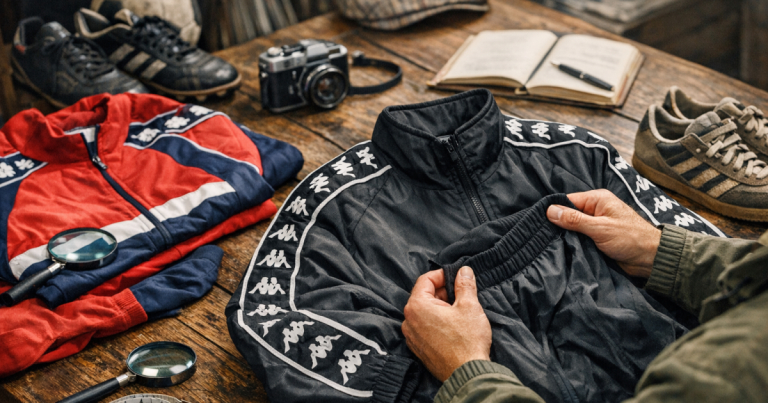
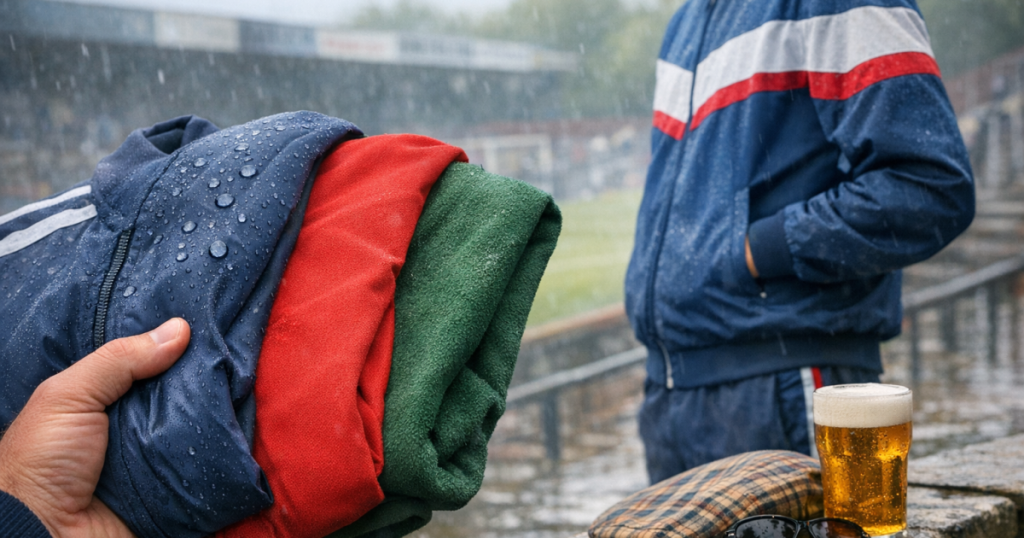
British weather is rarely kind to a full set: one minute drizzle, the next a warm train carriage, then a cold walk from the station to the ground. Choosing the right retro tracksuit fabric matters because the wrong cloth can feel clammy on a train, heavy in rain or too warm once you are indoors. The aim is not to chase one perfect material, but to match the cloth to how you actually wear it: matchday queues, pub stops, school runs, weekend errands and the odd sunny spell.
What to know first
For most people in Britain, the most useful tracksuit fabric is not the thickest one. It is the one that balances wind resistance, drying time, comfort and layering space. A shiny polyester track top might look properly archive-inspired, but it will behave very differently from a brushed cotton hoodie-style set or a crinkly nylon shell.
- For damp, changeable days: favour polyester or nylon blends that dry faster than heavy cotton, but check whether the garment is merely smooth or actually labelled shower-resistant.
- For cold matchdays: choose a fabric that leaves room for a base layer, polo, knit or light fleece underneath rather than buying the thickest top available.
- For pub-to-terrace wear: avoid anything too insulating if you will spend half the day indoors.
- For vintage buying: inspect bobbling, lining condition, elastic, zips and fabric thinning before getting carried away by the badge.
Step 1: Start with the weather you actually face
A tracksuit for a dry September away day is not the same as one for a wet February walk across an exposed retail park car park. Before looking at colour blocking, era or brand, think about your usual conditions.
Cool and damp
This is the classic British problem. Heavy cotton absorbs moisture and can feel cold once wet, while smooth synthetics tend to dry more quickly. Polyester tricot, woven polyester and nylon-style shells can work well here, provided you are realistic: many retro track tops are not waterproof jackets. If the label or retailer does not clearly say water-resistant or shower-resistant, assume it is for light drizzle at most.
Cold and windy
Wind can make a thin track top feel much colder than its weight suggests. Tightly woven fabrics usually block wind better than open, soft jersey fabrics, but the trade-off is breathability. For cold stands, late trains and long walks back after full time, the smarter move is often a medium-weight track jacket with a thin layer underneath rather than one bulky garment.
Mild and changeable
Spring and early autumn are where shiny heritage fabrics shine. They give you the look without overheating too quickly, and they sit neatly over a T-shirt or polo. If you are wearing wide track bottoms, check that the fabric has enough drape to fall cleanly rather than ballooning around the shoe.
Step 2: Know the main fabric types
The retro tracksuit fabric decision becomes much easier once you know how the common materials behave. The badge and colourway might get your attention, but the composition label tells you whether you will actually keep reaching for it.
Polyester tricot
Polyester tricot is closely tied to the classic sportswear look: smooth, slightly shiny and instantly recognisable. It usually works well for everyday wear because it keeps its shape, dries reasonably quickly and layers without much bulk. The downside is that it can feel warm or clammy if the cut is tight or the lining is heavy, so check the fit across the chest, shoulders and thighs.
Nylon and woven shell fabrics
Nylon-style track tops and woven shells bring more of a crisp, outdoorsy edge. They can be useful in wind and light rain, but they are more likely to rustle and may feel less relaxed indoors. If you are buying vintage, listen for crackling in coated fabrics and inspect the inside surface, because old coatings can deteriorate with age.
Cotton-rich jersey and fleece
Cotton-rich tracksuits are comfortable, familiar and easy to wear casually, especially if your style leans more hoodie, cap and trainers than shiny terrace top. They are not the best first choice for wet weather because they hold moisture, but they are strong for dry cold days, travel and low-key weekend wear. Cotton fleece can also look bulkier, so pay attention to the taper of the bottoms and the length of the top.
Velour and plush fabrics
Velour has a clear retro appeal, but it is less versatile for British weather. It can look sharp in the right setting, though rain, mud and packed public transport are not its friends. Treat it as a statement fabric rather than an all-weather option.
Step 3: Match fabric to the silhouette
Fabric and fit are tied together. A fabric that looks sharp in a slim track top may not work in oversized bottoms, and a soft cotton set can look lazy if the proportions are wrong. The old casuals instinct was never just about labels; it was about how the whole outfit sat.
Smooth polyester tends to suit clean lines: ribbed cuffs, a neat hem, a track top that finishes around the hip, and bottoms that break cleanly over trainers. Cotton fleece needs more discipline. If the top is long, the bottoms are loose and the fabric is thick, the outfit can quickly move from relaxed to shapeless.
Woven shells can take a slightly roomier cut because the fabric has structure. That said, too much volume can make a full tracksuit feel like waterproof overtrousers rather than terrace sportswear. If you are unsure, compare the garment measurements against something you already wear well rather than trusting size letters alone.
Step 4: Use modern reissues as reference points
Current heritage pieces are useful because they let you feel fabrics in shops or compare retailer descriptions before chasing a vintage original. A set such as the Adidas Originals Trefoil Tracksuit can help you judge how a modern polyester heritage tracksuit sits, while the Adidas Originals Superstar Tracksuit gives another familiar reference point for cut, sheen and everyday wearability. Always verify the current fabric composition and care label, because brands can update materials and fits across seasons.
If you are weighing up different heritage sets, our comparison of Trefoil and Vector heritage tracksuits is a useful next read because it looks at how full sets wear in real outfits, not just how they look on a product page.
Step 5: Check the lining, not just the outer
The outer fabric gets most of the attention, but the lining often decides whether a track top works in Britain. Mesh can feel cooler and more breathable, while brushed or fully lined pieces may be warmer but less flexible indoors. Some vintage tops also have linings that catch, sag or cling, which can ruin the fit even when the outer looks pristine.
- Mesh lining: usually better for mild days and layering over a T-shirt or polo.
- Smooth woven lining: easy to slide over other layers, but check for static and trapped warmth.
- Brushed lining: warmer, but more likely to feel bulky under an outer jacket.
- No lining: light and simple, though it may show the shape of layers underneath.
Step 6: Build for layering without losing the shape
A good British-weather tracksuit should give you options. If you can only wear it over a thin T-shirt, it is probably too limited for most of the year. If it only works over a sweatshirt, it may be too roomy for everyday wear.
For cold matchdays, look for enough shoulder and chest room to add a thin thermal, polo or lightweight knit underneath. Avoid stacking too many thick layers under a shiny track top, because the fabric will pull and the sleeves will lose their line. For more detailed outfit planning, especially when you want warmth without turning the jacket into a padded coat, read our guide to layering a track jacket for cold matchdays without bulk.
Step 7: Inspect vintage fabric carefully
Vintage track tops can be brilliant, but fabric condition matters more than a nostalgic colourway. Photos often hide thinning elbows, shiny wear patches, tired cuffs and pilling at the sides. Ask for clear pictures of the collar, cuffs, hem, armpits, zip area and inner label. If buying online, measurements in centimetres are more reliable than relying on a vintage size tag.
Smell is another clue. A musty synthetic top can sometimes be freshened up, but deep storage odour is harder to judge through a listing. Be cautious with old nylon coatings, cracked printed panels and badly stretched waistbands. These faults are not always deal-breakers, but they should affect what you are willing to pay and how often you expect to wear the piece.
Step 8: Think about washing before you buy
Fabric choice affects care. Smooth polyester is generally easier to look after than delicate vintage finishes, but heat, rough washing and aggressive spin cycles can still age a track top quickly. Cotton fleece may bobble, dark colours may fade, and old printed details can suffer if treated carelessly.
Before buying, check whether the garment needs a low-temperature wash, gentle cycle, air drying or special handling. If you already own older pieces, our guide on washing a vintage track top without bobbling covers the sort of routine that helps preserve the fabric and shape.
Common questions
Is polyester better than cotton for British weather?
For damp days, usually yes, because polyester tends to dry faster and hold less water than cotton. For dry cold days, cotton-rich fleece can feel warmer and more comfortable.
Are retro tracksuits waterproof?
Most are not. Some shell-style pieces may handle light showers, but only trust waterproof or water-resistant claims when they are clearly stated on the label or retailer description.
What fabric works best for a full tracksuit?
Medium-weight polyester is often the easiest full-set option because it keeps the silhouette tidy without feeling too heavy. Very thick fleece can work, but it needs a sharper fit.
Should I size up for layering?
Only slightly. You want enough room for a thin layer underneath, not so much excess fabric that the shoulders drop badly or the bottoms look baggy.
Is vintage fabric worth the risk?
It can be, especially for colourways and cuts you cannot easily find in reissues. Buy on condition first, label second, and ask for measurements and close-up photos.
Final thoughts
The best fabric for British weather is the one that matches your real routine. Shiny polyester brings the classic terrace feel and handles changeable days well. Nylon-style shells are useful when wind and drizzle are part of the plan. Cotton-rich fleece is comfortable for dry cold wear but less convincing once the rain starts.
Do not buy on nostalgia alone. Check the fabric composition, lining, weight, measurements and care label, then picture the actual journey: train, pub, pavement, turnstile, walk home. If the cloth works for that, the tracksuit has a far better chance of becoming something you wear often rather than something that only looks good in the wardrobe.