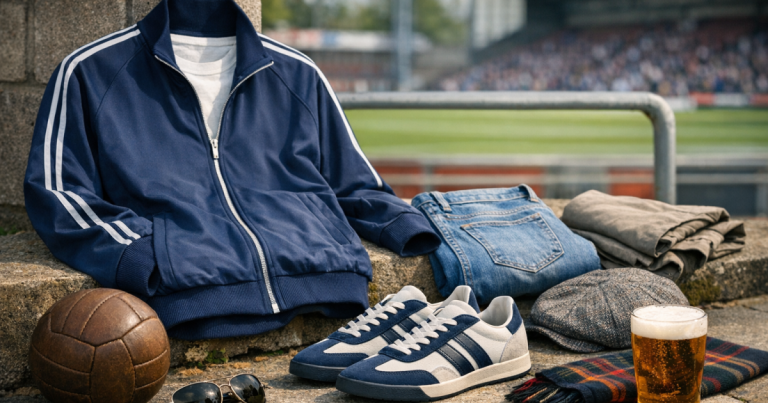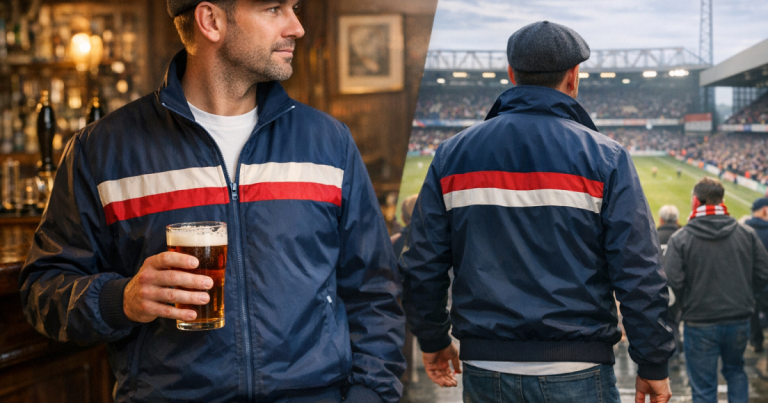
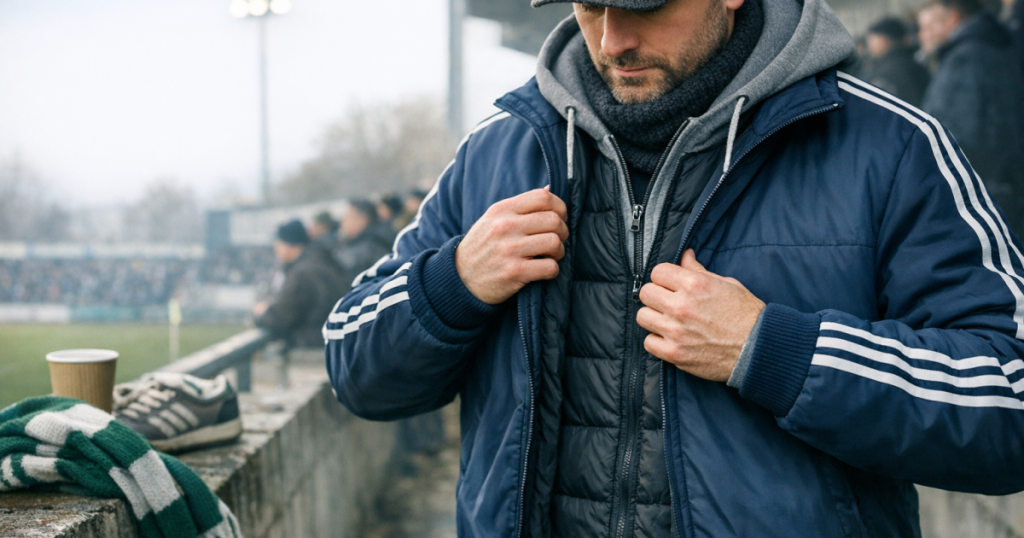
Cold matchdays expose the difference between looking prepared and looking padded out. The trick to layering a track jacket is to build warmth underneath and around it, not to bury the jacket under random bulk. Done well, the track top still carries the look: clean collar, visible stripes or piping, tidy cuffs and enough movement for the walk to the ground, the concourse queue and the ninety minutes.
The short version
For a cold British matchday, think in thin, controlled layers: a close base layer, a neat mid-layer, the track jacket as the visual centre, then a light weatherproof outer if the forecast is grim. Bulk usually comes from oversized cotton hoodies, thick jumpers, heavy parkas and trousers that fight the jacket’s shape.
- Start close to the body: a fitted thermal or long-sleeve tee keeps warmth in without changing the jacket’s silhouette.
- Use one tidy mid-layer: a polo, fine-gauge knit or slim sweatshirt is usually enough unless it is properly freezing.
- Let the track top show: keep the collar, chest panel, sleeve stripes or contrast piping visible where possible.
- Add weather protection, not padding: a light shell or mac works better than a bulky coat when you want the terrace shape to stay sharp.
- Balance the bottom half: wide track bottoms, denim or cords all change how heavy the outfit feels.
Step 1: Build warmth with a close base layer
The base layer is where most people either win or lose the outfit. A thin thermal, merino-blend top or close cotton long sleeve keeps warmth near the body while letting the track jacket sit properly across the shoulders. A loose T-shirt under a thick hoodie under a track top quickly creates folds at the chest and sleeves, which makes even a good jacket look tired.
For a clean terrace look, keep the base layer plain: white, navy, black, grey or cream. A visible neck can work if it looks intentional, but avoid anything that bunches above the collar. In single-digit temperatures, a crew neck usually behaves better than a roll neck under a zipped track top, because it gives the collar space to sit flat.
Something like a Uniqlo Heattech Crew Neck T-Shirt is a useful reference point for the kind of low-profile layer to consider, but check the fit, fabric feel and warmth level before relying on any base layer for a long afternoon outside.
Step 2: Choose a mid-layer that respects the jacket
The mid-layer should add warmth without stealing the whole shape. A fine sweatshirt can work, but the cuffs and hem need to be controlled. If the sleeves are too long or the body is too boxy, the track jacket has to stretch over it, which creates the rounded, overstuffed look most people are trying to avoid.
A polo shirt is often underrated for cold matchdays. It adds a little structure at the neck, keeps the outfit closer to terrace heritage than gym wear, and gives you options if you unzip the track top indoors. A Fred Perry Twin Tipped Polo Shirt is the obvious cultural reference here, though any neat polo with a flat collar can do the same job if the proportions are right.
Fine-gauge knitwear is another strong choice, particularly under Italian-style track tops from the Sergio Tacchini, Fila or Ellesse school. Keep the knit smooth rather than chunky. Cable knits and heavy lambswool jumpers may be warm, but they push the jacket out at the shoulders and arms.
Step 3: Make the track jacket the centre, not the insulation
A retro track jacket is rarely the warmest layer in the outfit, and it does not need to be. Its job is line, colour, identity and that unmistakable sportswear shape. The mistake is asking it to behave like winter outerwear, then adding so much beneath it that the jacket loses the very details that made you pick it.
Zip position matters. Fully zipped gives the cleanest silhouette and keeps heat in around the chest. Half-zipped feels more casual and lets a polo collar or plain base layer show. Open can look strong for a short walk or pub stop, but on a cold concourse it is usually style over sense unless you have built enough warmth underneath.
If you are wearing a full set, keep the proportions deliberate rather than defaulting to baggy-on-baggy. The principles in making a full tracksuit look sharp rather than sloppy apply even more when extra layers are involved: clean hems, controlled cuffs and no unnecessary sagging around the waist.
Step 4: Add an outer layer only when the weather demands it
Cold alone is different from cold rain. If the forecast is dry, you may get away with a base layer, mid-layer and track jacket, especially if you are moving between train, pub and ground. If rain or wind is likely, add a light outer layer that protects the track top without flattening the look.
A plain nylon shell, cagoule, coach jacket or light mac usually works better than a thick padded coat. The outer should have enough room to go over the track jacket without pulling across the chest, but not so much volume that the whole outfit becomes shapeless. Dark navy, black, forest green and stone are easy colours because they let brighter archive panels or sleeve details do the work underneath.
A wax jacket can also sit well with terrace sportswear when the colours are restrained. A Barbour Bedale Wax Jacket is a familiar British reference, but the key check is whether the cut allows comfortable movement over the track top without crushing the collar or bunching the sleeves.
Step 5: Control the neck, hands and head
Small cold-weather details can save you from adding another bulky torso layer. A scarf, beanie and gloves often do more for comfort than a second sweatshirt. They also keep the outfit looking considered rather than desperate.
Choose a scarf that lies flat rather than a huge blanket style. Football colours can work, but they change the tone of the outfit, so keep the rest quieter if the scarf is doing the talking. A ribbed beanie in navy, black, grey or bottle green is easy with most track jackets. Caps can still work in cold weather, but they do not protect the ears, so they are better for milder days or under a hooded shell.
Step 6: Keep the lower half from adding visual weight
Bulk is not just about the top half. Heavy layers up top paired with wide trousers and chunky trainers can make the whole outfit look bottom-heavy. If your track jacket is already layered under a shell, keep the trousers clean: straight-leg denim, cords, or track bottoms with a controlled break at the shoe.
Wide tracksuit bottoms can look excellent with a retro jacket, but the trainer choice becomes important. Too small and the hem swallows the shoe; too chunky and the look turns blocky. For more detail on getting that balance right, use the fit checks in picking trainers for wide tracksuit bottoms.
Matchday examples that actually work
The dry but freezing fixture
Use a thermal crew neck, fine polo, zipped track jacket, wool scarf, beanie and gloves. Keep the outer layer off unless the wind is cutting through. This keeps the jacket visible and avoids the heavy coat problem.
The wet away day
Go with a close base layer, thin sweatshirt, track jacket and plain shell. Keep the shell lightweight and slightly longer than the track jacket if possible, so rain does not sit on the waistband. Avoid a cotton hoodie here, because once it gets damp it feels heavy and loses shape.
The pub-to-ground afternoon
A polo or fine knit under the track jacket gives you enough polish indoors, then a scarf and gloves handle the walk. If you are moving in and out of warm rooms, layers you can adjust quickly matter more than one enormous coat.
Common mistakes that create bulk
- Layering two loose tops underneath: choose one proper mid-layer instead of stacking a T-shirt, hoodie and sweatshirt.
- Ignoring sleeve space: if the jacket arms feel tight before you leave the house, they will feel worse after hours of movement.
- Using a padded gilet over everything: it can work occasionally, but it often hides the best parts of the track top and squares off the torso.
- Letting hems fight each other: the base, mid-layer and jacket should not all finish at visibly different lengths.
- Overdoing logos: one strong sportswear piece looks deliberate; five competing badges can look like a changing-room floor.
After the final whistle
Cold matchdays are hard on vintage and reissue track tops: rain, pub warmth, train seats, spilled drinks and damp scarves all take their toll. Air the jacket when you get home rather than leaving it zipped in a bag or thrown over a radiator. Heat can be unkind to synthetic fabrics, prints and older trims.
If the jacket needs washing, treat it as a garment with history rather than standard gym kit. Zip it up, turn it inside out where appropriate, avoid overloading the machine and follow the care label. For older pieces, the advice on washing a vintage track top without bobbling is a sensible next step before you risk damaging fabric, embroidery or flocked details.
Quick answers
Can you wear a hoodie under a track jacket?
You can, but it is the easiest route to bulk. If you do it, choose a thin hoodie with neat cuffs and a flat hood. Thick fleece hoodies usually distort the jacket shoulders and make the collar sit awkwardly.
Should the track jacket go under or over the coat?
For cold rain, the track jacket usually sits under a lightweight shell or mac. For dry cold, let the track jacket be the outer visible layer and use base layers, scarf and gloves for warmth.
What is the warmest low-bulk combination?
A close thermal base layer, fine mid-layer, zipped track jacket, scarf, beanie and gloves is usually the most efficient starting point. Add a light shell only for wind or rain.
The big picture
The best cold matchday layering keeps the track jacket’s identity intact. Use thin warmth close to the body, avoid lazy hoodie bulk, choose weather protection only when it earns its place, and keep the lower half clean. That way the outfit still reads as terrace sportswear rather than winter survival gear, even when the temperature drops and the away end is testing everyone’s resolve.