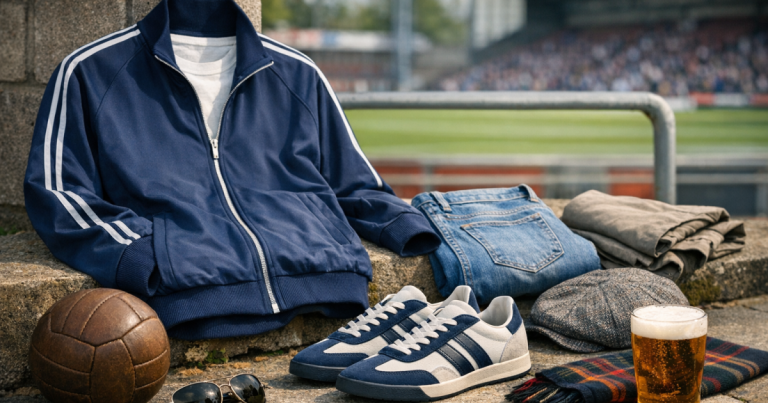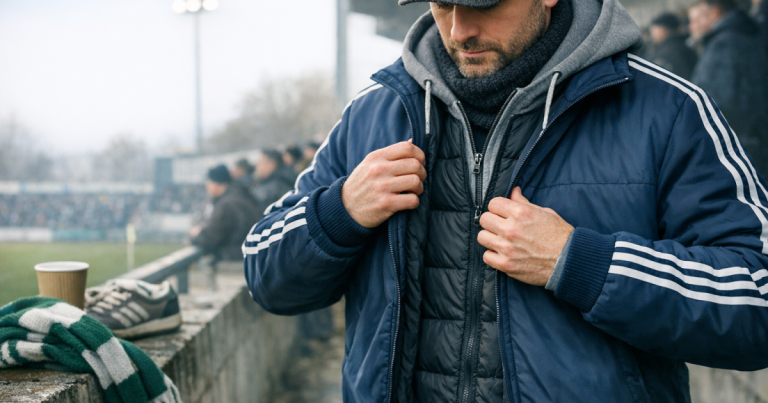
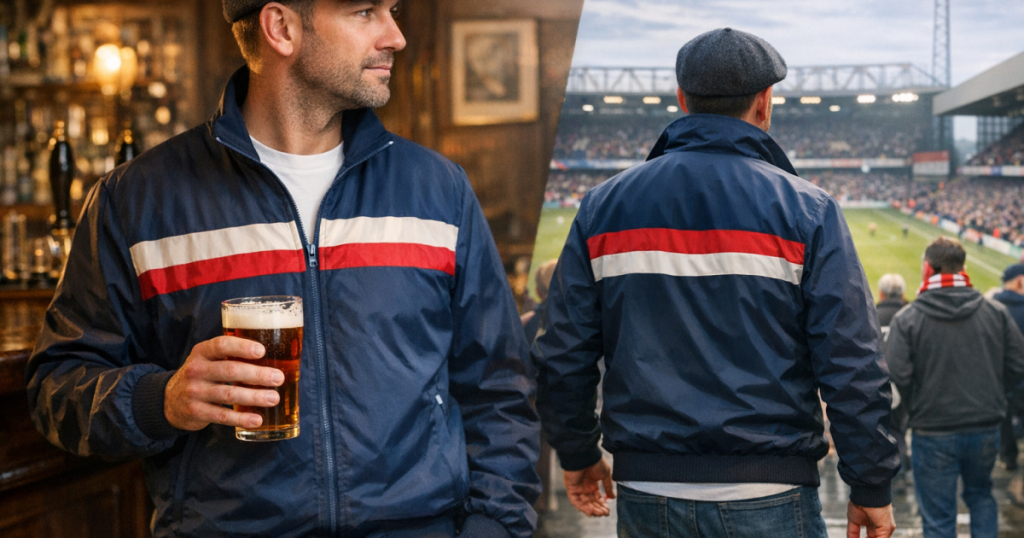
The walk from the pub to the turnstiles is where a jacket proves itself. A pub-to-ground track jacket has to survive warm bars, drizzle, queues, a bit of shoulder-to-shoulder movement and the usual post-match detour without looking like fancy dress. The aim is simple: enough heritage to feel terrace-aware, enough restraint to work with jeans, cords or track bottoms, and enough practicality for a British Saturday.
This is not about dressing like a museum display from a football documentary. It is about reading the old codes properly, then making them work around modern grounds, packed pubs, trains, weather apps that lie, and jackets that need to earn their place.
The decision in five checks
- Choose a fabric that suits the forecast, not just the era you like.
- Keep the fit clean through the shoulders and waist so it layers without ballooning.
- Pick colour with your route in mind: pub lighting, rain, crowd movement and denim all matter.
- Check pockets, zip, cuffs and collar before matchday, because small annoyances get bigger in a queue.
- Use heritage details lightly. One strong reference is better than a full costume.
Step 1: Start with the weather, not the badge
British matchdays can run from overheated pub snug to sideways rain in under an hour. That makes fabric the first serious decision. A shiny polyester track top can look spot-on under pub lights and still feel chilly when the wind comes through an exposed stand. A heavier knit-backed or lined style may feel better in winter but can be too warm once you are inside for a pint before kick-off.
For mild days, a light track jacket works well over a polo, tee or thin knit. For damp days, think about whether you need a separate outer shell rather than expecting a retro track top to behave like rainwear. For colder fixtures, the jacket should sit as part of a layering system rather than doing all the work itself. If you are unsure how different sportswear fabrics behave in British conditions, the guide to choosing retro tracksuit fabric for British weather is the natural next read.
Step 2: Get the fit right for movement
A track jacket for pub-to-ground wear needs room, but not slop. You should be able to raise your arms, reach a bar, sit on a train, zip it up over a layer and stand in a tight crowd without the hem riding halfway up your back. The mistake is going too oversized because it looks relaxed on a hanger. In real use, excess fabric catches on bags, bunches under coats and makes the whole outfit feel less considered.
Use these checks before committing to a matchday outing:
- The shoulder seam should not drag so far down the arm that the sleeve twists.
- The hem should sit cleanly around the hip or upper seat, depending on the jacket shape.
- The cuffs should hold without clamping, especially if you wear a watch.
- The zip should close comfortably over your usual base layer without pulling across the chest.
- The collar should sit neatly open and zipped, because pub-to-ground wear usually needs both.
If the jacket only works when fully open and perfectly arranged, it is probably too fussy for the job.
Step 3: Choose colour like you are actually going out
Terrace style has always understood colour, but the best matchday outfits are sharper than they are loud. Navy, black, forest green, burgundy, cream, bottle green, deep red and brown tones usually work harder than neon or overly bright archive colours. They sit better with denim, suede trainers, wool overshirts and darker winter layers.
Club colours are a separate question. Wearing them can be part of the ritual, but a full branded colour block can feel heavy-handed away from the ground. If you want a nod rather than a chant sheet, choose one colour from the club palette and keep everything else calmer. A burgundy stripe, navy body, green piping or white zip detail often says enough.
Also think about stains and weather. Pale sleeves look excellent until the pub table is sticky, the rain starts, or someone brushes past with chips. Darker cuffs and collars are easier for regular use, while lighter jackets suit more controlled days when you are not doing trains, pubs and a packed concourse.
Step 4: Read the heritage without copying the whole scene
The cultural appeal of a track jacket comes from more than the logo. There is the tennis club influence of the Italian brands, the three-stripe training-ground look, the glossy football casual crossover, the rave-adjacent sportswear mood and the indie pub circuit connection. The trick is to borrow the feeling without dressing as a character.
Use real pieces as references for proportion and attitude. The adidas Originals Firebird Track Top gives you the bold, recognisable sportswear line; the Sergio Tacchini Damarindo Track Top points towards the tennis-casual side of the story; and the Fila Settanta Track Jacket carries that clean Italian clubwear mood many UK casuals still respond to. The exact piece matters less than the discipline: pick one clear reference, then keep the rest of the outfit grounded.
That might mean a track jacket with straight-leg jeans and understated trainers, or a more relaxed jacket over a plain polo with dark cords. If you go full matching set, make sure the fit is clean and the footwear has enough weight to anchor it. If you add a cap, keep it simple. Too many signals at once turns terrace style into costume.
Step 5: Match the jacket to the route
A home fixture with a ten-minute walk from the local is different from an away day involving a train, two pubs, a police cordon, a long walk and a late-night return. The longer the route, the more practical the jacket needs to be.
For short pub-to-ground trips, you can get away with lighter fabrics, cleaner collars and more expressive colour. For longer days, pockets become more important, darker tones make more sense, and a jacket that can sit under an outer layer is useful. If you carry very little, zipped side pockets can be enough. If you need keys, ticket, phone and travel card, check that the pockets do not gape or drag the jacket out of shape.
On cold fixtures, avoid the instinct to solve everything with one bulky coat. A thin base layer, polo or knit, track jacket and weather-appropriate outer layer often looks better and feels more adaptable. For a deeper breakdown, read the advice on layering a track jacket for cold matchdays without bulk.
Step 6: Check the details that annoy you later
Small details decide whether a jacket becomes a reliable matchday piece or stays in the wardrobe. Run through the practical checks at home, not while you are trying to get through a crowded doorway.
- Zip: it should run smoothly and not catch the facing when you are in a hurry.
- Collar: it should sit naturally open without flopping, and zipped without digging into the neck.
- Pockets: they should hold essentials securely enough for pub and concourse movement.
- Lining: it should slide over layers without gripping sleeves or bunching at the elbow.
- Care label: check washing and drying instructions, especially for vintage or delicate reissue fabrics.
- Smell retention: synthetic jackets can hold pub smells, so air them properly after wear.
If beer, rain or takeaway sauce is part of your normal matchday risk profile, keep care realistic. Do not scrub aggressively at old sportswear or heat-dry it because you want it ready for the next fixture. For spills, the specific steps in getting beer out of a track jacket are worth knowing before the damage sets in.
What works with jeans, track bottoms and trainers
With jeans
Jeans keep the jacket grounded. Straight or relaxed denim usually works better than spray-on cuts, especially with a boxier retro top. Mid-wash denim leans casual and pub-friendly; dark denim looks sharper if you are going somewhere after the match. Avoid stacking too much fabric over low-profile trainers unless that is the exact 1990s silhouette you want.
With track bottoms
A full tracksuit can look sharp, but it needs intention. Matching jacket and bottoms should be clean, properly sized and broken up with good footwear. If the bottoms are wide, the jacket should not also be huge. If the jacket is loud, the rest should be quiet.
With trainers
Terrace-style trainers should match the weight of the jacket. Slim suede trainers work with neat Italian-style tops and denim. Chunkier runners can work with bolder 1990s sportswear, but they change the whole outfit. The goal is balance: the jacket, leg shape and trainer profile should look like they belong to the same day out.
Common mistakes to avoid
- Choosing a jacket only because the badge is right, then ignoring poor fit or awkward fabric.
- Wearing too many heritage references at once: track top, retro cap, loud trainers, full colours and vintage bag can become theatre.
- Assuming a track jacket is rainwear. Most are better treated as mid-layers unless clearly designed otherwise.
- Going too pale for messy, crowded pub days.
- Forgetting that grounds and pubs are warm in some areas and freezing in others, so adaptable layering beats one heavy piece.
Things readers ask
Should a track jacket be zipped up or worn open?
It should work both ways. Open looks relaxed in the pub; zipped is useful outdoors and in queues. If it only looks good one way, it is less versatile.
Can you wear a hood under a track jacket?
Yes, but keep the hoodie thin and plain. A bulky hood under a high collar usually distorts the shape and makes the jacket look cramped.
Is vintage better than a modern reissue?
Vintage has character, but condition, smell, zip quality and fabric fatigue matter. A reissue is often easier for regular pub and ground wear.
Are bright colours too much for matchday?
Not always. Bright colour works best when the rest of the outfit is restrained. Let one panel, stripe or jacket do the talking.
What should I wear under it for a normal British fixture?
A tee or polo works for mild weather; a fine knit or thin sweatshirt works when it is colder. Avoid bulky layers unless the jacket is cut for them.
The big picture
The right track jacket for pub-to-ground wear is not the loudest, rarest or most obviously branded piece. It is the one that handles the whole rhythm of the day: standing at the bar, walking in bad weather, joining the queue, sitting or standing in the ground, then heading back out afterwards. Get the fabric, fit, colour and details right, and the heritage takes care of itself.
Terrace style works best when it looks lived in rather than performed. Pick a jacket that can take a normal British matchday, pair it with clothes you already wear well, and let the references sit in the background rather than shouting over the outfit.