Buying a vintage-style track top online is a gamble if you only trust the labelled size. To measure a track top properly, you need flat garment measurements, a similar jacket you already like, and a clear idea of the fit you want rather than the size you used to wear.
That matters even more with terrace sportswear, where archive cuts, modern reissues, boxy football-casual shapes and slim contemporary fits can all sit differently on the body. A medium in one era-inspired top can feel relaxed, while another medium from a different brand can sit short, narrow or too neat over a hoodie.
The short version
- Use a soft tape measure and record everything in centimetres.
- Measure a track top you already like, not your body alone.
- Prioritise pit-to-pit, back length, shoulder width, sleeve length and hem width.
- Compare your numbers with the seller’s flat measurements, allowing a small margin for fabric, age and measuring method.
- Check photos for fit clues: sleeve stacking, waistband tension, collar height and whether the top is shown zipped or open.
- For vintage pieces, ask for confirmation of measurements rather than relying on the size label.
What you need before you start
You do not need anything complicated. A flexible tailor’s tape is best because it follows seams and curves without pulling the fabric out of shape. A rigid ruler is fine for a quick check, but it is less reliable across sleeves, ribbing and soft tricot fabric.
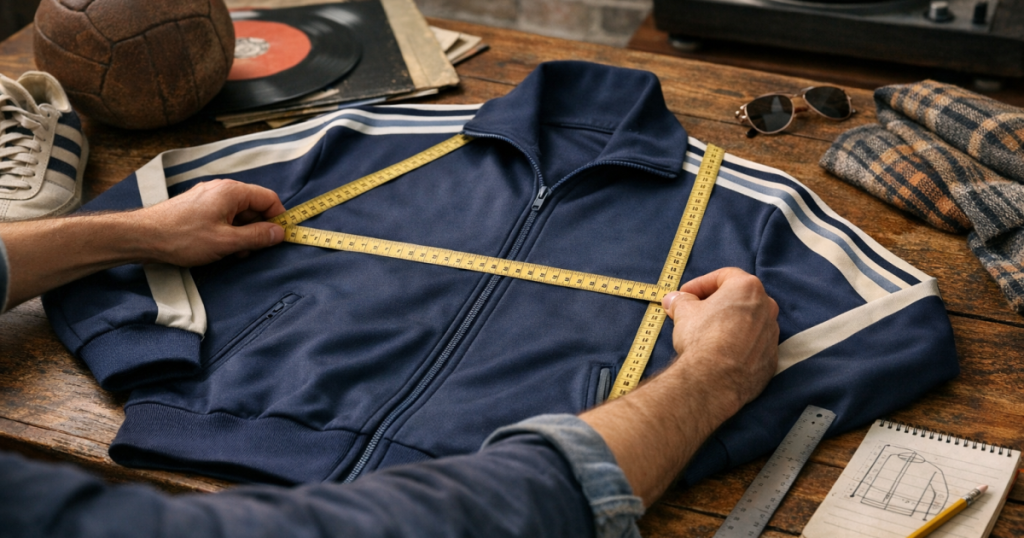
Lay the garment on a clean table, bed or floor, fully zipped if it has a zip. Smooth it with your hands, but do not stretch it. Track tops often have ribbed hems, elasticated cuffs, panels, piping or raglan-style sleeves, so pulling the fabric tight can make the numbers look more generous than the jacket actually wears.
Keep a note on your phone with your best-fitting measurements. Once you know the numbers that work for you, buying online becomes much less about guesswork and much more about comparing cuts.
Step 1: Choose the right reference top
The best starting point is a track top, zip jacket or light sportswear layer you already wear comfortably. It does not have to be the same brand, but it should play the same role in your wardrobe. A slim gym-style jacket is not a useful reference if you are shopping for a relaxed terrace look, and an oversized shell jacket may not help if you want a neat tricot top.
Think about how you normally wear it. If you like a top zipped up over a T-shirt, your reference can sit closer. If you want it over a sweatshirt or hoodie, pick a roomier jacket as your benchmark. For styling context, the proportions in our adidas Originals Firebird Track Jacket styling guide show why length and sleeve shape can change the whole feel of a retro sportswear outfit.
Step 2: Lay it flat without cheating the fit
Zip the top fully and line up the hem, collar and shoulder area so the garment sits naturally. The side seams should fall where they normally would when worn. If the top has no obvious shoulder seam, do not force one into place; raglan and panelled sleeves need slightly different handling, which is covered below.
Press down lightly with your hands to remove folds. Do not iron the garment just to measure it, and do not pull at ribbed cuffs or waistbands. A track top that measures 2 cm wider only because the hem has been stretched flat may still feel tight once it springs back on the body.
Take each measurement twice. If the numbers differ, reset the garment and try again. Online listings often vary because sellers measure casually; having your own repeatable method makes it easier to spot whether a listing looks realistic.
Step 3: Take the five measurements that actually matter
Pit to pit
Measure straight across the front from one underarm seam to the other. This is the most useful number for judging chest room on most track tops. Compare it with a garment that feels right when zipped. For a relaxed casual fit, you usually want enough room for the fabric to move rather than pull across the chest.
Back length
Measure from the base of the collar seam down to the bottom hem at the back. Do not include the collar itself. This tells you whether the top will sit cropped, regular or long. Many archive-inspired looks work because the jacket sits around the hips rather than hanging like a long modern outerwear piece.
Shoulder width
Measure from shoulder seam to shoulder seam across the back. This is useful on set-in sleeve designs. If the top has raglan sleeves, where the sleeve runs diagonally into the collar, shoulder width may not exist in the usual sense. In that case, sleeve and chest measurements become more important.
Sleeve length
For set-in sleeves, measure from the shoulder seam to the end of the cuff. For raglan sleeves, measure from the collar edge or neckline seam down to the cuff, and note which method you used. Sleeve length matters on track tops because cuffs often stack at the wrist; too much length can look sloppy, while too little can make an otherwise good jacket feel shrunken.
Hem width
Measure straight across the bottom hem without stretching it. Ribbed hems can dramatically affect how a track top sits. A wide chest with a tight hem may balloon when zipped. A straight hem can hang cleaner but may look less traditional depending on the era you are referencing.
Step 4: Compare your numbers with the seller’s listing
Once you have your reference measurements, compare them with the seller’s figures one by one. Do not just look for an exact match. A difference of around 1 cm can come from tape placement, fabric thickness or how flat the garment was laid. A difference of several centimetres is more likely to change the fit noticeably.
Ask sellers for missing measurements before buying, particularly with vintage or second-hand pieces. A listing that only says “large” is not enough. Older sportswear can shrink, stretch, fade or change shape through wear and washing, while modern reissues may follow a brand’s current size grading rather than the original archive cut.
The fabric and era matter as much as the number on the label. Nylon shells, tricot tops and velour pieces all hang differently, so it is worth understanding the broader cuts in our guide to tracksuit eras, fabrics and terrace fits before deciding whether a close measurement is genuinely close enough.
Step 5: Read the shape, not just the size
Good measurements tell you the dimensions. Photos tell you the attitude of the garment. A proper buying decision uses both.
- Boxy tops: Often have a generous pit-to-pit measurement and shorter body length. They can look sharp with straight-leg track pants or jeans, but may feel too wide if you are used to slim modern sportswear.
- Slim reissues: These can look cleaner under a jacket, but may not give the relaxed terrace feel people expect from old football-casual references.
- Raglan sleeves: These can feel more forgiving across the shoulders, but sleeve measurements need careful reading because there may be no standard shoulder seam.
- Elastic hems: These can make a top sit higher on the waist, especially when zipped. Check hem width as well as chest width.
- High collars: A taller collar can add presence, but it may feel bulky under outerwear if the top already fits close.
Step 6: Match the fit to how you will wear it
A track top bought for summer evenings over a T-shirt can be neater than one intended for colder match days over a hoodie. Before you commit, imagine the outfit rather than the garment in isolation.
If you wear straight denim, cords or loose track pants, a slightly cropped top can keep the silhouette balanced. If you prefer tapered trousers, a roomier top can stop the outfit looking too narrow. Trainers matter too: once the jacket proportions are right, pairing Gazelle Indoor trainers with retro track tops is one way to fine-tune the era and mood without changing the whole outfit.
Layering is the main reason people get online sizing wrong. A top that looks perfect over a thin T-shirt may feel tight with a sweatshirt underneath. If layering is part of the plan, compare your seller’s pit-to-pit and hem width with a jacket you already layer comfortably.
Common listing problems to watch for
- Only the label size is shown: Ask for flat measurements. Label sizing is not consistent across brands, eras or regions.
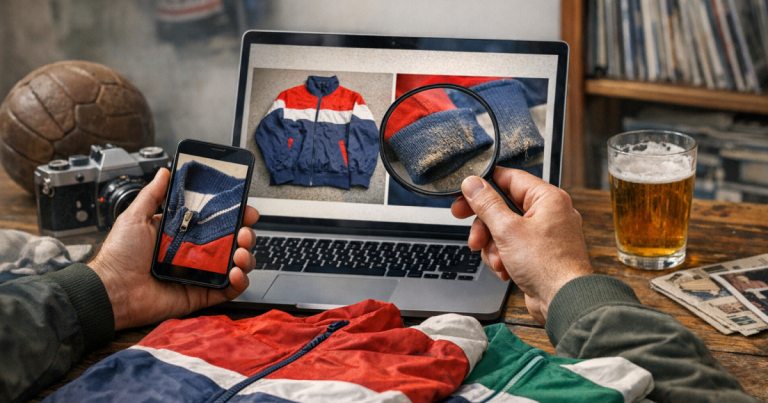
- The garment is photographed on a hanger only: Hanger photos can hide width, length and hem tension. Flat photos are more useful for fit.
- Measurements are rounded heavily: “About 60 cm” is less useful than a clear pit-to-pit figure taken flat.
- No mention of condition: Wear at the cuffs, stretched hems or damaged zips can affect how the top sits and functions.
- The seller measures across the back for some figures and front for others: Ask for clarification so you are comparing like with like.
A simple fit note to keep on your phone
Build a short reference note once and use it every time you shop. It could look like this:
- Best pit to pit: your preferred flat chest measurement in cm.
- Minimum back length: the shortest length you are comfortable wearing.
- Ideal sleeve: your preferred measurement method and number.
- Layering fit: the measurements that work over a sweatshirt.
- Neat fit: the measurements that work over a T-shirt.
This stops you being swayed by a rare colourway, a nostalgic badge or a bargain that is clearly the wrong shape. Terrace style has always been about details, but a piece still has to fit your actual body and wardrobe.
Helpful questions
Should I measure my body or another track top?
Use another track top first. Body measurements help in tailoring, but flat garment measurements are easier to compare with online listings and show how a top actually wears.
How much difference is acceptable between my top and the listing?
A difference of about 1 cm is usually measurement variation. Several centimetres across the chest, length or hem can noticeably change the fit, especially on zipped tops.
Do vintage track tops fit smaller than modern ones?
Some do, some do not. Age, brand, fabric, shrinkage and previous wear all matter. Treat the label size as a clue, not proof, and rely on measurements.
What if the seller will not provide measurements?
For anything expensive, rare or non-returnable, walk away or accept the risk knowingly. A serious listing should be able to provide basic flat measurements.
Should a terrace-style track top be oversized?
Not automatically. Many strong terrace looks are relaxed rather than huge. Aim for movement, clean length and balanced sleeves rather than simply sizing up.
Why it matters
The best online buys usually come from patience rather than luck. When you know your pit-to-pit, length, sleeve and hem preferences, you can judge a listing quickly and avoid the familiar disappointment of a top that looks right in photos but wears wrong in real life.
Measure once, keep the numbers, and compare every future listing against them. It is a small habit, but for retro track tops, archive reissues and second-hand terrace pieces, it is often the difference between a keeper and a resale job.