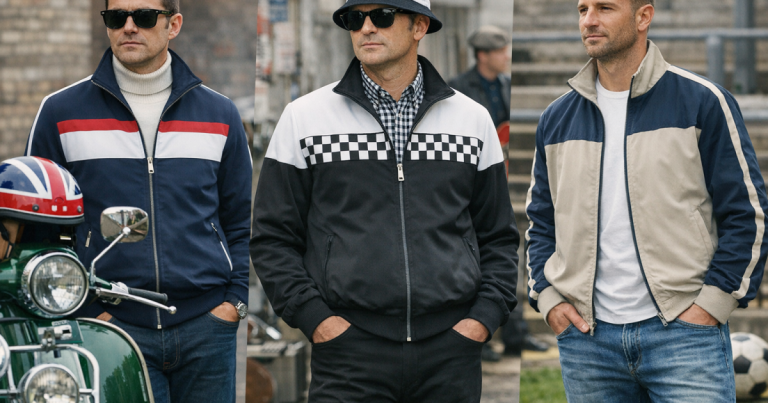

A zip puller can look convincing from a distance, but it rarely tells the whole story. When dating a vintage Adidas tracksuit, the safest approach is to read the garment as a set of clues: neck label, care label, logo style, country of manufacture, zip hardware, fabric, cut and whether the jacket and bottoms actually belong together.
The aim is not to pin every piece to an exact month. It is to build a credible era range and spot the warning signs that separate a genuine archive garment from a later reissue, a mixed set, or a modern piece dressed up as older stock.
At a glance
- Start with the main neck label, then confirm it against the wash label and zip.
- The Trefoil usually points towards heritage Adidas, but it is not automatically old because it has been used on reissues.
- Country wording is one of the strongest clues, especially labels saying West Germany.
- Zip brands such as YKK, Opti and RiRi can support a date, but they are not proof on their own.
- Jacket and bottoms should share a believable era, label format, fabric and trim language.
Step 1: Photograph every label before judging the tracksuit
Before you decide on an era, take clear photos of the neck label, side seam care label, inside pocket label if present, zip puller, zip tape, size tab and any small woven tabs. Sellers often show the front badge and forget the boring labels, but the boring labels are where the date usually lives.
Look for consistency rather than one heroic clue. A jacket with a 1970s-style Trefoil, a modern multi-page care label and a recent-looking product code needs closer inspection. Equally, an old zip on a newer garment is possible if a zip has been replaced. Adidas production varied by country, factory and market, so avoid treating any single label feature as a universal rule.
Step 2: Read the logo and wording first
The Trefoil was introduced in the 1970s and became central to Adidas sportswear and leisurewear. On older tracksuits it often appears with relatively simple brand wording, sometimes on a woven neck label, chest embroidery, flock print or sewn patch. That is a useful starting point, but not a final answer.
The performance-style three-bar mark became much more visible from the 1990s onwards, while Adidas Originals later revived heritage styling and the Trefoil for modern collections. That means a Trefoil garment could be 1980s terrace gold, a later Originals reissue, or something in between. The badge must be checked against the label format and construction.
For context on why certain eras and logos became loaded with meaning on British terraces, the wider story of how football casuals shaped retro tracksuit style by era helps explain why collectors care about small period details rather than just the badge.
Step 3: Use country of manufacture as an era clue
Country wording is one of the most useful dating tools. A label saying Made in West Germany strongly points to manufacture before German reunification, although old stock and label transition periods mean it should still be treated as an era clue rather than an exact date stamp. Made in Germany generally points later than West Germany.
You may also see European production from countries such as France, Portugal or Yugoslavia on older Adidas sportswear, alongside production from Asian manufacturing centres on later pieces. These labels can be very helpful, but they need to be read carefully. Political and trade changes affected country names, and brands sometimes used different factories for different markets at the same time.
If the tracksuit has no country label at all, do not panic. Labels can be cut out, faded or lost, especially on heavily worn sets. In that case, the zip, fabric, cut and stitching become more important.
Step 4: Check the size label and market codes
Older Adidas labels often show multiple country sizes, such as D, GB, F, I or USA sizing. A very simple size tab can suggest an older piece, while later garments often have more standardised international sizing, longer product information and fuller care instructions.
Be cautious with size alone. A tracksuit marked D 6 or GB 40 may not fit like a modern medium, and shrinkage, stretched waistbands and altered hems can distort the original shape. From a dating point of view, the value is in the format of the size label: typeface, woven quality, language mix and whether it matches the rest of the garment.
Step 5: Study the care label and fibre content
The care label is often more revealing than the chest logo. Older sportswear may have a compact woven or printed label with fibre content and basic washing symbols. Later garments tend to include longer multilingual labels, modern compliance details, barcode-style references, and clearer article or style codes.
Look for terms that feel era-specific. Shiny polyester tricot, nylon shells and acrylic blends are common in different archive periods, while later performance lines may use more technical branding. Do not assume a fabric name alone proves age, though. Reissues can deliberately mimic old textures, and original Adidas tracksuits were made for real sport as well as leisure, so fabric choices were not uniform.
If the label is crisp, bright and mechanically perfect while the garment looks heavily aged, ask why. It could be unworn old stock, but it could also be a replacement label or a modern piece being misdescribed.
Step 6: Inspect the zip without overvaluing it
Zip pullers are a favourite shortcut, but they are also one of the easiest details to misread. Adidas used different suppliers across decades and production locations. YKK is common across many eras, Opti appears on various European garments, and RiRi is associated with some higher-quality sportswear and fashion pieces. None of those names automatically proves a decade.
Check three things together: the puller branding, the zip tape and the way the zip is sewn into the jacket. An older zip often has wear consistent with the jacket: softened tape, rubbed metal or plastic, and stitching that looks original rather than freshly replaced. If the zip is much newer than the fabric, it may simply have been repaired.
Also look at whether the zip puller shape matches the style of the garment. A chunky branded pull can suit a later 1990s or 2000s piece, while a slimmer, plainer pull may look more believable on an older track top. Treat this as supporting evidence, not a verdict.
Step 7: Match the details to the style era
Once the labels and zip have given you a rough date range, step back and look at the design. A 1970s track jacket may have a neater athletic cut, ribbed collar and cuffs, and relatively restrained striping. Many 1980s terrace-friendly pieces lean into shiny tricot, stronger colour blocking, contrast piping and bolder branding. By the 1990s, looser cuts, shell fabrics and performance-led details become more common.
British terrace style complicates this because football lads often wore pieces outside their original sporting context. Tennis, running and training gear all crossed into matchday wardrobes. If the look you are checking has that clean 1980s Adidas feel, it is worth comparing it with the styling cues in 1980s Adidas terrace style rather than relying only on a label photo.
Step 8: Confirm that the jacket and bottoms belong together
Many so-called full sets are marriages: a jacket from one year and bottoms from another, brought together because the colours are close enough. That does not make them useless, but it changes how you should describe and value them.
Check whether the labels use the same brand wording, country of manufacture, size system and care label format. Then compare the fabric sheen, stripe width, ribbing, drawcord, pocket construction and logo placement. A jacket made in West Germany with bottoms carrying a much later label format should be treated as a mixed set unless there is strong evidence otherwise.
Step 9: Separate originals from reissues
Modern Adidas Originals releases can be excellent wearable pieces, but they are not the same thing as archive originals. Reissues usually have cleaner modern labels, contemporary production information and more consistent sizing. They may also reinterpret old colours or silhouettes rather than copying them exactly.
A current or recent heritage set such as the Adidas Originals Superstar Tracksuit can give you a useful visual reference for how the brand reworks archive language, but do not use a modern reissue as proof of how every original looked. Use it to notice differences: label density, zip finish, fabric feel, fit and the neatness of modern manufacturing.
Common questions
Does a Trefoil logo mean the tracksuit is definitely vintage?
No. The Trefoil is a strong heritage clue, but Adidas has used it on many later Originals pieces and reissues. Always confirm it with the care label, country wording, zip and construction.
Are West Germany labels always pre-1990?
They are one of the strongest pre-reunification clues, but treat them as an era marker rather than an exact date. Old stock, export timing and label transitions can blur the edges.
Can a replacement zip ruin the dating evidence?
It weakens one clue, but it does not make the whole garment impossible to date. If the labels, fabric and construction all point to the same period, a replaced zip can simply be noted as a repair.
What is the biggest warning sign on a supposed archive set?
The biggest warning sign is inconsistency: a heritage-looking badge paired with modern label formatting, mismatched trousers, an implausibly fresh zip, or a care label that does not match the claimed era.
Where can I decode terrace terms around vintage sportswear?
If the language around casuals, creps, clobber and track tops gets confusing, the British tracksuit culture glossary is a useful reference point.
Why it matters
Dating a vintage Adidas tracksuit is part detective work and part cultural reading. Tags and zips give you hard evidence, but the terrace value of a piece also comes from how its era, silhouette and details sit within British football and music-influenced sportswear history.
The most reliable answer comes when every clue tells the same story. Neck label, wash tag, zip, country, fabric and cut should all point broadly in one direction. When they do, you can describe the piece with confidence. When they do not, the honest answer is usually more useful: later reissue, repaired original, mixed set, or simply not enough evidence yet.