At its simplest, terrace style is best understood as football-casual dress filtered through British matchdays, music scenes and sportswear heritage. It is not a uniform, and it is not just a tracksuit; it is a way of wearing athletic clothing with enough cultural memory to feel deliberate rather than lazy.
The tracksuit matters because it sits at the meeting point of comfort, colour, tribal belonging and status. On British streets and stands, a track top has often said as much about taste, music and local identity as any club scarf.
The short version
- It grew from football-casual culture, where fans used sportswear, trainers and outerwear to signal taste without wearing obvious club colours.
- The best outfits usually balance one strong sportswear piece with quieter basics, rather than piling on logos from head to toe.
- Brands such as adidas, Fila, Sergio Tacchini, Ellesse, Diadora, Kappa, Lacoste and PUMA became important because of how they travelled through football, tennis, skiing, music and street culture.
- Music scenes, especially Madchester, Britpop and rave culture, helped move the look beyond the terraces and into everyday British menswear.
- Modern versions work best when they respect the reference but update the fit, condition, footwear and layering for real life now.
Where the look came from
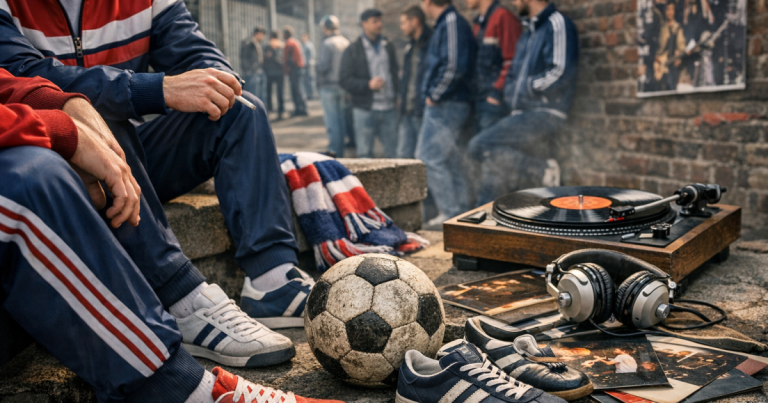
The phrase is rooted in the football terrace, but the clothing was never only about watching a match. From the late 1970s into the 1980s, British football casuals began wearing European sportswear, premium trainers, ski jackets, tennis tops and colourful track jackets. Part of the appeal was discovery: the right piece looked imported, unusual and hard to place.
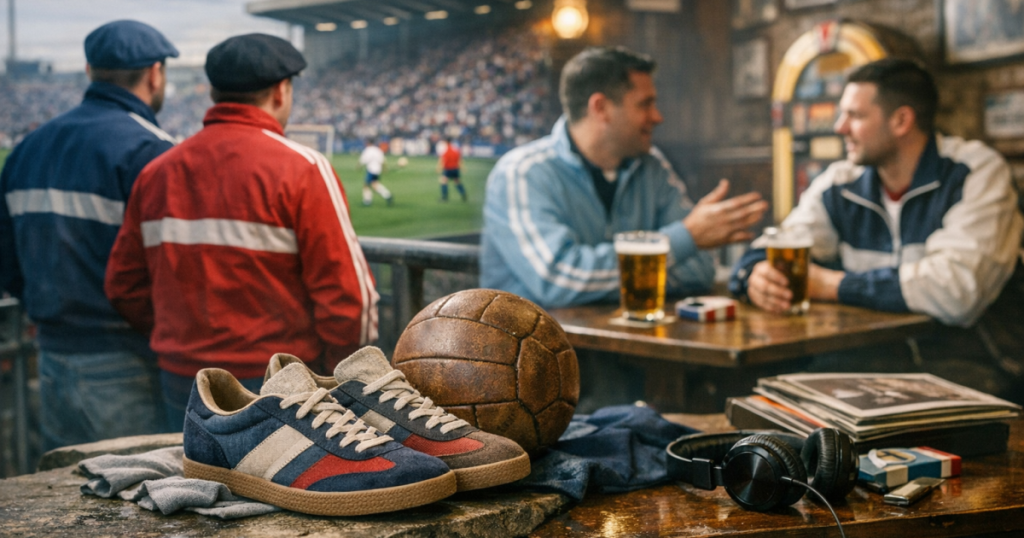
That mattered in a culture where subtle recognition carried weight. A tracksuit top from an Italian or German sportswear label could feel sharper than a club shirt because it hinted at travel, music, knowledge and confidence. It also worked practically: zip-up layers suited cold stations, packed coaches, wet pavements and long matchdays.
The exact timeline is bigger than one decade, and the details shift by city, club and scene. For a wider historical route through the major shifts, the decade-by-decade guide to retro tracksuit style is a useful next step.
Why tracksuits became central
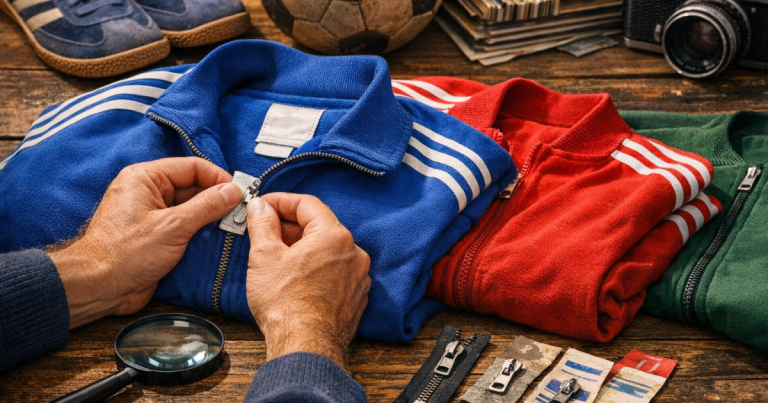
Terrace style gives the tracksuit a meaning beyond gym kit. A track jacket can be relaxed, but it can also be coded: colour, piping, collar shape, sleeve stripes, badge placement and fabric finish all change the message. A shiny retro top feels different from a brushed cotton hoodie, and a full matching set feels different from a single jacket worn with denim.
Tracksuits also suited British casual culture because they sat between smart and scruffy. They were not formal, yet the right one looked considered. A zip neck or funnel collar framed the face; contrast panels added impact under a jacket; matching track pants could look sharp when the footwear was right. The look was sporty, but the attitude was closer to street-level curation.
That is why archive influence remains so strong. Modern reissues and heritage-inspired designs often borrow old colour blocking, chest logos, taping and silhouettes because those details carry memory. They do not need to copy the past exactly; they just need to hold enough of the original language for people to recognise the reference.
The football-casual code
The original casual look was partly about not looking like a stereotypical supporter. Instead of obvious replica shirts, fans wore sportswear, knitwear, jeans, trainers and jackets that suggested allegiance to a scene rather than a team. That made clothes a kind of quiet competition: who had found the better jacket, the cleaner trainers, the rarer colourway?
It is important not to flatten that history into caricature. The culture has links with rivalry and policing, but the clothing itself also belongs to broader stories of working-class style, youth identity, travel, music and aspiration. Many people today are drawn to the clothes because they like the design language, not because they want to recreate the harder edges of old football culture.
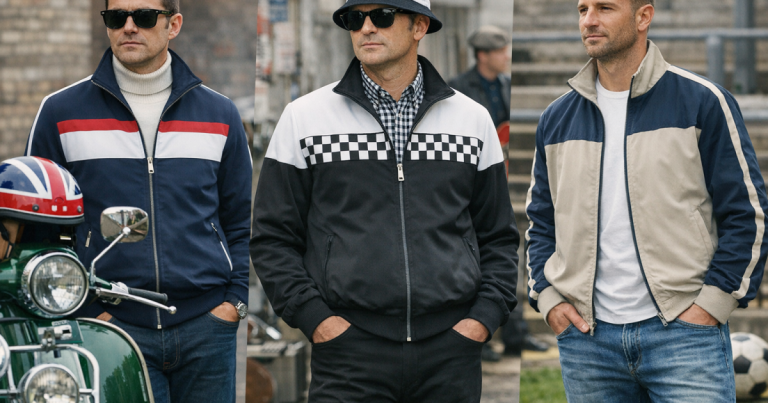
Modern terrace style is at its best when it keeps the confidence and taste but drops the pantomime. A vintage-inspired track top, straight-leg denim, a plain tee and clean trainers can carry the reference without turning the wearer into a costume version of a 1980s away day.
Music changed the meaning
Football gave the look its base, but music gave it reach. Madchester blurred indie, dance music and sportswear, making loose track tops, cagoules and trainers feel like part of a wider northern youth language. Rave culture pushed comfort, movement and colour. Britpop then made sportswear and track jackets visible in magazines, videos and festival fields.
That Britpop period is still one of the easiest entry points for people who want a wearable reference. A zipped track jacket, relaxed denim, a plain tee and suede trainers can nod to the era without overdoing it. For a closer look at that specific crossover, read the guide to Britpop-era tracksuit style for modern terrace wear.
The key difference is attitude. Madchester often feels looser and more psychedelic; Britpop is sharper, more graphic and more lad-culture adjacent; 1980s casual references can be cleaner, more premium and more European. Knowing which lane you are borrowing from helps the outfit feel coherent.
How to read the main elements
Track tops
The track top is usually the anchor. High collars, contrast sleeves, bold chest panels and embroidered badges all point towards different eras. A piece such as the Adidas Originals Firebird Track Top is recognisable because it carries a clear heritage sportswear shape, but the same principle applies to many archive-inspired tops from other labels.
Track pants
Full tracksuits are powerful but less forgiving. Matching top and bottoms can look brilliant when the fit is clean and the colours are controlled, but they can also tip into fancy dress if everything is too shiny, too baggy or too logo-heavy. Separating the jacket from the bottoms is often the easier everyday move.
Trainers
Footwear does a lot of cultural work. Suede terrace trainers, indoor court shapes and classic running silhouettes all change the era reference. A shoe such as the Puma Suede Classic reads differently from a chunky runner or a pristine white tennis trainer, so the trainer choice should match the story the outfit is telling.
Outerwear and layers
British weather is part of the look. Lightweight shells, wax jackets, parkas, polos, sweatshirts and knitwear all help make tracksuit pieces wearable outside summer. A track jacket under a plain outer layer can be more convincing than relying on the loudest item in the wardrobe every time.
What separates it from generic athleisure?
Athleisure is usually about comfort and convenience. Terrace style is about reference, proportion and cultural memory. The garments may be sporty, but the outfit is judged by how the pieces speak to each other: track top with denim, suede trainers with a funnel collar, a plain cap with a colourful jacket, a polo under a zip top.
The difference is restraint. Generic sportswear can look like whatever was clean that morning. A considered football-casual outfit tends to have a centre of gravity: one strong colour, one archive cue, one recognisable trainer shape, one sensible layer for the weather. It does not need to shout.
If you are trying to make the look work in daily life, start with proportion rather than nostalgia. Check shoulder fit, sleeve length, trouser break and whether the colours suit what you already wear. The practical guide to building a terrace style wardrobe that actually works goes deeper into making those choices wearable.
Common mistakes
- Wearing every reference at once: a track top, bucket hat, football scarf, vintage trainers and retro sunglasses can quickly look staged.
- Ignoring condition: bobbling, loose cuffs, tired zips and shiny wear marks can make a good piece look neglected rather than lived-in.
- Mixing eras without control: an 1980s tennis top, 1990s rave shell and modern chunky trainer can work, but only if the colours and shapes are disciplined.
- Forgetting the setting: an outfit that works at a gig or matchday pub may need toning down for everyday errands or a casual office.
- Buying purely by badge: the logo matters less than whether the cut, colour and fabric actually suit you.
Care and authenticity
Original vintage tracksuits can have charm, but they need realistic expectations. Older synthetic fabrics may hold odours, show pulls or lose elasticity at cuffs and hems. Reissues can be easier to wear and care for, but they will not always match the cut, texture or colour depth of an old piece. Neither route is automatically more authentic; it depends on what you value.
Always check the garment label before washing, especially with nylon, polyester blends, embroidered badges and taped details. Cool washes, gentle cycles and air drying are usually kinder than heat-heavy routines, but the care label should lead. A handheld steamer can help relax creases in some synthetic sportswear, provided the fabric care guidance allows it.
In brief
Terrace style is not just a nostalgic tracksuit look. It is a British sportswear language shaped by football crowds, European brands, music scenes, weather, travel and social codes. The strongest modern outfits understand the history but avoid copying it too literally.
Think in references rather than rules: one good track top, the right trainers, a sensible layer, controlled colour and a fit that belongs in the present. That is how tracksuit culture stays alive without becoming museum dressing.
Common questions
Is terrace style only for football fans?
No. Football culture shaped it, but the clothes now sit across music, streetwear and everyday British casual dressing. Understanding the roots helps you wear it with more respect and better judgement.
Do you need vintage pieces to get the look right?
No. Vintage can add character, but modern reissues and archive-inspired pieces are often easier to size, wash and wear. Fit and styling matter more than age alone.
Can a full tracksuit still look good?
Yes, but it needs restraint. Keep the trainers clean, avoid too many extra logos, and make sure the fit is intentional rather than simply oversized or baggy.
Which trainers work best with retro tracksuits?
Classic suede trainers, indoor court shoes and low-profile running shapes usually suit the look. Choose the trainer by era and silhouette, not just by brand name.
How do you avoid looking like you are in fancy dress?
Use one or two references at a time. Pair a strong track jacket with plain modern basics, keep accessories quiet, and avoid copying a famous photo too literally.