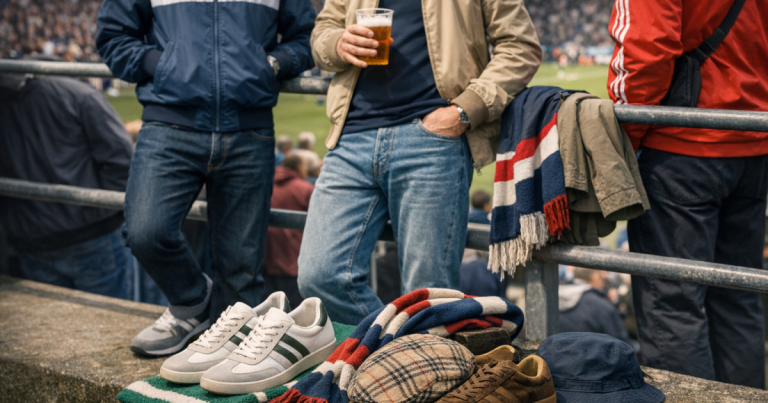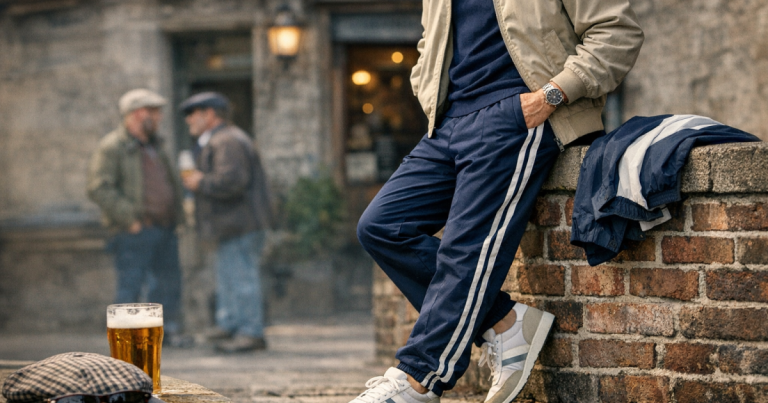
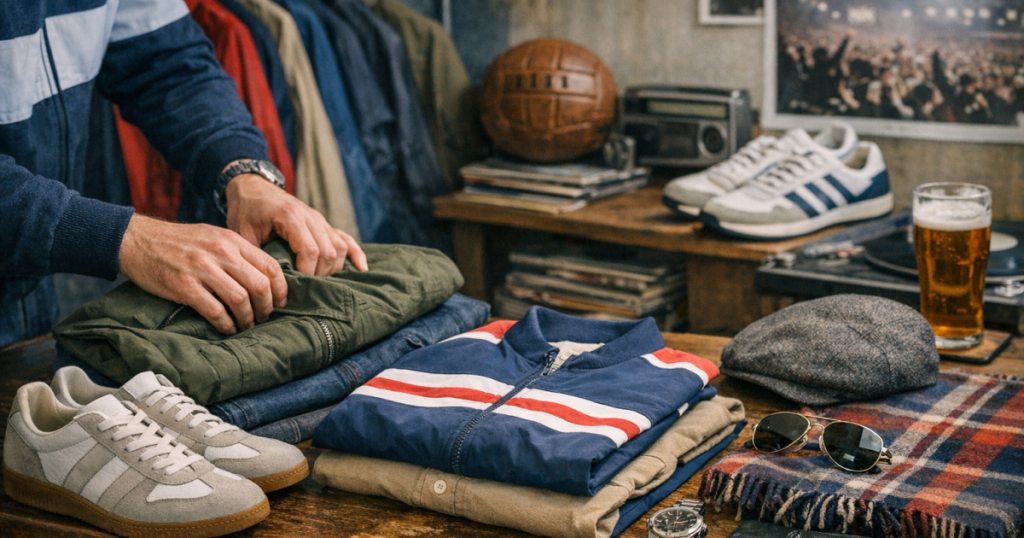
The point of a good terrace style wardrobe is not to copy a photograph from the stands or dress head-to-toe in archive kit. It is to build a wearable set of clothes with the right references: football-casual confidence, music-culture ease, sharp trainers, and enough restraint to make it work on a wet Saturday in town.
Start with shape, colour and proportion before chasing labels. The strongest outfits usually come from a few well-chosen pieces rather than a rail full of loud gear that only works once.
The short version
a reliable terrace-inspired wardrobe needs five things: a strong track top or jacket, clean trainers, plain layering pieces, sensible outerwear and one or two accessories that do not dominate the outfit. Keep the palette tight, avoid wearing every logo at once, and learn which era you are referencing before mixing too much together.
Think of it less as a costume and more as a modular uniform. A navy track top, stone chinos, white trainers and a plain polo can lean classic. A bolder shell jacket, relaxed track bottoms and retro runners can lean more music-led. The trick is knowing where the outfit is meant to sit.
Start with the spine: track top, jacket, trainers
Every terrace style wardrobe needs a spine. That usually means one standout upper layer, one dependable pair of trainers and enough quiet pieces to stop the look becoming overloaded. A track top is the obvious starting point, but a windbreaker, Harrington or lightweight casual jacket can do the same job.
If you are new to the look, avoid buying a full matching set first. A full tracksuit can be brilliant, but it is less forgiving than separates. A track top worn with denim, chinos or plain track pants gives you more room to learn the proportions. For background on how different tracksuit moods developed, the guide to the eras that defined British tracksuit culture is a useful next stop.
For a recognisable modern reference, the Adidas Originals Firebird Track Top gives you the broad outline many people associate with retro sportswear: strong stripes, easy layering and a familiar terrace-adjacent silhouette. It is not the only route, but it is a useful benchmark when judging fit, colour and how bold you want the branding to be.
Pick an era, then loosen it
The mistake is trying to wear every influence at once: a tennis track top, rave-coloured shell, Britpop haircut, designer knit and chunky trainers can quickly turn into a mood board rather than an outfit. Choose an anchor first.
- Classic football casual: cleaner colours, premium knitwear, polos, straight-leg trousers, leather or suede trainers, and jackets that do not shout.
- Britpop terrace: track tops, zipped jackets, relaxed denim, parkas, caps and a slightly scruffier confidence.
- Madchester and rave-adjacent: brighter shells, looser fits, bucket hats or caps, bolder colour blocking and trainers with more movement.
- Modern retro sportswear: reissues, archive-inspired track tops, technical-looking jackets and neat trainers worn with contemporary basics.
Once you know the lane, loosen it. A faithful head-to-toe recreation can feel like fancy dress. A single reference worn with modern proportions usually lands better: a vintage-style track top with clean dark denim, or a bright jacket over a plain sweatshirt and neutral trainers.
Build the base layers properly
The pieces under the jacket matter more than they first appear. A terrace outfit often fails because the statement piece is fine, but the base is wrong: a flimsy T-shirt, over-branded hoodie or clashing collar can make the whole thing feel careless.
Plain white, navy, grey and black T-shirts are the easiest base. Piqué polos work when you want a sharper football-casual feel. A sweatshirt or hoodie can sit under a shell or track jacket, but keep the hood, zip and collar arrangement tidy. Too many competing necklines make the outfit look bulky.
A polo such as the Fred Perry Twin Tipped Polo Shirt is a familiar reference point because it bridges sportswear, music culture and British casual dressing without needing much explanation. Check the fit against how you plan to wear it: tucked, untucked, under a track top or beneath a jacket.
Get the trousers right
Track tops are easy to obsess over, but trousers decide whether the outfit works in real life. Denim, chinos, cords and track pants all belong, but each changes the mood.
- Straight denim: the safest partner for most track tops. Mid or dark washes keep the look grounded.
- Stone or navy chinos: useful when you want the outfit to feel cleaner and less sportswear-heavy.
- Track pants: best when the top half is controlled. If the jacket is loud, keep the bottoms plain.
- Cords: good for a more mature casual look, especially with suede trainers and knitwear.
Avoid ultra-skinny fits if you want a believable terrace silhouette. At the other end, very wide trousers can push the look into a different streetwear lane. A straight or relaxed taper is usually the easiest modern compromise.
Trainers: the detail everyone notices
Terrace style has always taken trainers seriously. They do not need to be rare, but they do need to make sense with the rest of the outfit. Suede and leather court shoes suit sharper looks. Retro runners work well with tracksuits and shell jackets. Chunkier shapes can work, but only if the trousers balance them.
The Diadora B. Elite is a good example of a trainer shape that feels connected to football-casual and continental sportswear references without dominating an outfit. If you prefer something sportier, retro running silhouettes can work with track pants and windbreakers, but keep the colourway in conversation with the jacket rather than matching it too literally.
For everyday wear in Britain, also think about weather and upkeep. White leather is easier to wipe down than pale suede after a damp away day or a walk back from the pub. That does not mean avoiding suede entirely; it just means having at least one pair that can handle drizzle without ruining your mood.
Outerwear makes it wearable in Britain
A wardrobe built around terrace references has to cope with changeable weather. Lightweight jackets are not just styling pieces; they make the look usable across much of the year. A Harrington gives structure, a windbreaker adds colour and movement, and a track jacket sits neatly between sport and casual.
If you are choosing one outer layer first, go for the piece that matches your real life. A bright shell is brilliant if you already dress casually most days. A navy Harrington or understated windbreaker will get more use if you need something that works with jeans, polos and knitwear as well as track tops. For a deeper breakdown of jacket types, see the guide to Harringtons, windbreakers and track tops.
Accessories should finish the outfit, not announce it
Caps, crossbody bags, scarves and small shoulder bags can all work, but they are also where outfits often become too busy. The rule is simple: if the jacket is loud, keep the accessories quiet. If the outfit is minimal, one accessory can add the casual edge.
A cap should sit naturally with the jacket shape. A structured cap can sharpen a windbreaker; a softer cap can suit a relaxed track top. Bags need the same restraint. A crossbody bag is practical for match days, train journeys and city wear, but strap placement matters. Wearing it too high across a heavily branded track top can break up the lines and make the outfit feel cluttered. For that particular detail, the advice on wearing a crossbody bag without spoiling terrace style is worth reading.
Vintage, reissue or modern inspired?
You do not need archive originals to dress well. Vintage pieces can have better stories and unusual colourways, but they come with condition issues: worn cuffs, tired zips, bobbling, thinning fabric, old sizing and care labels that may no longer be readable. Reissues and modern inspired pieces are often easier to wear, easier to replace and more predictable in fit.
The sensible approach is to mix them. Let one vintage or vintage-feeling piece carry the outfit, then use modern basics around it. If you are shopping second-hand, check seams, zip movement, elastic, stains, odour and whether the fabric has gone shiny or brittle. If you are buying new, check return terms, sizing notes and fabric composition rather than assuming every heritage logo means the same cut or quality.
Be wary of marketing that uses terrace language without offering much substance. Heritage references can be genuine, exaggerated or simply decorative. The label matters less than whether the piece has the right shape, fabric feel, colour discipline and wearability.
Care keeps the look sharp
Retro sportswear looks best when it is clean, shaped and not over-washed into tiredness. Always follow the care label, especially with synthetic fabrics, printed details, contrast panels and older garments. Wash similar colours together, avoid unnecessary heat, and air dry where the label allows.
A handheld steamer can help relax creases in track tops and jackets without flattening them under an iron. The Philips 3000 Series Handheld Garment Steamer is one familiar option to compare if you want a compact care tool, but always check garment labels first and test carefully on delicate, vintage or printed areas.
A simple starter wardrobe
If you want a practical route in, build slowly rather than buying the loudest pieces first. A balanced starting point could look like this:
- One navy, black or bottle-green track top.
- One lightweight jacket for rain and wind.
- Two plain T-shirts and one polo.
- One pair of straight jeans and one pair of chinos or plain track pants.
- One pair of clean leather trainers and one more casual suede or retro runner pair.
- One cap or bag, not both competing for attention at the same time.
From there, add colour and era-specific pieces carefully. If your first few items work together, every new addition has a job. If they do not, you end up with isolated statement pieces that only look good in theory.
Common questions
Can you wear a full tracksuit without looking overdone?
Yes, but keep the rest restrained. Clean trainers, a plain T-shirt and minimal accessories help a full tracksuit look intentional rather than costume-like.
Which colours are easiest to start with?
Navy, black, grey, bottle green, burgundy and off-white are the safest base colours. Add brighter panels or stripes once the core wardrobe is working.
Do you need designer labels for terrace style?
No. Labels can carry cultural weight, but fit, condition, colour and confidence matter more. A well-balanced outfit beats a badly styled logo every time.
Are modern reissues acceptable?
Absolutely. Reissues are often easier to size, care for and wear regularly. Vintage is attractive, but it is not automatically better.
What is the quickest way to avoid looking like fancy dress?
Limit each outfit to one strong heritage reference. Pair it with simple modern basics and avoid stacking too many era-specific details at once.
Final thoughts
Building this kind of wardrobe is about judgement rather than strict rules. The best outfits understand the terrace references but do not let nostalgia do all the work. Start with a strong jacket or track top, get the trainers right, keep the base layers clean, and add personality slowly. That is how the look stays connected to football, music and sportswear history while still feeling wearable now.