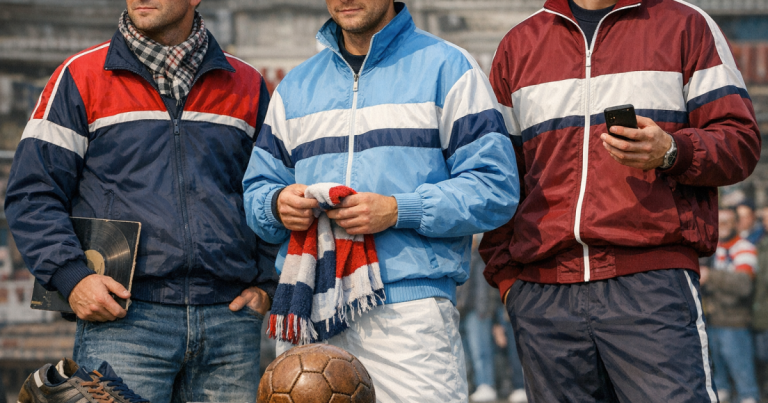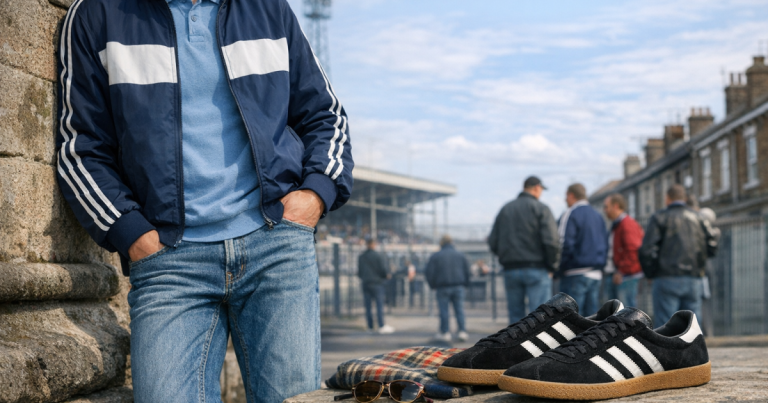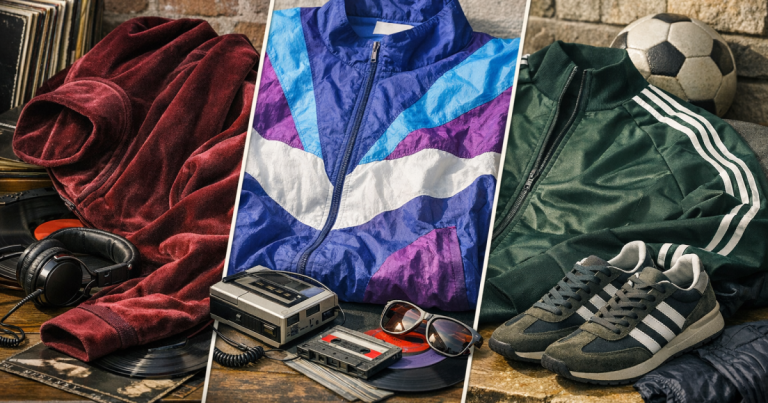
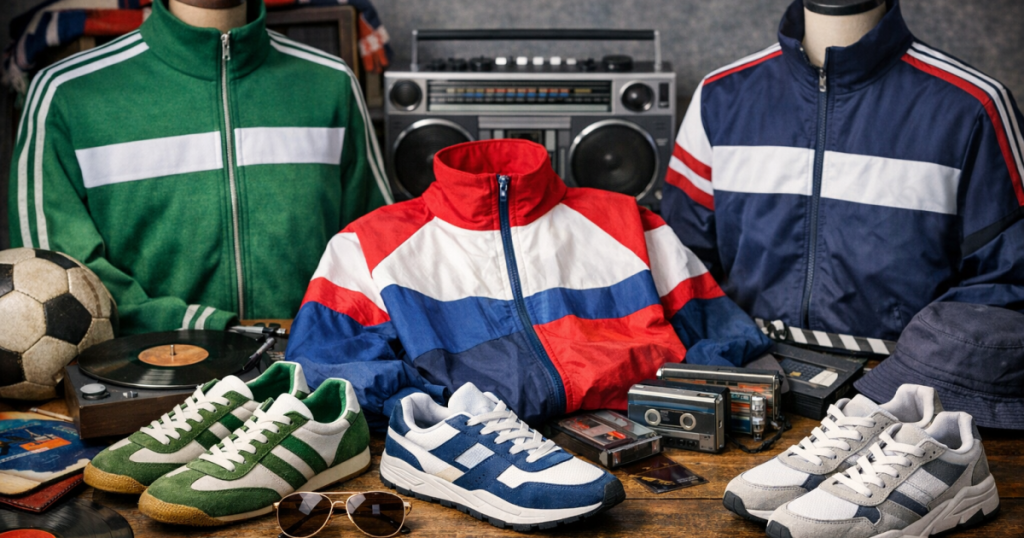
A good decade-by-decade wardrobe is not about dressing like a museum display. It is about knowing which details carry the mood: a slim track top, a shell suit sheen, a baggy Madchester silhouette, or a cleaner 2000s football-casual layer. Get those details right and retro tracksuit style feels natural on British streets, in pubs, at gigs and on match days.
The trick is to treat each era as a set of cues rather than a fancy-dress brief. Shape, colour, fabric, branding and footwear matter more than copying a whole look from an old photograph. The same navy track top can read 1970s, 1980s or 1990s depending on what sits with it.
What to know first
- 1970s looks tend to feel leaner, sportier and less logo-heavy, with track tops that sit closer to the body.
- 1980s terrace dressing brought stronger brand status, European sportswear, colour blocking and sharper casual codes.
- 1990s outfits often loosened up, drawing from rave, Britpop, football travel and high-street sportswear.
- 2000s styling became cleaner and more mixed, with hoodies, caps, technical jackets and trainers doing more of the work.
- The most wearable modern outfits usually borrow one decade clearly, then calm it down with current proportions.
The wider story: why the decade matters
Tracksuits did not move through Britain as one neat timeline. What appeared on training pitches, in catalogues, on European shopping trips, in music videos and outside grounds all fed into the same visual language. For a broader sweep, the site’s guide to the eras that defined British tracksuit culture is a useful companion to this more wardrobe-led breakdown.
There is also a regional texture to remember. A look that felt right outside a northern indie venue could differ from what was being worn on a London estate, a Midlands away day, or a Scottish terrace. The decade gives you the framework; the local culture gives it the edge.
1970s: athletic, tidy and understated
The 1970s track look sits close to sport. Think zip track tops, neat collars, ribbed cuffs, straight or slightly tapered track pants and colours that were bold but not chaotic. Compared with later decades, the branding usually feels more contained. Stripes, piping and embroidered logos are enough; the outfit does not need to shout.
For today, the easiest route is a fitted track top with straight-leg trousers or dark denim. Navy, burgundy, bottle green, off-white and red all work well, especially if the rest of the outfit stays disciplined. Avoid pushing every detail vintage at once. A 1970s-leaning top with plain trainers and a simple crew-neck T-shirt often lands better than a head-to-toe replica.
Footwear should stay low-profile. Suede or leather terrace trainers, gum soles and old-school indoor silhouettes make more sense than bulky running shapes. If you want a modern reference point without overcomplicating it, a clean adidas Originals track top and slim trainers give the right sort of period echo, provided the fit is not too tight.
1980s: terrace status, European labels and sharper colour
The 1980s is where the conversation becomes more visibly connected with football-casual culture. European sportswear labels, skiwear influences, tennis styling and continental shopping all helped tracksuits move beyond pure sport. Brands such as Fila, Sergio Tacchini, Ellesse, Diadora, Kappa and adidas became part of a wider code of taste, access and one-upmanship.
Colour blocking is a major clue. Panels across the chest, contrast sleeves, stand collars and crisp piping all help a piece feel rooted in the period. The fit is still tidier than many 1990s shapes, but there is more swagger than the leaner 1970s. It is less about gym kit and more about looking like you know exactly what you have found.
Ellesse is one of the clearest examples of this shift from performance roots into British casual identity. The brand’s move from Italian skiwear into terrace wardrobes is covered in more depth in the Ellesse terrace style history, and it explains why those half-ball logos still carry a particular nostalgia in the UK.
To wear the 1980s influence now, choose one statement piece: a panelled track jacket, a bold full-zip top, or a colour-blocked sweatshirt. Keep trousers darker and cleaner. Trainers can carry more character, but avoid making every item compete. The strongest 1980s-inspired outfits usually have a single point of pride.
1990s: Madchester looseness, Britpop confidence and shell layers
The 1990s widened the tracksuit mood. Early in the decade, baggier shapes, rave energy and Madchester looseness made sportswear feel more relaxed. By the middle of the decade, Britpop pushed track jackets, zip tops, parkas and trainers into a recognisable high-street uniform. Football culture was still part of the story, but music gave it a different stage.
This is the decade of bigger silhouettes, brighter nylon, bolder shell jackets and a more casual attitude to matching. You might see a track top with loose denim, a hoodie under a lightweight jacket, or track pants worn with a football shirt and trainers. The look feels less polished than the 1980s and more lived-in.
A full shell suit can easily turn novelty if the colour, shine and fit are all exaggerated. For most modern wardrobes, one synthetic layer is enough. A navy, black, forest green or deep red windbreaker is easier to wear than a loud neon set. The Nike Air Max 90 can work with this period because its shape sits naturally with 1990s sportswear, though colour choice matters: understated pairs are usually easier than high-contrast statement versions.
Britpop styling benefits from restraint too. A track jacket, straight denim, simple T-shirt and trainers will usually say more than a full tribute act. If you add sunglasses, a bucket hat or a parka, make sure the rest of the outfit stays grounded.
2000s: cleaner casualwear, football trips and everyday layering
By the 2000s, tracksuit dressing had become more blended. Full sets still existed, but terrace-inspired outfits often mixed hoodies, technical jackets, jeans, caps, small bags and trainers. The look was less about strict archive accuracy and more about practical casualwear that could handle town centres, travel, match days and wet British weather.
Track jackets became everyday layers rather than the whole statement. Hoodies added weight and comfort. Caps and crossbody bags became more visible, although the strongest outfits kept them functional rather than over-styled. A New Era 9Forty Cap can sit comfortably in this lane when the rest of the outfit is pared back.
This is also the point where modern reissues become especially useful. You do not need to chase fragile vintage nylon or rare old sets if your aim is a wearable weekly wardrobe. Archive-inspired pieces, current track tops and simple hoodies can achieve the mood while being easier to care for and replace.
Making decade details wearable now
The best retro tracksuit style in 2026 does not come from copying a decade perfectly. It comes from choosing the part of that decade that suits your build, lifestyle and existing clothes. If you already wear straight-leg denim and suede trainers, a 1970s or 1980s track top will slot in easily. If your wardrobe leans hoodies, caps and weatherproof jackets, 1990s or 2000s cues may feel more natural.
- Pick one era per outfit. Mixing 1980s colour blocking, 1990s shell shine and 2000s accessories can look confused unless the colours are tightly controlled.
- Watch the trouser shape. Slimmer tops need balanced trousers; oversized shell jackets usually need a calmer lower half.
- Let trainers set the period. Low-profile suede trainers pull an outfit older; chunkier running shapes bring it closer to the 1990s and 2000s.
- Use colour like a reference, not a costume. Burgundy, navy, cream, green and red are easier than head-to-toe brights.
- Care matters. Vintage and synthetic sportswear can crease, pull or lose shape. Gentle steaming and careful storage often do more for the outfit than another purchase.
If you are building from scratch, start with a track top you genuinely like, then work outwards. The guide on how to build a terrace style wardrobe that actually works is a sensible next step if you want the look to feel coherent rather than collected at random.
Where archive ideas meet modern clothing
Archive originals have character, but they also come with trade-offs: inconsistent sizing, ageing zips, delicate fabric, marks, bobbling and limited returns if you are buying second-hand. Reissues and archive-inspired pieces are usually easier for daily wear, even when they are not perfect recreations.
A set such as the Adidas Originals Trefoil Tracksuit can help you understand the difference between heritage mood and literal period accuracy. It is not about pretending every modern item is an untouched archive piece; it is about recognising which shapes, logos and colours still speak the same language. Likewise, a dependable garment-care tool such as the Philips 3000 Series Handheld Garment Steamer is less glamorous than a rare track top, but it can keep synthetic layers looking sharper between washes.
For UK readers, the better shopping habit is to check fit, fabric feel, return terms and condition before getting carried away by nostalgia. A jacket that looks brilliant in a listing can still sit awkwardly if the shoulders are wrong or the hem is too short for how you wear trousers now.
Helpful questions
Which decade is easiest to wear day to day?
The 1980s and 2000s are usually the easiest. The 1980s gives strong track tops and colour blocking, while the 2000s allows hoodies, caps and weather-friendly layers without looking too themed.
Should a retro tracksuit be worn as a full set?
It can be, but it is not essential. A full set works best when the colours are restrained and the fit is right. Separates are often easier for pubs, gigs, travel and casual weekends.
Are vintage originals better than reissues?
Not always. Vintage pieces have charm, but reissues are often more practical for regular wear. Check condition, sizing and fabric carefully before assuming the older item is the smarter choice.
What trainers work across several decades?
Low-profile suede or leather terrace trainers are the safest bridge. They suit 1970s and 1980s track tops, but can also calm down louder 1990s-inspired jackets.
How do you avoid looking like you are in costume?
Keep one obvious period reference and make the rest current. Modern trousers, simple colours, restrained accessories and clean trainers stop the outfit feeling like a themed night.
What to remember
Every decade has its own tracksuit language. The 1970s is tidy and athletic, the 1980s is sharper and more brand-conscious, the 1990s is looser and music-led, and the 2000s is more layered and practical. You do not need to choose one forever, but you do need to understand what each one is doing.
The strongest modern terrace-inspired outfits respect the past without becoming trapped by it. Borrow the silhouette, colour or trainer shape that speaks to you, then wear it like normal clothing. That is where the style still has life.