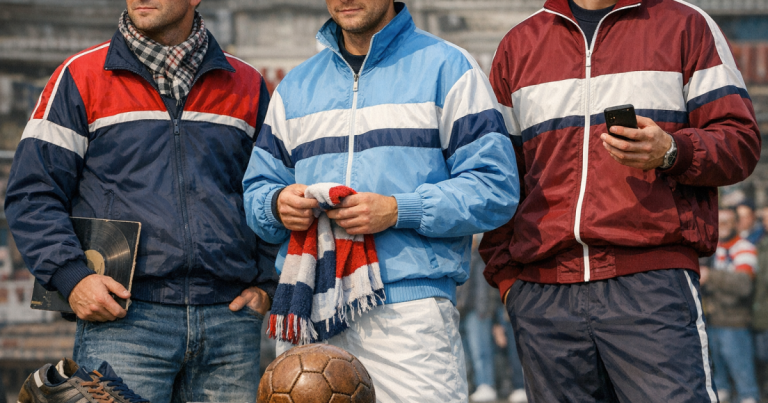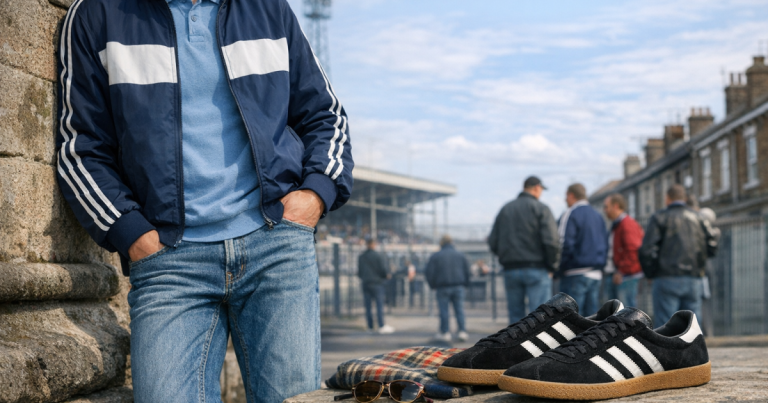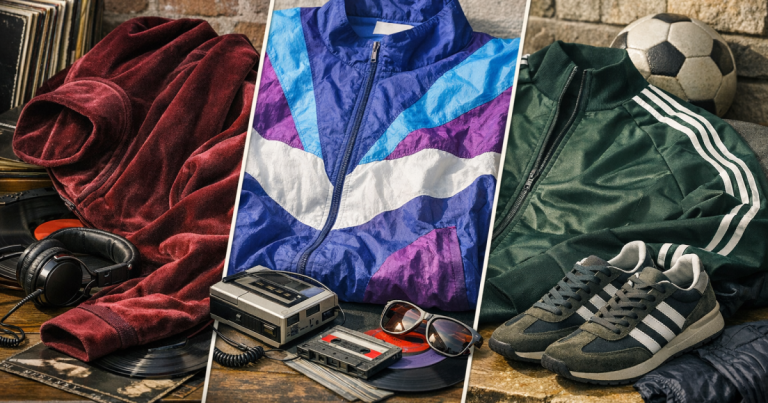
Grime did not arrive with a neat wardrobe brief. It came through stairwells, youth clubs, estates, record shops, school corridors and late-night aerials, so 2000s grime tracksuit style always looked more lived-in than styled. The key was energy: clothes that could handle filming outside, travelling across London, standing in a radio studio, clashing on a mic and still looking sharp enough to announce where you were from.
That is why the tracksuit mattered. It was practical, recognisable and loaded with social meaning. A full set could look clean and unified; a track top thrown over denim could feel more casual; a hoodie under a shell jacket made sense when you were out late in British weather. The point was not luxury for its own sake. It was presence.
The short version
- Early grime tracksuit style was shaped by pirate radio, tower-block videos, local crews and the need to move quickly around the city.
- Fits tended to be roomier than today’s slim retro revival, but the best looks still had control: cuffs, hems and jacket length mattered.
- Brands varied by area, budget and moment, with Nike, Adidas, Reebok, Avirex, Evisu, Akademiks, New Era and sportswear staples all appearing in the wider visual mix.
- The modern version works best when you keep one or two period cues and avoid dressing like a fancy-dress reconstruction.
Pirate radio made the clothes feel immediate
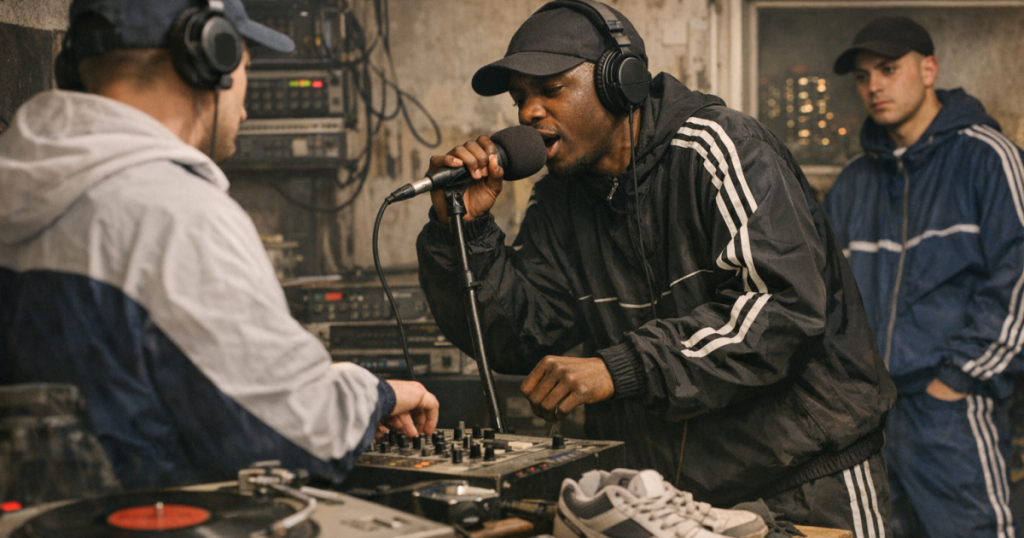
To understand the look, picture the setting. Pirate radio rooms were not glossy fashion backdrops. They were cramped, functional and full of bodies: MCs waiting for a reload, DJs leaning over decks, mates in the corner, jackets kept on because no one was settling in for comfort. The clothes had to read quickly on grainy footage and in photos: bold logos, strong colour blocks, clean trainers, caps low, hoods up.
The radio set also changed how a tracksuit was seen. On a football terrace, sportswear often had a coded, brand-conscious edge built around away days, trainer choices and regional loyalties. In grime, the tracksuit carried a different voltage: hunger, pace, local identity and lyrical confrontation. For broader context on how sportswear became tied to age, attitude and belonging in Britain, the deeper cultural background is worth reading in the meaning of tracksuits in British youth culture.
Footage from the period also explains why the silhouette was rarely delicate. Baggy sleeves, stacked track pants and oversized outerwear suited the physical language of MCing: arms moving, shoulders forward, bodies packed together. It was performance clothing without being stage costume.
The brands that sat in the grime orbit
No single brand owned grime. That is part of the point. The scene was too local, too fast-moving and too mixed for one uniform. Still, certain labels and garment types kept appearing because they fitted the mood and the realities of the time.
Nike and the road-ready tracksuit
Nike tracksuits, windbreakers and trainers were a natural fit for the sharper, athletic side of the look. They worked with caps, hoodies and larger outerwear without needing much styling. The trainer choice often carried as much weight as the tracksuit itself; in many UK wardrobes, models such as the Nike Air Max 95 became part of the wider streetwear vocabulary. If you are recreating the feel now, the lesson is less about chasing one exact model and more about keeping the footwear substantial enough to balance a looser trouser.
Adidas, Reebok and heritage sportswear
Adidas and Reebok were already embedded in British sportswear culture before grime, so they did not need explaining. Three-stripe track tops, classic logo pieces and simple full sets could sit comfortably in a grime-adjacent wardrobe, particularly when worn with a plain tee, fitted cap or clean white trainer. Reebok’s connection to UK sportswear history also gives it a different flavour from purely American streetwear references; the Bolton link and terrace crossover are explored well in Reebok Classics history and terrace style.
Denim, leather and loud status pieces
The tracksuit was central, but it was not the only look. Early grime visuals also included baggy denim, branded belts, big jackets, leather bombers, puffers and embroidered jeans. Evisu-style denim, Avirex jackets and oversized graphic tops all sat in the same world of visible identity. A full tracksuit could say speed and crew unity; a big leather jacket could say status; a hoodie and track bottoms could say you had come straight from the ends and were not dressing up for anyone.
Fit: loose, but not careless
The easiest mistake when revisiting the era is to hear “baggy” and go shapeless. Good 2000s grime styling had proportion. Track tops were often roomy, but they still sat with intent. Bottoms could stack over trainers, but the stacking worked because the cuff or hem had weight. Hoodies looked oversized, yet the cap, jacket and trainers pulled the outfit into a recognisable outline.
Compared with 1980s casual looks or early 1990s Madchester silhouettes, grime’s tracksuit fit felt less polished and more street-level. It was not about pristine Italian sportswear on a continental away trip. It was about a harder urban outline: hood up, zip high, trousers relaxed, trainers visible under the break.
For a modern wearer, the trouser break is the difference between a reference and a mess. Too short and the outfit loses the 2000s attitude; too long and it drags. A slight stack over a chunkier trainer usually works better than a puddled hem. The same principle applies across terrace-inspired outfits, and the guide to getting the right trouser break for terrace trainers is useful if you are balancing track pants with retro footwear.
Colour, logos and the camera test
Grime’s early visual record was low-resolution, high-impact. Clothes had to survive poor lighting, phone clips, DVD footage and street videos. That helped bold colours, contrast panels and large logos punch through. Black, navy, grey and white were dependable, but red, royal blue, forest green and bright contrast trims gave outfits instant recognition.
Logos mattered, but not in a tidy fashion-editor way. A chest logo, sleeve stripe or cap badge could help the outfit read from a distance. Too many competing logos now can look forced, so pick a lead piece. A track jacket with strong branding can sit over plain bottoms. A full set can work if the trainers and cap are kept clean. A loud jacket can carry simple joggers and a white tee.
The “camera test” still helps: take a quick mirror photo from a few metres back. If all you see is bulk, refine the shape. If one piece dominates and the rest supports it, you are closer to the original energy.
How to wear the influence now
The current revival works best when it respects the scene without copying it too literally. You are not trying to look as if you have walked out of an old Channel U clip. You are borrowing the codes: relaxed tracksuit shapes, functional layers, visible trainers, caps, and a sense that the outfit belongs outdoors rather than on a mood board.
- Start with the silhouette. Choose a track top or hoodie with room through the chest and sleeves, then keep the trousers relaxed but controlled at the hem.
- Use one heritage sportswear anchor. A Reebok, Adidas, Nike or Puma piece can set the tone without turning the outfit into a brand collage.
- Keep trainers clean but not precious. Grime style was grounded in movement, so overly delicate footwear can feel wrong. Chunkier retro runners or simple court trainers are easier to wear.
- Add a cap if it suits you. A New Era 9Forty Cap gives the outline without needing an exaggerated fitted-cap look.
- Avoid costume styling. Do not combine every period cue at once: huge denim, giant logos, oversized jacket, cap, jewellery and box-fresh trainers can become parody quickly.
If you want a softer route, a tracksuit top with straight-leg jeans and classic trainers nods to the period without going full set. If you prefer the complete set, keep the colours restrained and let the fit do the talking. A current retro-inspired full set, such as an Adidas Originals Superstar Tracksuit, can give the right broad reference, but check cut, fabric feel and leg shape rather than assuming any archive-style set will automatically look right.
Where grime overlaps with garage and terrace style
Grime did not appear from nowhere. UK garage, jungle, dancehall, hip-hop, football casual culture and local youth style all fed into the look. Garage often had a glossier club edge: sharper shoes, designer belts, pressed shirts, cleaner going-out tracksuits. Grime stripped some of that polish away and added a colder, more confrontational street energy.
Terrace style, meanwhile, gave British sportswear a long-running language of brands, trainers and regional recognition. Grime took some of the same raw materials but changed the setting. The emphasis moved from matchday codes to postcode identity, radio sets and music-video presence. That is why a similar track jacket can read differently depending on whether it is worn with a terrace trainer, a puffer, a fitted cap or a pair of stacked jeans.
The overlap is useful for modern dressing. If full grime styling feels too heavy, borrow from the terrace side: cleaner trainers, neater outerwear, less bulk. If terrace looks feel too polished, loosen the fit and bring in a hoodie or cap. The sweet spot is usually somewhere between heritage sportswear and street-level practicality.
Care and condition make a difference
Retro-inspired sportswear can lose its shape if it is washed harshly or dried without care. Check garment labels, wash similar colours together and avoid treating synthetic track tops like heavy cotton sweatshirts. Steam can help relax creases in some pieces, but use the correct setting and keep direct heat under control, particularly around printed logos, badges and delicate trims.
Condition is especially important if you are mixing vintage with newer pieces. A lightly worn track jacket can look brilliant with clean trainers; a bobbled, stretched set can make the whole outfit look tired. The original grime era was not about pristine luxury, but there is a difference between lived-in and neglected.
Questions people ask
Was grime tracksuit style only a London thing?
London was central to grime’s early visual identity, but the look travelled quickly through radio, DVDs, forums, clubs and youth culture. Different UK cities interpreted the tracksuit, hoodie and trainer mix in their own way.
Do you need a full tracksuit to get the look?
No. A track top, hoodie, relaxed bottoms and the right trainers can carry the reference. A full set is stronger visually, but it needs good proportion to avoid looking too literal.
Which trainers work with 2000s grime tracksuit style now?
Chunkier retro runners, clean court trainers and UK streetwear staples all work. The main thing is balance: the trainer should hold its own under a relaxed track pant without disappearing.
How is grime style different from UK garage tracksuit style?
Garage often leaned smoother and more club-ready, while grime looked colder, rougher and more functional. For a closer comparison, the guide to wearing 2000s UK garage tracksuit style today shows how that cleaner side of the decade worked.
What stands out
The lasting strength of grime tracksuit style is that it was never just about clothes. It was about access, speed, visibility and self-definition. Pirate radio gave the look its frame; crews gave it energy; British sportswear gave it the tools. The best modern interpretation keeps that urgency while editing the details: a relaxed fit, a clear trainer choice, one strong logo moment and enough restraint to make it wearable now.
If you are building the look today, start with the shape before the label. The right proportions will say more than the rarest badge. Once the silhouette works, the brands become what they were in the first place: signals of taste, place and attitude.