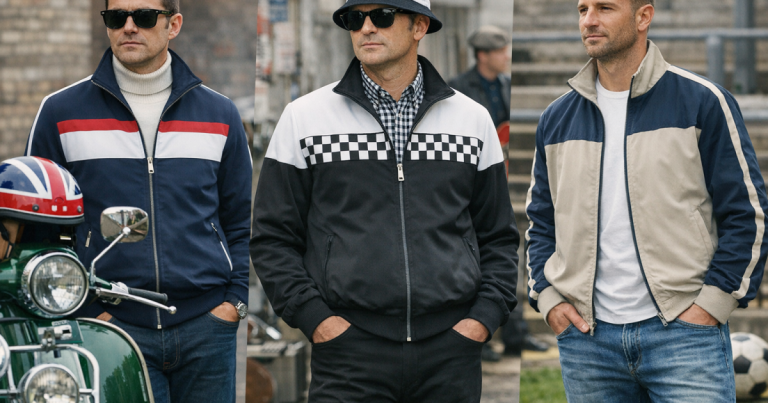
The tracksuit is never just a matching top and bottoms. In Britain, it has been teamwear, streetwear, clubwear, school-gate uniform, class marker and cultural shorthand all at once. The meaning of tracksuits in British youth culture comes from that tension: comfort and confidence on one side, suspicion and stereotyping on the other. To understand why the look still has weight in 2026, you have to read it through football, music, local identity, brand knowledge and the way young people have always turned practical clothes into social language.
The short version
Tracksuits became meaningful in British youth culture because they sat at the meeting point of sport, leisure, music and class. They were affordable enough to be everyday clothes, recognisable enough to carry status, and flexible enough to move from five-a-side pitches to terraces, estates, bus stops, record shops and nightclubs.
- Football gave the tracksuit its first mass youth visibility, through training wear, supporters, away days and casual culture.
- Music gave it movement, from soul and hip-hop influences to rave, Madchester, UK garage and grime-adjacent street style.
- Brands became codes, not just logos: adidas, PUMA, Fila, Sergio Tacchini, Ellesse, Reebok and Nike could all say different things depending on era and location.
- Class shaped the reaction, with tracksuits often admired within youth scenes while being judged harshly by outsiders.
- The modern revival works best when it respects the code: good fit, clean trainers, a sense of era, and no fancy-dress exaggeration.
Why the tracksuit became a youth uniform
The tracksuit’s power in Britain begins with its usefulness. It is warm enough for a cold platform, loose enough to move in, sharp enough when new, and easy to throw on without looking like you have tried too hard. That practicality mattered to young people moving between school, sport, home, town centres, mates’ houses, bus routes and matchdays.
Unlike formal menswear or designer tailoring, the tracksuit did not require permission from adult respectability. It was built for movement, which made it naturally suited to youth culture. It suggested activity even when the wearer was simply hanging about. It could look athletic, confrontational, relaxed, cheeky or stylish depending on the setting.
There is also a deeply British layer to this. In a country where class is read through accent, postcode, shoes and fabric, sportswear became a way to negotiate status without adopting middle-class dress codes. A crisp track top could be aspirational without being posh. A full set could say you understood the local language of style, even if adults dismissed it as scruffy.
Football terraces turned sportswear into a code
Football did not invent youth tracksuit style, but it gave it one of its strongest public stages. By the late twentieth century, young supporters were using sportswear to signal taste, loyalty, regional pride and awareness of what was coming in from Europe. The terraces were not simply about club colours. In some circles, looking right mattered almost as much as being there.
Casual culture sharpened that instinct. Imported sportswear, tennis labels, ski jackets and track tops became part of a visual competition. The point was not always to look loud; often it was to look informed. A logo, stripe width, collar shape or colourway could place someone inside or outside a scene.
That is why tracksuits can be difficult to decode from the outside. A navy set with understated trainers might look plain to one person and perfectly judged to another. The difference lies in context: which brand, which fit, which decade it references, what the trainers are, and whether the whole outfit feels lived-in or staged. For a deeper look at those matchday signals, the guide to terrace tracksuit codes breaks down how brand, fit and meaning work together.
Music made the tracksuit move differently
If football made the tracksuit visible, music made it feel alive. British youth style has always fed on sound systems, dancefloors, record sleeves, pirate radio, music videos and weekend scenes. A tracksuit on a terrace reads one way; the same silhouette under club lights reads another.
In the early hip-hop and breakdance-influenced years, sportswear carried movement and rhythm. In northern soul and later dance scenes, practical clothing mattered because people needed to move. When rave and Madchester reshaped youth culture, loose track tops, sports jackets and trainers suited the mood: casual, sweaty, communal and anti-formal. The clothes did not need to be pristine tailoring; they needed energy.
Madchester is a particularly important bridge because it softened the boundary between football casuals, indie crowds and dance culture. Baggy fits, zipped tops, bold colour blocking and trainer culture all overlapped. The result was not one uniform, but a shared attitude: clothes should feel ready for a gig, a night bus, a match, a record shop and a half-remembered afters. The practical details behind that look are covered in the guide to an early 90s Madchester tracksuit look.
By the 2000s, UK garage pushed the tracksuit into a sharper, glossier space. Full sets, clean trainers, fitted shapes and a sense of night-out polish gave sportswear a different status. It was still casual, but not careless. Garage style proved that a tracksuit could be club-ready when the grooming, footwear and confidence were right. That influence still shows up whenever modern retro sportswear leans into neat silhouettes and high-contrast colour.
What different eras said
The 1970s: sport, television and early leisurewear
In the 1970s, tracksuits became more visible through football training, athletics, television sport and the wider rise of synthetic leisurewear. The look was still close to sport, but it was beginning to escape the changing room. Young people saw sportswear as modern, practical and slightly futuristic compared with older everyday clothing.
The 1980s: casuals, status and European influence
The 1980s gave tracksuits and track tops a sharper social charge. Football casuals developed a knowledge-heavy approach to brands, and European labels carried particular prestige. Fila, Sergio Tacchini, Ellesse, adidas and others could all function as signs of taste, travel, money or connection. The full tracksuit was not the only important form; often the track jacket, paired with denim or cords, did the heavy lifting.
The 1990s: rave, Britpop, estates and everyday confidence
In the 1990s, the tracksuit spread across scenes rather than belonging to one tribe. It appeared around football, clubs, gyms, estates, schools, parks and music venues. Some wore it baggy and dancefloor-ready; others wore it tidy and local. This was when the tracksuit became deeply embedded as a British everyday youth garment, not just a subcultural costume.
The 2000s: garage, grime-era attitudes and media judgement
The 2000s made the tracksuit more contested. It could be aspirational in music culture and demonised in tabloid language at the same time. The same outfit might be celebrated in a video, policed in a shopping centre, mocked in a comedy sketch and worn with pride on a high street. That contradiction is central to its meaning.
Garage style is worth separating from lazy stereotypes. The best looks were often controlled and deliberate: matching sets, clean footwear, careful colour, jewellery, fresh trims and a sense of occasion. For more on that sharper side of the era, see how to wear 2000s UK garage tracksuit style today.
Class, stigma and the politics of being seen
No honest account of tracksuits in British youth culture can ignore stigma. The tracksuit has repeatedly been used as shorthand for anti-social behaviour, working-class masculinity, council-estate life or supposed lack of aspiration. Those judgements say as much about Britain’s class anxieties as they do about clothing.
Words like “chav” turned sportswear into a cultural insult, often aimed at young working-class people. The outfit became a way for outsiders to make quick assumptions about intelligence, behaviour, family background and threat. That is why the tracksuit can feel protective and exposed at the same time. Within a peer group it may signal belonging; in a shopping centre or train station it may attract suspicion.
This double reading explains why the garment carries emotional weight. For some, it is comfort, memory and pride. For others, it recalls being judged before saying a word. British youth style often works like this: the clothes are pleasurable, but the social reading is never neutral.
Why brands mattered without being the whole story
Brands matter because youth cultures use detail. A three-stripe sleeve, a contrast panel, a tennis logo, a heritage crest or a particular cut can point to an era and a social world. But it is too simple to say British tracksuit culture is only about labels.
Fit, condition and styling matter just as much. A battered set can feel authentic or neglected depending on context. A reissue can look strong if worn with ease, but awkward if every reference is overplayed. A vintage piece can have charm, but it can also be fragile, misshapen or difficult to clean. The culture has always involved judgement: not just what you wear, but how you wear it.
There is also regional variation. London, Manchester, Liverpool, Glasgow, Birmingham, Leeds and Newcastle have never dressed identically. Local football culture, music scenes, shops, weather and social codes all shape what looks right. The tracksuit travels well, but it picks up an accent wherever it lands.
How the meaning changes when worn today
In 2026, retro tracksuit style is easier to access but harder to wear convincingly. Reissues, vintage sellers and archive-inspired ranges mean the clothes are visible again, yet that visibility can flatten the history. A look that once came from local scenes can become a mood board if handled carelessly.
The strongest modern outfits usually avoid copying a whole decade too literally. A track jacket with straight-leg jeans, a plain tee and terrace trainers can nod to the 1980s without becoming costume. A full set can work if the fit is right and the colours are grounded. A shell top can reference rave or garage without needing every accessory from the era.
Practical details help. Keep synthetics clean without over-washing, avoid cooking old elastic with high heat, and use a steamer carefully if a piece can tolerate it according to its care label. Good sportswear often looks best when it has shape, not when it is ironed flat or worn crumpled. The aim is not museum perfection; it is respect for the garment.
- For a terrace-leaning look: use a track top with muted trainers, denim or tapered track pants, and avoid too many competing logos.
- For a Madchester feel: think looser shapes, relaxed colour, a bucket-hat-adjacent attitude if it suits you, and trainers that look walked-in rather than box-fresh theatre.
- For a garage influence: keep the silhouette cleaner, the footwear sharper and the overall look more deliberate.
- For everyday wear: break up a full set with a plain jacket, polo, overshirt or simple cap so the outfit feels natural outside a nostalgia setting.
Common questions
Why are tracksuits so associated with British working-class youth?
Because they were practical, visible, relatively accessible and tied to football, estates, sport and street-level leisure. Media stereotypes exaggerated that link, but the class reading has always shaped how tracksuits are judged.
Are tracksuits mainly a football casual thing?
No. Football casual culture is central, but tracksuits also belong to dance music, hip-hop influence, UK garage, school culture, gym culture and everyday streetwear. Their meaning changes with the setting.
Can a full tracksuit look stylish rather than lazy?
Yes, if the fit, condition, colour and footwear are considered. A full set looks strongest when it feels intentional and rooted in a clear style reference, not simply thrown on without care.
Is vintage always more authentic than a reissue?
Not necessarily. Vintage can have character, but reissues are often easier to wear, clean and size correctly. Authenticity comes from understanding the code, not just owning an older garment.
Why does the tracksuit still divide opinion?
It carries conflicting meanings: comfort, pride, masculinity, youth, class, threat, music, sport and nostalgia. Few garments expose British assumptions about class and behaviour quite so quickly.
Final thoughts
The tracksuit endures because it is both ordinary and loaded. It can be something you wear to the shop, something you remember from a first match, something linked to a pirate radio set, or something that made adults cross the road. That mixture is exactly why it matters.
Tracksuits in British youth culture are not a single story of fashion revival. They are a record of how young people use clothes to move through public space, claim identity, resist respectability and show taste without explaining themselves. Worn well today, the tracksuit is not just retro sportswear. It is a living British style language, still changing every time it steps onto a terrace, a train platform or a night out.