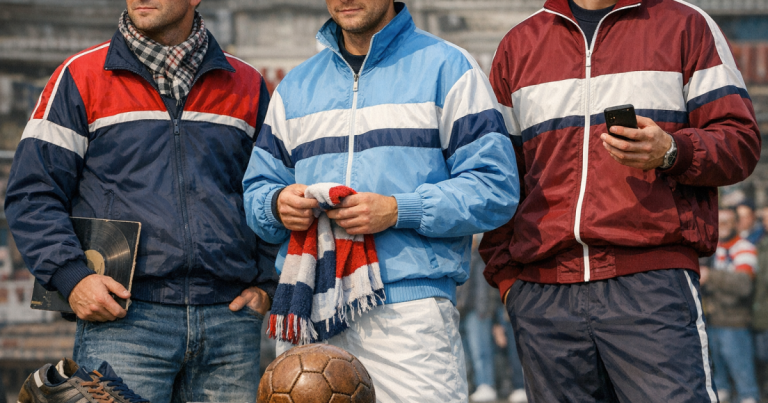
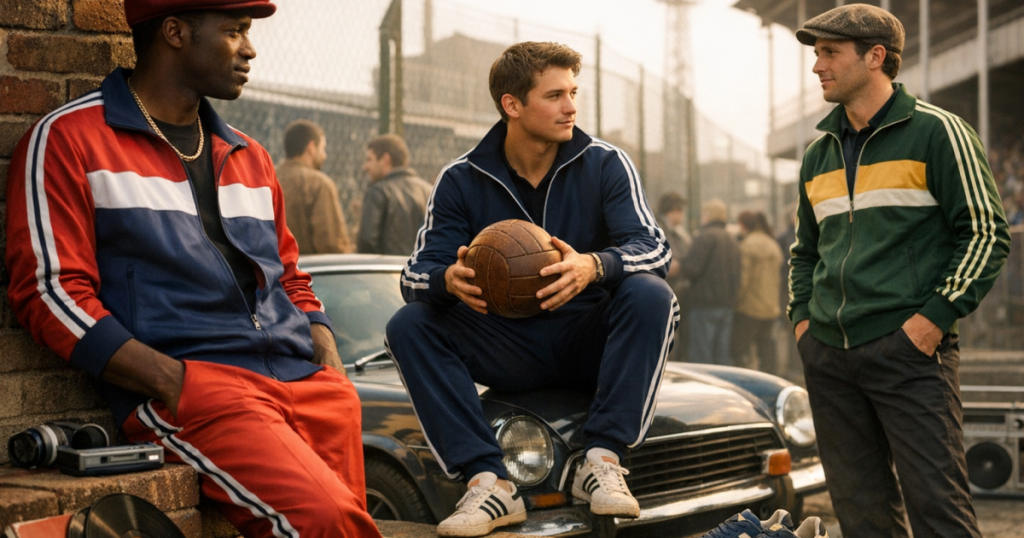
The seventies did not invent the tracksuit, but it changed what it could mean on British streets. 1970s tracksuit style sat between gym kit, football travel wear, soul club sharpness and early casual one-upmanship. It was less about matching archive nostalgia than about recognising the codes: colour, cut, fabric, trainers and the confidence to wear sport gear away from sport.
What to know first
The decade’s look was not a finished uniform. It was a shift. Tracksuits moved from school changing rooms, athletics clubs and televised sport into youth culture, where they mixed with denim, polos, leather jackets, knitwear and sharp shoes. The silhouette was neater than many later revival fits: shorter tops, straight or slightly flared track trousers, ribbed cuffs, contrast piping, high collars and colour blocking that looked bold without becoming fancy dress.
To understand the period properly, it helps to separate three influences that often get blurred together: football travel culture, soul and disco nightlife, and the growing status of continental sportswear. Together, they formed the groundwork for what would become the better-known casuals look of the eighties.
Football was the public stage
British football in the seventies was not only about the match. It was about railway stations, coach parks, pubs, city centres and away-day visibility. Supporters noticed what other groups wore, and clothes became part of the theatre. Sportswear had obvious practical appeal: it was comfortable, easy to move in and looked connected to the athletic glamour people were seeing on television.
Tracksuits were also useful because they sat just outside ordinary workwear. They were not suits, not jeans, not military surplus and not standard Saturday-night tailoring. That made them attractive to young men who wanted to look modern without looking formal. A sharp track top could signal that you knew what was happening beyond your own town, especially when it carried a foreign sportswear name or a colour combination not seen everywhere.
This is where the early terrace codes started forming. It was not yet the fully developed label-conscious culture many people associate with later decades, but the instincts were already there: notice the badge, clock the cut, keep the trainers clean, and avoid looking like you had bought the whole outfit by accident. For the broader story of how matchday clothing became identity, the site’s guide to the football casuals movement is the natural next step.
Soul, funk and club clothes sharpened the look
The football side of the story can dominate, but the seventies sportswear mood was not only made on the terraces. Soul, funk, jazz-funk, disco and later early electro influences all mattered because dance culture made movement, colour and confidence central to dress. Clothes had to look good in motion. A track jacket with a high collar, a fitted body and contrast sleeve stripes could sit surprisingly well alongside wide-collar shirts, knitwear, flared trousers and polished casual shoes.
Across Britain, local scenes developed their own preferences. Northern soul was not simply a tracksuit culture, but it did help normalise the idea that youth style could be athletic, mobile and obsessively coded. Dancefloors rewarded practicality as much as display. Lightweight fabrics, short jackets and trainers made sense when people were travelling, dancing and staying out late.
The important point is that seventies sportswear was often worn with a sharper instinct than modern costume versions suggest. The best looks were balanced: a track top with denim, a zip-neck top with cords, a simple sports jacket over a fitted tee, or track trousers worn with a clean knit rather than a full matching set. It was sportswear edited through nightlife, not just kit worn outside the gym.
The early sportswear codes that still matter
By the end of the decade, several visual codes had become familiar. They were not rules printed anywhere, but they shaped how credible sportswear looked on British streets.
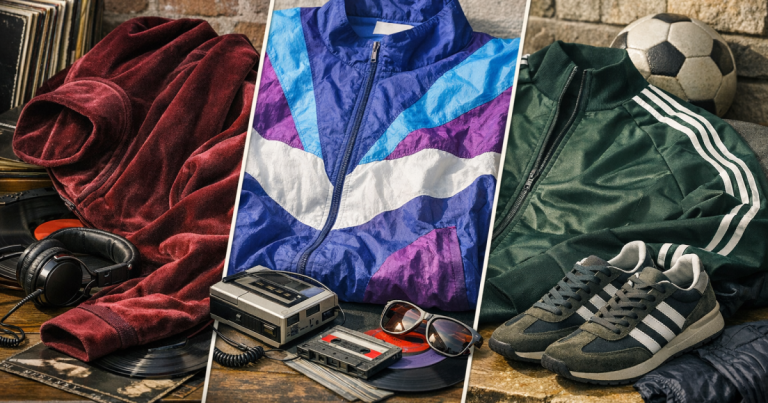
- Colour had to feel intentional. Navy, burgundy, bottle green, off-white, rust, brown, sky blue and primary red all fitted the era. Strong colour blocking worked, but only when the rest of the outfit stayed disciplined.
- Badges carried weight. A small chest logo or stitched emblem had more power than a huge graphic. The appeal was recognition, not shouting.
- Fabric changed the mood. Smooth polyester, nylon blends and early synthetic sheens made the tracksuit look modern. Heavier cotton layers softened it and made it more wearable day to day.
- Collars mattered. High collars, contrast tipping and zip necks framed the face and gave the top its attitude, especially under a jacket.
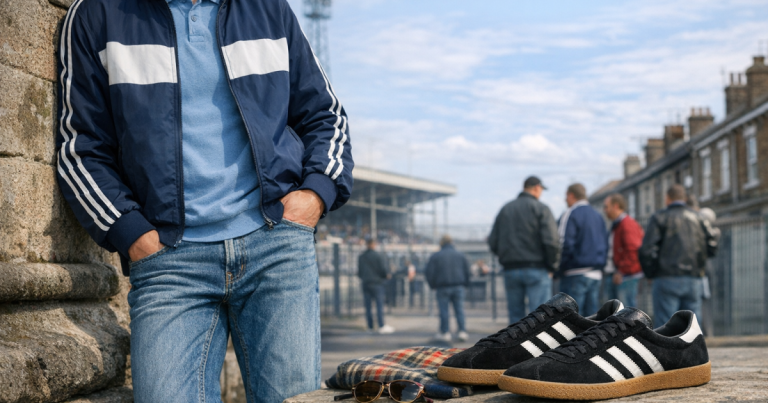
- Trainers completed the signal. Slim, low-profile training shoes made more sense than bulky modern runners if you are trying to keep the seventies line intact.
These codes are why the decade still feels relevant. It offers a way to wear retro sportswear without copying the more familiar eighties or nineties terrace template. The result can be quieter, more colourful and slightly smarter.
How it differs from the eighties casuals look
It is easy to read the seventies backwards from what came next, but the distinction matters. The eighties made labels, European shopping trips and terrace competition more explicit. Tracksuits, trainers and designer casualwear became more openly status-driven, with Italian tennis brands, ski wear, golf jumpers and rare trainers all feeding the look.
The seventies were looser. The outfit might include a sports top, but it did not need to be an entire branded system. A lad could wear a track jacket with flares, a polo with track trousers, or trainers with a suede blouson. The attitude was emerging rather than codified.
That difference is useful if you are building a wearable outfit now. The seventies route gives you permission to avoid the full matching tracksuit. It is more about one sportswear piece doing the work, supported by the right colours and proportions. For the next stage in the timeline, compare it with 1980s casuals style, where the codes become sharper and more competitive.
Wearable ways to reference the decade now
A modern seventies-inspired tracksuit look works best when it suggests the period rather than reenacting it. Start with one strong piece: a zip track top, a contrast-panel sports jacket, or straight-leg track trousers. Then build around it with quieter layers. A fitted polo, plain crew-neck tee, fine-gauge knit or dark denim jacket will usually do more for the look than piling on multiple retro items at once.
Keep the proportions controlled. Oversized nineties shapes can look good, but they pull the outfit into a different decade. For a seventies feel, aim for a shorter jacket length, a neat shoulder, trousers that fall cleanly, and trainers that do not overpower the hem. If you wear a full tracksuit, choose muted colours or simple contrast rather than loud novelty patterns.
Footwear is where many modern outfits drift. Chunky running trainers can make the look feel contemporary rather than period-aware. Slim suede or leather trainers, gum soles, low profiles and simple stripes tend to sit better with the era. You do not need a museum-perfect pair; you need the right shape and restraint.
Accessories should stay minimal. A knitted scarf, retro holdall or simple cap can work, but too many period signals turn the outfit theatrical. The aim is to look like someone who understands the decade, not someone dressed for a themed night.
Where to look for authentic references
Good references are better than vague nostalgia. Look at football crowd photography, athletics coverage, soul club images, music television clips and old catalogue scans. Pay attention to ordinary combinations rather than only the most dramatic outfits. The everyday details often matter most: how a jacket sits at the waist, how track trousers break over trainers, how colours are repeated once rather than everywhere.
Vintage shops, reissue rails and online marketplaces can all help, but condition is crucial with older synthetic sportswear. Check zips, cuffs, waistband elasticity, lining wear, colour fade and seam stress. Some original pieces are wonderful; others are fragile, misshapen or difficult to clean. A modern reissue can be a better everyday choice if you want the look without worrying about damaging an ageing garment.
For new clothes, use the seventies as a filter rather than a strict shopping list. Look for track tops with clean colour blocking, ribbed trims, understated branding and a shorter, neater shape. With trousers, avoid anything too tapered or overly technical if your aim is a period feel. The safest modern interpretation is often a heritage track jacket with dark denim and low-profile trainers.
What the decade gave to tracksuit culture
The real legacy of the seventies is that it made sportswear socially interesting. Before the later terrace uniform became famous, this decade showed that a tracksuit could carry signals of travel, taste, music, football knowledge and modernity. It also proved that sportswear did not have to be scruffy. Worn well, it could look sharp, deliberate and quietly competitive.
That is why the era still matters to retro casual style. It gives today’s wearer a less obvious route into the culture: softer than the eighties, less baggy than the nineties, and more rooted in the moment when athletic clothing first became street language. If you want the wider context of how sports kit turned into a cultural uniform, read tracksuit culture explained.
FAQ
Was the full matching tracksuit common in the seventies?
It existed, especially through sport and athletics, but the street look was often more mixed. A track top with denim, cords or casual trousers can feel more authentic than a head-to-toe set.
Which colours best capture the era?
Navy, burgundy, brown, cream, green, red and sky blue all work well. The key is controlled contrast rather than modern neon or oversized graphics.
How do I avoid looking like I am in fancy dress?
Wear one or two period cues at a time. Keep the fit neat, choose clean trainers, avoid novelty accessories and balance sportswear with everyday staples such as denim or knitwear.
Is 1970s tracksuit style the same as terrace style?
Not exactly. It helped lay the groundwork for terrace style, but the fully developed casuals look became more label-conscious and structured later.
Are original vintage tracksuits worth wearing regularly?
Sometimes, but check condition carefully. Older synthetics, zips and elastic can be delicate, so a good reissue may be more practical for frequent wear.
What to remember
The seventies tracksuit was a bridge between sport and street culture. Football gave it visibility, soul and dance culture gave it movement, and early brand awareness gave it status. For a modern wardrobe, the strongest approach is simple: neat track top, considered colour, slim trainers, minimal accessories and enough restraint to let the era speak without turning the outfit into costume.