The football casuals movement was never just about lads in expensive sportswear; it was a way of signalling taste, travel, loyalty and nerve on British matchdays. What began around away trips, European influence and youth one-upmanship became a language of track tops, trainers, haircuts and records. For today’s reader, the value is not in copying every code literally, but in understanding why certain pieces still carry charge: they say something about place, memory and belonging before a badge or chant does.
The big picture
Casual style grew out of football culture, but it was also shaped by music, class, geography and access. It sat somewhere between sport, nightlife and street fashion. A jacket bought on a continental away trip, a pair of trainers not yet common in British shops, or a track top seen on someone with the right confidence could become a local signal almost overnight.
That is why the look still feels different from generic retro sportswear. A tracksuit on its own is just clothing. In this context, it carries a story: the walk to the ground, the pub before kick-off, the record shop, the coach journey, the estate, the city centre and the quiet judgement of people who know exactly what they are looking at.
For a broader foundation on how sportswear became part of terrace dress, the history of tracksuit culture moving from sport to terrace style gives useful context before narrowing in on casuals specifically.
Where the look came from
The roots of the casuals story are often placed around late twentieth-century football travel, especially the way British fans encountered European sportswear, designer leisurewear and unfamiliar trainers on away trips. Imported brands and hard-to-find pieces mattered because they separated the wearer from the ordinary crowd. The point was rarely to look like a football supporter in the traditional sense. The sharper move was to look like you knew something others did not.
There was also a strong regional element. Liverpool, Manchester, London, Glasgow and other football cities all developed versions of the code, shaped by local shops, clubs, music scenes and teams. The same brand could read differently depending on where it was worn and who was wearing it. Casual style was never one fixed uniform; it was a competitive, shifting set of clues.
It is impossible to discuss the subject honestly without acknowledging its association with trouble around football. Yet reducing the whole culture to violence misses the larger point. Many people were drawn to the clothes, the music, the travel, the wit and the status games more than confrontation. The most interesting part is how fashion became a social language among young working-class and lower-middle-class men who were rarely invited into official fashion conversations.
Why tracksuits mattered so much
The tracksuit worked because it sat between practicality and performance. It was comfortable enough for travel, distinctive enough for the terrace and sharp enough, when worn well, to signal taste rather than laziness. A good track top could do the job of a jacket: colour, collar, cut and logo placement all mattered.
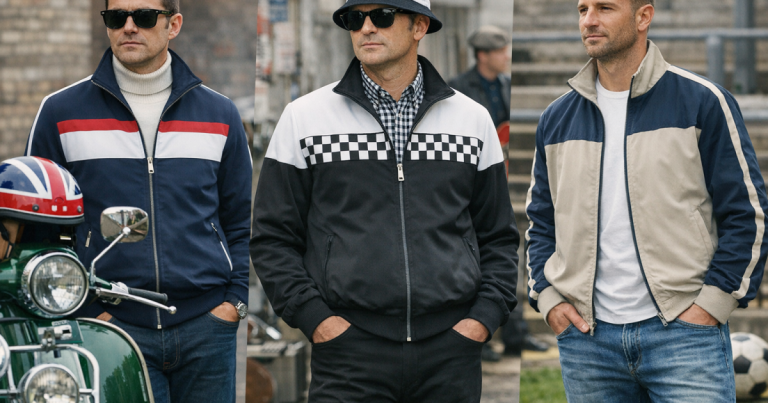
Different eras favoured different shapes. Slimmer track tops, high collars, contrast piping and clean side stripes all had their moment. Full matching sets could look powerful in the right setting, but many casual dressers used separates: a track jacket with jeans, track pants with a knitted top, or a sportswear layer under an outer jacket. That mix-and-shift approach is what keeps the style wearable now.
Modern retro pieces such as the Adidas Originals Trefoil Tracksuit show why the formula still works: recognisable heritage, bold branding, and a silhouette that can be worn casually rather than theatrically. The key is not to treat it as fancy dress. One heritage piece usually says more than a head-to-toe costume of references.
Music gave the clothes a second life
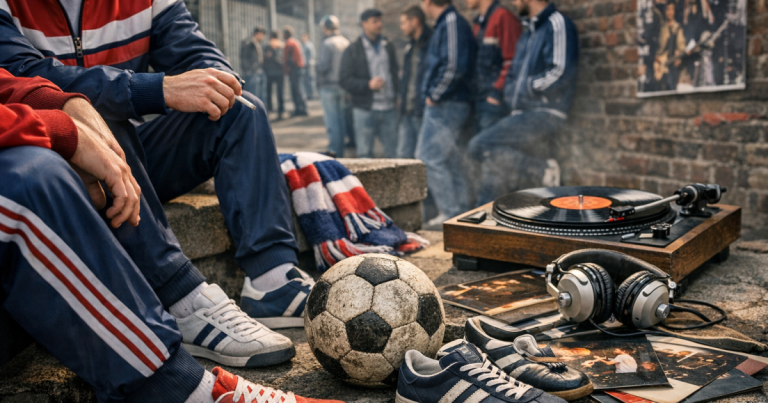
Football casual style did not exist in isolation from music. The same people who cared about imported trainers and track tops often cared about records, clubs and scenes. Post-punk, new wave, soul, house, rave, Madchester, Britpop and indie all brushed against casual dress in different ways. Music gave the clothing movement, attitude and rhythm beyond the matchday.
In the north west, the crossover between football, clubs and bands helped make sportswear feel culturally loaded. Around Manchester and Liverpool especially, jackets and trainers were not just worn to the ground; they appeared in record shops, on nights out and in youth culture photography. Elsewhere, acid house and rave softened some of the sharper football edges, pulling tracksuits, cagoules, bucket hats and trainers into a broader dancefloor language.
Britpop later reintroduced a more visible national nostalgia around track jackets, polos and trainers. It did not invent the look, but it made parts of it legible to a wider audience. The difference is important: the mainstream borrowed the surface, while terrace culture carried the memory of why those pieces mattered in the first place.
Matchday identity without replica kit
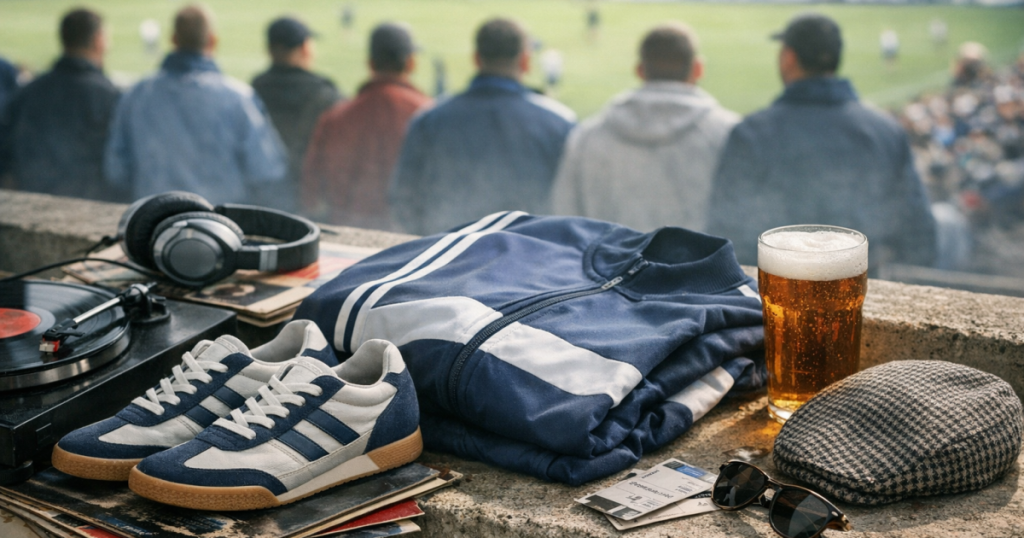
One of the defining casual moves was the rejection, or at least avoidance, of obvious replica shirts. Instead of declaring allegiance through club colours, people used dress to signal taste, confidence and belonging to a more selective group. The terrace became a place where you could be loyal without wearing the official uniform.
That did not mean football identity disappeared. It became coded. A colour combination might nod to a club without copying the kit. A jacket might be associated with a particular city. Trainers might place someone in a specific era. Even the decision to avoid logos that were too obvious could be part of the message.
This is why the clothing still attracts people who like football culture but do not want to dress like walking memorabilia. The best casual outfits feel connected to matchday without being swallowed by it. A track top, dark denim, clean trainers and a weatherproof jacket can say more than a loud shirt-and-scar combination, especially away from the ground.
Status, scarcity and the art of being first
Casual style has always been tied to status, but not always in the simple luxury sense. Scarcity mattered. Being first mattered. Knowing which shop had a shipment, which European brand was about to land, or which trainer looked right with a particular track top could give someone an edge.
That knowledge economy is still visible today, even if the channels have changed. Instead of coach trips, specialist shops and word of mouth doing all the work, people now use archives, resale platforms, social media and brand reissues. The principle is familiar: not everything rare is good, and not everything widely available is weak. The best eye still comes from proportion, condition, context and restraint.
For readers building a modern wardrobe around these references, the strongest lesson is to understand the codes rather than chase every logo. Our guide to 1980s casuals style codes digs further into the decade that still shapes many of today’s terrace-inspired choices.
The competing view: subculture or nostalgia industry?
There is a fair argument that casual style has been softened by nostalgia. Once brands reissue archive designs and high-street fashion borrows the shapes, the original edge can become diluted. A track jacket that once felt like a hard-won signal can become a convenient retro purchase.
But that does not make the style meaningless. Subcultures often survive by being reinterpreted. The question is whether the wearer understands the reference and wears it with some judgement. A carefully chosen track top with modern trousers and understated trainers can feel alive. A pile-up of logos, badges, tinted glasses and forced attitude can feel like costume.
Books and photography help separate memory from myth. The Football Casuals: A History by Cass Pennant is one well-known route into the subject, while documentary photography from the period can be just as revealing because it shows how ordinary and extraordinary the clothes looked in their real setting.
How the codes translate now
The modern version works best when it respects the spirit rather than copying the whole outfit. Think in terms of balance: one strong sportswear piece, one grounded casual layer, clean trainers and a fit that looks intentional. The aim is lived-in confidence, not museum accuracy.
- Track top with denim: a reliable way to make a heritage jacket feel wearable outside the matchday bubble.
- Full tracksuit, carefully handled: best when the fit is clean and the trainers are simple rather than overly loud.
- Outerwear over sportswear: a lightweight jacket or waxed layer can make a track top feel more grown-up.
- Music-reference styling: subtle nods to indie, rave or Britpop work better than copying a band photo exactly.
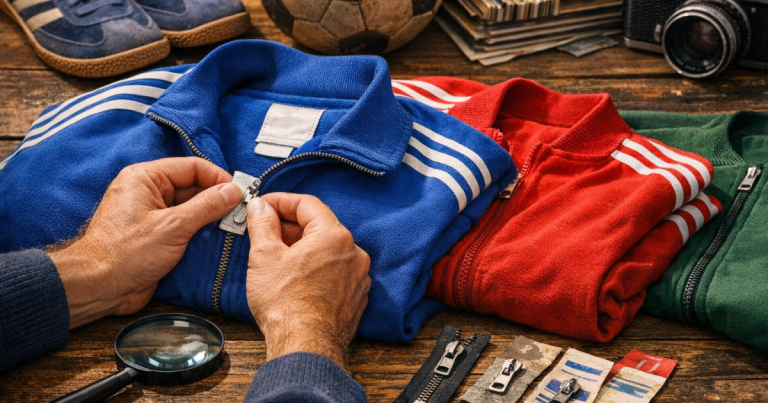
- Condition matters: vintage pieces need checking for zip wear, fabric pulls, staining and tired elastic before they earn regular wear.
A simple hoodie can also sit naturally within the wider look, particularly when it softens a sharper jacket or trainer choice. Something like a Puma Classic Hoodie is less about shouting heritage and more about giving the outfit an easy sportswear base.
If you want to build the look without overdoing the references, the most useful next step is understanding the core pieces. The breakdown of terrace style essentials covers jackets, knitwear, denim and trainers in a way that connects the culture to real outfits.
Helpful questions
Were football casuals only about designer brands?
No. Designer and imported labels mattered, but the deeper point was taste, timing and scarcity. A lesser-known track top worn well could carry more status than an obvious expensive label worn badly.
Is wearing casual-inspired style today controversial?
It depends how it is worn and presented. The clothes have links to football subculture, including its difficult edges, but they are also part of British sportswear, music and street-style history. Avoid glorifying violence and focus on the cultural and design story.
Can a full tracksuit still look good away from matchday?
Yes, but restraint matters. A clean fit, simple trainers and minimal accessories usually work better than stacking every retro cue at once. Separates are often easier for everyday wear.
Which music scenes shaped the look most?
There was no single soundtrack. Post-punk, soul, house, rave, Madchester, Britpop and indie all intersected with casual dress at different points, depending on city, era and crowd.
What to remember
The casuals story matters because it shows how British football supporters turned sportswear into identity. Tracksuits, trainers and jackets became tools for self-expression long before heritage sportswear was neatly packaged as retro fashion. Music widened the language, matchdays sharpened it, and local scenes gave it character.
The best way to read the style now is not as a fixed uniform, but as a set of decisions: what to show, what to hold back, what era to reference and how to make it wearable in the present. Get those decisions right and the look still has what it always had at its strongest: confidence without needing to explain itself.