The easiest way to spot rave influence in terrace tracksuit culture is to look for movement: looser fits, brighter panels, synthetic sheen and outfits built for all-day wear. It was never a clean break from football-casual style; it was a remix shaped by away days, clubs, pirate radio, record shops and youth culture across Britain.
That matters because not every bright tracksuit is rave-coded, and not every terrace outfit is understated. The useful skill is reading the details together: silhouette, colour, fabric, trainers, attitude and context.
In brief
- Rave-leaning terrace style usually looks more relaxed, louder and more kinetic than classic football-casual minimalism.
- Look for baggier track tops, shell fabrics, colour-blocking, high-contrast panels, bucket hats, compact bags and trainers chosen for long days on foot.
- The strongest outfits still have terrace discipline: clean lines, good proportions and a sense of restraint somewhere in the look.
- The look sits between football, club culture and music scenes rather than belonging purely to one of them.
Step 1: start with the cultural crossover
Rave did not replace terrace style; it softened, loosened and brightened parts of it. Football casuals were already skilled at reading brands, cuts and imported sportswear. Club culture added a different set of priorities: clothes had to move, breathe, survive crowds and look alive under lights.
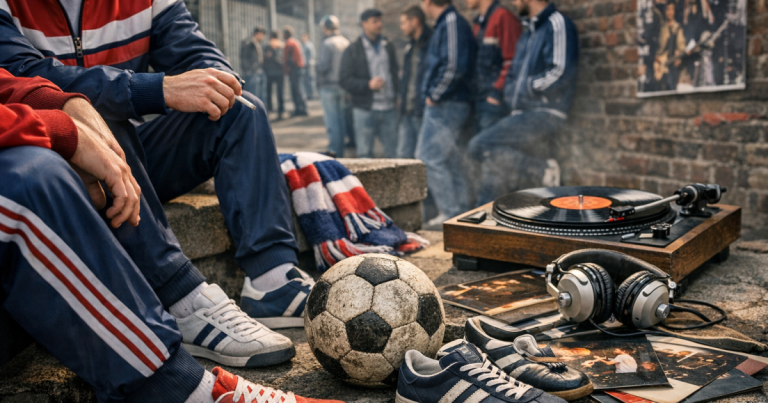
The overlap was strongest where the same people moved between football, pubs, record shops, all-night clubs and motorway service stations. A track jacket that made sense on the terraces could also work in a warehouse or field, provided the fit and fabric felt right. For the foundations of the football-casual side, it helps to understand what terrace style means before the rave layer is added.
A useful rule: terrace culture often values sharpness and recognition; rave culture adds release and energy. When both are present, the outfit tends to feel casual but charged.
Step 2: read the silhouette before the logo
Logos can mislead. Plenty of brands crossed several subcultures, and modern reissues often blur the lines even further. Silhouette is usually the better first clue.
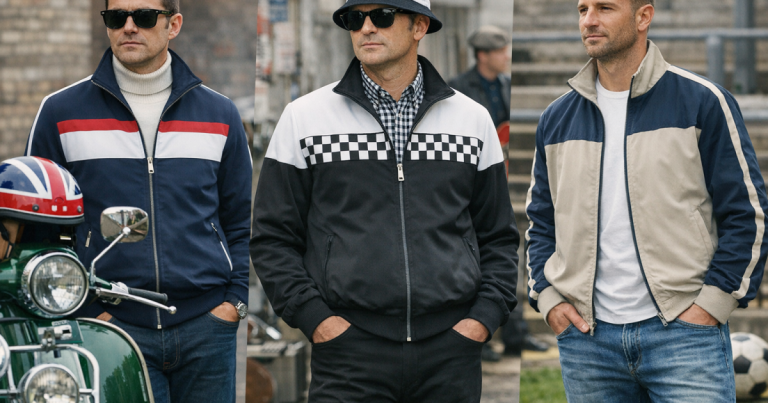
- Classic terrace lean: neater track tops, straighter trousers, tidy cuffs, fitted polos, clean trainers and a controlled profile.
- Rave-leaning terrace look: wider or boxier jackets, slightly slouchier trousers, shell suits, roomy sleeves and a more relaxed upper-body shape.
- Hybrid approach: a loose track top balanced with slimmer bottoms, or a bright jacket worn with plain joggers and understated trainers.
The key is not just “baggy”. It is whether the outfit looks built for movement. A rave-influenced terrace tracksuit often has space around the shoulders and arms, allowing the wearer to look comfortable rather than posed.
Step 3: look for colour that feels energetic, not random
Rave culture brought a bolder colour language into British sportswear. Acid brights, high-contrast panelling and graphic blocking became part of the visual vocabulary, but the best terrace versions still feel deliberate.
Colour clues that usually point towards the dancefloor
- Neon or near-neon accents used on zips, piping, sleeve panels or chest blocks.
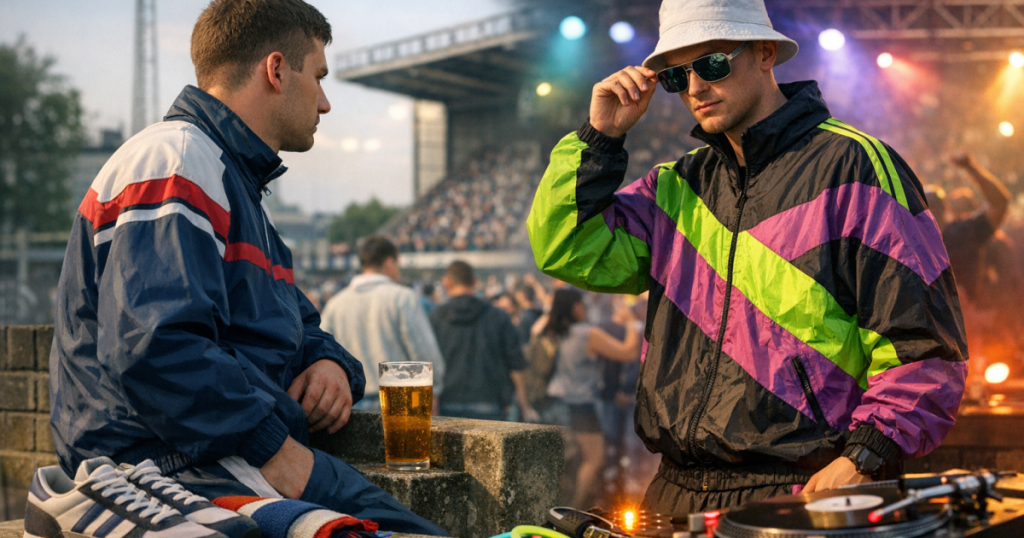
- Combinations of purple, turquoise, lime, orange, cobalt, pink or yellow against black, navy or white.
- Large geometric panels that look dynamic when the body moves.
- Shell jackets with a glossy or crinkled surface that catches light.
- Matching sets that look less like training kit and more like weekend subculture uniform.
The trap is going too fancy-dress. If every item is shouting, the look can tip into costume. In real terrace terms, one loud element usually works harder than three: a vivid track jacket over a plain tee, or bright trousers anchored by a dark top.
Step 4: check the fabric and finish
Fabric is where rave influence often becomes obvious. Traditional terrace pieces can be knitted, brushed, cotton-rich or smooth polyester. Rave-era sportswear leans heavily into lightweight synthetics, nylon-feel shells and surfaces that rustle, shine or crease in a distinctive way.
That does not mean every shiny jacket belongs in the same lane. The difference is how the finish behaves with the rest of the outfit. A high-sheen shell top worn with beat-up trainers, a plain tee and a relaxed trouser shape feels closer to club-adjacent casualwear. The same jacket worn too tight with over-styled accessories can look more like a retro party costume.
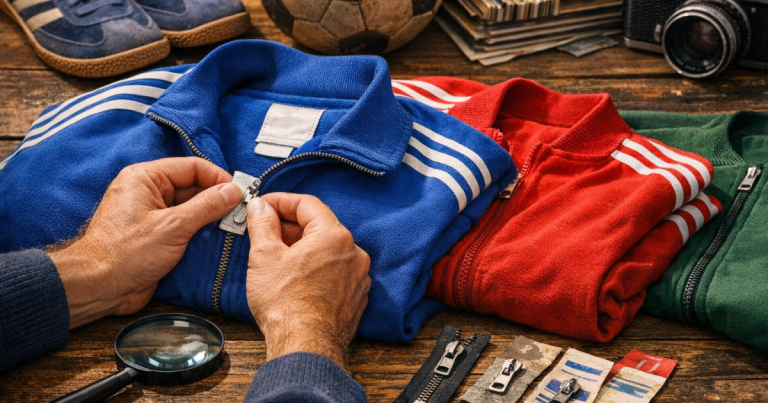
When handling vintage or reissued pieces, check the care label and fabric condition. Older synthetic sportswear can be vulnerable to cracking prints, tired elastics and weakened linings, so careful washing and air drying matter if you want the garment to keep its shape.
Step 5: notice the trainers and accessories
Footwear tells you whether the outfit is still rooted in the terraces. Rave-influenced outfits may look freer above the ankle, but they often keep the trainer choice grounded: low-profile casual trainers, suede styles, indoor court shapes, running-inspired silhouettes or simple leather pairs that can handle a long day.
Accessories can push the signal further. Bucket hats, small crossbody bags, compact waist packs, caps and lightweight outer layers all make sense in a scene built around movement and long hours. The important bit is scale. A small bag looks practical; an overloaded one drags the outfit away from terrace neatness.
If the trainers are too pristine, the outfit may feel styled rather than lived-in. If they are too battered, the sharpness disappears. The sweet spot is clean enough for the casual code, comfortable enough for the culture around it.
Step 6: separate rave cues from Britpop and pure casual style
There is overlap between rave, Madchester, Britpop and football-casual dressing, but they are not identical. Reading the differences helps you avoid flattening British sportswear culture into one nostalgic blur.
- Pure football-casual influence often feels more brand-conscious, tidy and status-led, with Italian sportswear, clean trainers and restrained colour doing the work.
- Rave and acid house influence feels more physical: looser, brighter, shinier and more open to unusual colour combinations.
- Madchester influence often sits in the middle, mixing baggy shapes, track tops, bucket hats, band culture and football references.
- Britpop-era sportswear tends to bring in parkas, polos, denim, branded track tops and a more pub-to-gig mood.
For a wider timeline of how these looks sit alongside one another, the breakdown of the eras that shaped British tracksuit culture gives useful context without treating every scene as the same thing.
Step 7: use brand clues carefully
Brand archives are useful, but they are not the whole answer. Adidas, Fila, Ellesse, Kappa, Sergio Tacchini, Diadora, Nike and Puma all appear across football, leisurewear, club culture and mainstream fashion at different points. A badge alone cannot prove influence.
Instead, look at the design language: does the piece have archive-style panelling, oversized proportions, bright synthetic fabric, bold sleeve taping or colour choices that feel built for nightlife as much as matchday? Modern reissues often borrow from several periods at once, so the same jacket can carry terrace, rave and broader retro-sportswear signals.
That is why archive awareness helps. Understanding how sportswear brand archives shape modern retro tracksuits makes it easier to tell the difference between an authentic reference, a loose revival and a modern piece using nostalgia as decoration.
A practical mirror test
If you are trying to build or read the look, use a simple five-point check. You are not trying to pass a purity test; you are checking whether the outfit communicates the right blend of terrace sharpness and rave looseness.
- Does one part of the outfit move freely, such as a roomy shell jacket or relaxed track top?
- Is there a clear colour statement rather than random brightness everywhere?
- Do the trainers keep the outfit grounded in casual culture?
- Is at least one element restrained, such as a plain tee, dark trouser or simple cap?
- Could the outfit plausibly work for football, a pub, a record fair or a late train home?
If the answer is mostly yes, the influence is probably being handled well. If the outfit only makes sense at a themed night, it may be leaning too heavily on retro caricature.
Common mistakes when reading the look
- Assuming all bright tracksuits are rave-influenced. Some are simply bold sportswear designs with no real club-culture connection.
- Ignoring regional nuance. Manchester, Liverpool, London, Glasgow, Leeds and other UK scenes developed different relationships with football, music and clothing.
- Overvaluing logos. Fit, fabric and styling often reveal more than the badge.
- Forgetting practicality. Much of the look came from clothes that could be worn for long, messy, mobile days.
- Turning it into costume. Authentic influence usually looks casual, not theatrical.
Things readers ask
Is rave-influenced terrace style the same as Madchester style?
No. They overlap, especially through baggy shapes, track tops and music culture, but Madchester has its own band, club and city-specific references. Rave influence is broader and more dancefloor-led.
Can a modern tracksuit show rave influence without being vintage?
Yes. Modern pieces can carry the look through colour-blocking, synthetic fabrics, relaxed fits and archive-inspired shapes. The styling matters more than the age of the garment.
Are shell suits always part of rave-influenced terrace culture?
Not always, but they are a strong clue when combined with bright panels, looser proportions and practical trainers. A shell suit can also read as general retro sportswear depending on context.
How do you stop the look becoming fancy dress?
Keep one anchor point restrained. Use plain layers, clean trainers, a simple cap or darker trousers so the brighter rave-coded piece has room to work.
Key takeaways
Rave influence shows up in terrace tracksuit culture through looseness, colour, synthetic texture and the sense that the outfit is made for movement as much as display. The strongest examples do not abandon football-casual codes; they bend them, adding energy while keeping enough discipline to feel wearable.
Look beyond the obvious signs. A bright jacket, a bucket hat or a glossy fabric only tells part of the story. The real clue is the full combination: terrace roots, club energy, practical trainers and a silhouette that looks ready for both the stand and the sound system.