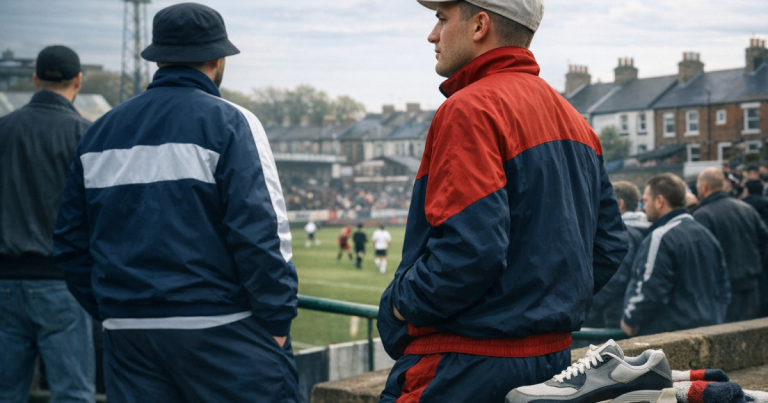

Adidas Originals terrace sportswear is not just about a logo; it is about how a sports brand became visual shorthand for credibility on British terraces, in pubs, on trains and in everyday casual wardrobes. The three stripes worked because they sat between performance kit, European travel cachet and wearable street uniform. That balance is still why adidas archive pieces feel easier to wear than many louder retro revivals.
The important point is not that adidas was the only brand in terrace culture. It is that its best-known silhouettes gave fans a shared language: track tops, zip-through jackets, slim trainers, bold colour blocking and a badge that could say a lot without shouting.
The big picture
- Adidas became a terrace benchmark because its football heritage, European availability and distinctive branding all fed naturally into casual style.
- The Trefoil and three stripes made garments instantly recognisable while still being wearable away from the ground.
- Archive-style track tops and trainers remain useful today because they bridge nostalgia and normal everyday dressing.
- The strongest looks are usually restrained: one adidas statement piece, sensible trainers, and colours that do not accidentally mimic the wrong club allegiance.
Why adidas made sense to football lads in Britain
British terrace style did not appear from a single brand campaign. It grew through travel, rivalry, observation and one-upmanship. Supporters coming back from European away days, holidays and city breaks brought home sportswear that looked different from what was common on UK high streets. Adidas had an advantage because it was already deeply connected to football, but it also had the continental aura that mattered to young fans trying to separate themselves from ordinary replica-kit dressing.
Unlike a club shirt, an adidas track jacket could move through different social settings. It worked at the match, on the coach, in the pub and later in music-led nightlife. That versatility mattered. Terrace dress was rarely just about looking sporty; it was about looking switched-on, selective and part of a scene. Adidas garments made that easier because they offered visible identity without turning the wearer into a walking advert for one club.
The three stripes also solved a practical style problem. A plain track top could disappear; a heavily branded one could look overdone. Adidas sat in the middle. The stripes gave rhythm to sleeves and legs, the Trefoil added heritage, and colour panels did enough work without needing complicated styling.
The Trefoil effect: recognisable but not cartoonish
The Trefoil is central to the story. It carries a different feeling from modern performance branding: less gym, more archive; less professional athlete, more lived-in sportswear. For terrace wardrobes, that distinction is crucial. The appeal is not to look as though you are about to train. It is to look as though the sportswear has history, taste and social context.
That is why adidas Originals pieces often outperform louder retro items in real outfits. A navy track top with white stripes, a bottle-green zip jacket, or a black pair of track pants can nod to the past without becoming fancy dress. The badge is understood, but it does not need explanation.
Readers who want to go deeper into how track tops actually changed shape over time should compare this with our guide to tracksuit fit by decade, because the difference between a 1970s neat track jacket and a 1990s roomy set affects whether an outfit feels sharp or sloppy today.
Key adidas pieces that shaped the terrace look
Not every adidas item belongs in terrace conversation equally. The strongest references tend to come from football-adjacent training wear, archive track jackets and low-profile trainers rather than modern technical gym kit. The best pieces share three traits: they are recognisable, they layer well, and they do not rely on novelty.
Track tops and zip jackets
The track top is the obvious starting point because it carries the brand codes most clearly. Archive-inspired adidas jackets have a natural terrace logic: ribbed cuffs, a zip front, side stripes and enough structure to sit cleanly over a polo, T-shirt or light knit. A piece such as the Adidas Originals Firebird Track Top is useful as a modern reference point because it shows how a familiar three-stripe jacket can be worn casually without chasing a rare vintage original.
For a neater, older-school shape, the Adidas Originals Beckenbauer Track Top gives readers another recognisable comparison. The point is not that one model is automatically superior; it is that different cuts change the whole mood. A boxier jacket leans 1990s and 2000s. A trimmer track top feels closer to earlier European sportswear and can look smarter under a casual jacket.
Track pants and full sets
Full adidas tracksuits can work, but they need more judgement. A matching set has strong visual impact, which is part of the appeal, but it can also look too staged if the fit is off or the colours are too bright. For everyday UK wear, many people get more mileage from splitting the set: track top with jeans or cords, track pants with a plain sweatshirt, or a jacket under a waxed or lightweight outer layer.
If you do wear a full set, check the basics before buying: waist rise, leg width, cuff style, jacket length and whether the fabric has the feel you want. Vintage pieces can have charm, but condition varies. Reissues are usually easier for regular wear, returns and size consistency, though they may not have the exact same fabric weight or proportions as older garments.
Trainers that complete the message
adidas trainers matter because they ground the outfit. Terrace footwear has its own hierarchy, but low-profile suede or leather trainers usually sit better with archive sportswear than bulky running shoes. The Adidas Originals Gazelle Indoor is a good example of the slim, gum-soled lane that many terrace-inspired outfits still use, though readers should always check fit, material and colour in person where possible.
For broader pairing ideas across brands and eras, the Terrace Style Footwear Guide is the better next step, especially if you are weighing adidas against Puma, Diadora, Reebok or other casual favourites.
Why it became a benchmark, not just another brand
Adidas reached benchmark status because it could mean several things at once. To football supporters, it carried sporting legitimacy. To casuals, it carried European taste and recognisable status. To later music and streetwear scenes, it carried nostalgia without feeling niche. That layered meaning is hard to manufacture.
The brand also benefited from visual discipline. Three stripes are simple enough to spot from across a concourse, but they are not so complex that they date badly. Compare that with sportswear driven by giant graphics or unusual panel shapes: those pieces can be brilliant in the right outfit, but they are harder to keep in regular rotation. Adidas archive clothing tends to age more calmly.
There is also a classically British tension in the way adidas was worn. Terrace dress often prized restraint and coded recognition. The best-dressed people were not necessarily wearing the rarest item; they were wearing the right item in the right way. A navy adidas track top, dark denim and clean trainers could say more than a head-to-toe display of logos.
The competing view: was adidas too obvious?
There is a fair argument that adidas became so dominant that it lost some of its insider edge. Once a brand is widely understood, it is no longer a secret signal. Some terrace purists prefer the more specific pull of Italian tennis brands, rarer European labels, or regional favourites that feel less universal.
That criticism has weight, but it also proves the point. A benchmark is not always the rarest or most exotic option. It is the reference other choices are measured against. Adidas became the baseline because it was accessible enough to spread, distinctive enough to matter, and versatile enough to survive changing decades.
The better question for a modern wardrobe is not whether adidas is obvious. It is whether the piece you choose has the right proportion, colour and context. A badly fitted rare jacket will not beat a well-styled adidas track top simply because it is harder to find.
How to wear the influence without looking like a costume
The safest route is to keep one strong adidas element and build around it. A track top works well with straight-leg jeans, cords, plain tees, polos, casual knitwear and understated outerwear. Track pants can look sharp with a simple sweatshirt or overshirt, but they need clean footwear and a decent length so they do not bunch awkwardly.
Colour is where many outfits succeed or fail. Adidas has long used strong combinations, but terrace culture adds another layer because colours can carry football meaning. Red, blue, green, white, black and yellow all read differently depending on where you are, who you support and what matchday context you are stepping into. If that matters to you, our piece on terrace tracksuit codes explains how fit, fabric and colour can change the message of a tracksuit.
Condition matters too. Vintage adidas can be brilliant, but check zips, cuffs, collar shape, fading, bobbling, elastic and whether the garment has been altered. With synthetic sportswear, careless heat can damage fabric or logos, so follow the care label and avoid treating every track top like a cotton sweatshirt. A handheld steamer can be useful for gentle freshening, but test carefully and keep heat controlled.
What to look for in 2026
For current wardrobes, the most wearable adidas Originals pieces are usually the least gimmicky. Look for archive-leaning colours, strong ribbing, a jacket length that sits naturally at the waist or hip, and trousers that match how you actually dress. A full tracksuit can be right for a confident casual look, but separates often work harder across the week.
Think in outfits rather than isolated garments. A black track top might look plain on the hanger but become your most-used piece. A brighter blue or green jacket may feel more authentic to the era you like, but it will demand calmer trousers and trainers. White trainers can sharpen a look, while gum soles bring the continental indoor-sport feel that sits comfortably with terrace styling.
If you are choosing between vintage and reissue, be honest about how you will wear it. Vintage gives character, older labels and period proportions. Reissues make sense when you want easier sizing, cleaner condition and less worry about damaging a collectible piece. Neither route is automatically more authentic; the outfit and the wearer do that work.
Questions people ask
Is adidas Originals the same as vintage adidas?
No. Adidas Originals is the heritage-led lifestyle side of the brand, while vintage adidas refers to older garments from previous eras. Originals can draw on archive designs, but a modern reissue is not the same thing as an original period piece.
Why do terrace fans favour adidas trainers?
They suit the visual language: low profiles, suede or leather uppers, gum soles and football-adjacent heritage. They also pair naturally with track tops, denim and casual outerwear without looking like modern running footwear.
Can you wear a full adidas tracksuit casually?
Yes, but fit and colour decide whether it works. Muted colours and clean proportions are easier for everyday wear, while very bright matching sets need more confidence and restraint elsewhere.
Is the Trefoil more terrace-friendly than the modern adidas performance logo?
Usually, yes. The Trefoil reads as heritage sportswear, which suits retro tracksuit culture better than current performance branding, though the garment shape still matters more than the badge alone.
Final thoughts
Adidas Originals became a terrace benchmark because it joined the dots that mattered: football credibility, continental cool, clear branding and practical wearability. It was never just a tracksuit brand and never just a trainer brand. It gave British casual culture a set of visual tools that could be adapted by decade, region, club colour and personal taste.
That is why the three stripes still hold up. Worn well, adidas does not need to announce that it belongs to terrace style. It already speaks the language.