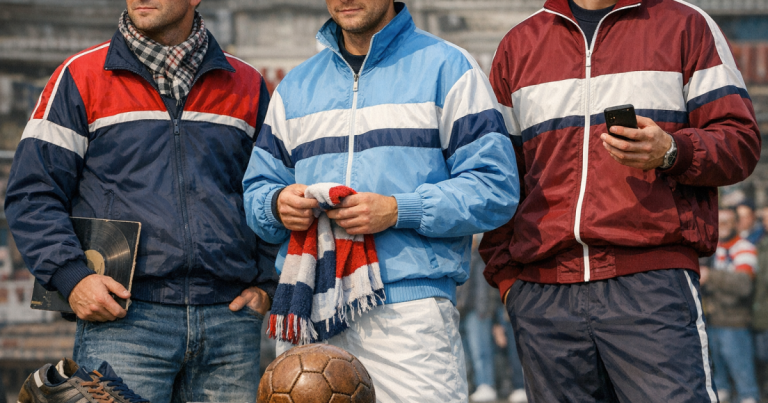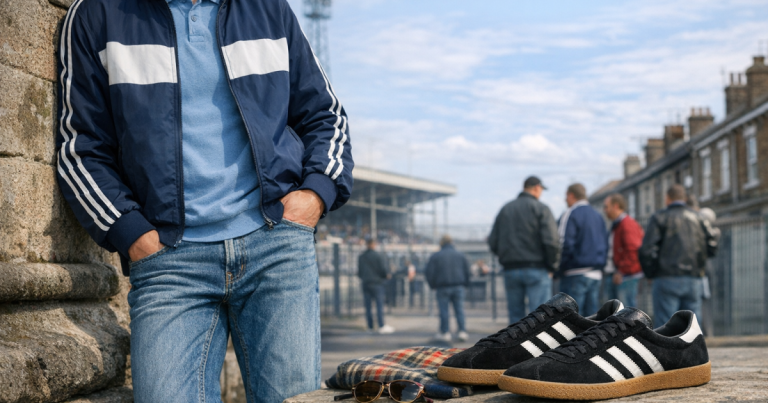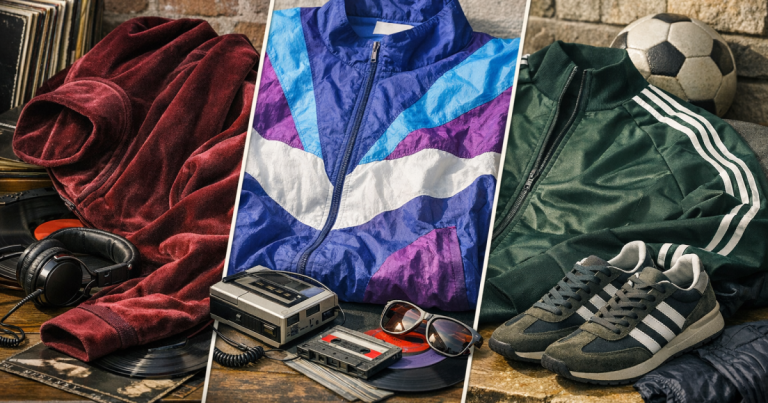
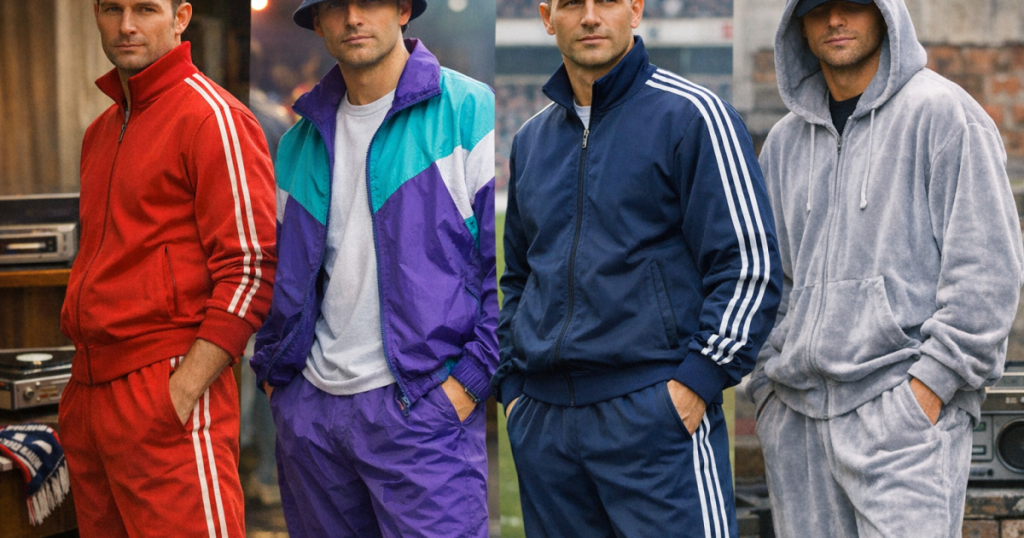
A tracksuit can look era-correct or strangely off for one simple reason: shape. Understanding tracksuit fit by decade helps you read the difference between a sharp 1970s track top, an expansive 1980s casual jacket, a baggier 1990s set and the polished 2000s revival pieces that still turn up around British football grounds and city centres.
The logos matter, but fit does more of the work than most people admit. A collar that sits high, a cuff that grips the wrist, a hem that finishes on the hip or a trouser leg that pools slightly over trainers can shift the whole outfit into a different era. For terrace-inspired dressing in 2026, the aim is not fancy dress. It is knowing which decade you are borrowing from and making the proportions wearable now.
What to know first
Each decade has its own visual logic. The 1970s often favoured neater track tops, ribbed trims and a closer athletic line. The 1980s pushed more colour, broader bodies and bolder nylon or shiny poly blends. The 1990s loosened the silhouette, with relaxed trousers and bigger tops. The 2000s kept the oversized mood but added smoother technical finishes, taping, contrast panels and branded side detailing.
That does not mean every garment from a decade fits the same. Tennis warm-ups, football training suits, leisurewear sets and reissued fashion pieces all behave differently. Still, the broad period shapes are useful. They help you decide whether a jacket should sit cropped or slouchy, whether the collar should be zipped up or left open, and whether the trousers should taper cleanly or carry a bit of weight over the shoe.
For the wider meaning of fit, fabric and football-casual signals, the site’s guide to terrace tracksuit codes is a useful companion to this era-led breakdown.
1970s: neat, athletic and surprisingly sharp
The 1970s track jacket is often the easiest to wear badly and the most rewarding to get right. Compared with later decades, the cut tends to feel trimmer through the body, with a shorter hem, a defined collar and ribbed cuffs that hold the sleeve in place. The jacket should look sporty without feeling like a modern gym top. It works because it has structure.
Think of the classic zip track top with contrast striping, a collar that can sit flat or slightly raised, and a waistband that finishes around the hip rather than hanging long. The sleeves often feel slimmer than a 1990s jacket. If the body is too tight, it becomes retro cosplay; if it is too long, it loses that 1970s balance.
The Fila Settanta Track Jacket is a strong reference point for this period because it shows how a simple collar, clean stripe placement and controlled proportions can carry the whole look. Our piece on wearing a 1970s Fila Settanta track jacket today goes deeper on making that shape feel current rather than costume-like.
How to wear the 1970s fit now
- Keep the jacket neat through the shoulders, but avoid anything that pulls across the chest.
- Wear the hem around the hip, not halfway down the thigh.
- Pair with straight denim, cords or restrained track pants if you want the jacket to lead the outfit.
- Use trainers with a lower profile to keep the proportions period-friendly.
1980s: volume, colour and casual swagger
The 1980s is where tracksuit shape becomes more theatrical. Casual culture, sports sponsorship, continental tennis styling and football travel all helped turn sportswear into a status-coded wardrobe. The tops became roomier, the panels bolder and the fabrics more noticeable. A little shine was not a problem; it was part of the point.
Compared with the 1970s, an 1980s-style top usually gives you more body, more sleeve and more visual presence. The collar might be higher, the zip chunkier and the shoulder line less discreet. Cuffs still matter, but they are often working against a fuller sleeve, creating that gathered shape at the wrist. It is a silhouette that looks natural with jeans, pleated trousers, polos or lightweight knitwear underneath.
Pieces inspired by Sergio Tacchini, Fila, Ellesse and early adidas leisurewear all sit comfortably in this zone. The Sergio Tacchini Damarindo Track Top is a useful modern reference if you want to study how colour blocking and a fuller casual cut can feel smart rather than sloppy.
Getting the 1980s shape right
- Let the jacket have some width, but keep the hem controlled so it does not swallow the outfit.
- Use a polo shirt or plain tee underneath rather than layering too heavily.
- Choose trousers with enough substance to balance the upper half.
- If the colour is loud, keep trainers and accessories calmer.
1990s: relaxed, practical and street-level
By the 1990s, the tracksuit had moved through football, dance music, high street sports shops, estate style and Saturday afternoon television. The fit generally relaxed. Jackets became longer and easier. Trousers had more room through the thigh. Elasticated cuffs could sit over chunky trainers, while open hems gave a straighter, more casual fall.
This decade is where many people accidentally overdo it. A true 1990s silhouette can take volume, but it still needs shape. The jacket should look deliberately relaxed, not simply too big. The trousers should have movement, not collapse. A full nylon or polyester set can look brilliant with the right trainers, but the wrong size will make it look like forgotten PE kit.
Collars also changed in feel. Stand collars and half-zips became common visual shorthand, while some sets used broader, softer collars that looked more like leisurewear than training kit. This is where a track top starts to sit close to the world of hoodies, shell jackets and loose outerwear.
Modern ways to handle 1990s looseness
- Go relaxed in either the top or trousers first, rather than automatically oversized in both.
- Check sleeve length: a dropped shoulder can work, but cuffs should not cover half your hand.
- Use simple layers underneath so the silhouette stays clean.
- Let trainers carry some weight; slim shoes can look lost under wider track pants.
2000s: shine, taping and sharper branding
The 2000s brought a different kind of tracksuit confidence. Footballers, music videos, high street sportswear and European casual influences all pushed branded sets back into everyday visibility. Fits could be roomy, but the finish often looked sleeker than the 1990s. Side taping, contrast piping, zip pockets, smoother synthetic fabrics and coordinated tops and bottoms made the full set feel deliberate.
Kappa, adidas, Reebok, Nike, Puma and other familiar sportswear names all played into this mood in different ways. The 2000s shape is not just big; it is streamlined. Trousers often sit with a cleaner line through the leg, and jackets can combine generous width with neater panels. A full set can feel very terrace if the colours are chosen carefully, but it can also become too branded if every detail is shouting at once.
For 2026 wardrobes, this era is often the easiest to revive with current reissues or archive-inspired pieces. You can wear a full set, but separates are more flexible. A shiny track jacket with plain dark trousers can feel sharper than the matching bottoms. Likewise, taped track pants with a sweatshirt or knit can nod to the period without going full throwback.
Cuffs, hems and collars: the small details that change the decade
Fit is not only about whether something is slim or baggy. The details at the edges tell you where the garment is coming from.
- Ribbed cuffs: common across decades, but especially important on neat 1970s and fuller 1980s tops because they control sleeve shape.
- Elasticated trouser cuffs: useful for a sporty or 1990s look, especially when worn with trainers that have enough presence.
- Open hems: often feel more relaxed and casual, working well with 1990s and 2000s-inspired outfits.
- High stand collars: add 1980s and 1990s energy, particularly on nylon or shiny poly jackets.
- Flat fold collars: suit 1970s tennis and training references, giving the top a cleaner, sharper line.
The quickest test is to look at the outline from a few metres away. If the collar, sleeve and trouser break all point to the same era, the outfit usually makes sense. If the top is neat 1970s but the trousers are huge and modern, you need a deliberate reason for that contrast.
Trainers decide whether the fit lands
Tracksuit proportions only fully make sense once trainers enter the picture. A narrow retro runner can sharpen a slim 1970s-inspired track top. A gum-soled terrace shoe can ground an 1980s casual jacket. A chunkier runner can balance a 1990s trouser leg. A low-profile indoor trainer can keep a 2000s taped set from looking too heavy.
The adidas Originals Handball Spezial remains a useful reference for the low-profile terrace look because it works under straighter trousers and with neater track tops. If you want to match footwear to period shape more carefully, the guide to retro trainers by decade breaks down those choices in more detail.
Vintage, reissue or modern inspired?
Vintage originals carry the charm of real age: period labels, older fabric handle, faded colours and cuts that modern brands do not always reproduce. They also bring trade-offs. Elastic can slacken, zips can fatigue, linings can mark and sizing labels can be unreliable. Always check measurements rather than trusting the tag size alone, especially with older European sportswear.
Reissues and modern archive-inspired pieces are usually easier to live with. You may get a more predictable size range, cleaner condition and current fabric standards, but the cut may have been adjusted for modern tastes. That can be good if you actually want to wear the piece often. It can be less satisfying if you are chasing an exact period silhouette.
For a wearable middle ground, compare shoulder width, body length and trouser rise before worrying about the badge. A familiar logo will not rescue a poor fit. Equally, a lesser-hyped brand can look superb if the cut, collar and cuffs are right for the decade you are referencing.
Common questions
Should a retro track jacket fit slim or oversized?
It depends on the era. A 1970s-inspired jacket usually works best neat and hip-length, while 1990s and 2000s styles can handle more room. The fit should look intentional, not simply sized up.
Are cuffed track pants more retro than open-hem trousers?
Cuffed track pants often feel sportier and suit 1980s, 1990s and some 2000s looks. Open hems can look more relaxed and grown-up, especially with terrace trainers or casual shoes.
Can you mix decades in one outfit?
Yes, but keep one decade dominant. A 1970s-style jacket can work with modern straight trousers, or 1990s track pants can sit with a plain hoodie, as long as the proportions are balanced.
What matters more: brand or fit?
Fit matters first. Brands carry cultural meaning, but the wrong length, collar or trouser shape can make even a respected label look off.
Main lessons
The point of tracksuit fit by decade is not to dress like a museum display. It is to understand why a sharp ribbed 1970s track top, a colourful 1980s casual jacket, a loose 1990s set and a sleek 2000s tracksuit all feel different on the body. Once you can read the cut, cuffs and collars, you can choose pieces with more confidence and build outfits that nod to football-casual history without getting trapped by it.
Start with the silhouette, then refine the details. Get the shoulder right, check where the hem falls, look at how the cuffs behave, and choose trainers that support the era rather than fighting it. That is where retro tracksuit style becomes wearable: not in copying a decade perfectly, but in understanding its proportions well enough to make them work now.