A tracksuit on the terrace has rarely been just a tracksuit. The cut, sheen, logo placement and trainer pairing all say something before anyone speaks. Understanding terrace tracksuit codes helps explain why one full set looks sharp and rooted, while another feels like fancy dress or gym kit. The point is not to police what anyone wears. It is to read the references properly, then use them with enough restraint for modern matchday, pub, record-shop or weekend wear.
At a glance
- Fit matters more than nostalgia: a relaxed track top can look authentic, but sloppy proportions can kill the look.
- Fabrics carry era signals: smooth poly tricot, nylon shells, velour and modern technical blends all point to different moments.
- Branding should feel deliberate: small crests, sleeve taping and contrast panels often read better than oversized logos.
- Trainers complete the code: suede court shoes, runners and indoor silhouettes can change the whole message.
- The best modern version borrows the attitude, not the full costume.
Why tracksuits became a terrace language
British football-casual style grew from travel, rivalry, aspiration and sharp observation. Supporters noticed what was new, foreign, scarce or expensive-looking, then turned those details into status markers. Sportswear moved from training ground to stand because it was practical, visible and loaded with brand meaning. A track top could signal continental taste, a good eye, a recent away trip or simply the confidence to dress differently from the crowd.
That is why the tracksuit became more than leisurewear. On UK terraces, the difference between a club-shop tracksuit, an Italian tennis-style jacket and a German-made casual classic could be socially legible. If you want the longer historical sequence of brands, silhouettes and unspoken rules, the football casuals style timeline is a useful next step.
The fit code: sharp, loose or fully oversized?
Fit is the quickest way to place a tracksuit in a particular mood. Seventies and early-eighties track tops often read clean and athletic: neat through the body, ribbed at the hem, with enough room to move but not enough fabric to swamp the wearer. Worn today, that shape works well with straight-leg denim, cords or matching track pants that do not puddle heavily over the shoe.
The later eighties and nineties widened the silhouette. Shell suits, bolder warm-up sets and roomier sportswear reflected both fashion and function: bigger jackets, looser trousers, louder panels. Done well, that shape has swagger. Done carelessly, it can look like a retro party outfit. The trick is balance. If the jacket is boxy, keep the trousers cleaner. If the bottoms are relaxed, make sure the footwear has enough visual weight to anchor them.
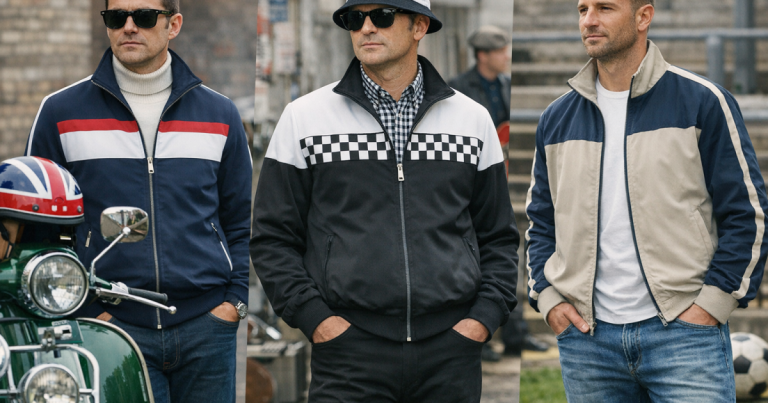
Modern slim tracksuits create a different problem. They can look tidy, but too much stretch and taper pushes the outfit towards gymwear rather than terrace style. A football-casual track top usually benefits from a little ease, a proper collar or stand neck, and a hem that sits naturally at the waist rather than clinging to the body.
Fabric signals: tricot, nylon, velour and modern blends
Fabric is where the code becomes more subtle. Smooth polyester tricot has a classic sportswear feel: slightly shiny, structured enough to hold a shape, and closely tied to vintage training tops. It can look especially strong in deep navy, burgundy, bottle green, off-white or primary colour blocking.
Nylon and shell fabrics carry a different charge. They bring rain-jacket practicality, away-day energy and a sharper eighties-to-nineties edge. Lightweight shells work well over polos, sweatshirts and football shirts, but they can become noisy visually if the colour blocking is too loud. A restrained palette usually makes the historical reference feel more grown-up.
Velour belongs to another strand of sportswear culture. It has luxury, music and casual-lounge associations as much as football meaning. On the terrace-style spectrum, it works best when handled with confidence and simplicity: dark colours, minimal branding and clean trainers. Too much shine, jewellery and matching accessories can make it feel caricatured.
Modern recycled polyester, stretch blends and brushed technical fabrics are not automatically wrong. They are simply less archive-coded. If the shape, collar, stripe placement and colour story feel right, a modern fabric can still carry the look. The practical advantage is easier care and better everyday comfort, but readers should always check the garment label before washing or steaming synthetic sportswear.
Branding: the difference between recognition and shouting
Terrace style has always had a complicated relationship with logos. Brands matter, but obviousness can weaken the effect. A small embroidered badge, chest mark, sleeve stripe or taping detail often says more than a giant front logo. It suggests the wearer knows the reference rather than needing to announce it.
Italian and European sportswear labels gained particular weight because they felt harder to get and less ordinary in Britain. Fila, Sergio Tacchini, Ellesse, Diadora, Kappa, adidas, PUMA and Lacoste all carried different meanings depending on era, region and scene. The Fila Settanta track jacket, for example, still reads as refined because of its tennis heritage, tidy shape and controlled use of colour.
That does not mean every terrace-inspired outfit needs a heritage badge. A plain navy track top with good ribbing, a proper zip and clean proportions can sit comfortably in the same world. The code is about recognition, not costume accuracy.
Trainers change the meaning of the whole tracksuit
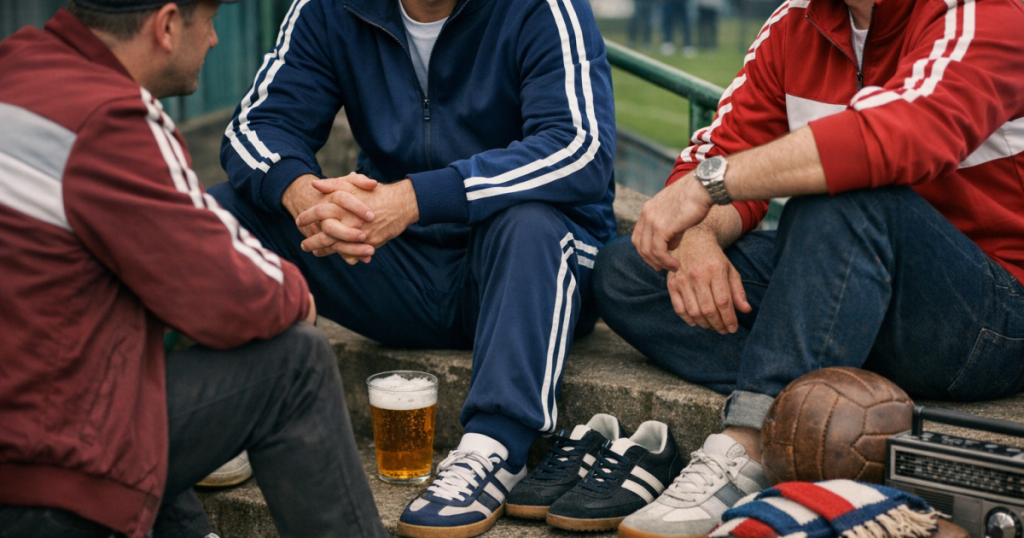
No tracksuit code works in isolation. Trainers can pull an outfit towards the seventies, the casuals era, nineties rave-adjacent sportswear or modern streetwear. Suede court and indoor styles tend to soften a track top and make it feel more terrace-led. Chunkier runners make it more urban and later-period. Bright modern performance trainers can break the spell completely unless the rest of the outfit is intentionally contemporary.
Colour matters as much as silhouette. A navy track top with white piping can handle white leather trainers. A forest green or burgundy set often looks better with gum soles or muted suede. Black trainers can work, but they need the right trouser break and enough texture to avoid looking like work shoes. For a fuller era-by-era pairing approach, see the guide to retro trainers by decade.
Common codes and what they usually suggest
- Neat track top, straight denim, low-profile trainers: a wearable casuals nod without committing to a full set.
- Matching tricot jacket and bottoms: strong archive energy; best kept clean, well-fitted and not over-accessorised.
- Nylon shell jacket over polo or sweatshirt: practical matchday layering with eighties and nineties associations.
- Sleeve taping and contrast panels: instantly recognisable, but more convincing when the rest of the outfit is quiet.
- Velour set: more music-and-leisure coded than pure terrace; works when the colour palette is restrained.
- Overly tight tapered bottoms: reads more modern gym-casual than old-school terrace.
Competing views: authenticity versus modern wearability
There are two common arguments around terrace tracksuit codes. One side values authenticity: period-correct brands, archive cuts, original colourways and era-accurate trainers. That approach can be brilliant when done with knowledge, especially by collectors who understand the cultural detail.
The other side is more wearable. It treats the terrace as a reference point rather than a rulebook. A modern track top, straight trousers and understated trainers can carry the spirit without trying to recreate a photograph from an away end. For most people, this is the stronger daily approach. It respects the culture while accepting that bodies, weather, pubs, trains and workplaces are not museum conditions.
The tension is healthy. If everything becomes perfectly reproduced, the look freezes. If every reference is watered down, it loses meaning. The sweet spot is to keep one or two strong signals and let everything else breathe.
How to wear the codes without looking costume-like
Start with one anchor. That might be a heritage track jacket, a clean pair of terrace-friendly trainers or a shell jacket in a classic colour block. Build around it with quieter pieces: plain tees, polos, straight-leg jeans, simple caps or understated outerwear. Avoid stacking too many signals at once: full tracksuit, vintage football shirt, scarf, retro trainers and era-specific haircut can quickly become theatre.
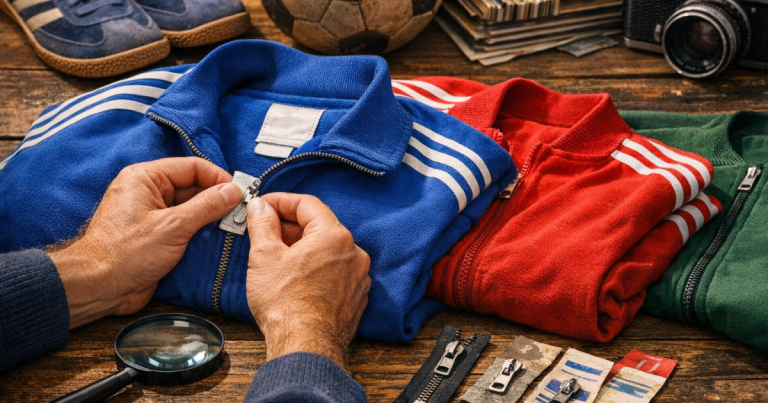
Pay attention to condition. A lightly worn track top can have character, but damaged zips, stretched cuffs and shiny worn patches make the outfit look tired rather than lived-in. If buying vintage, check seams, elastic, zip function and fabric snags. If wearing reissues or modern alternatives, look for proportions that feel close to the reference rather than chasing an exact replica.
Colour discipline is underrated. Navy, cream, green, burgundy, red, royal blue and black all have strong sportswear heritage, but two or three colours are usually enough. Let the piping, stripes or panels do the work.
FAQ
Are terrace tracksuits always full matching sets?
No. Full sets have strong impact, but many terrace-inspired looks work better with just a track top, shell jacket or track pants mixed into ordinary clothing.
What fabric feels most authentic for a retro track top?
Polyester tricot is one of the clearest classic signals, especially with ribbed cuffs, a proper collar and modest branding. Nylon shells are also strongly coded to later casual eras.
Can modern sportswear still fit the football-casual look?
Yes, if the shape, colours and styling are right. Avoid overly tight gym cuts and loud performance details if you want a more terrace-led feel.
Do terrace tracksuit codes apply outside football?
They do, but context matters. The same jacket can work at a gig, pub or weekend city trip when styled with restraint rather than full matchday theatre.
Final thoughts
The best terrace tracksuit codes are not rigid rules. They are shared references built from football travel, brand desire, music culture, film memory and the everyday practicalities of British weather. Fit gives the outfit shape. Fabric places it in an era. Branding adds recognition. Trainers finish the sentence.
Read the signals carefully and the look becomes far more flexible. You can wear a retro track jacket without pretending to be from another decade, and you can enjoy the football-casual meaning without flattening it into stereotype. That is where the style still feels alive: informed, wearable and quietly confident.