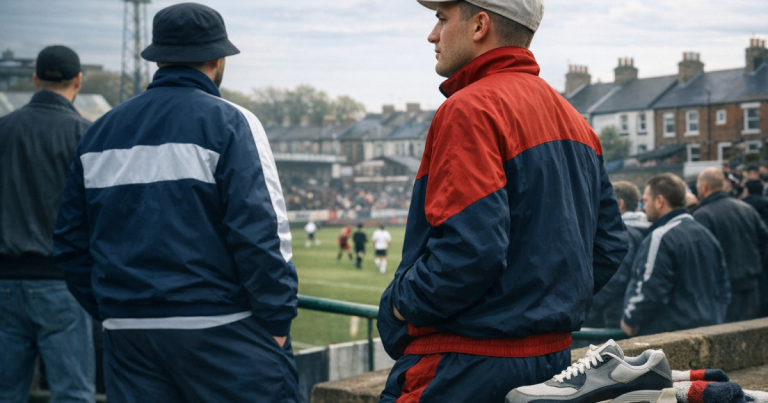
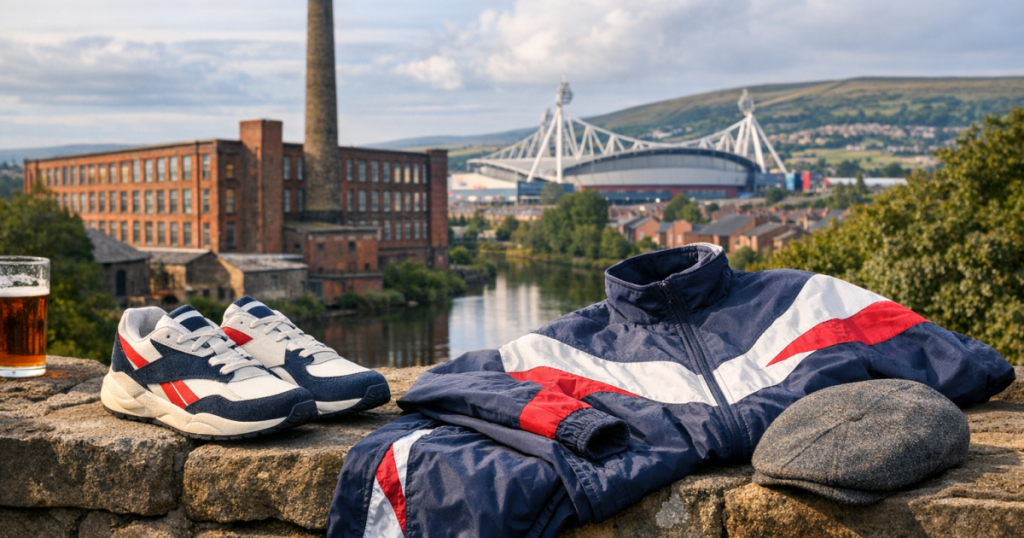
For terrace sportswear, origin stories matter because they colour how a brand feels on the body, not just how it looks in a photo. Reebok Bolton roots give the label a different weight from imported glamour brands: local running-shoe craft, northern industry, and a name that travelled far beyond Lancashire without fully losing its UK accent.
That background does not make every Reebok piece automatically terrace-worthy. It does explain why the right Reebok trainers, track tops and understated sportswear can feel more authentic than a logo-heavy outfit trying too hard.
The short version
- Reebok’s story starts in Bolton through the Foster family’s running-shoe heritage, long before the brand became a global sportswear name.
- That northern, performance-led origin gives Reebok a grounded credibility within UK casual dressing.
- Terrace style values nuance: fit, era, colour, trainer choice and local meaning matter more than simply wearing a recognisable badge.
- Reebok works best in low-key outfits built around clean trainers, restrained tracksuit shapes, sweatshirts, polos and practical outerwear.
- Modern buyers should check fabric, cut, cuffs, logo scale and colour before treating any reissue as a faithful archive piece.
Step 1: understand what Bolton adds to the story
Reebok’s origins sit close to British running rather than glossy lifestyle marketing. The Foster family had deep links with athletic footwear in Bolton, and the Reebok name later grew from that environment into a sportswear brand with international reach. For terrace culture, that matters because football-casual style has always mixed aspiration with locality: Italian tennis labels, German trainers, French crocodiles, British knitwear, northern shop windows and matchday practicality all rubbing together.
Bolton gives Reebok a point of difference. It is not only a retro logo from gym floors, aerobics videos or American sports campaigns. In a UK terrace context, it also carries the memory of industrial towns, running clubs, wet pavements, lower-key sportswear and people making sharp clothing choices without looking like they are dressing for a fashion shoot.
That is why Reebok can sit naturally in an outfit built around understatement. A clean Reebok trainer, a navy track top, a grey marl sweatshirt or a simple black tracksuit does not have to shout. The appeal is often in the restraint.
Step 2: place Reebok honestly within terrace culture
It would be lazy to pretend Reebok occupied exactly the same space as every Adidas, Fila, Sergio Tacchini, Kappa or Lacoste piece in the classic casual imagination. Different towns, eras and groups had different preferences, and some brands became more visible in particular moments than others. Reebok’s terrace relevance is strongest when you read it through British sportswear credibility, not when you force it into a continental luxury story.
On the terraces, a brand rarely survives on heritage alone. It has to look right with denim, cords, track pants, cagoules, polos, knitwear and trainers that can handle real movement. Reebok’s better casual pieces tend to suit that world because they often avoid excessive drama. The right styling makes them feel deliberate rather than nostalgic for the sake of it.
For the broader language of cuffs, fabrics, badges and football-casual meaning, the site’s guide to terrace tracksuit codes is a useful next step before judging any single brand in isolation.
Step 3: choose the Reebok pieces that carry the story best
Start with trainers. The Reebok Classic Leather is one of the clearest ways to bring Reebok into a terrace-influenced outfit because it is clean, familiar and easy to pair with track pants, straight-leg denim or a simple sweatshirt. The Reebok Club C 85 can do a similar job from a court-shoe angle, particularly when you want something less chunky and more understated.
With tracksuits, be more selective. A Reebok set can look sharp, but the success depends on cut and fabric. A too-slim modern fit may lose the relaxed sportswear attitude; a baggy piece can drift into fancy dress if the cuffs, collar and proportions feel off. Current versions and reissues should be checked on their own terms rather than assumed to match archive originals.
If you are weighing up a modern set, our Reebok Classic tracksuit review covers the real-world limits of the look: where it works, where it can feel too plain, and what to consider before building an outfit around it.
Step 4: build the outfit around restraint
The easiest mistake with any heritage brand is over-signalling. Reebok’s Bolton link is strongest when the outfit feels lived-in and practical, not like a themed costume. Think of the brand as a grounding element rather than the whole story.
A simple terrace-leaning Reebok outfit
- Start with clean white, off-white or black Reebok trainers, depending on the rest of the outfit.
- Add straight-leg denim, relaxed track pants or understated joggers with a neat break over the shoe.
- Use a plain sweatshirt, knitted polo, track top or zip jacket rather than stacking large logos.
- Keep outerwear practical: a lightweight shell, Harrington-style jacket or waxed jacket can work better than a full matching set in everyday wear.
- Choose one recognisable sportswear element and let the rest of the outfit support it.
Colour is where the terrace detail starts to matter. Navy, black, forest green, burgundy, stone, grey and white are safer than loud colour blocking if you want the Bolton-rooted Reebok story to feel grown-up. Bright club-adjacent combinations can work, but they need care, especially on matchdays where colours are read quickly and locally.
Step 5: check fit before you check the badge
A great logo cannot save a bad silhouette. Reebok pieces can vary between archive-inspired cuts, modern sportswear shapes and fashion-led versions, so judge the garment before you judge the label. The questions are simple but important.
- Does the track top sit cleanly at the shoulders without pulling or ballooning?
- Are the cuffs firm enough to hold shape without looking tight?
- Does the collar frame the outfit, or does it collapse awkwardly under a jacket?
- Do the track pants taper naturally, or do they fight the trainers?
- Is the logo scale subtle enough for everyday wear?
- Does the fabric look closer to retro sportswear, modern gym kit or casual loungewear?
For a deeper breakdown of how tracksuit proportions changed across eras, use the guide to tracksuit fit by decade. It helps explain why one jacket looks sharp with terrace trainers while another feels too contemporary, even if both carry a heritage badge.
Step 6: match the trainers to the era you are hinting at
Reebok can cover several moods. Classic white leather trainers suggest clean everyday casualwear. Court-style shoes lean smarter and flatter with polos, knitwear and straight trousers. Chunkier running-inspired pairs can work, but they need more care with track pants because the outfit can quickly become general retro sportswear rather than terrace-specific.
The key is not to chase a single correct shoe. It is to decide what story the outfit is telling. A Bolton-rooted Reebok look can be northern, unfussy and practical; a sharper court-shoe outfit can look more pub-to-ground than gym-to-sofa. If trainers are the deciding point, the terrace style footwear guide gives a broader view of brands, silhouettes and matchday choices.
Step 7: separate heritage from marketing
Heritage labels often trade on archive language, but readers should still check the actual garment. A piece can be inspired by an old design without being a precise reproduction. Materials, lining, zip quality, leg shape, badge placement and colour tone can all affect whether it feels like proper retro sportswear or just a modern item with a vintage reference.
That does not mean reissues are inferior. For many people, a current Reebok piece is more wearable than a fragile vintage find. Newer garments are usually easier to source in wearable sizes, easier to replace, and less likely to arrive with tired elastics or hidden wear. Vintage can offer character, but it needs closer inspection, patient searching and realistic expectations about condition.
Things readers ask
Is Reebok a proper terrace brand?
Reebok can be part of proper terrace style, but it depends on the piece and the outfit. Its strength is low-key British sportswear credibility rather than showy status dressing. Trainers, simple tracksuits and understated layers are usually the safest way in.
Does the Bolton connection still matter if the brand became global?
Yes, but as context rather than a guarantee. The Bolton origin gives Reebok a distinctive UK story, while the modern garment still has to earn its place through fit, quality, colour and styling.
Can you wear a full Reebok tracksuit without looking dated?
You can, but keep the rest controlled. Clean trainers, a plain cap or no cap, restrained colours and a jacket that fits properly will look sharper than a full logo-heavy outfit with too many retro signals at once.
The big picture
Reebok’s Bolton background matters because terrace sportswear is not just about which badge is fashionable. It is about where a brand comes from, how it was worn, how it fits into British street and football culture, and whether the clothes still work on real pavements today.
For modern wardrobes, Reebok is strongest when treated as a grounded heritage option: clean trainers, restrained tracksuits, practical layers and colours that do not try too hard. Get the fit right, keep the styling honest, and the Bolton story becomes more than trivia. It becomes part of why the outfit feels credible.