Gavin Watson’s photodiary rewards a slower look. For anyone trying to understand A Casual Look terrace style, the value is not in copying a single outfit but in learning how clothes, posture, setting and confidence work together.
The book is useful because it shows sportswear in lived-in British contexts: streets, estates, trips, friendships and matchday-adjacent culture. Read it like an archive, not a catalogue, and it becomes a sharp lesson in proportion, restraint and attitude.
The short version
Read A Casual Look: A Photodiary of the 1980s Casual, Terrace and Football Scene by looking for repeat signals rather than isolated statement pieces. The strongest cues are usually the quiet ones: a track top zipped just so, a clean trainer shape, a polo under a jacket, a compact bag, a sensible haircut, or a colour combination that looks confident without shouting.
- Study silhouettes before logos: jacket length, trouser shape and how layers sit.
- Notice how sportswear is mixed with ordinary clothing, not worn as fancy dress.
- Look at footwear as a status signal, but also as part of the overall balance.
- Separate period detail from modern wearability; not every archive cue needs reviving.
- Use the photos to refine taste rather than to build a head-to-toe replica.
Start with the setting, not the clothes
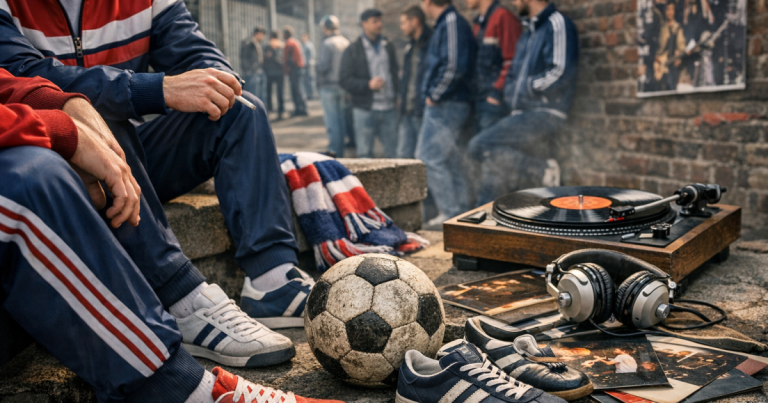
The mistake is to flick through the book looking only for brands. The surroundings matter because they explain why the clothes look right. These are not studio outfits. They are worn in public, in groups, in ordinary British spaces, with a mix of effort and nonchalance that is hard to fake.
Ask yourself where the outfit is being worn. Is it practical for standing around, travelling, going out, or moving between scenes? The strongest terrace cues often come from clothing that can handle several situations in one day. That is why track tops, polos, lightweight jackets and trainers sit so naturally in the look: they are presentable, mobile and readable to people who know.
If you want more written context around the same culture, Cass Pennant’s work is a useful companion; our review of The Football Casuals: A History helps frame how style, football and identity became intertwined without reducing the scene to a shopping list.
Step 1: read the silhouette
Before you name a label, look at shape. In Watson’s photos, the clothes often sit close enough to look sharp but loose enough to feel relaxed. That balance is central. Too tight and the outfit loses its period ease; too oversized and it drifts into a later sportswear language.
Check three things in each image:
- Jacket length: many strong looks sit around the waist or upper hip, giving the outfit a compact top half.
- Trouser line: straight, relaxed or slightly tapered shapes tend to read more naturally than extreme cuts.
- Layer depth: a polo, T-shirt or knit under a track top changes the mood more than a large logo does.
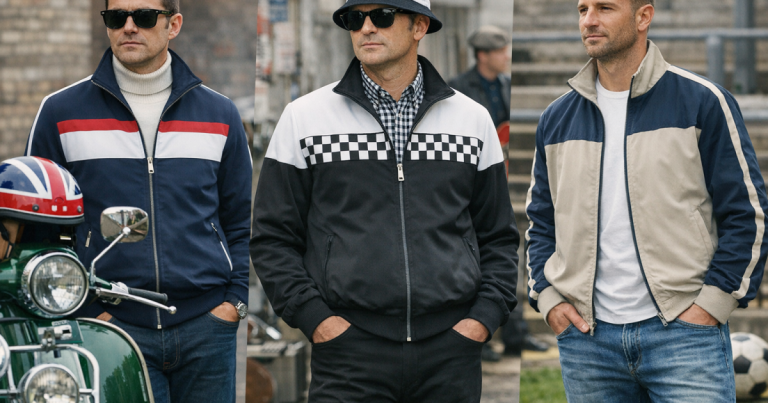
For modern outfits, this means the first decision is not “which brand?” but “what shape am I trying to create?” A retro track jacket with a clean shoulder and a neat hem will usually carry more terrace feeling than a loud piece with poor proportions.
Step 2: treat brands as signals, not trophies
Brand recognition is part of the story, but it is not the whole story. The photos show how labels operate as social shorthand: a flash of stripes, a tennis-court badge, an Italian sportswear colour block, a trainer shape associated with taste and access. The point is the signal, not just the name.
When reading the images, notice whether a logo is central or incidental. Sometimes the strongest outfit has a visible badge; sometimes it is the cut, colour and cleanliness doing the work. That is an important lesson for now, because modern terrace-inspired dressing can quickly become too logo-heavy.
A good exercise is to cover the badge mentally and ask whether the outfit still works. If it does, the styling is doing the heavy lifting. If it collapses without the logo, it may be more about nostalgia than taste.
Step 3: follow the colour discipline
Archive casual style is often remembered as bright, but Watson’s photographs show more nuance than that. There are strong colours, yes, but also navy, white, burgundy, bottle green, grey, cream and black used with restraint. The eye should move through the outfit rather than get trapped by one over-loud piece.
Look for colour relationships:
- A bold track top calmed down by plain trousers or denim.
- A white trainer lifting a darker outfit.
- A polo collar adding contrast under a zipped jacket.
- One main colour echoed subtly elsewhere, rather than matched obsessively.
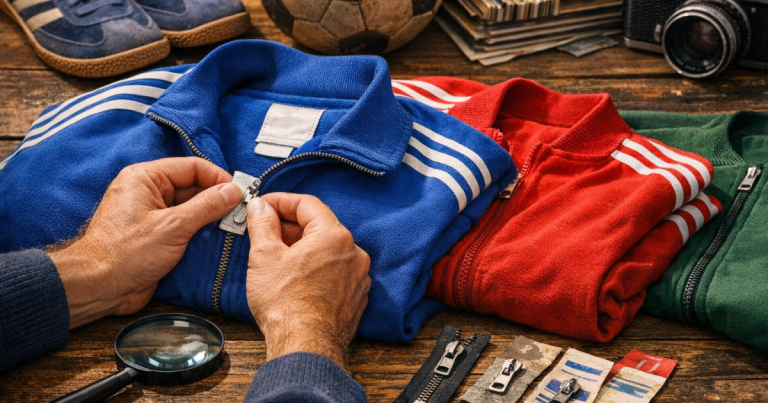
For a current wardrobe, this is where a heritage track top can earn its place. If you like the classic adidas outline, the adidas Originals Firebird Track Top shows how a familiar terrace shape can still work with jeans, track pants or understated trainers without needing a full period reconstruction.
Step 4: watch the footwear
Trainers in the book are never just an afterthought. They affect stance, proportion and social meaning. A low-profile court trainer gives a different message from a bulkier runner; a clean pair says something different from a battered pair worn past its best.
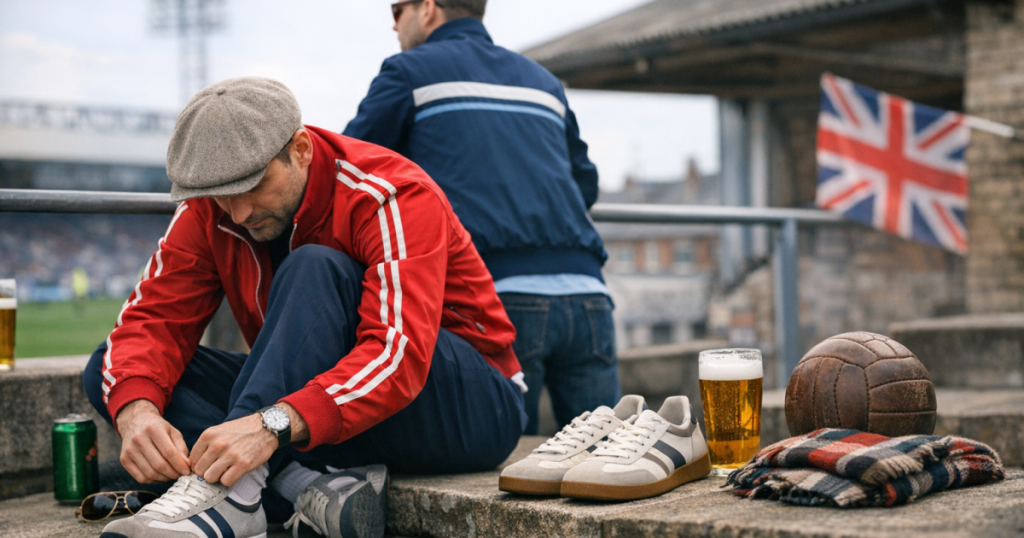
When studying the photographs, note how much visual weight the footwear carries. Does it sharpen the outfit? Does it make the trousers sit better? Does it keep a tracksuit from looking too soft? The trainer is often the final piece that turns sportswear into a considered look.
Modern readers do not need to chase every rare archive model. The better lesson is to understand categories: court shoes for quiet sharpness, suede terrace trainers for colour and texture, runners for a later casual or rave-adjacent energy. For a low-key court reference, our Diadora B. Elite trainer review explores the kind of restrained shape that sits naturally with retro sportswear.
Step 5: separate attitude from costume
The danger with any style archive is over-literal copying. A period haircut, exact jacket, exact jeans and exact trainers can look more like reenactment than influence. Watson’s images work because the people in them are wearing clothes from their own moment, not dressing as an aesthetic project.
To translate the cues properly, take one or two ideas at a time. That might be a neat track top with plain trousers, a polo under a casual jacket, or a clean trainer with a simple T-shirt. Leave room for your own age, build, setting and daily routine.
A useful rule: if an outfit would only make sense at a themed night, soften it. If it would make sense at the pub, on a train, at a record shop, on a casual day in town or around a matchday crowd without trying too hard, it is probably closer to the spirit of the book.
Step 6: read the group dynamic
One of the most overlooked parts of the book is how style works in groups. Individual outfits matter, but the collective visual language matters too. People dress differently, yet there is a shared understanding: similar silhouettes, overlapping brands, comparable trainer choices, and a sense of mutual awareness.
This helps explain why terrace style is not just “wear a tracksuit”. It is a code. Some people lean tennis-inspired, some go full track top, some keep it minimal with denim and trainers. The common thread is taste, context and knowing when not to overdo it.
When you look at a group shot, ask who stands out and why. Is it colour? Fit? Clean footwear? Confidence? Or is it simply that their outfit looks unforced? Those answers are more useful than trying to identify every single garment.
Details worth pausing over
Small details often teach the most. A zipped collar can change the mood of a track top. A plain white T-shirt can make a bold jacket wearable. A cap can shift an outfit towards streetwear; a polo collar can pull it back towards terrace sharpness. Even how sleeves sit or how trousers break over trainers can affect the whole read.
- Collars: zipped, folded or layered collars create structure around the face.
- Bags: compact crossbody or shoulder bags can add practicality without dominating the outfit.
- Condition: clean trainers and cared-for synthetics often look sharper than rare pieces worn badly.
- Restraint: one strong archive cue usually lands better than five competing references.
How to use the book for your own outfits
Pick one photograph that genuinely appeals to you and describe it without naming brands. Write down the shape, colours, layers and footwear type. Then build a modern version from those ingredients rather than searching for an identical item.
For example, instead of “I need that exact jacket”, the note might be: short navy track top, white T-shirt, straight denim, clean court trainers. That gives you a usable formula. It also keeps you from buying pieces that look impressive in isolation but do not fit your everyday wardrobe.
Another method is to group the images by mood: sharp and minimal, colourful sportswear, denim-led, tennis-influenced, travel-ready, night-out casual. Once you see those patterns, the book becomes less of a nostalgia object and more of a practical reference for dressing with better judgement.
FAQ
Is A Casual Look mainly about football casuals?
It is closely tied to casual culture, but it is broader than matchday clothing alone. Its strength is showing how clothes, friendship, place and youth identity overlap in real British settings.
Can you copy outfits from the book directly?
You can, but it often works better to borrow the proportions, colour discipline and footwear logic. Direct copying can look costume-like if the context does not suit you.
What should beginners notice first?
Start with jacket shape, trouser fit and trainer profile. Those three elements explain more about the look than simply spotting badges or chasing rare labels.
Does terrace style have to mean full tracksuits?
No. Full sets are part of the culture, but many strong looks mix track tops, polos, denim, lightweight jackets and trainers. The balance matters more than one fixed uniform.
The big picture
The best way to read Watson’s book is slowly. Do not treat every image as a shopping prompt. Treat it as evidence of how sportswear becomes style when it is worn with context, confidence and restraint.
The most useful cues are not always the loudest ones. Shape, cleanliness, colour balance and social setting tell you why a look works. Once you can read those details, you can bring the influence into a modern wardrobe without flattening it into fancy dress.