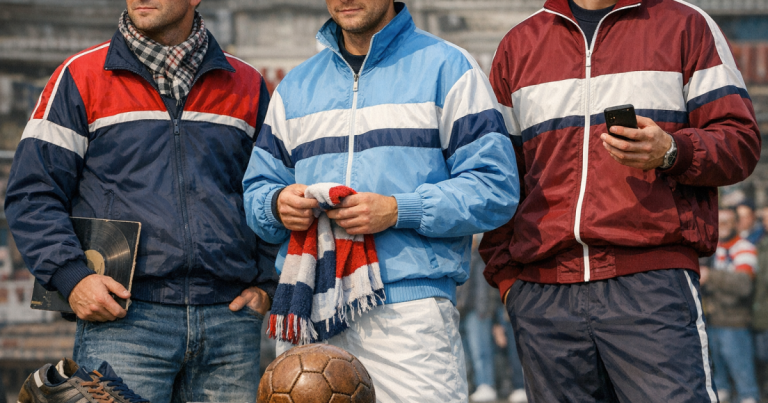

An acid house tracksuit look is less about fancy dress and more about getting the late-eighties mood right: loose movement, synthetic shine, confident colour and a slightly chaotic club-to-street energy. The best version feels like it could have left a warehouse party, a football special, a student bedsit or a record shop queue without needing a costume rail.
Think of it as rave sportswear with terrace discipline. You want comfort and swagger, but the outfit still needs proportion, restraint and enough modern cleanliness to work in 2026.
Main points
- Start with a relaxed nylon or poly tracksuit shape rather than a gym-tight fit.
- Use one loud colour story, then calm it down with plain layers and sensible trainers.
- Reference UK rave culture through silhouette, movement and texture, not novelty smiley overload.
- Keep the trousers long enough to sit naturally over trainers, but avoid fabric pooling.
- Mix vintage and modern pieces carefully so the result looks worn-in, not staged.
Step 1: Understand the late-eighties reference
Late 80s acid house style in Britain sits at the meeting point of club culture, football casual dress, imported sportswear and DIY youth energy. London clubs such as Shoom, Manchester’s Haçienda orbit and the wider warehouse party scene all helped shift sportswear from purely athletic kit into social uniform. It was practical: track tops were light, easy to move in and bright enough to feel optimistic under club lights.
The important distinction is that rave style was not one single uniform. Some wore baggy denim, some wore loose T-shirts, some wore cycling caps, some wore sportswear. For a tracksuit-led version, borrow the attitude: functional, colourful, slightly oversized and unprecious. If you want the broader timeline around which shapes belong to which period, the guide to retro tracksuit eras and UK subculture cues is a useful reference point before you start combining pieces.
Step 2: Choose the right tracksuit base
The tracksuit is the anchor, so get the shape right first. A late-eighties-inspired set should have room through the chest, sleeve and thigh. It should not cling like performance running kit, and it should not be so huge that it looks like a later baggy rave or 2000s grime silhouette. Aim for relaxed movement rather than exaggerated bulk.
Fabric and finish
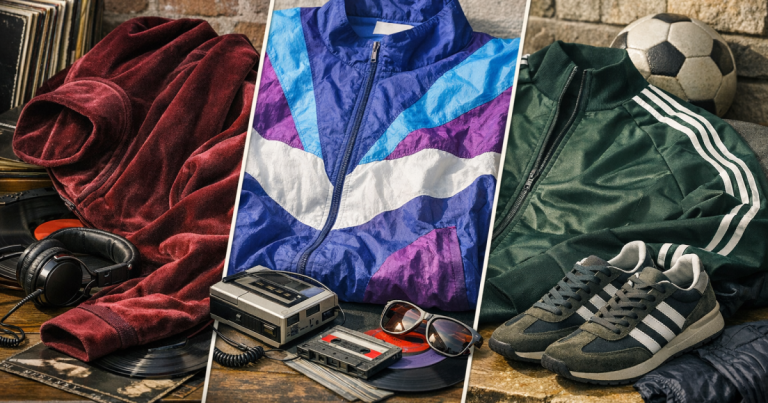
Nylon, shiny polyester and light shell fabrics suit the reference best. They catch light, crease in the right way and give that club-worn energy. Cotton jersey can work, but it leans more casual Sunday than warehouse. Velour usually pulls the look away from acid house and into a different sportswear era.
Jacket details that help
- Raglan sleeves or dropped shoulders give the right looseness.
- Zip fronts feel more authentic than sweatshirt-style tops for this particular look.
- Elasticated cuffs and hem help create the slightly blouson shape common to period sportswear.
- Panelled colour blocking works well, especially across chest, shoulder or sleeve.
- A stand collar is often stronger than a hood if you want a sharper terrace edge.
Step 3: Build the colour story
Acid house imagery is famous for bright colour, but a wearable outfit needs control. Choose one dominant statement: citrus yellow, electric blue, hot pink, purple, turquoise, red or white with bold panels. Then support it with neutrals such as black, navy, grey or off-white.
A good rule is one loud tracksuit piece and one quieter piece. If the jacket has heavy colour blocking, keep the T-shirt plain and the trainers grounded. If the track top is mostly dark, you can push brighter trousers, socks or a cap. The aim is to look like you understand the era, not like you raided every neon item in the house.
Step 4: Get the fit and proportions right
Fit is what separates a convincing late-eighties sportswear look from a themed party outfit. The jacket should sit around the hip or just below it. Sleeves can be slightly generous, but they should still break near the wrist rather than swallowing the hand. The trousers should be easy through the thigh and taper or gather enough at the hem to show the trainer shape.
For a modern terrace read, avoid a perfectly matching, box-fresh set unless the colours are already restrained. A slightly broken-up outfit often looks better: track top with plain trousers, shell trousers with a knitted polo, or matching suit softened by a white tee and simple footwear. The same logic applies when mixing vintage track tops with modern terrace style: keep one foot in the archive and one in real life.
Step 5: Pick trainers that do not fight the outfit
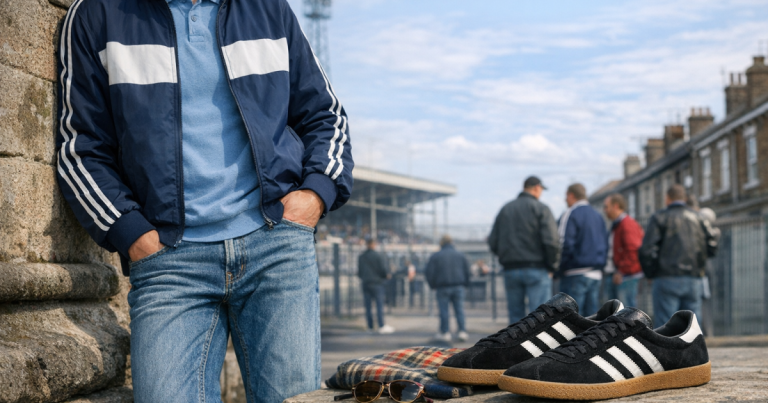
Footwear should feel casual, low-profile and grounded. Late-eighties rave sportswear can handle colour, but the trainers should not turn the whole outfit into a circus. Terrace-friendly suede or leather trainers, indoor court shapes and classic runners all work, provided the proportions sit under the trouser hem cleanly.
White trainers can sharpen a dark tracksuit. Black or navy trainers calm a bright one. Gum soles are useful when you want a softer retro tone. Heavily futuristic trainers can work in some modern outfits, but they usually pull this specific reference away from the late-eighties feel.
The trouser hem matters as much as the trainer. Too short and the look becomes cropped and contemporary; too long and the fabric swallows the shoe. For a more detailed breakdown, use the guide to getting the right trouser break for terrace trainers before deciding whether to cuff, stack or leave the hem alone.
Step 6: Add layers without overloading it
The safest base layer is a plain white, black or grey T-shirt. A washed graphic tee can work, but keep the design subtle unless you are deliberately leaning into club-night energy. Polo shirts add a football-casual angle, while a fine knit underneath a track top makes the outfit feel more mature.
Outerwear is optional. A light cagoule, coach jacket or wax jacket can sit over the top if the weather needs it, but the more layers you add, the easier it is to lose the rave reference. In Britain, this matters because the outfit needs to survive actual streets, train platforms and pub gardens, not just a mood board.
Step 7: Use accessories carefully
Accessories should support the outfit rather than announce the theme. Acid house culture has obvious visual cues, but using all of them at once is the quickest route to costume.
- A plain bucket hat can work, but avoid pairing it with too many novelty rave symbols.
- A simple cap keeps the look more terrace than festival.
- A small crossbody bag or record-bag-style shoulder bag suits the era without shouting.
- White sports socks are fine if the hem and trainer shape are clean.
- One graphic reference is enough: smiley badge, old club tee, bright cap or printed scarf, not all four.
Step 8: Make it wearable now
The easiest modern version is a bright vintage-style track top, plain relaxed trousers and classic trainers. The bolder version is a full nylon tracksuit with a plain tee and minimal accessories. The most terrace-coded version is a track jacket over a polo or knit, with darker trousers and understated trainers.
Condition matters too. A genuinely vintage piece with minor wear can look brilliant, but tired elastic, damaged zips and heavy staining will drag the outfit down. Reissues and archive-inspired pieces can be smarter if you want the mood without maintenance issues. Either route works; the key is avoiding an outfit where every item is trying to be the loudest thing in the room.
Practical outfit formulas
- Warehouse clean: bright shell track top, white tee, navy track trousers, white or gum-sole trainers.
- Terrace-rave crossover: panelled track jacket, knitted polo, straight track trousers, dark suede trainers.
- Full set, toned down: matching nylon tracksuit, plain tee, minimal cap, trainers in white, black or navy.
- Club-night nod: darker tracksuit, acid-bright T-shirt or socks, small shoulder bag, no extra graphics.
- Everyday version: vintage-style jacket, relaxed chinos or track trousers, neutral trainers and a clean outer layer.
Mistakes that weaken the look
- Too much neon: one bright hit feels intentional; five can look like fancy dress.
- Over-skinny trousers: the late-eighties feel needs movement and ease.
- Modern performance fabrics: ultra-technical running gear usually looks too sleek for the reference.
- Novelty rave graphics everywhere: cultural cues land better when they are restrained.
- Ignoring condition: vintage sportswear should look lived-in, not neglected.
Common questions
Does the tracksuit have to be vintage?
No. Vintage can add authenticity, but a modern archive-style track top or shell suit can work if the cut, colour and fabric feel right. Fit and styling matter more than the label age.
Can a full matching tracksuit work?
Yes, but keep everything else quiet. A plain T-shirt, simple trainers and minimal accessories stop a matching set from becoming too theatrical.
Which colours feel most acid house?
Yellow, pink, turquoise, purple, red, cobalt and black all make sense. The trick is using one or two strong colours rather than dressing head-to-toe in neon.
How do I avoid looking like I am going to a costume party?
Remove one obvious cue. If you have a loud jacket, skip the novelty badge. If the tracksuit is bright, keep trainers and accessories calm.
Is this more rave style or terrace style?
It can be either. Looser colour and club references push it towards rave; cleaner trainers, sharper layers and restrained colours pull it back towards terrace style.
What stands out
The late 80s tracksuit look works because it captures a very British collision: football-casual taste, imported sportswear, cheap movement-friendly kit and a club culture that wanted colour after dark. Build from silhouette first, control the colour, then add only enough rave detail to make the reference clear. When the outfit feels easy to wear on a train, in a pub and outside a venue, you have probably got it right.