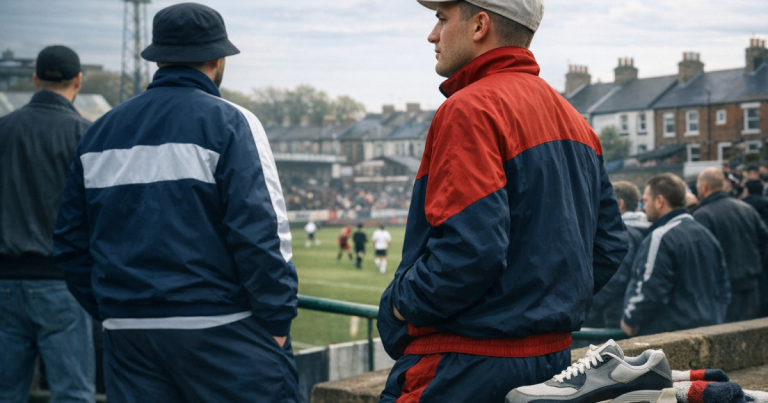
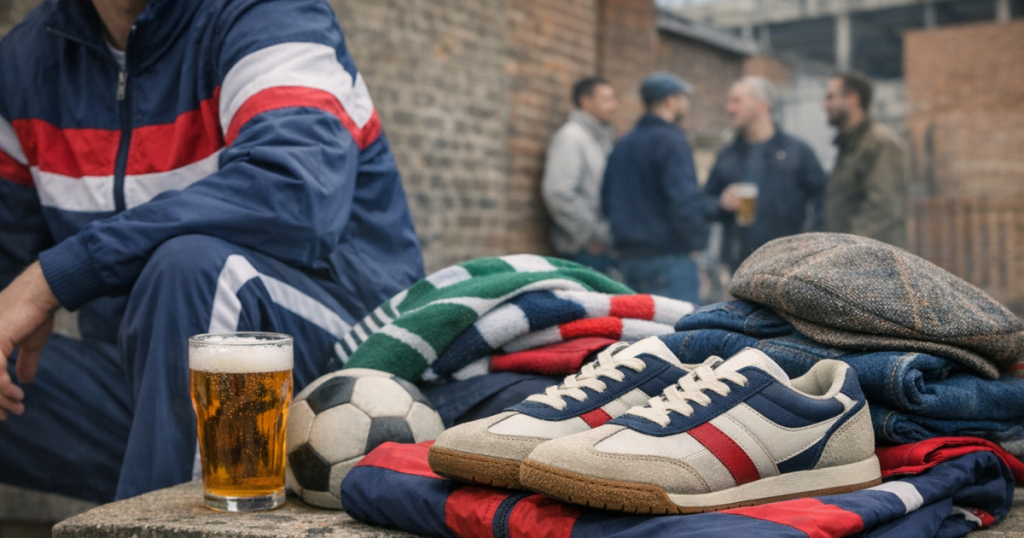
Ellesse did not arrive on British terraces as a blank fashion label; it brought colour, Italian confidence and a sporting story people could recognise. Ellesse terrace style worked because the clothes looked aspirational without feeling stiff: zip tops, bold panels, neat branding and a bit of Mediterranean swagger against the grey of an away day. That tension still explains why the brand sits so comfortably in retro tracksuit culture.
The short version
- Ellesse began as an Italian sportswear brand with roots in ski and tennis clothing, not football.
- Its UK appeal came from the football-casual appetite for imported, logo-led, continental sportswear.
- The brand’s best terrace looks are usually clean rather than loud: a sharp track top, straight-leg trousers, classic trainers and restrained accessories.
- Vintage pieces have charm, but modern reissues are often easier for regular wear if you care about condition, sizing and washing.
From Perugia to the sportswear shelf
Ellesse was founded in Perugia, Italy, in 1959 by Leonardo Servadio. The name comes from his initials, L.S., spoken in Italian, and the logo famously brings together the shapes of a tennis ball and ski tips. That symbol matters because it shows the brand’s original territory: performance sport with style built in, rather than sportswear that only became fashionable later.
The early Ellesse story is tied closely to skiing and tennis, two sports that carried a different kind of glamour in Britain. Skiwear suggested expense, travel and alpine confidence; tennis suggested clean lines, strong colour and televised summer style. By the time British casuals were looking beyond domestic sports shops for something sharper, Ellesse already had the right ingredients: European credibility, visible branding and clothes that looked purposeful without being plain.
That is the key distinction. Ellesse was not simply adopted because it was rare. It fitted a wider pattern in the meaning of tracksuits in British youth culture, where sportswear could signal class aspiration, local identity, musical taste and football allegiance all at once. A track jacket was never just a track jacket once it moved from court, slope or gym into the street.
Why Ellesse terrace style felt different from the usual suspects
Adidas carried deep football weight in Britain, Fila had a strong Italian tennis aura, and Sergio Tacchini became shorthand for a certain smooth casual look. Ellesse sat slightly differently. It was sporty, but it also had a resort feel: half training kit, half holiday photograph. That helped it cut through on terraces where looking considered mattered, but looking over-dressed could ruin the point.
The brand’s visual language made sense from a distance. The semi-palla logo was readable without needing huge text. Colour-blocking gave tops shape. Ribbed cuffs, funnel necks and contrast panels created structure around the shoulders and chest. On a crowded train platform or outside a ground, that mattered. Terrace clothing has always rewarded pieces that look composed in movement, in layers and in bad weather.
There was also a useful contrast between Italian polish and British bluntness. An Ellesse top over a plain tee, worn with faded denim or track trousers and low-profile trainers, carried a bit of continental elegance without softening the outfit too much. The result was not catwalk fashion. It was wearable status: good enough to be noticed, relaxed enough to live in.
The pieces that carried the look
For modern readers, the most relevant Ellesse pieces are not necessarily the rarest ones. Archive collectors will always chase specific eras, labels and unusual colourways, but most people trying to wear the look now need shape, condition and proportion first.
Track tops
The track top is the most direct route into Ellesse’s terrace identity. Look for a clean collar, a zip that sits neatly, cuffs that have not stretched out and branding that feels integrated rather than plastered on. Pieces such as the Ellesse Rimini Track Top show why the formula still works: simple enough to wear regularly, recognisable enough to carry the brand’s history.
Track pants
Ellesse track pants work best when they avoid the two common extremes: too skinny to feel archival, or too baggy to sit properly over trainers. A straight or gently tapered leg usually feels most useful for today. If the hem bunches heavily, the outfit starts to look accidental rather than casual. If it hovers too high, the trainer choice has to be very deliberate.
Shells and lightweight jackets
Ellesse’s ski heritage makes outerwear a natural part of the story, but not every technical-looking jacket translates to terrace wear. For a British matchday wardrobe, the useful versions are usually lightweight, layerable and not too shiny. A shell should sit over a sweatshirt or track top without turning the silhouette bulky. The point is weather-ready style, not pretending you are on the slopes.
How to wear Ellesse now without turning it into costume
The easiest mistake is to treat Ellesse as pure nostalgia. Full retro styling can look brilliant on the right person, but it can also slide into themed-night territory. The more reliable approach is to let one archive-feeling piece lead and keep the rest grounded.
- Start with the top half: a track jacket or zip-neck layer gives the clearest brand signal without requiring a full matching set.
- Keep colours controlled: navy, cream, red, forest green and black tend to age better than very busy combinations.
- Watch the shoulder line: a slightly relaxed fit works, but dropped shoulders and excess fabric can make the jacket look tired rather than vintage.
- Balance the trousers: straight denim, cords or clean track pants keep the outfit wearable. Avoid fighting a sporty top with overly formal trousers.
- Use accessories sparingly: a simple cap or cross-body bag can work, but too many retro cues at once make the outfit feel staged.
If proportions are the part you struggle with, the useful reference point is not a mood board but the body shape of the outfit: jacket length, trouser break and how the layers stack. The terrace fit guide to silhouettes and matchday proportions is a good next step for getting that balance right.
Trainers make or break the outfit
Ellesse track tops tend to pair best with trainers that have the same low-profile, court-to-street energy. Suede terrace staples, slim leather court shoes and retro runners can all work, but the choice changes the mood. A suede gum-sole trainer leans football casual. A white leather court trainer pushes the tennis connection. A bulkier retro runner makes the outfit feel more 1990s or early 2000s.
What usually fails is scale. A neat Italian sportswear top worn with oversized modern trainers can make the lower half look too heavy. Equally, very delicate trainers under wide track pants can look lost. The trouser break should sit cleanly enough to reveal the trainer shape without swallowing it. That small detail is one reason terrace style looks effortless when it is done well: the outfit is casual, but the proportions are not random.
Vintage or reissue: which route makes sense?
Vintage Ellesse has obvious appeal. Older pieces can have better colour combinations, unusual labels and a patina that reissues cannot copy. They also come with trade-offs. Elastic can relax, zips can be temperamental, linings can mark, and sizing often feels different from current UK expectations. Always check garment measurements, close-up label photographs, fabric condition and whether the piece has been altered.
Reissues and current archive-inspired pieces are often the more practical choice for regular wear. You lose some collector romance, but you usually gain easier sizing, more predictable fabric behaviour and less anxiety about washing. That matters if the jacket is going into an actual weekly rotation rather than being kept for photos.
A sensible wardrobe can include both: one special vintage piece for character, plus a newer track top or jacket that handles pub trips, away days and damp pavements. The point is not to prove purity. It is to understand why the brand mattered, then wear it in a way that suits your life now.
Why Britain made it its own
Ellesse’s move into British terrace culture was not a formal brand campaign in the modern influencer sense. It was a cultural translation. British football crowds took Italian sportswear and gave it a different setting: railway stations, city centres, estate pubs, away ends and music scenes where clothes were read quickly and remembered sharply.
That translation is why the brand still feels relevant here. It carries memories of televised tennis and alpine graphics, but also of casual one-upmanship, import culture and the British habit of making sportswear do social work. In the UK, a good Ellesse jacket does not only say “sport”. It can say taste, era, locality and attitude, depending on how it is worn.
For year-round wear, the practical question is layering. A thin track top is useful in spring and early autumn, but winter terraces demand a coat over it or a heavier mid-layer underneath. Summer suits lighter colours and open zips; colder months need darker tones, knitwear or a weatherproof outer layer. For season-by-season thinking, dressing terrace style through the British football season gives the wider framework.
What to look for when shopping
Whether you are browsing vintage sellers, high-street sportswear rails or current heritage drops, judge Ellesse pieces on more than the logo. The right item should feel wearable before it feels collectable.
- Label and era: older labels can help date a piece, but condition matters more for everyday wear.
- Fabric feel: check whether the material is smooth, brushed, crinkled or lined, because that affects how it hangs and how warm it feels.
- Zip and trims: a good track top depends on the zip, collar and cuffs sitting cleanly.
- Colour placement: panels should flatter the body rather than making the torso look boxy.
- Branding scale: small-to-medium logos are easier to wear often; oversized branding needs a simpler outfit around it.
- Care needs: synthetic sportswear can hold odours or crease oddly, so check care labels and avoid aggressive heat when laundering.
If you want to build one outfit rather than collect a rail of jackets, start with a navy or dark green track top, straight-leg trousers and a clean pair of terrace trainers. Add a plain white or cream tee underneath, then adjust with a jacket or knit depending on the weather. That gives you the Ellesse reference without needing every item to shout at once.
Questions people ask
Is Ellesse an Italian brand?
Yes. Ellesse was founded in Perugia, Italy, by Leonardo Servadio. Its identity grew from ski and tennis clothing before being adopted into wider sportswear and street style.
Why did football casuals like Ellesse?
It offered the right mix of continental status, strong branding and wearable sport style. On British terraces, that made it feel distinctive without being too formal.
Are vintage Ellesse tracksuits worth buying?
They can be, but only if the condition, measurements and trims are sound. For regular wear, a good reissue may be more practical than a fragile original.
What trainers suit an Ellesse track top?
Low-profile terrace trainers, suede court shoes and clean retro runners usually work best. Keep the trouser break tidy so the trainer shape is visible.
Can you wear a full Ellesse tracksuit today?
Yes, but fit is everything. A full set works best when the jacket and trousers are relaxed but not baggy, with simple trainers and minimal accessories.
What to remember
Ellesse moved from Italian sportswear to terrace style because British casual culture knew how to repurpose aspiration. Ski and tennis references became pub, pavement and matchday references. The logo stayed the same, but the meaning shifted.
Wear it well today by respecting that shift. Choose pieces with clean shape, strong but not overpowering branding, and colours that fit your real wardrobe. The best Ellesse outfits do not look like museum recreations. They look like someone understands the history and still knows how to get dressed on a Saturday.