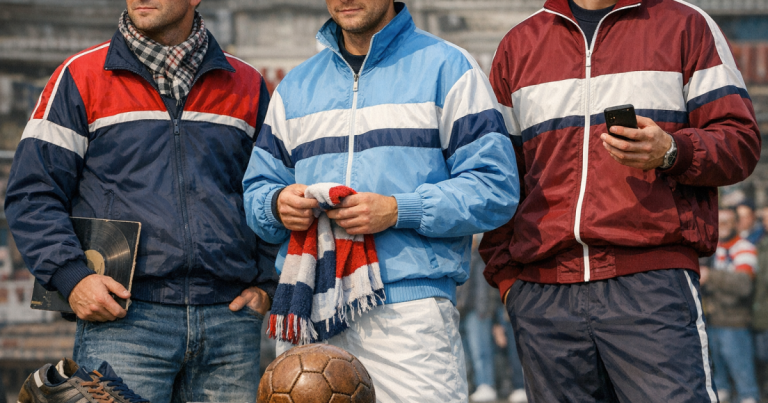
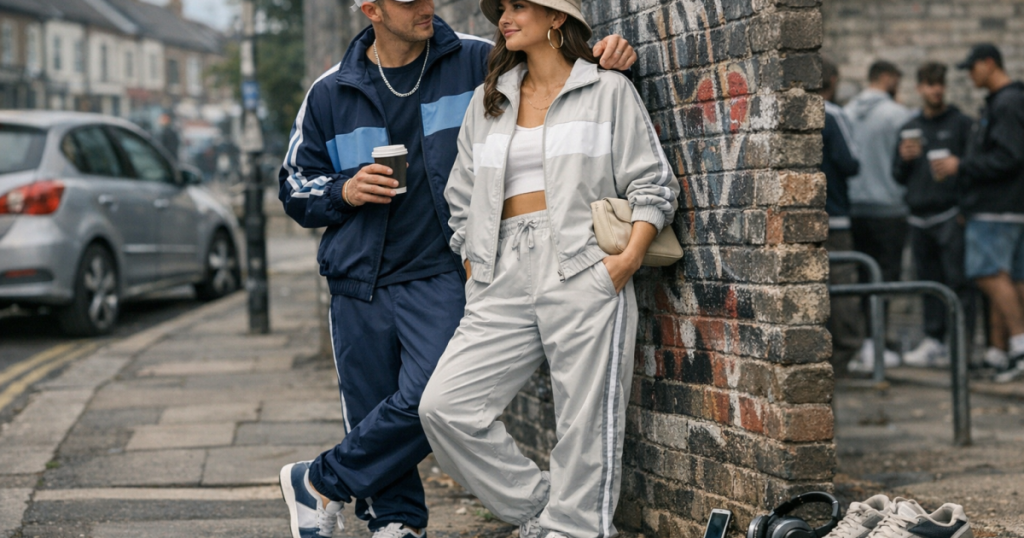
UK garage dress codes were never just about looking sporty; they sat between club confidence, estate practicality and a sharp London-to-regions sense of status. The trick with 2000s UK garage tracksuit style now is to keep the sleek energy, clean trainers and logo discipline without sliding into fancy dress. Think fitted rather than sprayed-on, glossy but not plastic, and matched only when the set genuinely earns it.
The look works best today when it is edited. Take the rhythm of the era — track tops, side stripes, caps, clean creps, a touch of shine — then balance it with modern proportions and restraint.
At a glance
- Fit comes first: aim for neat shoulders, a clean leg line and enough room to move.
- Use one loud signal: a shiny track top, bold stripe, cap or trainer is enough.
- Keep trainers immaculate: garage style looks wrong when the footwear looks tired.
- Avoid full costume cues: too many period details at once can feel like fancy dress.
- Blend with terrace sensibility: smart sportswear, controlled branding and weather-aware layering make it wearable in Britain now.
Decode the original codes before copying them
Early-2000s UK garage style grew out of club culture, pirate radio, MC tapes, glossy videos, high-street sportswear and the ongoing British habit of turning functional kit into status clothing. It shared ground with football casual dressing but had a different tempo: more night out than matchday, more polish than mud, more fitted zip-through energy than oversized ladwear.
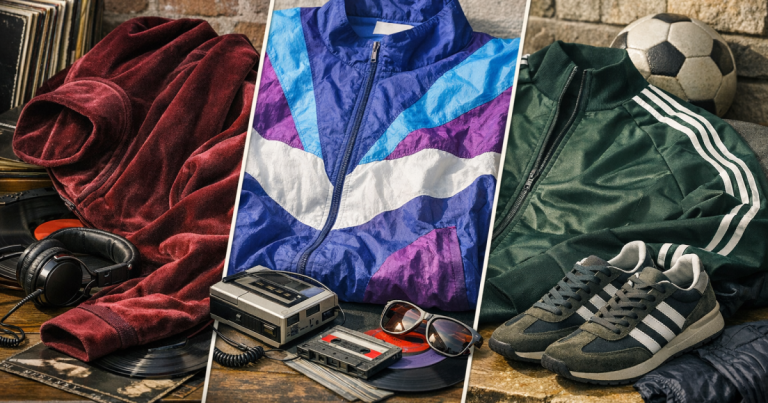
The tracksuit sat right in the middle of that. It could be practical for travel across town, sharp enough for a queue, and recognisable from a distance. Side stripes, contrast panels, zip necks, reflective trims, velour textures, nylon sheen and branded trainers all played a part. But the best looks were rarely random. There was usually discipline in the colour palette, the footwear and the way the jacket sat on the body.
That overlap with the terraces matters. If you want the wider British sportswear background, the history of tracksuits, music and matchday identity explains why certain brands and silhouettes carried so much meaning long before UKG made them club-ready.
Step 1: Build the shape around a neat tracksuit silhouette
Start with the outline rather than the logo. A modern UKG-inspired tracksuit should look sharp from across the street: jacket sitting cleanly on the shoulders, cuffs not swallowing the hands, trousers falling straight or slightly tapered rather than flapping around the shoe.
A full matching set can work, but it needs confidence and restraint. If the fabric has shine, the colour is bold or the branding is prominent, keep the rest of the outfit quiet. If the tracksuit is darker and minimal, you can afford a brighter trainer, cap or polo underneath.
Good modern proportions
- Track jacket: zipped to the upper chest or worn open over a plain tee or polo.
- Track trousers: clean through the thigh, not skin-tight, with a tidy break over the trainer.
- Length: avoid jackets that sit too long; the 2000s feel comes from a compact upper body.
- Fabric: smooth polyester, tricot, nylon or velour can all work, but avoid anything that looks flimsy or overly shiny under daylight.
For a recognisable sportswear reference, an Adidas Originals Superstar Tracksuit gives a clear sense of the stripe-led, full-set language that can be adapted without chasing an exact club archive look. Treat it as a reference point for proportion and contrast rather than a rule.
Step 2: Keep the colour story club-smart
UK garage style loved presence, but it was not always chaotic. Black, navy, silver, white, red, royal blue and bottle green all sit naturally in the mood. The easiest modern formula is one dark base plus one sharper accent: black with white stripes, navy with silver piping, charcoal with red details, or cream trainers against a dark tracksuit.
If you choose a bright set, make everything else calmer. A royal blue top with matching bottoms needs plain footwear and minimal accessories. A silver or pale grey jacket is better with dark track trousers or clean denim than with matching shine head to toe.
Colour combinations that still feel wearable
- Black track top, black or charcoal track bottoms, white trainers.
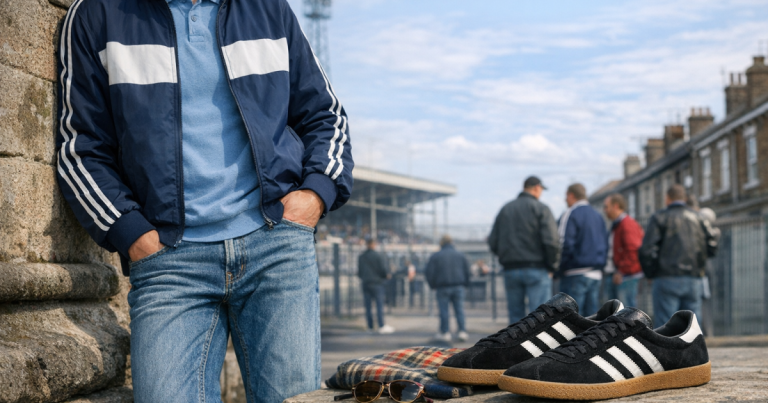
- Navy tracksuit, white tee, dark cap, gum-sole terrace trainers.
- Grey zip-through jacket, black track trousers, black leather trainers.
- Red or royal blue jacket, plain dark bottoms, no extra loud branding.
- Chocolate, cream and gold accents if you want a warmer clubwear feel.
Step 3: Let the trainers decide the direction
Footwear is where the outfit becomes believable or falls apart. UKG-influenced tracksuit dressing needs trainers that look looked-after. They do not need to be box-fresh, but they should be clean, shaped and deliberate.
Chunkier runners push the outfit towards late-90s and early-2000s street style. Sleeker terrace trainers make it feel more casuals-adjacent. White leather trainers make the tracksuit cleaner and more club-smart. Dark trainers can work, but they need contrast elsewhere so the outfit does not become flat.
A pair like the Nike Air Max 90 can bring the right period-adjacent energy when the rest of the outfit is controlled. If you prefer a more terrace-rooted finish, gum-soled adidas styles and low-profile indoor trainers often soften the look and stop it becoming too music-video literal.
Step 4: Add one UKG-era signal, not five
The fastest way to ruin this look is to pile on every reference at once: glossy tracksuit, tinted shades, oversized jewellery, branded cap, loud trainers, throwback phone case and a slogan tee. One or two signals are enough.
Choose a single cue that carries the mood. A fitted cap, a zipped track top, a side-stripe trouser, a contrast-panel jacket or a pair of spotless white trainers will do more than a whole rack of nostalgia.
Details that read correctly today
- Caps: keep them structured and simple, not novelty. A New Era 9Forty Cap works as a clean modern cap shape if the colour sits with the tracksuit.
- Jewellery: one chain or watch is enough; avoid parody-level shine.
- Base layers: plain white tees, black tees and slim polos work better than busy graphics.
- Outerwear: a short bomber, Harrington-style jacket or lightweight shell can sit over a track top if the colours are quiet.
- Bags: a small crossbody or shoulder bag feels more natural than an overpacked rucksack.
Step 5: Make it work for British weather and real settings
A club-era outfit has to survive modern British life: trains, drizzle, pub floors, matchday walks, cold evenings and daylight. That means layering matters. A track top under a lightweight jacket often looks more believable than a full tracksuit worn with no plan for the weather.
For a Saturday daytime look, try a dark track jacket, plain tee, straight track trousers and low-profile trainers. For an evening version, zip the jacket higher, keep the cap optional and go cleaner on the footwear. For a matchday-adjacent version, bring in a terrace trainer and a practical outer layer instead of leaning too heavily into club shine.
The seasonal logic is similar to classic terrace dressing: adapt the same core sportswear codes to rain, cold and travel rather than pretending every day is a video shoot. The breakdown of terrace style through the British football season is useful if you want to make the look work from August heat to January away days.
Step 6: Keep the finish sharp
UK garage tracksuit dressing depends on finish. Creased synthetic fabric, scuffed trainers and sagging cuffs kill the effect quickly. The outfit should look like it has been chosen, not dragged from the bottom of a sports bag.
Wash synthetic tracksuit pieces according to the care label, avoid overloading the machine, and let garments dry properly before storing them. Hang track tops on decent hangers so the shoulder line stays clean. Fold trousers along the seams rather than stuffing them into drawers.
Steam can help relax creases in many synthetic sportswear pieces, but always check the garment label first and avoid holding heat too close to delicate prints, badges or flocked details. For a care-focused angle, the site’s Tefal Access Steam Easy review looks specifically at whether a handheld steamer makes sense for retro tracksuits.
Common mistakes to avoid
- Going too tight: fitted is right; restrictive is not. You want movement in the shoulders and thighs.
- Overdoing shine: one glossy piece is often stronger than a full reflective outfit.
- Mixing too many eras: 1970s football colours, 1990s rave shapes and 2000s garage gloss can clash if nothing anchors them.
- Ignoring footwear condition: worn-out trainers make the whole outfit look accidental.
- Using fake ageing: forced vintage effects rarely look as good as a clean reissue or a well-kept original.
- Dressing for a costume theme: the aim is influence, not impersonation.
Common questions
Can you wear a full tracksuit without looking dated?
Yes, if the fit is clean and the rest of the outfit is restrained. Keep colours controlled, trainers fresh and accessories minimal. A full set looks more modern when the jacket is neat and the trouser leg sits properly over the shoe.
Were velour tracksuits part of the UK garage look?
Velour belongs in the wider early-2000s clubwear conversation, though it can easily tip into fancy dress now. If you wear it, choose a dark or muted colour and keep the trainers and accessories very simple.
Which trainers suit the look best?
Clean runners, white leather trainers and low-profile terrace trainers all work. The key is condition and proportion: the trainer should support the tracksuit shape rather than overpower it.
Can this style work outside London?
Definitely. UK garage had strong London roots, but its style travelled through clubs, radio, universities, record shops and nights out across Britain. Today it reads best when adapted to your setting rather than copied like a postcode uniform.
How do you stop the outfit looking too young?
Use darker colours, better layering and less obvious branding. A track top with plain trousers and smart trainers often feels more grown-up than a bright full set with heavy accessories.
Key takeaways
Wearing UKG-inspired tracksuit style today is about editing the era, not recreating it exactly. Start with a sharp silhouette, keep the colours deliberate, let the trainers do some of the cultural work, and add only one obvious early-2000s signal at a time.
The best version feels recognisably British: part club queue, part terrace intelligence, part everyday sportswear. It should look like you understand the culture behind the clothes, but still have somewhere real to go.