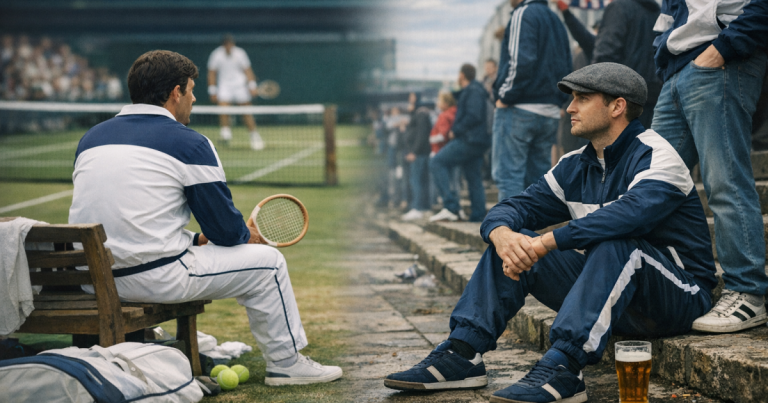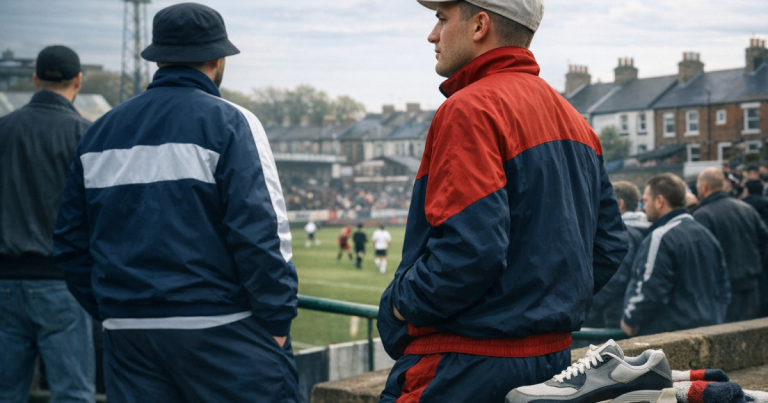
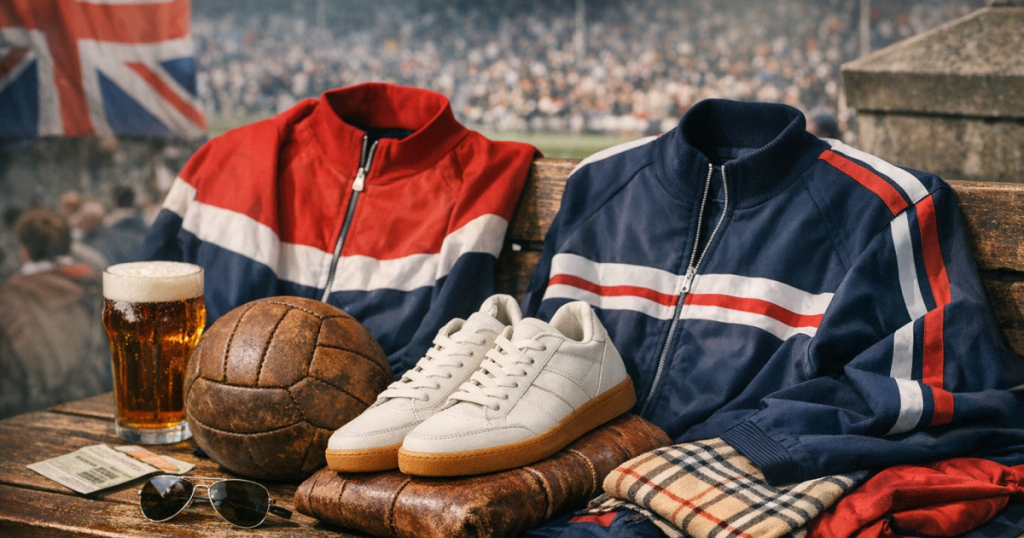
Fila did not become beloved on British terraces by accident. The appeal of Fila casuals was built from Italian sportswear, visible status, tennis glamour and a sharp instinct for clothes that looked better off the pitch than on it.
For British dressers who cared about labels, fit and being just ahead of the next lad, Fila offered something more refined than standard teamwear. It looked continental, expensive and slightly detached from the usual football wardrobe, which made it ideal casuals currency.
At a glance
- Fila’s terrace appeal came from Italian design, tennis prestige and a cleaner silhouette than much mainstream sportswear.
- British casuals valued it because it looked imported, selective and sharp without shouting football allegiance.
- The brand’s strongest terrace pieces were track tops, knitted polos, zip-neck layers and clean trainers rather than full replica kit.
- Modern Fila works best when styled with restraint: one archive-influenced piece, good denim or track pants, and unfussy trainers.
From Biella to Borg: why the origin story mattered
Fila was founded in Biella, northern Italy, in 1911, long before it became a name on British terraces. Its early reputation was rooted in textiles, which matters because casuals culture has always been alert to cloth, cut and finish. The brand’s later move into performance sportswear gave it a different feel from purely football-led labels: more country club than club shop, more Milanese neatness than muddy touchline.
The tennis connection was crucial. Björn Borg’s association with Fila in the 1970s helped turn the brand into a visual shorthand for cool control: headband, trim track top, sharp stripes, immaculate timing. For British lads watching from a distance, that look had glamour without flash. It was sporty, but not ordinary. It carried a European confidence that translated easily into the terrace code.
This is where Fila separated itself. Adidas had deep football credibility, Sergio Tacchini had Italian tennis elegance, Kappa had kit-room swagger, and Fila sat neatly between performance, leisure and status. It was a brand you could wear to the match, to the pub and into town without looking as though you had simply kept your PE kit on.
Why British casuals took to Fila
The British football casuals scene was never only about football. It was about travel, discovery, competition and knowing which labels were worth noticing before they became obvious. The broader football casuals movement turned sportswear into a social signal: not just what you wore, but how you sourced it, combined it and carried it.
Fila fitted that mentality because it had several terrace-friendly qualities at once. It was recognisable, but not everywhere. It had a strong logo, but the better pieces did not depend entirely on branding. It felt European, but it was easy to mix into a British wardrobe. Most importantly, it looked considered. A Fila track top with straight denim and clean trainers said something different from a full football tracksuit. It suggested taste, contacts and a bit of effort.
Scarcity played its part too. In the strongest casuals eras, the most desirable sportswear was not simply the item you could buy on any high street. It was the jacket from a particular shop, the track top brought back from an away trip, the colourway only a few people had seen. Fila’s Italian identity and tennis associations made it feel less predictable than domestic leisurewear, which increased its value in a scene built on small distinctions.
The pieces that made the label stick
Fila’s terrace reputation was not built by one item alone, but some silhouettes did much of the heavy lifting. The classic short-waisted track top is the most obvious: zipped, neat through the body, often with contrast panels or piping that gave it shape without making it garish. Worn with denim, cords or matching track pants, it had enough structure to feel dressed rather than slung on.
The Fila Settanta Track Jacket remains one of the easiest pieces to understand in this context. Its appeal is not only nostalgia; it is the balance of simple colour blocking, heritage sportswear lines and a fit that can work with terrace staples. If you are comparing vintage and reissue versions, check the cut, fabric feel, zip quality, cuff condition and whether the colourway suits your wardrobe rather than just your memory of old photographs.
Knitted polos and zip-neck tops also helped Fila cross from sport into casual dressing. They offered a smarter edge for lads who wanted the status of a sports label without wearing a full tracksuit. That overlap with knitwear is part of why Fila could sit next to Pringle-style golf jumpers, Italian trainers, denim jackets and lightweight cagoules in the same outfit language.
Footwear mattered, but Fila was rarely only about trainers in Britain. Clean court-inspired pairs, including styles such as Fila Original Fitness Trainers, can still support the look, but the terrace wardrobe has never required head-to-toe loyalty. Many of the best outfits mix Fila up top with adidas, Diadora, PUMA or Lacoste-style footwear depending on the era being referenced.
Status without costume
The best casuals looks are full of reference but not trapped by them. Fila’s strength is that it gives a clear historical signal without forcing you into fancy dress. The trick is to keep the outfit believable: one strong vintage-style piece, a sensible colour palette and modern proportions where needed.
For a wearable British take, start with a Fila track top in navy, red, cream, bottle green or other grounded colours. Pair it with straight-leg denim, relaxed track pants or cords rather than ultra-skinny jeans. Trainers should look clean and period-aware, but they do not have to be box-fresh. A lightweight jacket over the top can soften the sportswear feel, especially if you are wearing the look away from matchday.
It is also worth understanding the difference between genuine terrace influence and generic retro branding. Details such as cut, colour, fabric texture and how a piece layers are often more important than a large logo. If you want to sharpen your eye, our guide to spotting genuine terrace influence is a useful next step before buying vintage or modern reissues.
Vintage, reissue or modern Fila?
Original vintage Fila has obvious appeal: age, authenticity, older labels and the thrill of finding a piece that has not been overexposed. The trade-off is condition. Check elastic, staining, pilling, zip function, loose stitching and whether the fabric has lost shape. Vintage synthetic sportswear can look tired quickly if it has been stored badly or washed harshly.
Reissues are often easier to wear. They may offer fresher fabric, more predictable sizing and less anxiety about everyday use. The compromise is that some reissues feel slightly different from archive originals, either in cut, colour or fabric handle. That does not make them worse; it just means you should judge them as clothes, not museum pieces.
Modern Fila can work if it respects the old proportions. Be cautious with oversized logos, overly loud colour blocking or pieces that lean too heavily into novelty nostalgia. The most convincing current buys tend to echo the brand’s clean tennis and track heritage rather than chasing every retro cue at once. For a deeper look at one of the brand’s key pieces, see our Fila Settanta track jacket review.
How to wear Fila now
A good Fila outfit in Britain today should feel like a nod, not a reenactment. Try a heritage track top over a plain white or navy T-shirt, then add dark denim and low-profile trainers. For a softer pub or gig look, swap denim for relaxed track pants and keep the rest neutral. If the track top is bright, everything else should calm it down.
Accessories should be minimal. A simple cap, a plain scarf or a functional crossbody bag can work, but too many period details at once will flatten the outfit into costume. The same goes for haircuts, badges and overly literal matchday styling. The point is to carry the codes forward, not cosplay a terrace photograph.
For readers building a small rotation, Fila is best treated as one part of a wider casuals wardrobe. A track top, a knitted layer and one pair of clean trainers will go further than chasing every logoed piece you can find. If you want visual context beyond clothing racks, books such as A Casual Look: A Photodiary of the 1980s Casual, Terrace and Football Scene are useful for seeing how sportswear was actually worn, not just how it is styled in product shots.
Things readers ask
Was Fila a football brand or a tennis brand first?
Fila’s strongest early style association was tennis, especially through Björn Borg. Its football terrace importance came later, when British casuals adopted tennis and European sportswear as part of matchday identity.
Is vintage Fila better than a reissue?
Not automatically. Vintage has character and collectability, but reissues can be easier to size, wear and care for. Judge each piece on cut, condition, fabric and how often you will realistically wear it.
Can you wear a full Fila tracksuit without looking dated?
Yes, but restraint matters. Choose a clean colourway, avoid too many extra retro accessories, and keep trainers simple. If in doubt, split the set and wear the jacket or track pants separately.
What makes Fila different from Sergio Tacchini or Kappa?
All three carry Italian sportswear appeal, but Fila’s strongest terrace identity leans into tennis polish and neat track-top styling. Sergio Tacchini often feels more court-luxury, while Kappa brings a stronger football-kit and logo-tape energy.
Why it still matters
Fila became a British casuals favourite because it offered the right mix at the right time: continental prestige, sporting credibility, visual sharpness and just enough scarcity to make it desirable. It gave terrace dressers a way to look athletic without looking ordinary, stylish without appearing overdone, and informed without spelling everything out.
That is still the reason Fila works today. Worn well, it brings a direct line from Italian tennis courts to British terraces, but it remains practical clothing rather than pure nostalgia. Choose the right piece, keep the styling grounded, and the brand’s casuals appeal still feels alive rather than archived.