A retro tracksuit can carry the right energy without copying a museum mannequin. Spotting genuine terrace influences is about reading the choices behind the piece: era, fit, fabric, colour, styling and the kind of understated confidence that UK football casuals turned into a code.
The trick is not asking whether a top is “old school” in a vague way. Ask whether it makes sense beside the clothes, clubs, music and high-street habits that shaped British terrace dressing.
At a glance
- Terrace influence is usually subtle: the right silhouette, colour and pairing matter more than the loudest logo.
- Context counts. A track top linked to tennis, football travel, Italian sportswear, Britpop or 1980s casuals can read differently depending on how it is worn.
- Full tracksuits can work, but the fit and styling need to feel lived-in rather than staged.
- Modern reissues are not automatically wrong. A well-cut reissue can feel more wearable than a fragile original.
- If the outfit looks like a costume for a theme night, it has probably missed the point.
Step 1: Start with the culture, not the logo
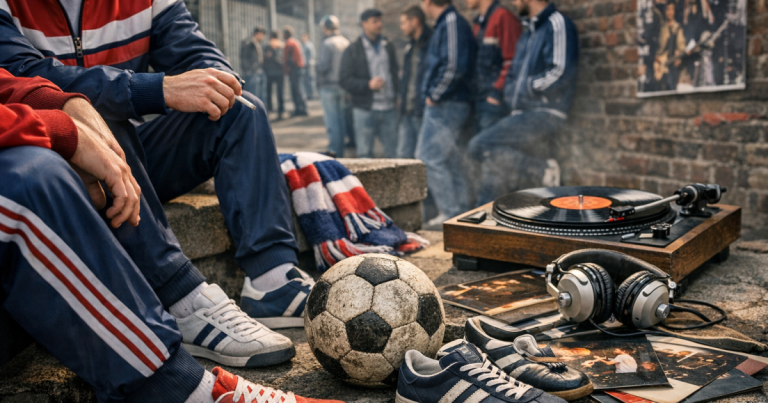
Terrace style did not begin as a neat fashion category. It grew from football travel, away days, local rivalry, European sportswear, youth culture and a sharp eye for what looked different from ordinary British sports kit. That is why a tracksuit can be technically retro yet still feel flat if it only copies surface details.
A genuine terrace reading usually comes from restraint. The item might have a recognisable badge, but it does not need to shout. It should look like something that could sit naturally with clean trainers, a polo, a lightweight jacket or denim rather than relying on novelty colour blocking alone. For the wider code behind the look, it is worth grounding the details in what terrace style actually means before judging a tracksuit in isolation.
Step 2: Place the tracksuit in an era
One of the easiest ways to spot credible influence is to ask which period the piece is referencing. A design can borrow from several decades, but the strongest looks usually have a clear centre of gravity.
Late 1970s and early 1980s codes
Look for cleaner sportswear shapes, neat ribbed collars, contrast piping, zip track tops and colours that feel more European than gym-class. Tennis and continental labels mattered here because they looked different on British streets. Sergio Tacchini, Fila, Ellesse, Kappa, Diadora and adidas all sit in this wider conversation, though not every item from those brands is automatically terrace-coded.
The tennis-to-terrace crossover is especially important because it explains why some smooth, court-led tops became football-casual staples. The story of Sergio Tacchini’s move from tennis courts to terrace culture is a useful example of how sporting origin and subcultural adoption can meet without the clothing being designed for football fans in the first place.
Late 1980s into 1990s sportswear
Later influences can be looser, brighter and more connected to dance culture, Britpop, big-brand sportswear and high-street accessibility. A full zip top with relaxed track pants can still feel terrace-adjacent, but the styling needs care. Too much nostalgia in one outfit can make the reference obvious in the wrong way.
Modern pieces such as the adidas Originals Firebird Track Top can work as a reference point because they sit in the visible heritage sportswear lane. The question is not whether the item is old enough, but whether the whole outfit keeps the casual language: good proportions, grounded colours and trainers that make sense with the era.
Step 3: Read the silhouette before the badge
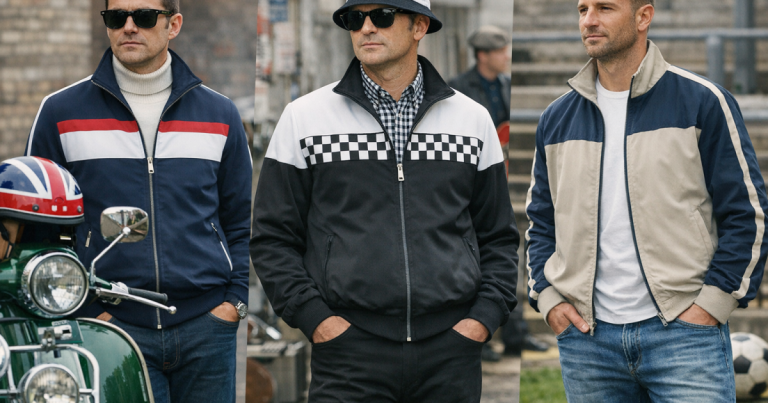
Shape gives away more than most people think. A terrace-influenced track top often has a relaxed but tidy fit: roomy enough to layer over a polo or knit, not so oversized that it becomes modern streetwear by default. The shoulders should sit naturally, the hem should not balloon awkwardly, and the collar should frame the face rather than collapse into a shapeless sports jacket.
Track pants are harder to get right. Too slim and they can look like contemporary gymwear. Too baggy and the outfit can drift into fancy dress or festival nostalgia. A straight or gently tapered leg tends to be the safest route for a wearable terrace look, especially with low-profile trainers.
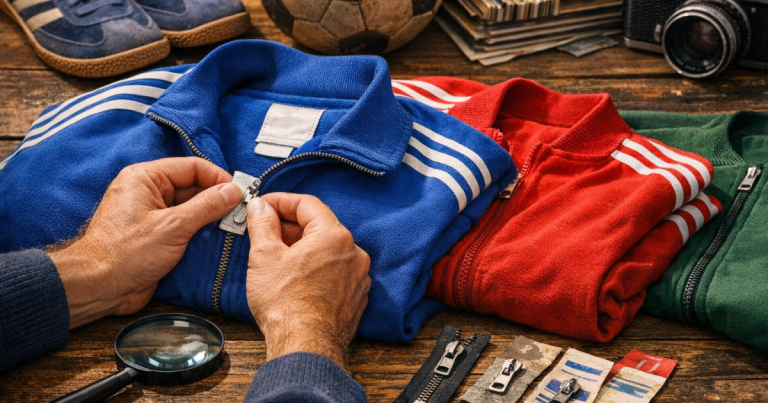
Fabric also matters. Shiny polyester can be right for some eras, but cheap-looking sheen is not the same as archive energy. Brushed tricot, smooth poly blends, ribbed cuffs, decent zip weight and tidy stitching all help a piece feel intentional. With vintage originals, check for tired elastic, distorted hems and damaged zips; with reissues, check whether the proportions still echo the reference era rather than simply adding a retro badge to a modern cut.
Step 4: Check whether the colours feel believable
Terrace influence is often strongest when the palette feels plausible for real life. Navy, burgundy, bottle green, cream, royal blue, white, black, red and muted gold details all have a natural place in the wider casual wardrobe. Very loud colours can still be authentic to certain 1990s references, but they need the right context.
A good test is to imagine the tracksuit away from a styled photo. Would it work in a pub before a match, on a train to an away day, or under a practical jacket in bad weather? If the answer is yes, the colour probably has enough restraint. If it only works when the entire outfit is theatrical, it is more likely retro-themed than terrace-informed.
Club colours can be tricky. A nod to a team palette can feel sharp, but dressing head to toe in obvious club-coded sportswear can flatten the look. Terrace style has always had a relationship with football, but it is rarely as simple as wearing team colours from top to bottom.
Step 5: Look for brand logic, not brand worship
Some brands carry real terrace weight because of how they were adopted by British football crowds. That does not mean every garment from a heritage label has the same credibility. A modern lifestyle drop with oversized branding might be less convincing than a plain, well-cut track top from the same archive.
Ask three questions. Does the brand have a believable connection to football casuals, tennis crossover, European sportswear or 1990s British street culture? Does this particular piece reflect that connection in its design? Does the styling around it support the reference?
A Fila Settanta Track Jacket, for instance, carries a different set of associations from a generic modern training top because its shape and heritage point towards tennis and casual culture. But it still needs the right surrounding pieces: simple trainers, confident fit and enough restraint elsewhere.
Step 6: Test the outfit as a whole
Terrace influence is rarely created by one garment. The track top, trousers, trainers, outerwear and accessories have to speak the same language without becoming a uniform. If every item is screaming for attention, nothing looks natural.
Try this quick check:
- One hero piece: let the tracksuit top or full set lead, then keep the rest quieter.
- Era-compatible trainers: low-profile court shoes, classic runners or terrace trainers usually work better than bulky modern gym footwear.
- Layer with purpose: polos, fine knits, denim, lightweight jackets and waxed outerwear can stop a tracksuit looking like sports kit.
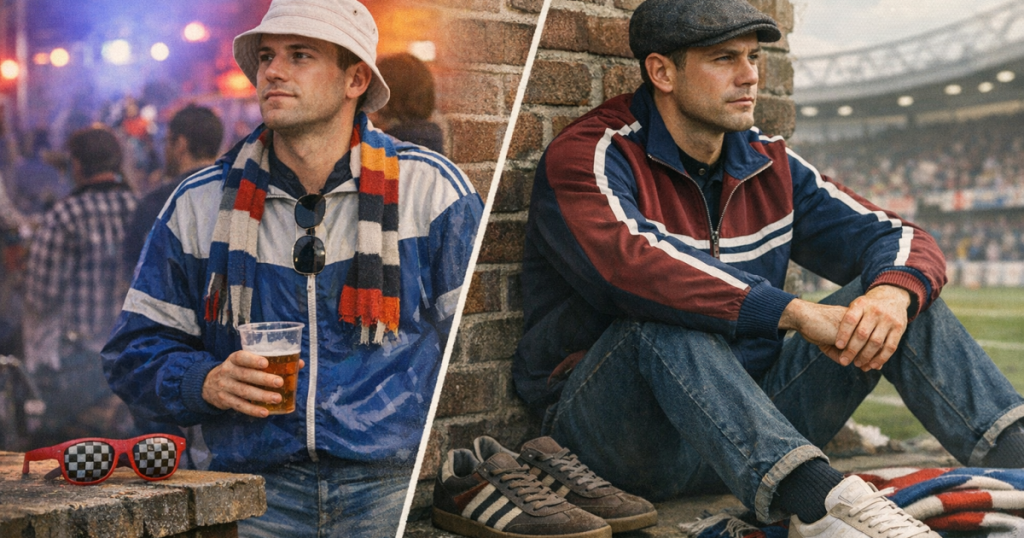
- Avoid novelty stacking: bucket hat, football shirt, retro scarf, loud track top and bright trainers together can tip into costume.
- Check the setting: what works at a music festival might feel forced on a Saturday afternoon matchday.
If you want the full-tracksuit route, the safest approach is to keep the styling cleaner than you think. The set should feel like part of a wardrobe, not the entire personality of the outfit. For a more detailed styling route, use the advice on how to build a terrace tracksuit outfit without looking fancy dress.
Step 7: Separate real influence from costume signals
There are a few warning signs that a tracksuit is borrowing terrace imagery without understanding the code. Oversized novelty logos, exaggerated colour clashes, poor proportions and forced “lad culture” styling can all make the reference feel shallow. The issue is not that bold clothing is wrong; it is that terrace style usually works through recognition, detail and attitude rather than obvious performance.
Another false positive is assuming age equals authenticity. A vintage track top can be interesting, but if it has no link to the relevant sportswear language, it may simply be old sports kit. Equally, a modern reissue can be credible if it respects the archive shape and is worn with the right balance.
Condition matters too. Worn-in can look excellent; worn-out is different. Fading, light creasing and softened fabric can add character, while broken zips, stretched cuffs and bobbled synthetic fabric can make a piece look neglected. Terrace style has a sharpness to it, even when it is casual.
Step 8: Use small details as evidence
Once the big picture works, details can confirm the influence. Look at zip pulls, collar height, sleeve stripes, piping, badge placement, cuff shape and trouser leg opening. None of these details proves anything alone, but together they create a design language.
Badges should feel integrated rather than slapped on. Stripes should suit the cut rather than overwhelm it. A collar should look good zipped halfway as well as open. Track pants should sit cleanly over trainers rather than pooling heavily or clinging like running tights.
Accessories need the same discipline. A simple cap, understated bag or classic polo can help the outfit settle. A Fred Perry Twin Tipped Polo Shirt under a track top, for example, can add British subcultural context without turning the outfit into a costume, provided the colours and fit are kept controlled.
FAQ
Does a terrace-influenced tracksuit have to be vintage?
No. Vintage originals have character, but a modern reissue can be more wearable if the cut, colours and details respect the original design language. Fit and styling matter as much as age.
Can a full tracksuit look terrace rather than sporty?
Yes, but it needs restraint. Keep the trainers era-appropriate, avoid too many loud accessories, and make sure the fit looks casual rather than like gymwear or fancy dress.
Are big logos always wrong?
Not always. Some archive sportswear used bold branding, but the logo should make sense with the era and garment. If the branding is the only interesting thing about the piece, the influence is probably thin.
Which trainers help the look feel more authentic?
Classic court shoes, gum-sole terrace trainers and older running silhouettes usually work best. The key is proportion: the trainer should sit naturally with the track pant rather than overpowering it.
How do you avoid looking like you are copying a stereotype?
Keep the outfit personal and pared back. Use one strong retro sportswear piece, balance it with everyday layers, and avoid piling on every football-casual signifier at once.
Main lessons
Genuine terrace influence is not a checklist of famous badges. It is a mix of era, silhouette, colour, fabric, cultural context and the confidence to leave some things understated. The most convincing retro tracksuits look like they belong in real British casual wardrobes, not just in nostalgic mood boards.
Start with the culture, place the piece in an era, then judge the whole outfit. If the tracksuit works with practical layers, clean trainers and a bit of restraint, it is far more likely to carry the right terrace energy.