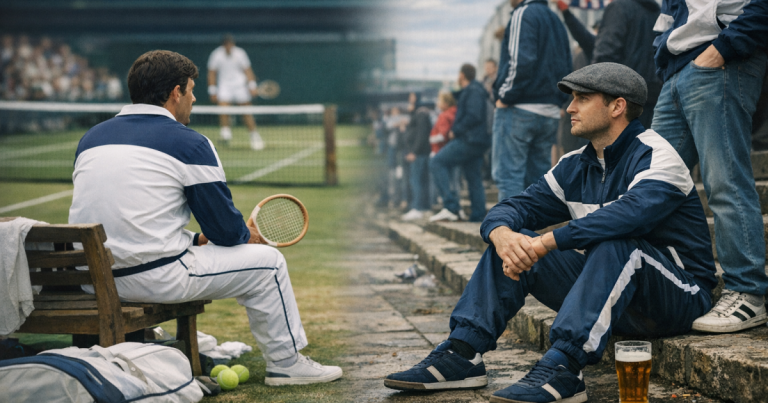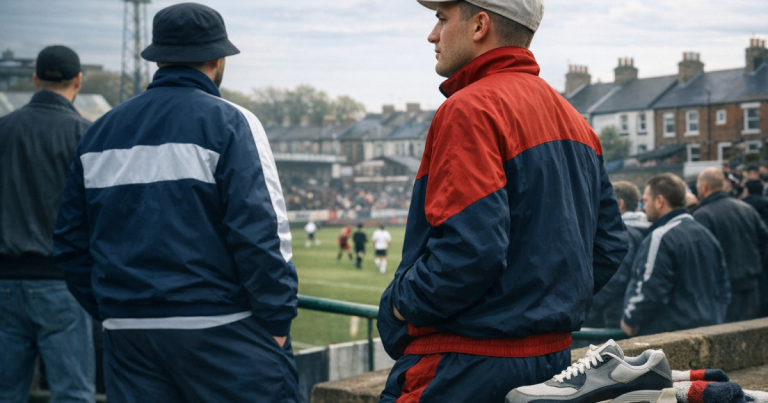
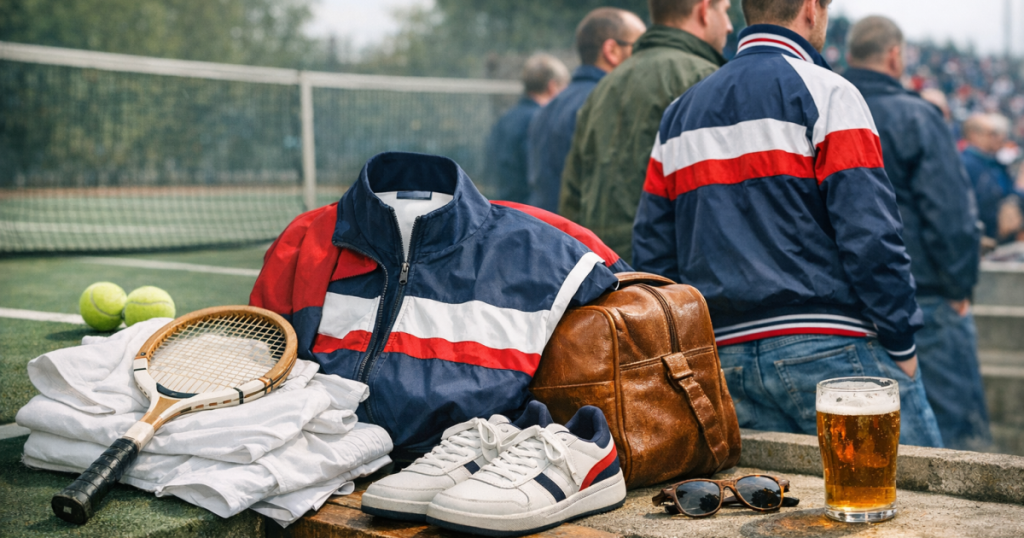
The appeal of Sergio Tacchini history is that it begins with performance tennis, not football, yet still ends up feeling completely at home on British terraces. The brand’s best pieces carry that tension: clean court lines, Italian colour, sharp collars and just enough flash to make a track top feel considered rather than loud.
For UK readers into retro tracksuits and terrace style, Sergio Tacchini matters because it sits in the same conversation as Fila, Ellesse, Diadora and adidas, but with its own court-first identity. It was never simply a football brand. That is exactly why casuals found it interesting.
What to know first
- Sergio Tacchini was founded by Italian tennis player Sergio Tacchini in 1966, originally under the Sandys name before becoming strongly associated with his own name.
- The brand became famous for challenging conservative tennis whites with colour, contrast trims and Italian styling.
- Its tennis credibility came through major players and high-visibility tournament wear, not through terrace culture first.
- British football casuals helped reframe the brand as desirable off-court sportswear, especially through imported tracksuits and track tops.
- Modern buyers should judge pieces by cut, fabric feel, colour balance and whether the styling works beyond nostalgia.
From player to sportswear name
Sergio Tacchini was not a boardroom invention. Tacchini had been an Italian tennis player, and that court background shaped the label’s early purpose. Tennis in the 1960s still carried a strong sense of tradition, with white clothing and club etiquette dominating the visual language of the sport. Tacchini’s brand pushed against that restraint by bringing colour and graphic confidence into tennis clothing without abandoning elegance.
That distinction matters. The brand did not become iconic because it looked like generic sports kit. It became recognisable because it made tennis clothing feel modern, continental and expressive. The trims, panels and colour blocking gave the clothes a visual identity from a distance, which later helped them translate into street and terrace settings.
Where some sportswear brands were built around running, football or basketball, Sergio Tacchini’s emotional centre was the tennis court. That gave the tracksuits a slightly different mood: less training-ground utility, more country-club rebellion. On a British high street or away-day concourse, that subtle difference was part of the status.
The tennis years that built the image
The brand’s rise was tied to visibility on elite tennis players. Over time, Sergio Tacchini clothing was associated with major names including Jimmy Connors, John McEnroe, Vitas Gerulaitis, Martina Navratilova, Pete Sampras and Goran Ivanišević. Not every player wore the same kind of kit or represented the same era, but collectively they helped make the marque feel serious rather than purely decorative.
McEnroe is especially important to the cultural memory because his personality matched the clothes’ disruptive edge. Tennis was still formal in image, and he was anything but neutral. Put a colourful Italian sportswear label on a player with that much presence and the kit became part of the theatre.
That court credibility is also why the brand still works today. A Sergio Tacchini track top is not just a retro fashion object; it carries a sporting lineage. If you want the wider shift from sportswear into social identity, the story sits neatly alongside how tracksuit culture moved from sport to terrace style.
How it crossed into British terrace culture
The UK casual scene did not simply adopt whatever was available in local sports shops. Part of the culture was about seeking out labels, colourways and garments that felt rarer, sharper or more continental than standard domestic options. Italian sportswear had the right mix: quality perception, bold styling and a sense of being one step removed from ordinary teamwear.
Sergio Tacchini fitted that world because it looked expensive without needing to be formal. The tracksuit shape gave comfort and movement, while the tennis association added a smarter edge. Worn with the right trainers, it could sit between sport, travel, nightlife and matchday without feeling like gym clothing.
By the time terrace style had developed its own codes, the brand was part of a broader language of status. Logos mattered, but so did restraint. A track top in navy, red, white, green or royal blue could signal knowledge without shouting. That is one reason Sergio Tacchini has never needed to be reduced to a single garment or slogan.
For the wider dress-code context, it belongs naturally beside 1980s casuals style and terrace codes, where imported sportswear became a way of reading taste, access and confidence.
The design cues that still make it recognisable
Sergio Tacchini’s most useful design language is not just the logo. It is the combination of court neatness and Italian sportswear colour. Look for these cues when judging vintage pieces, reissues or modern archive-inspired releases:
- Colour blocking: panels that frame the chest, sleeves or shoulders without overwhelming the whole outfit.
- Contrast piping or trims: small details that sharpen the outline and make a track top look intentional.
- Ribbed cuffs and collars: details that help a sporty piece sit closer to a casual jacket than a loose training top.
- Court colours: white, navy, red, green and blue often feel more authentic than overly trend-led shades.
- Balanced branding: visible enough to read as Sergio Tacchini, but not so oversized that it turns into costume.
That last point is important. Terrace style has always had room for display, but the best outfits usually show control. The garment should look chosen, not performed.
Archive appeal versus modern wearability
Original vintage Sergio Tacchini can be brilliant, but it is not automatically the smartest route. Older synthetic fabrics can vary in condition, zips may be tired, cuffs can lose shape and sizing can feel very different from current expectations. A vintage piece with provenance and clean colour can be worth the hunt, but a battered one is not improved just because it is old.
Modern reissues and archive-inspired pieces can be easier to wear day to day. Track tops such as the Damarindo Track Top and Orion Track Top are useful reference points for the kind of silhouette many readers have in mind: zipped, colour-conscious and rooted in the brand’s court-to-casual identity. Before buying, check the actual fabric composition, fit notes, care label, return policy and whether the cut suits how you plan to wear it.
If you are building an outfit rather than collecting for the wardrobe rail, think about balance. A bright Tacchini top can work with plain track pants, dark denim or simple trainers. A full matching tracksuit needs more care: keep the trainers clean, avoid piling on too many logos, and make sure the fit is relaxed rather than baggy in the wrong places.
Why the brand still matters now
Sergio Tacchini remains relevant because it bridges several worlds without belonging entirely to one. Tennis fans recognise the court heritage. Casuals recognise the continental sportswear signal. Britpop and 90s sportswear fans recognise the relaxed track-top silhouette. Modern dressers recognise that a good retro sportswear piece can replace a lightweight jacket in a weekend wardrobe.
It also offers a softer route into terrace style than some more heavily coded items. A navy or white Tacchini track jacket can look sharp with a polo, knitwear or straight-leg denim without making the outfit feel like a themed reconstruction. For practical outfit building, it sits well within the same wardrobe logic as terrace style essentials such as jackets, knitwear, denim and trainers.
The trade-off is that nostalgia can tempt people into buying pieces that are too shiny, too tight, too oversized or too logo-heavy. The best modern use of Sergio Tacchini is selective. Let one item carry the history, then keep the rest of the outfit grounded.
Different readings of the brand
There are two common ways people talk about Sergio Tacchini. One view treats it as a pure tennis heritage label: elegant, European and defined by champions. The other sees it mainly through the terrace lens: imported status, tracksuit culture and football-casual memory. Both are true, but neither is complete on its own.
The tennis story explains the design discipline. The terrace story explains why the clothing gained a second life away from sport. Without the first, the brand would have lacked authority. Without the second, it might have remained a more niche court label in the UK imagination.
That layered identity is what makes the brand more interesting than simple retro revival. Sergio Tacchini is not just something people wore; it is a case study in how sportswear changes meaning when it moves through class, travel, music, football and youth culture.
FAQ
Is Sergio Tacchini a tennis brand or a terrace brand?
It began as a tennis-led sportswear brand, but British casual culture helped turn its tracksuits and track tops into terrace staples. The strongest appeal comes from that overlap.
What should I look for in a Sergio Tacchini track top?
Look for balanced colour blocking, a wearable fit, neat cuffs and collar, decent zip condition, and branding that feels sharp rather than oversized. For vintage, inspect fabric wear closely.
Are modern Sergio Tacchini reissues worth wearing?
They can be, especially if you want the look without the risks of vintage condition. Check materials, sizing and colourways rather than assuming every reissue captures the same feel.
Can you wear a full Sergio Tacchini tracksuit without looking like fancy dress?
Yes, but keep it simple. Choose clean trainers, avoid too many extra logos, and make sure the fit is contemporary. Muted colourways are easier than very bright matching sets.
Final thoughts
Sergio Tacchini’s journey from tennis courts to terrace culture works because it was never forced. The clothes had genuine sporting credibility, a recognisable Italian visual language and enough exclusivity to matter in UK casual circles. That combination is still useful now.
For anyone building a retro sportswear wardrobe, the lesson is straightforward: do not buy the logo alone. Buy the shape, colours and context. A good Sergio Tacchini piece should nod to tennis, make sense on the terrace, and still look right when you are just heading out on a Saturday afternoon.