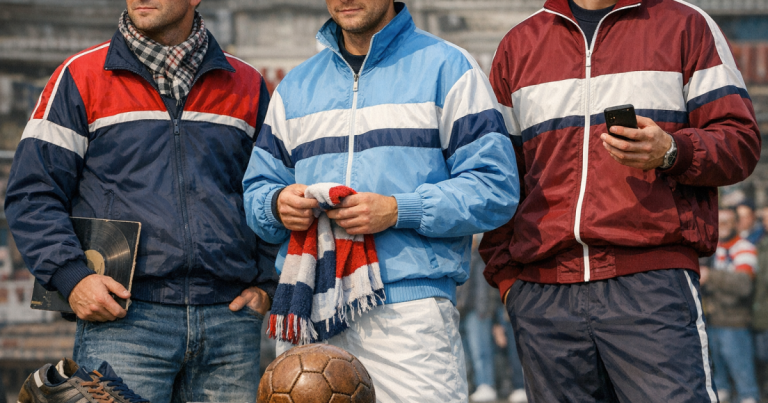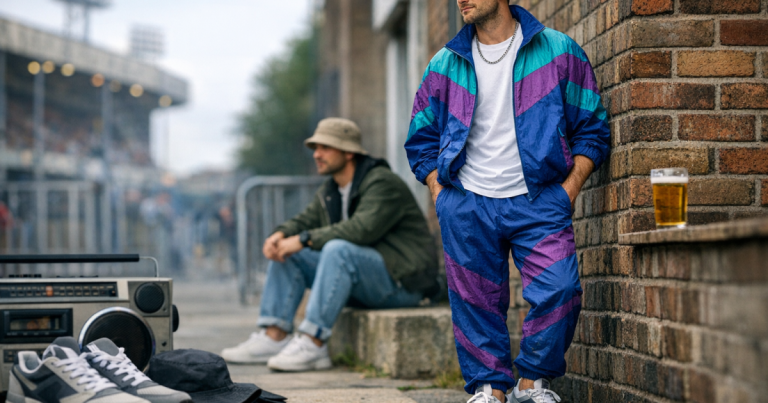
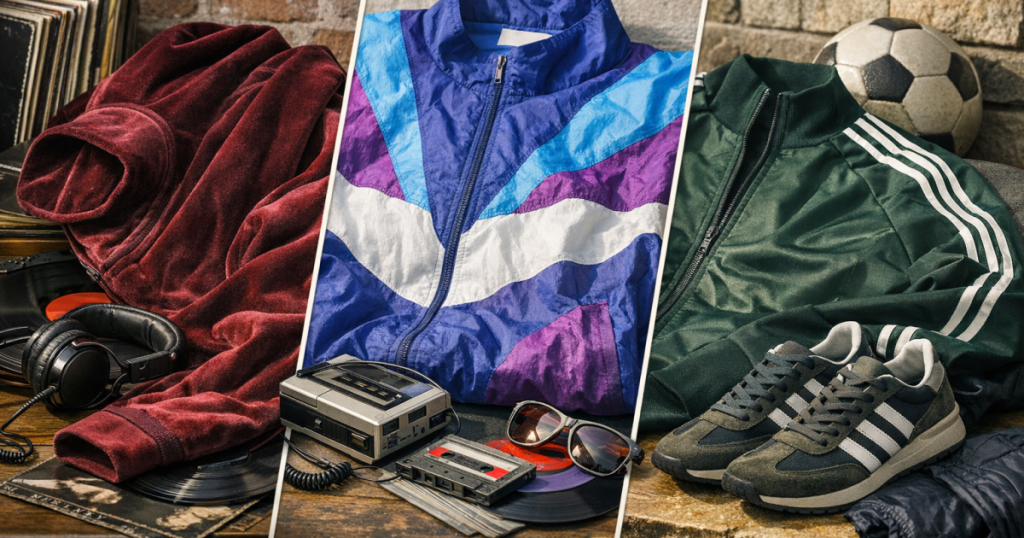
Velour says lounge-bar glamour, nylon says rain-slick away end, and brushed fleece says Saturday errands with a hint of training ground. Understanding tracksuit fabrics by era helps you spot why a set feels 1970s, 1980s, 1990s or modern before you even look at the badge. For terrace wear, fabric is never just comfort. It controls silhouette, rustle, colour depth, how the jacket sits under a coat and whether the whole outfit reads as archive-inspired or costume.
At a glance
- 1970s: velour, towelling textures, tricot polyester and softer leisurewear finishes gave tracksuits a louche, off-duty feel.
- 1980s: smoother synthetics, sheen, colour blocking and premium-looking finishes connected sportswear with football casual status.
- 1990s: nylon and lightweight shell fabrics brought volume, brightness, rave influence and weather-ready energy.
- 2000s onwards: brushed fleece, poly-cotton jersey and cleaner polyester knits made tracksuits more everyday and less theatrical.
- Modern reissues: the smartest buys are usually the ones that respect period shape without copying every awkward vintage detail.
Why fabric tells the story before the badge does
Badges matter, but cloth carries the decade. A slim tricot track top with a neat collar has a different cultural pull from a billowing nylon shell suit, even if both are technically tracksuits. In British terrace style, fabric also signals how close the piece sits to sport, leisure, music or nightlife.
That is why two jackets from the same brand can feel completely different. A soft velour top leans towards after-hours 1970s leisurewear. A shiny colour-blocked polyester jacket suggests 1980s casual confidence. A crinkly nylon set with elasticated cuffs lands much closer to early 1990s dancefloor and high-street sports shop culture.
If you want the wider decade-by-decade context around shapes, brands and subcultures, the retro tracksuit style timeline is a useful companion. Here, the focus is the material itself: how it behaves, what it says, and how to wear it now without losing the reference.
1970s: velour, tricot and the rise of leisurewear
The 1970s brought tracksuits out of pure training kit and into leisure. Velour is the headline fabric because it catches light, feels plush and gives even a simple zip top a nightclub-adjacent swagger. It was not the only fabric around, but it is the one most likely to make a tracksuit feel deliberately dressed-up rather than purely athletic.
Tricot polyester also matters. It tends to look smoother and more structured than fleece, with a surface that can read sporty without being bulky. In a terrace-influenced wardrobe, tricot works well because it keeps the jacket neat under outerwear and allows colour to do the talking.
How the 1970s fabric mood wears now
- Use velour sparingly if you want subtlety: a track top with dark denim or tailored trousers is easier than a full matching set.
- Look for deeper colours such as navy, bottle green, burgundy or brown if bright retro feels too theatrical.
- Keep footwear grounded with suede or leather terrace trainers rather than anything too futuristic.
- Avoid over-accessorising. Velour already has enough personality.
1980s: sheen, status and football casual polish
The 1980s casual look was not built only on tracksuits, but track tops and synthetic sportswear became part of the language. Smooth polyester, acetate blends and glossy finishes helped create that recognisable mix of sport, travel, continental brands and British terrace one-upmanship.
Brands such as Sergio Tacchini, Fila, Ellesse, Diadora and Lacoste Sport sat in the imagination because their fabrics often looked cleaner, sharper and more expensive than basic training gear. The appeal was not just logo size. It was the way a track jacket held its collar, the contrast piping, the sheen across the shoulders and the sense that the garment belonged to a world slightly beyond the local sports shop.
For modern wear, the trick is not to chase shine for its own sake. Too much gloss can make a jacket feel like costume. A smoother synthetic track top works best when the cut is controlled: shoulder seams where they should be, sleeves that do not drown the hands, and a hem that sits cleanly at the waist or upper hip.
1990s: nylon, shell suits and rave crossover
Nylon is the sound of the 1990s as much as the look: the rustle, the snap of elastic, the swish of movement. Shell suits and lightweight nylon tracksuits carried sport, streetwear, kids’ telly, rave culture and high-street fashion all at once. That is why they are so evocative, and also why they are easy to overdo.
Compared with velour or tricot, nylon tends to create more volume. Jackets balloon slightly, trousers sit looser, and colour panels can look louder because the fabric reflects light differently. Bright turquoise, purple, red, black and white combinations feel period-correct, but they need careful styling today.
The easiest route is to use one shell piece rather than a full set. A nylon jacket over a plain tee, straight jeans and classic trainers gives the reference without looking like you are heading to a themed night. If you do want the full tracksuit, keep the rest stripped back. The guide on how to wear a 1990s shell suit without fancy dress goes deeper into that balancing act.
What to check on vintage nylon
- Lining condition: older linings can snag, pill or feel clammy, so inspect inside as carefully as outside.
- Elastic: cuffs and waistbands can lose recovery over time, which changes the whole silhouette.
- Coating: some vintage shells may have internal coatings that flake or feel sticky with age.
- Zip quality: a great jacket becomes frustrating if the zip catches or separates.
- Noise and volume: charming in moderation, distracting if you want an everyday piece.
Late 1990s into 2000s: fleece, jersey and softer everyday tracksuits
By the late 1990s and into the 2000s, the tracksuit became more relaxed again, but in a different way from the 1970s. Brushed fleece, cotton-rich jersey and poly-cotton blends helped push tracksuits towards everyday comfort. The mood was less glossy terrace peacocking and more music video, sofa-to-street, training-ground casual.
These fabrics changed the silhouette. Fleece and jersey drape rather than snap. They make trousers feel softer and hoodies more central to the outfit. For a modern wardrobe, this is often the most forgiving entry point because the pieces do not demand a full retro commitment.
The risk is blandness. A plain grey fleece set can look more Sunday supermarket run than considered terrace style unless the fit, footwear and outer layer sharpen it. Pair softer fabrics with a structured jacket, a proper polo, or trainers with some heritage shape. The contrast keeps the outfit intentional.
Modern reissues: archive feel, contemporary expectations
Modern retro-inspired tracksuits rarely behave exactly like originals. They may use updated polyester knits, different linings, adjusted cuts or newer fibre blends. Some brands also use recycled synthetics in selected ranges, but the exact fabric content varies by garment, season and retailer, so always check the care label or product listing rather than assuming.
This is not a drawback. A reissue can be easier to wash, easier to size and less fragile than a vintage piece. The question is whether it keeps enough of the original language: the collar shape, panel placement, ribbing, stripe width, trouser cut and fabric hand-feel.
When a modern piece gets those details right, it can do the job better than a tired original. When it gets them wrong, it looks like generic athleisure wearing a heritage badge. For a closer look at shape and construction details, the terrace style fit guide is worth keeping open while you assess jackets and trousers.
How to match fabric to the look you actually want
The best fabric choice depends on how strongly you want the era to come through. If you want a clear 1970s nod, velour or soft tricot gives you that richness quickly. If you want 1980s casual polish, look for smooth synthetics, sharp collars and controlled colour blocking. If you want 1990s energy, nylon and shell fabrics are the obvious route, but they need restraint elsewhere.
- For subtle terrace wear: choose matte tricot, fine polyester knit or cotton-rich jersey in navy, forest green, burgundy, black or cream.
- For a stronger retro statement: try velour, shiny polyester or bold nylon panels, but keep trainers and layers simple.
- For wet British match-day conditions: a lightweight shell jacket can be practical, but check whether the garment is designed for weather resistance rather than assuming all nylon performs the same.
- For layering: thinner synthetic track tops sit better under wax jackets, overshirts and parkas than thick fleece.
- For comfort-first wear: brushed fleece and jersey are easier, but they need sharper styling to avoid looking flat.
Care notes for vintage and reissue fabrics
Most damage to old tracksuits comes from heat, harsh washing and careless storage. Vintage synthetics can be surprisingly resilient, but they are not indestructible. Always read the label first, especially on nylon shells, flocked logos, embroidered badges and bonded details.
As a general habit, wash inside out, use a gentle cycle, avoid high heat and let pieces air dry on a hanger or flat rack. Do not tumble dry vintage shell suits unless the care label clearly says it is safe. Heat can affect elastic, coatings, prints and shape.
For creases in synthetic track tops, steaming is usually gentler than pressing hard with an iron, provided the garment label allows it. A handheld steamer such as the Philips 3000 Series Handheld Garment Steamer can be useful for light refreshes, but keep the steamer moving and test discreetly first on delicate vintage pieces.
Where to find the right fabric now
Vintage sellers are the best hunting ground for true period fabrics, especially if you want the exact nylon crackle of a 1990s shell or the plush feel of older velour. The trade-off is condition. Photos rarely tell the full story, so ask about elastic, lining, zip function, marks, odour and whether the fabric coating is intact.
Reissues and archive-inspired pieces are better when you want regular wear, easier returns and more predictable sizing. Look beyond the headline brand and inspect the actual composition, cut and care instructions. A modern track top with a convincing collar and fabric weight will usually serve you better than a vintage grail that no longer hangs properly.
For UK buyers, patience helps. Good pieces move quickly on resale platforms, but overpaying for a tired fabric rarely works out. If the cloth is stretched, shiny in the wrong places, peeling inside or badly misshapen, nostalgia will not fix it.
FAQ
Is velour only for 1970s-inspired outfits?
No. Velour has a strong 1970s association, but it can work in modern terrace outfits if the colour is restrained and the rest of the outfit is clean. A single velour track top is easier than a full matching set.
Are nylon shell suits practical for everyday wear?
They can be, but it depends on cut, condition and how loud the colour blocking is. A shell jacket is often more wearable than a full suit, especially with plain trousers or jeans.
What fabric is easiest for a beginner to wear?
Matte tricot, fine polyester knit or cotton-rich jersey is usually easiest. These fabrics nod to retro sportswear without the high shine, volume or rustle that can make an outfit feel too themed.
Should I buy vintage or a modern reissue?
Choose vintage for authenticity and fabric character. Choose a reissue for easier sizing, fresher condition and regular wear. The better option is the one that fits well and still carries the era you want.
How do I stop a retro tracksuit looking like fancy dress?
Limit the number of loud period signals. If the fabric is bold, keep colour, accessories and footwear calmer. Good fit matters more than wearing every reference at once.
Key takeaways
Fabric is one of the quickest ways to read a tracksuit. Velour brings softness and 1970s swagger. Smooth synthetics and sheen speak to 1980s casual polish. Nylon and shell fabrics carry 1990s movement, colour and rave-adjacent energy. Fleece and jersey make the tracksuit easier for modern everyday wear, but need sharper styling to feel intentional.
The strongest terrace outfits usually respect an era without copying it head to toe. Start with the fabric mood you want, check the fit and condition carefully, then build the rest of the outfit around that texture. That is how retro tracksuit culture stays wearable rather than trapped in memory.