A good tracksuit can look sharp on the rail and still feel wrong once it is on. The difference is usually fit: how the jacket sits on the shoulder, how the trousers break over trainers, and whether the fabric has enough structure to hold its shape. Treat this terrace style fit guide as a way to read cuts, fabrics and details before you commit to a full look.
That matters because terrace dressing has never been only about logos. The right badge helps, but the silhouette does the heavy lifting. A track top that balloons at the waist, trousers that pool heavily over low-profile trainers, or a flimsy fabric that clings in the wrong places can push the outfit from considered to costume-like.
The short version
- Jackets should sit cleanly through the shoulder and chest, with enough room for a tee, polo or slim hoodie underneath.
- track trousers work best when the leg shape matches the trainer: straighter cuts for chunky runners, cleaner tapers for terrace classics.
- Fabric weight changes the whole feel. Tricot, nylon, fleece and jersey all drape differently.
- Details matter more when the outfit is simple: collars, cuffs, piping, zips and embroidery decide whether it feels archive-led or generic.
- Modern fit should not erase the reference point. Aim for wearable, not shrink-wrapped.
Start with the silhouette, not the badge
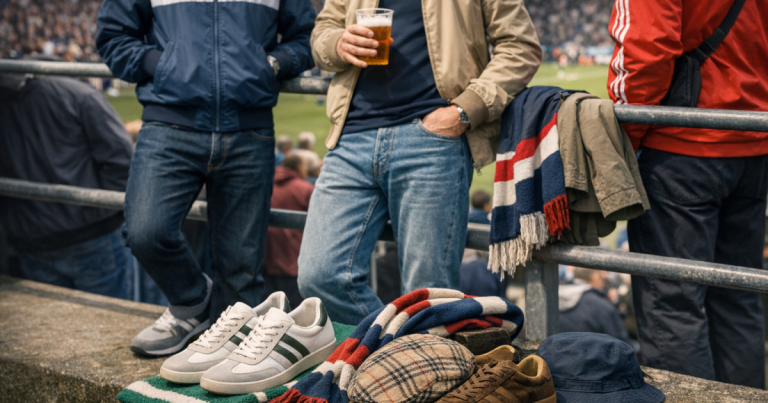
Terrace style grew around clothes that looked deliberate in ordinary British settings: walking to the ground, standing in the pub, catching a late train, cutting through drizzle without looking over-prepared. If you need the cultural backdrop before drilling into fit, start with the wider explanation of terrace tracksuit culture.
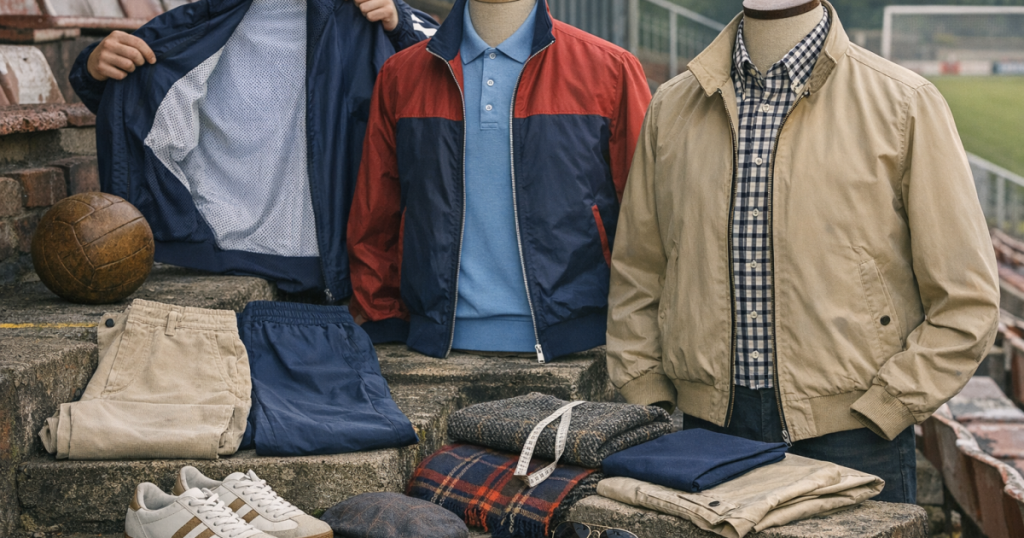
The core silhouette is relaxed but controlled. It is not gym compression, and it is not oversized streetwear for the sake of volume. Track tops usually look strongest when the zip placket lies flat, the shoulder seam or raglan line does not pull, and the hem finishes around the upper hip. Too long and the jacket can swallow the trousers; too short and it can look like a fashion crop rather than casual sportswear.
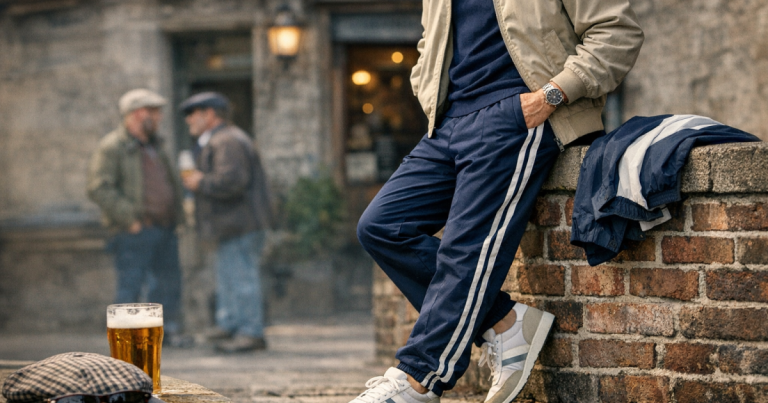
With trousers, think about the full line from waist to trainer. A straight leg gives a more old-school, casuals-era shape, especially with low-profile trainers or chunky runners. A tapered leg feels more modern and easier to wear day to day, but it can lose some retro character if it grips the calf too sharply. The sweet spot is usually a clean fall with a slight break over the shoe, not a tight cuff fighting the trainer.
Track top cuts: boxy, regular and slim
Boxy cuts
A boxier track top gives that archive sportswear feel: broader body, easy sleeve, ribbed hem and a little space through the chest. It suits layered looks and works well with straight-leg trousers. The danger is excess volume around the waist, especially if the hem is loose or the fabric is too light. If the jacket flares out when zipped, try a smaller size or a more structured fabric.
Regular cuts
Regular fit is the most useful starting point for most wardrobes. It lets the garment read as sportswear without looking sloppy. A regular track top should zip comfortably over a T-shirt or polo, sit neatly under a light jacket, and allow movement without pulling across the back. Something like the Sergio Tacchini Orion Track Top is the kind of reference point many readers use when thinking about clean retro proportions, but always check the current garment measurements rather than assuming every release fits the same.
Slim cuts
Slim cuts can work, particularly with a Britpop-leaning outfit: track top, plain tee, darker denim or tapered track trousers. The risk is losing the ease that makes the look convincing. If the sleeves twist, the chest pulls when zipped, or the waistband rides up, it is too tight for the mood. Terrace style should look lived-in, not forced.
Getting track trousers right
Track trousers are where many outfits fall apart. The waist is only one part of the equation. Rise, thigh room, leg opening and length all change the impression. A mid-rise cut tends to be easiest because it sits naturally with zipped track tops and hoodies. A very low rise can feel dated in the wrong way; a very high rise can work with vintage pieces but needs confidence and the right jacket length.
For trainers, match bulk with proportion. Low-profile terrace trainers usually work with a cleaner trouser line. Chunkier running silhouettes can handle more fabric and a wider leg opening. If you wear classic casual footwear such as the Diadora B. Elite, look for trousers that sit neatly on the shoe rather than covering half the upper.
Cuffs change the language. Open hems feel more relaxed and retro, especially with full tracksuits. Elasticated cuffs look sharper with modern trainers and wet pavements, but they can make the outfit look too gym-led if everything else is plain performance wear. Zipped ankles are practical for getting trousers over trainers, but the zip quality and placement matter: cheap, wavy ankle zips can cheapen the whole look.
Fabrics that change the mood
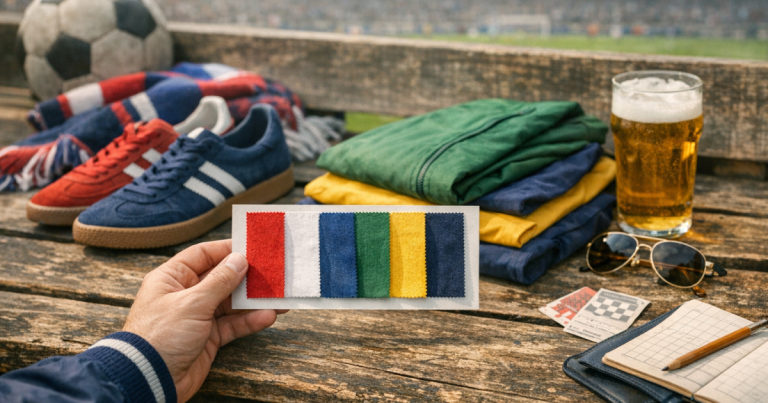
Fabric is not just about comfort. It tells people which version of sportswear you are referencing. Polyester tricot has a smooth, slightly shiny finish associated with classic track suits and archive-style releases. It hangs with more polish than cotton jersey and often works well for full sets. Nylon and shell fabrics lean more towards away-day outerwear and rave-era crossovers, especially when paired with bold colour blocking or contrast piping.
Cotton fleece and loopback jersey soften the look. They are useful for hoodies, sweat tops and off-duty layering, but they can make a tracksuit feel less terrace and more general leisurewear if the cut is bland. A hoodie under a track jacket can work brilliantly, provided the hood, shoulders and sleeves do not create a bulky stack. For that specific problem, the guide on layering a hoodie without bulking out is worth keeping close.
Velour, heavy brushed fabrics and very glossy finishes need more care. They can look strong in the right context, but they quickly become the loudest part of the outfit. If the fabric already has shine, texture or a bold colour, keep the rest quieter: plain trainers, simple tee, low-key cap, no unnecessary extras.
Details that make a piece feel authentic
Small design decisions carry a lot of weight in terrace clothing. A stand collar gives a sharper sportswear profile than a floppy hood. Ribbed cuffs create a more vintage shape. Contrast piping can nod to Italian tennis and football-casual references. Embroidered logos usually feel more substantial than oversized printed branding, though restraint matters either way.
- Collar: A neat stand collar frames the outfit well when zipped halfway. Oversized collars can look theatrical unless the whole outfit supports them.
- Zip: The zip should lie flat and move cleanly. A rippled zip front usually means the fit is too tight or the fabric lacks stability.
- Piping: Thin contrast lines add archive character without needing huge logos.
- Side stripes: Classic, but they dominate quickly. Balance them with simple footwear and a plain top layer.
- Logo scale: Small chest branding tends to age better than massive front prints.
- Pockets: Zipped pockets are useful, but bulky pocket bags can distort slim trousers.
When looking at a full set such as the Adidas Originals Trefoil Tracksuit, check how the details behave together. A strong logo, visible stripes and a shiny fabric can be enough on their own. Add loud trainers and a graphic tee and the balance can tip.
How to test the fit at home
Try the outfit in the conditions you will actually wear it. Stand still, walk, sit down, zip the jacket, unzip it, raise your arms, and check the trouser break with the trainers you plan to use. A fit that only works in a mirror pose is not a good fit.
- Shoulders: Seams should not drag far down the arm unless the cut is deliberately relaxed.
- Chest: The jacket should zip without pulling across the front.
- Hem: It should sit securely without ballooning out.
- Sleeves: Cuffs should reach the wrist without stacking heavily over the hand.
- Thigh: Trousers should allow movement without clinging.
- Length: Check with the exact trainers you will wear, not bare feet.
If the outfit works with one pair of trainers but not another, the issue may be proportion rather than size. Chunky runners, suede terrace trainers and clean leather trainers all change how much trouser volume looks right.
Vintage, reissue or modern retro?
Vintage pieces can have brilliant fabrics, unusual colourways and a sense of history that modern clothing struggles to copy. They can also bring shorter jacket bodies, wider trousers, delicate zips, worn elastic and unpredictable sizing. Always check measurements in centimetres, not just the label size. A vintage large from one brand may fit nothing like a current large from another.
Reissues and modern retro-inspired pieces are often easier to live with. You can usually expect clearer sizing, cleaner returns policies from UK retailers and fabrics designed for regular wear. The trade-off is that some pieces feel slightly polished compared with the originals. That is not automatically bad; for most people, wearable beats museum-accurate.
Care also affects fit over time. Wash synthetic sportswear gently, avoid aggressive heat, and let pieces dry naturally where possible. A handheld steamer such as the Philips 3000 Series Handheld Garment Steamer can help relax creases in many garments, but always follow the care label first, especially with prints, taped details or older fabrics.
Where the fit should take you next
Once you understand cuts and fabrics, building outfits becomes much easier. You can decide whether you want a full set, a track top with denim, a hoodie-and-shell combination, or a cleaner trainer-led outfit. The point is not to own every era at once. It is to know which shapes suit your body, your trainers and your normal week.
If your wardrobe already has a few pieces but still feels inconsistent, use the terrace-style wardrobe building guide as the next step. Fit is the foundation; the wardrobe works when jackets, trousers, layers and footwear all speak the same language.
FAQ
Should a terrace track top be loose or fitted?
It should be relaxed rather than tight. You want room for a tee or light layer, but the hem, sleeves and zip should still sit cleanly.
Are tapered track trousers still terrace-friendly?
Yes, if the taper is subtle. A clean taper can look modern and wearable, but a very tight calf often feels more gym-led than terrace-inspired.
Which fabric is easiest to wear day to day?
Midweight polyester tricot or a structured jersey is usually the easiest. It holds shape better than flimsy fabric and is less dramatic than high-shine nylon.
Can you mix a vintage track top with modern trousers?
Yes, but match the proportions. A short, boxy vintage top usually works better with straighter trousers than with very slim modern joggers.
What is the biggest fit mistake?
Buying for the logo and ignoring length. Jacket hem position and trouser break often decide whether the outfit looks natural or awkward.
Main lessons
Good terrace dressing is built on proportion. The brands, colours and era references matter, but cut decides whether they work on your body. Look for track tops that sit cleanly, trousers that match your trainers, fabrics that hold the intended shape, and details that add character without shouting over the outfit. Get those right and the whole look feels less like fancy dress and more like proper British casual sportswear.