A tracksuit rarely fails because the jacket is wrong; it usually falls apart at the feet. The point of retro trainers by decade is not costume accuracy for its own sake, but proportion: slim nylon sets need different footwear from oversized shell suits, and a modern reissue can look sharper when the trainer belongs to the same visual language. For UK terrace style, the trick is reading the era, then softening it enough for the pub, the train, the ground or a Saturday in town.
Main points
- Match shape before colour. A narrow 1970s track top usually wants a low-profile trainer; a fuller 1990s tracksuit can handle more sole and more volume.
- Use one era as the anchor. If the tracksuit is doing the nostalgia, keep the trainers calmer. If the trainers are loud, choose a plainer track set.
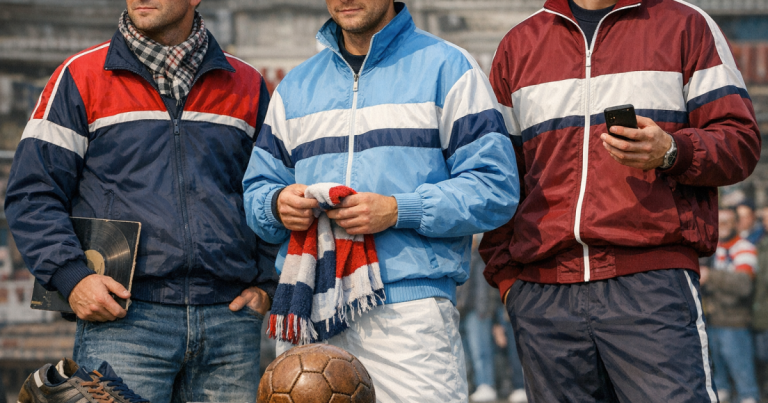
- Terrace style is about codes, not fancy dress. The best outfits nod to football casual history without looking like a film extra.
- Modern comfort is allowed. Reissues, clean leather styles and contemporary retro runners often make more sense than fragile vintage pairs.
Why trainers decide the era
Tracksuits carry obvious decade signals: ribbed collars, chevrons, contrast piping, shiny shell fabric, taped sleeves, baggier cuts. Trainers do quieter work, but they set the balance. A narrow sole makes a track trouser look cleaner. A chunkier runner makes a loose cuff look deliberate. A court shoe can pull a bold jacket back into everyday wear.
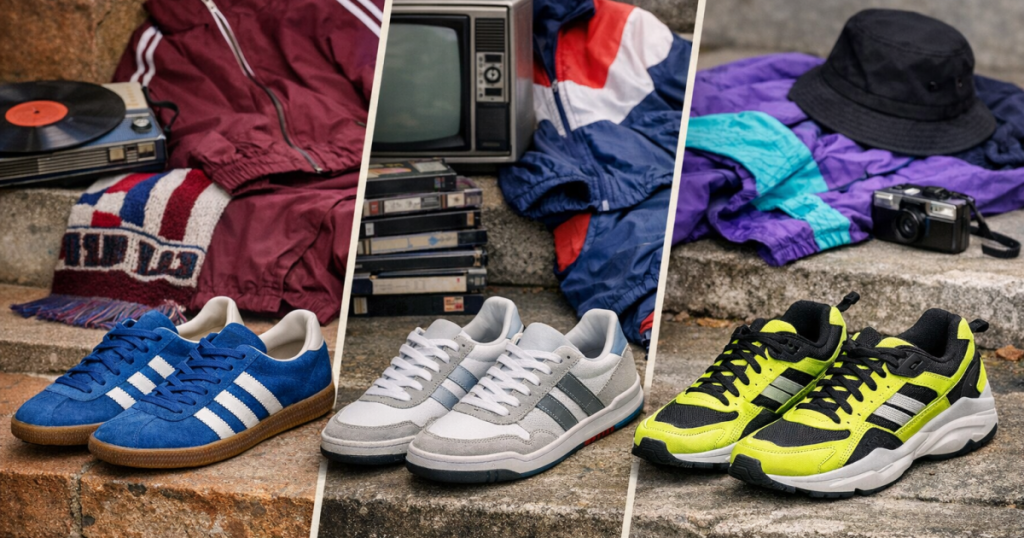
That is why older terrace looks still feel readable. The same navy track top can lean late 1970s with a slim leather trainer, mid-1980s with a handball or indoor court shape, or 1990s with a fuller white runner. For a broader timeline, the site’s guide to terrace style by era is a useful companion piece.
1970s: slim tracksuits, clean courts and early runners
The 1970s tracksuit silhouette was generally sharper than many people imagine: neat track tops, ribbed cuffs, shorter jackets and trousers that did not puddle over the shoe. The trainer pairing should respect that. Think low-profile leather, suede or canvas shapes rather than oversized soles.
A shoe in this mood works well with Fila, Sergio Tacchini, Ellesse and early adidas-inspired styling because it does not fight the line of the trouser. White leather with a coloured side stripe is an easy route, but off-white, navy and burgundy can look more lived-in and less box-fresh.
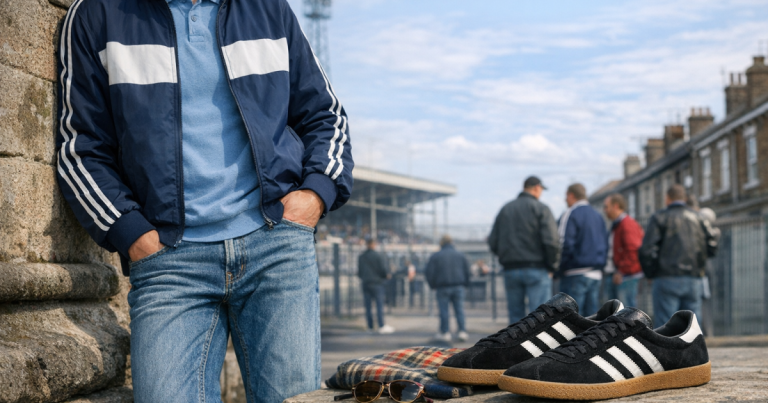
The Nike Cortez is a recognisable reference point for the slim runner side of the decade, while the Adidas Samba OG shows how a low indoor-football profile can still sit naturally with retro track tops. Neither has to be worn as a museum piece. The modern move is to keep the tracksuit top fitted, avoid novelty flares, and let the trainer sit just under the hem.
How to wear the 1970s influence now
- Choose a track jacket with a tidy collar, ribbed cuffs or modest contrast piping.
- Keep trousers slim or straight rather than wide and stacked.
- Use cream socks, white sports socks or dark socks depending on the trouser colour; avoid overly technical running socks.
- Let one vintage element lead. A retro jacket, slim trainer and modern plain T-shirt is usually enough.
1980s: casual culture, indoor courts and bolder sportswear
The 1980s is where UK football casual references become unavoidable. Imported sportswear, European labels, away-day one-upmanship and trainer knowledge all started to matter more. The footwear could still be low, but it often had more colour, more texture and more subcultural meaning than a plain gym shoe.
This is the decade where handball, squash, tennis and indoor football shapes make a lot of sense with tracksuits. Suede panels, gum soles, coloured stripes and compact silhouettes work especially well with track tops that have contrast sleeves, piping or chevron panels. The look is sharper than full rave sportswear and less minimal than 1970s styling.
For context on why these clothes became status markers rather than just sports kit, read how football casuals shaped the retro tracksuit revival. It explains why the right trainer is not just a finishing touch; it is part of the whole language.
Getting the 1980s balance right
- Pair a colour-blocked windbreaker or track jacket with a compact gum-sole trainer.
- Use trainers to pick up one colour from the jacket rather than matching everything exactly.
- Avoid making every item loud. If the jacket has a strong chevron, keep the trouser and trainer calmer.
- For matchday, a clean court trainer often works better than a fragile vintage pair, especially in wet British weather.
The 1980s also rewards layering. A track top under a casual jacket, or a lightweight windrunner over a plain tee, can look more wearable than a full matching set. If that is the direction you prefer, the guide to building a 1980s Nike Windrunner terrace look goes deeper on proportions and colour control.
1990s: bigger tracksuits, white leather and visible cushioning
By the 1990s, sportswear had more volume. Tracksuit trousers became roomier, shell fabrics were louder, and trainers could carry more mass without looking out of place. This is where the clean white leather runner, the chunky casual trainer and the fuller sole unit begin to make stronger sense.
The Reebok Classic Leather is one of the easiest shapes to understand in this context: plain enough to wear with bold nylon, but substantial enough not to disappear under a wider trouser. It suits navy, black, bottle green, grey and brighter shell suits because it gives the outfit a familiar 1990s sportswear base without shouting over the tracksuit.
For a UK wardrobe, the key is restraint. A bright jacket, loose track pants and loud trainers can tip into theme-night territory. If the tracksuit has shine, keep the trainer matte or simple. If the trainer is bulky, avoid trousers that are too short; the hem should meet the shoe cleanly rather than hovering awkwardly above it.
Good 1990s pairings
- Black or navy shell tracksuit with a white leather runner.
- Colour-blocked track top with neutral grey or white trainers.
- Loose track pants with a trainer that has enough sole to balance the hem.
- Logo-heavy jacket with understated footwear, rather than another oversized brand statement.
2000s: streamlined runners and relaxed sportswear
The 2000s moved tracksuit styling into a looser, more everyday sportswear space. Full sets became casual uniform for some, music videos amplified matching looks, and trainers often leaned more technical or streamlined. You do not need to copy the era literally; the useful lesson is comfort, ease and a slightly less precious attitude.
Retro runners with suede, mesh and simple colour blocking can work well here. The New Balance 574 is a good reference for the sort of rounded, casual runner that can soften a tracksuit without feeling too archival. It works particularly well when the tracksuit is plain, brushed-back or jersey rather than shiny shell.
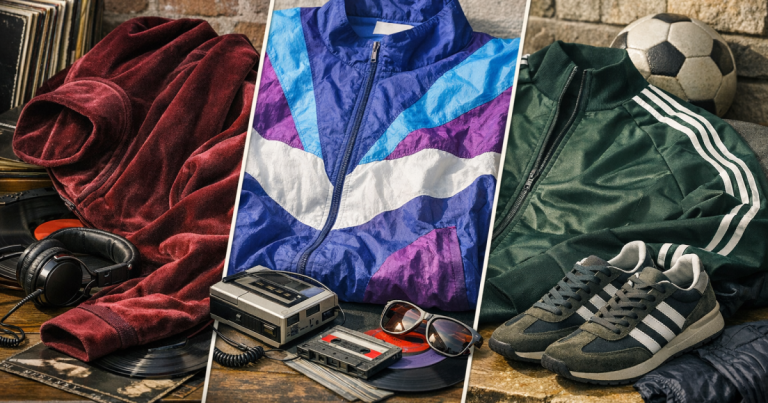
For modern terrace wear, this decade is best used sparingly. A relaxed tracksuit bottom, a clean hoodie, a retro runner and a cap can look natural. A head-to-toe oversized velour or heavily branded set is harder to land unless that is very much your personal style.
Modern revival: mixing decades without muddling the outfit
Today, the best retro tracksuit outfits rarely stick to one decade with complete accuracy. A 1970s-style track top might be worn with 1980s indoor trainers. A 1990s shell jacket might be calmed down with a simple leather court shoe. A modern hoodie can sit under an archive-inspired track jacket without breaking the mood.
The safe rule is to keep the shapes compatible. Slim jacket, slim shoe. Wide trouser, stronger sole. Shiny tracksuit, calmer trainer. Minimal tracksuit, more room for colour at the feet. This matters more than trying to prove the trainer existed in the same exact year as the jacket.
Colour is the second rule. Terrace style often works because it avoids over-matching. Navy tracksuit with white and gum trainers. Green track top with cream or black footwear. Red jacket with a trainer that uses just a small red accent. If the whole outfit looks too coordinated, swap one item for a plain basic.
Vintage, reissue or modern retro?
Vintage trainers have romance, but they are not always the smartest choice. Old soles can harden, glue can fail, midsoles can crack and sizing can be inconsistent. For display, collecting or occasional careful wear, vintage can be brilliant. For regular matchday use, commuting or wet pavements, a reissue or modern retro-inspired pair is usually more practical.
When browsing in the UK, check return policies, condition descriptions and sizing notes carefully. If buying used, look at heel drag, inner lining wear, sole flexibility and whether the seller has shown both shoes clearly. For tracksuits, check cuff stretch, zip function, lining condition and whether the fabric has pulls or shine from heavy wear. The trainer and tracksuit should both feel wearable, not just photograph well.
Simple outfit formulas by decade
1970s-inspired
- Slim track jacket in navy, red, cream or bottle green.
- Straight track trousers with minimal stacking.
- Low-profile leather or suede trainers.
- Plain white T-shirt or fine-gauge knit underneath.
1980s-inspired
- Colour-blocked windbreaker or track top.
- Indoor court or gum-sole trainers.
- Dark denim or matching track pants, depending on how full-on you want the reference.
- Minimal accessories: perhaps a cap, but not a full costume of badges and scarves.
1990s-inspired
- Roomier shell jacket or full tracksuit.
- White leather runner or fuller retro trainer.
- Plain sweatshirt or T-shirt to calm the shine.
- Neutral socks if the tracksuit is already bright.
2000s-inspired
- Relaxed track pants or a softer jersey tracksuit.
- Retro runner with suede or mesh texture.
- Hoodie or plain tee layered under the jacket.
- Cap or cross-body bag if it fits your usual wardrobe, not just the reference photo.
Helpful questions
Can you wear modern trainers with a retro tracksuit?
Yes, if the shape works. A modern trainer with a retro running profile can look natural, while very futuristic soles can clash with a 1970s or 1980s track top.
Should trainers match the tracksuit colour?
Not exactly. It usually looks better when the trainer picks up one accent colour or stays neutral. Exact matching can feel too staged.
Are white trainers the safest choice?
White trainers are versatile, especially with navy, black and green tracksuits. Cream, grey, gum and off-white can look softer and less box-fresh.
Do full tracksuits need chunkier trainers?
Not always. Slim full sets suit lower trainers; baggier shell suits often need a more substantial sole so the trouser hem sits properly.
Are vintage trainers worth wearing regularly?
Only if the condition is genuinely sound. For frequent wear, reissues or modern retro styles are usually more reliable on UK pavements and wet matchdays.
What to remember
The best trainer choice starts with the tracksuit’s decade, but it ends with proportion. A narrow 1970s-style set wants a low, clean shoe. An 1980s terrace look can take colour, suede and gum soles. A 1990s shell suit can handle more trainer volume. A 2000s influence works best when it feels relaxed rather than over-recreated.
Get the footwear right and the tracksuit stops looking like nostalgia for nostalgia’s sake. It becomes wearable: rooted in football casual history, aware of the era, but still fit for a normal British weekend.