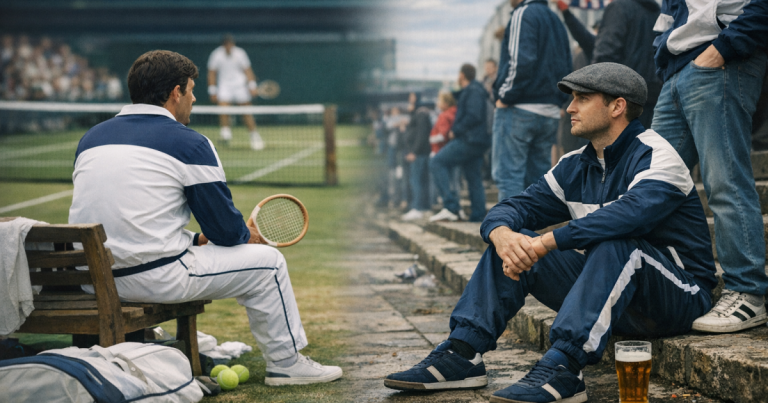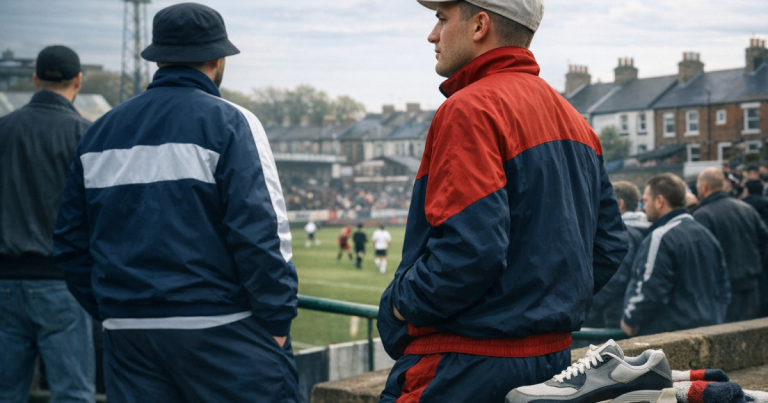
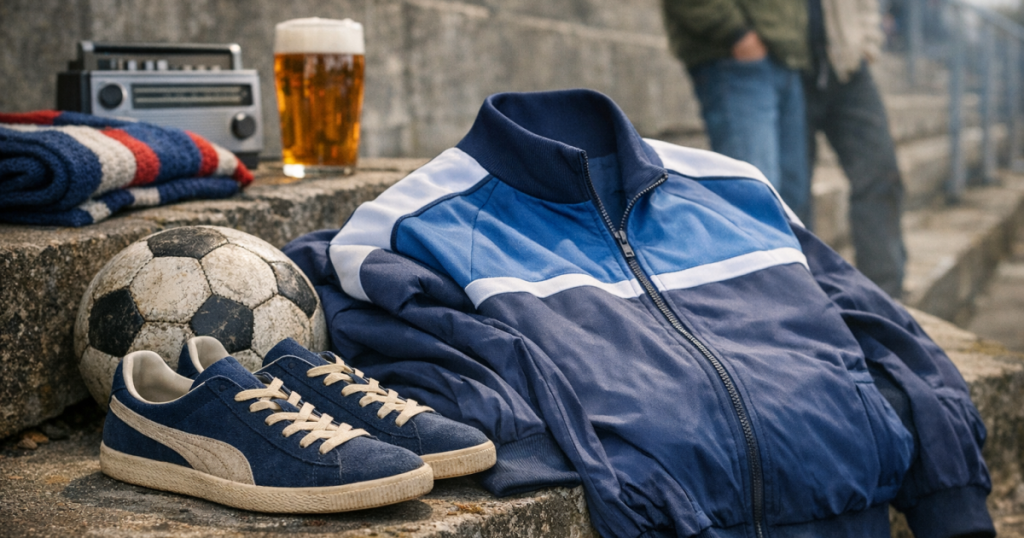
Puma has never needed the loudest branding on the terrace. Its appeal comes from football credibility, sharp European sportswear lines and trainers that could sit under a track pant without shouting. Puma tracksuit history makes most sense when you read it through that mix: kit heritage, casual adoption, trainer culture and the modern revival of archive-looking sportswear.
The short version
Puma’s place in retro tracksuit culture is built less on one defining tracksuit and more on a connected wardrobe: track tops, warm-up gear, football-rooted branding and the enduring pull of the Suede. For UK casuals, Puma has often been the understated option next to adidas, Fila, Sergio Tacchini or Kappa, but that has also helped it age well. It works when the fit is clean, the colours are restrained and the trainers do as much cultural work as the jacket.
-
Best-known anchor: the Puma Suede, a late-1960s trainer that became part of wider street, music and casual style.
-
Terrace strength: football credibility without needing a full replica-kit feel.
-
Modern approach: pair a Puma track top or shell with straight-leg track pants, denim or cords, and avoid overloading the outfit with logos.
Where Puma’s sportswear story starts
Puma was founded in 1948 by Rudolf Dassler in Herzogenaurach, Germany, after the split from his brother Adolf Dassler, who founded adidas. That family rivalry sits behind much of modern sportswear culture, but Puma’s identity was not simply “the other Dassler brand”. It built its own reputation through football boots, athletics, motorsport, tennis and lifestyle footwear.
For terrace readers, the key point is that Puma entered casual culture with a genuine sporting backstory. It was not a fashion label pretending to have training-ground roots. The cat logo, formstrip and football associations gave the clothes a credibility that UK lads recognised, even if Puma tracksuits were not always the most mythologised pieces in casual folklore.
That distinction matters. Some brands became status symbols because of rarity, Italian glamour or visible association with travelling fans. Puma’s value was often quieter: you could wear it with a proper trainer, keep the silhouette athletic, and still look connected to football rather than fancy dress. For the broader sequence of labels, fits and terrace codes, the football casuals style timeline is a useful companion.
Why the Suede matters to the tracksuit story
No discussion of Puma and terrace style works without the Suede. The Puma Suede Classic is not a tracksuit, but it helps explain why Puma sportswear crossed so easily from sport into streetwear. Its low profile, soft upper and simple formstrip gave it the kind of shape that worked with track pants, jeans and cords rather than looking locked to a gym bag.
The trainer’s significance also stretches beyond football. It has long associations with hip-hop, breakdance, skate-adjacent style and general streetwear, which gives it a different flavour from more overtly terrace-coded adidas silhouettes. On a UK matchday outfit, that can be useful. A Puma track top with Suedes feels relaxed and less predictable than the standard three-stripe route, while still staying within the retro sportswear language.
There is a practical styling point here too: Puma’s classic trainers often suit neater trouser breaks. A heavy, puddled track pant can swallow the shoe; a cleaner hem, slight taper or straight leg tends to work better. If you are buying reissue trousers, check the leg opening and inseam rather than assuming every “retro” pant will sit like an archive pair.
Football casuals and Puma’s quieter status
British football casual culture did not adopt every sportswear brand in the same way. Adidas had deep terrace recognition, Sergio Tacchini and Fila carried tennis-club glamour, Kappa developed its own bold taped identity, and Lacoste sat in a different polo-and-knitwear lane. Puma sat between those worlds: sportier than some, less showy than others, but still credible.
That partly explains why Puma tracksuits can look especially strong today. They are not overloaded with the clichés that can make a retro outfit feel too studied. A navy, green, burgundy or black Puma track top can read as period-aware without turning into costume. The brand’s best terrace use is usually controlled: one Puma hero piece, simple layers, and trainers that feel considered rather than randomly sporty.
For a useful way to judge that kind of credibility, the same questions apply across brands: was the label visible in sport or street culture, does the cut reflect an actual era, and is the design more than a modern logo exercise? Those checks are explored in more depth in what makes a retro tracksuit brand historically credible.
What Puma tracksuit history tells us about the garments
Puma’s tracksuit relevance is not just about nostalgia; it is about how sportswear construction changed the way men dressed casually. Track tops brought zip fronts, ribbed cuffs, synthetic fabrics, contrast panels and club-training energy into everyday outfits. That made them easier to wear than formal jackets and sharper than basic sweatshirts.
When looking at vintage Puma or modern reissues, the details tell you a lot. Archive-leaning pieces often rely on neat collars, modest logos, contrast piping, retro colour blocking and a slightly shorter jacket shape. Modern fashion-led versions may use looser cuts, heavier fabrics or oversized branding. Neither is automatically better, but they give a different effect.
-
For a 1970s feel: look for slimmer track tops, rich colour combinations and trainers with a low, simple profile.
-
For an 1980s casual feel: pair a Puma jacket with straight denim, cords or clean track pants, and keep outerwear understated.
-
For a modern terrace look: use one archive-style piece with a plain tee, neutral trousers and a cap or lightweight jacket.
The mistake is thinking a tracksuit has to be worn as a full set. Full sets can work, but they are harder to get right because the outfit becomes instantly more deliberate. Separates usually feel more wearable in a pub, on the train or around a ground.
Suede, Palermo and the trainer-to-tracksuit balance
Puma’s trainer catalogue gives its tracksuit story extra depth. The Suede is the obvious anchor, but terrace-minded dressers have also looked at gum-sole football-inspired shapes and low-profile lifestyle models. The Puma Palermo, for example, gives a different angle: still retro, still casual, but with a football-terrace flavour that can sit naturally with a track jacket.
The balance is important. If the jacket is bright, keep the trainer calmer. If the trainer is the statement, make the top simpler. Puma works best when the outfit feels assembled from real sportswear habits rather than bought as a themed look. That is why a plain white tee, knitted polo, dark denim or navy track pant can do more for the outfit than another loud branded layer.
Care is part of the equation as well. Many track tops and pants use synthetic fibres, so always check the garment label, wash cool where appropriate and avoid aggressive heat that can damage shape, prints or trims. Vintage pieces deserve extra caution: old zips, ribbing and flocked logos may not tolerate modern washing habits.
How Puma compares with the bigger terrace names
Puma’s advantage is subtlety. Adidas often gives instant recognition; Kappa brings bold tape; Fila and Sergio Tacchini carry a more glamorous European sports-club mood. Puma can sit slightly lower in the mix, which makes it a strong choice for readers who want terrace influence without looking like they are copying a single reference photo.
That does not mean every Puma piece is automatically terrace-ready. Oversized logos, overly technical modern training gear and very loud colour clashes can pull the outfit away from retro casual style. The strongest pieces tend to have three qualities: a clean athletic shape, recognisable but restrained branding, and colours that work with trainers you already own.
If you are comparing eras, it helps to think in moods rather than strict rules. Seventies sportswear is neater and more athletic; eighties casual style is richer in European brand signals; nineties looks allow more room in the fit and more crossover with music culture. The wider terrace style by era breakdown is useful if you want to place Puma alongside other labels without muddling the references.
What to look for in a Puma piece now
For modern wear, start with fit and fabric before logo nostalgia. A track top should sit cleanly on the shoulder, zip smoothly and have enough structure to hold its shape over a tee or polo. Track pants should not balloon unless you are deliberately going for a later-era look. With older garments, inspect cuffs, waistband elastic, zip teeth, lining and any printed branding before buying.
Colour is the next filter. Navy, forest green, burgundy, cream, black and off-white usually make Puma easier to integrate into a UK wardrobe than high-contrast training colours. That matters because good terrace style is rarely just about the garment itself; it is about whether you can wear it on a wet Saturday, under a coat, with trainers that make sense, and without feeling overdone.
If you want a simple route, build around one Puma track top, a plain tee, dark straight-leg trousers and Suedes or another low-profile Puma trainer. Add a casual jacket only if it improves the silhouette. The aim is not to recreate a museum outfit; it is to carry the brand’s history into something that still works now.
Common questions
Were Puma tracksuits a major football casual brand?
Puma had genuine credibility, but it was not always as dominant in UK casual mythology as adidas, Fila, Sergio Tacchini or Kappa. Its strength was quieter football and trainer heritage.
Are Puma Suedes terrace trainers?
They can be. The Suede is broader than terrace culture, with strong streetwear and music links, but it pairs naturally with track tops and casual football-influenced outfits.
Is vintage Puma better than a reissue?
Vintage can have more character, but condition matters. Reissues are often easier to wear and maintain. Check fit, fabric, logo treatment and whether the cut suits your wardrobe.
Can you wear a full Puma tracksuit without looking costume-like?
Yes, but keep colours restrained and trainers simple. Full sets are more deliberate than separates, so avoid adding too many extra branded pieces.
Main lessons
Puma’s tracksuit legacy is not about one single terrace uniform. It is about a sportswear ecosystem: football roots, clean track tops, adaptable colours and trainers that carry cultural weight. That is why Puma still works for retro casual dressers in 2026. It gives you history without forcing you into the most obvious lane, and that understated credibility is exactly what keeps it wearable.