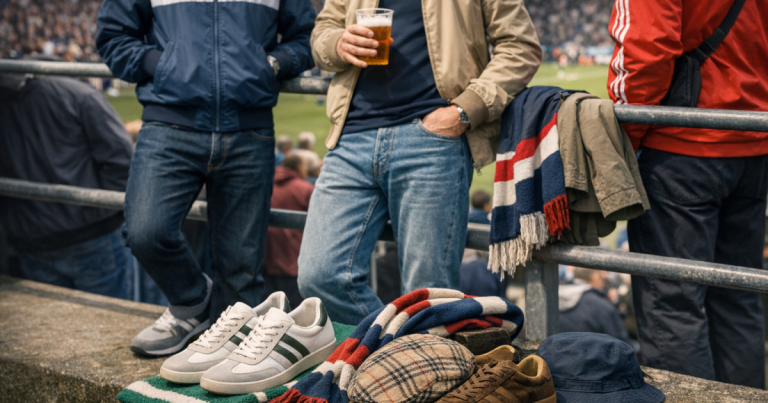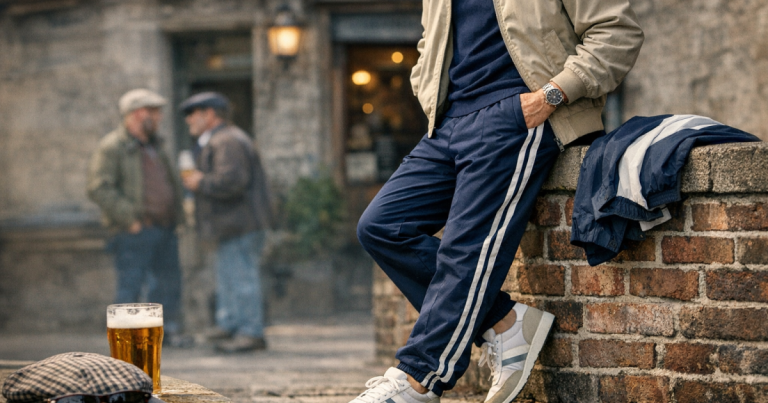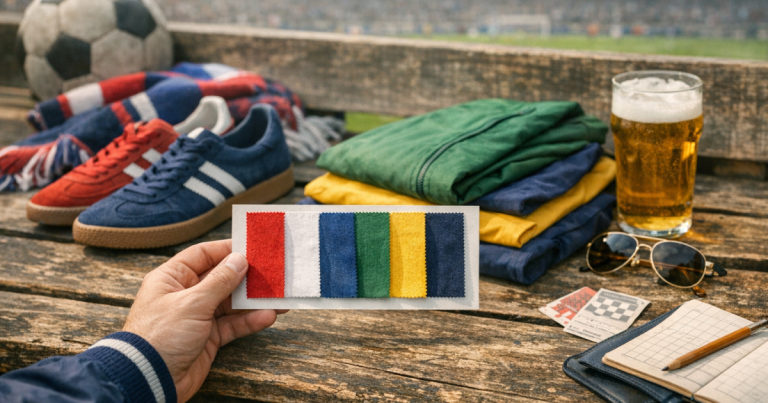
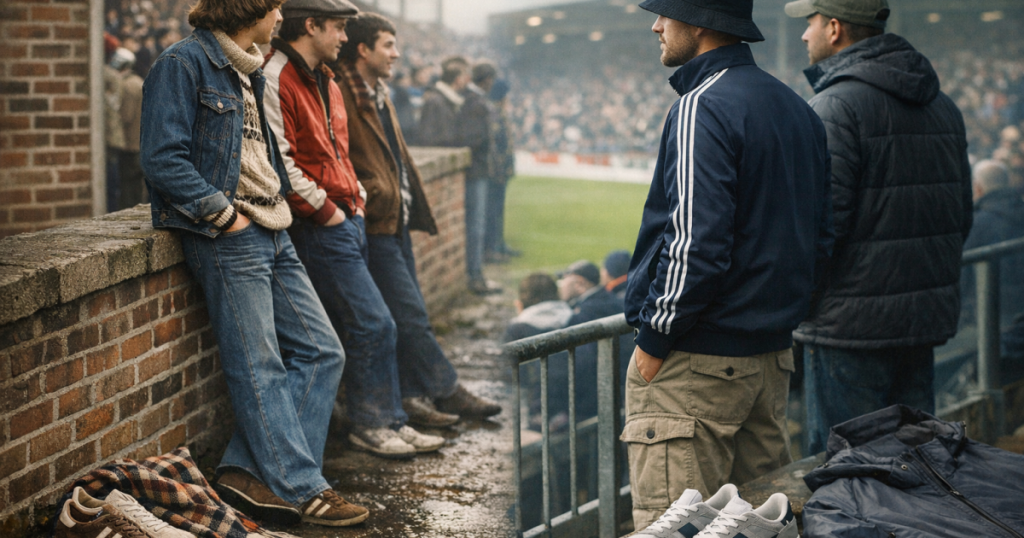
Football fashion rarely moves in a straight line. The same stand can hold a lad in a vintage track top, someone in sober designer outerwear, and a teenager wearing a reissue shirt with modern trainers. Understanding terrace style by era helps separate heritage from fancy dress, and shows why certain clothes still carry weight on British matchdays.
The point is not to copy an old photo head to toe. It is to read the codes: fit, fabric, colour, brand context, weather, music, travel, regional taste and the quiet desire not to look like everyone else. For the wider foundations, it is worth revisiting what terrace style means in clothes, culture and matchday codes before narrowing it down by decade.
The big picture
Terrace style started as a living culture, not a mood board. It grew through football travel, youth scenes, imported sportswear, music movements and the social pressure of being seen. A jacket was rarely just a jacket; it might signal where you had been, what you listened to, which shop you knew, or whether you understood the unwritten rules of the end you stood in.
That is why era matters. A seventies look built around denim and knitwear tells a different story from an eighties tracksuit top, a nineties Britpop jacket or a modern pared-back matchday outfit. The strongest contemporary looks borrow from these periods without flattening them into costume.
Seventies: pre-casual roots and continental aspiration
The seventies terrace look was not yet the fully formed casual uniform people now recognise. Earlier in the decade, many British football crowds still carried over skinhead, suedehead, glam and working-class youth style influences: boots, denim, Harringtons, polos, knitwear and longer-collared shirts. As the decade moved on, away travel and European competition helped shift attention towards imported labels and clothes that felt sharper than ordinary high-street sportswear.
Silhouettes could be lean or slightly flared depending on the scene: straight jeans, cords, fitted knitwear, leather jackets and weatherproof coats all appear in period photography. The important point is attitude rather than one fixed garment. The terrace was starting to reward those who found something different, especially if it looked continental, difficult to obtain, or just that bit more considered than standard Saturday clothing.
For a wearable seventies reference now, avoid overdoing collars, flares and retro props all at once. A knitted polo, straight denim, a simple jacket and low-profile trainers can nod to the period without turning into a television costume department.
Early eighties: the casual explosion
By the early eighties, the casual look had gained much sharper definition. Sportswear became status clothing. Italian tenniswear, French sports labels, German trainers and American-influenced outerwear all entered the terrace vocabulary. The shift was partly about travel and rarity, partly about one-upmanship, and partly about rejecting the obvious club-colour uniform.
Tracksuit tops, velour, rain jackets, ski-inspired knitwear and clean trainers became part of the visual language. Sergio Tacchini, Fila, Ellesse, adidas, Diadora and Lacoste all mattered in different ways, but credibility depended on timing and context. A brand could be right in one town, too obvious in another, or already moving out of fashion by the time it reached a wider audience.
When people picture the golden age of football casuals, they often imagine this period: neat hair, sharp trainers, tucked-away colours, and clothes that looked sporty but were worn socially. The full football casuals style timeline is useful if you want to place specific brands and fits more accurately within the wider scene.
Mid to late eighties: colour, shell suits and sharper codes
The mid and late eighties pushed sportswear louder. Track jackets became bolder, synthetic fabrics were everywhere, and colour blocking helped create instantly recognisable silhouettes. This is the period where retro tracksuit culture often finds its most obvious comparison points: shiny fabric, contrast panels, zip necks, elastic cuffs and a strong sense of movement.
Yet the most convincing eighties-inspired looks today are usually restrained. A single archive-style track top with plain jeans or understated track pants works better than a full comedy shell suit. If you wear something bright, give the rest of the outfit space to breathe. Trainers should feel era-compatible rather than randomly modern; a court trainer or terrace-friendly suede shape usually makes more sense than a bulky performance silhouette.
Photography is especially important for this decade. Books such as Gavin Watson’s A Casual Look show how clothes sat on real people, not mannequins. The lesson is fit and confidence: track tops were often worn casually, not precious, and the look was never as polished as modern reissue styling can make it seem.
Nineties: Britpop, designer labels and matchday understatement
The nineties brought a different rhythm. Football culture moved through the Premier League era, all-seater stadiums, Britpop, magazine culture and a wider mainstream fascination with working-class style. The terrace look did not disappear, but it became more mixed. Sportswear sat alongside desert boots, parkas, polos, knitwear, denim jackets, Harringtons and branded outerwear.
Britpop helped turn certain looks into a national shorthand: zipped track tops, cagoules, bucket hats, striped polos and trainers were suddenly part of the broader youth uniform. That mainstreaming matters. Once a style becomes widely recognised, subtlety becomes more important if you want it to feel credible rather than cartoonish.
A modern nineties-inspired matchday outfit might use a clean track jacket over a plain tee, relaxed denim and suede trainers. Alternatively, a polo under a lightweight jacket can carry the same energy without relying on obvious retro sportswear. A Fred Perry Twin Tipped Polo Shirt is a recognisable example of the kind of garment that crosses football, music and British subcultural style, though the exact fit and colour choice matter more than the label alone.
Two-thousands: labels, denim and the quieter casual
By the two-thousands, terrace style had moved into a more label-conscious and often less colourful phase. Technical jackets, premium denim, trainers, knitwear and understated designer pieces became common reference points. The look was still about knowledge, but less about bright archive sportswear and more about controlled choices.
Stone Island, CP Company and similar labels became prominent in many conversations around football casual clothing, though they also became heavily stereotyped. The lesson for modern dressing is to avoid thinking one badge automatically creates authenticity. A strong outfit can be built from a good jacket, plain knitwear, dark denim and clean trainers without shouting for attention.
This period also matters because it shaped the modern matchday balance: practical outerwear for British weather, more neutral palettes, less overt club branding and a greater focus on fit. It is the bridge between old casual codes and how many supporters dress now.
Modern matchday: heritage without costume
Today’s terrace-influenced dressing is more open than ever. Vintage, reissue, designer, high-street and football shirts can all work, but the strongest outfits know when to stop. Modern stadiums, transport, pubs, family sections and televised football have changed the setting. Looking good now often means understanding the reference without wearing every reference.
This is where terrace style by era becomes practical rather than nostalgic. Pick one period as the anchor, then build around it with contemporary restraint. If the anchor is eighties sportswear, keep the trousers and trainers clean. If it is nineties Britpop, avoid piling on bucket hat, parka, track top and retro shirt in one go. If it is two-thousands casual, let the outerwear and footwear do most of the talking.
For trainers, classic terrace shapes still make sense: low-profile suede, court trainers and leather styles with a clean line. The Diadora B. Elite is one recognisable example from the tennis-inspired side of the casual story, while adidas and PUMA terrace silhouettes can suit different regional and era references. The key is proportion: wide modern trousers need a different shoe shape from slim denim or track pants.
How to read an era without copying it
- Start with the silhouette. Seventies looks often lean on denim and knitwear; eighties styles use track tops and sharper sportswear shapes; nineties outfits feel more relaxed; modern matchday looks are usually cleaner and more layered.
- Use colour carefully. Archive sportswear can be bold, but one loud piece is usually enough. Navy, bottle green, burgundy, off-white, red and royal blue all have terrace history without needing to dominate.
- Mind the fit. Too tight can look like a costume; too oversized can lose the casual sharpness. Aim for natural movement rather than a fashion-week exaggeration.
- Keep club colours intentional. A football shirt can work brilliantly, but it needs balance. If the shirt is loud, simplify the jacket, trousers and trainers.
- Check the weather. British matchdays reward layers. A wax jacket, cagoule, overshirt or track top is not just styling; it is practical.
If you are trying to wear the influence without looking dressed up for a theme night, the most useful next step is the guide to dressing terrace without looking like fancy dress. It is the difference between reference and replica.
Where to find credible modern pieces
Credible terrace-inspired dressing does not mean hunting only for fragile vintage. Original pieces can be brilliant, but they bring trade-offs: condition, sizing, fading, damaged zips, fabric wear and the risk of paying more for nostalgia than quality. Reissues and archive-inspired pieces are often easier to wear, especially if you want reliable sizing and less worry in the rain or at the pub.
For seventies and early eighties influence, look at knitted polos, simple track tops, straight-leg denim and low-profile trainers. For mid-eighties energy, consider a colour-block track jacket but keep everything else quieter. For nineties references, lightweight jackets, polos, relaxed denim and suede trainers work well. For a modern matchday version, a sober outer layer such as a Barbour Bedale Wax Jacket can sit naturally over sportswear without feeling forced.
When shopping, verify fabric, fit, return terms, condition and care instructions rather than trusting a label alone. Vintage synthetic sportswear can be delicate, and modern reissues vary widely in cut. If a listing uses vague words like “casuals style” or “terrace inspired”, check whether the garment actually suits the era you are trying to reference.
Things readers ask
Which era is easiest to wear now?
Nineties and modern casual references are usually the easiest. A track top, plain tee, relaxed denim and suede trainers look natural on a UK matchday without needing specialist vintage pieces.
Can you mix eras in one outfit?
Yes, but keep one era dominant. An eighties-style track jacket can work with modern trousers, or a nineties polo can sit under a contemporary jacket. Problems start when every item shouts a different decade.
Are football shirts part of terrace style?
They can be, but traditional casual style often avoided obvious club colours. A shirt works best when the rest of the outfit is restrained and the fit feels current rather than fancy dress.
Is vintage always more credible than reissue?
No. Vintage has history, but reissues are often easier to size, clean and wear regularly. Credibility comes from proportion, context and restraint, not just age.
What should I avoid on a modern matchday?
Avoid wearing too many stereotypes at once: loud track suit, bucket hat, retro shirt, scarf and statement trainers can feel staged. Choose one strong reference and let it breathe.
What to remember
Terrace style is strongest when it feels lived-in, not assembled from a checklist. The seventies gave it roots, the eighties gave it a recognisable casual language, the nineties pushed it into football-and-music culture, and the modern matchday has made it more flexible. The aim is not to dress like a museum photograph. It is to understand why the clothes mattered, then wear the influence with enough confidence and restraint to make it work now.