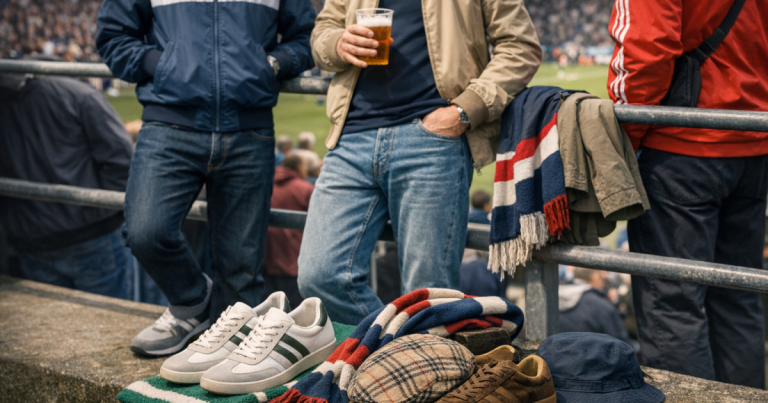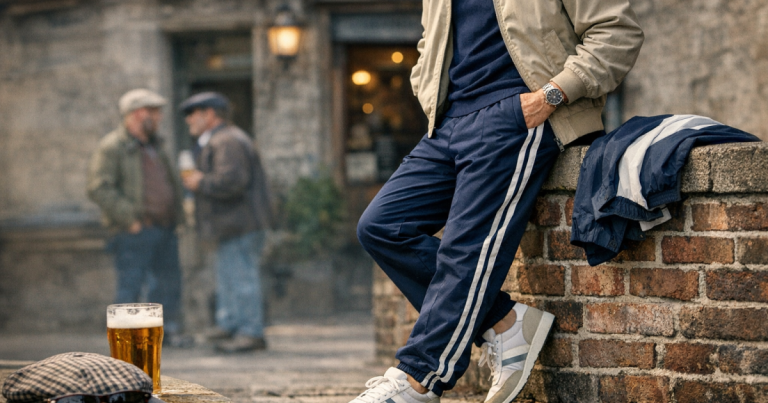
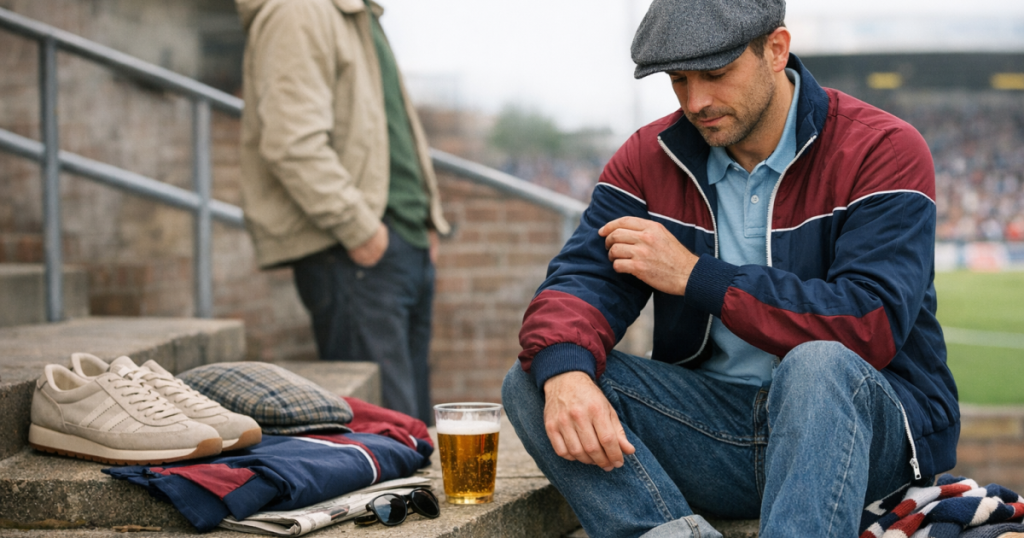
The danger with terrace-inspired clothing is not that it looks retro; it is that every reference arrives at once. To dress terrace style without looking like you are off to a themed night, build the outfit around one recognisable cue, then let the rest of it feel like normal clothes you would actually wear in Britain now.
That means fewer costume signals, better proportions, calmer colours and a bit of restraint with badges, stripes and labels. The best outfits nod to football casual culture without pretending the wearer has stepped out of an archive photo.
The short version
- Start with one anchor piece: a track top, knit, polo, cagoule, trainer or jacket.
- Keep the fit current rather than copying an old silhouette exactly.
- Use two or three colours, not a full scoreboard of period references.
- Avoid stacking famous logos unless the rest of the outfit is very quiet.
- Mix one heritage item with modern basics so the look feels lived-in.
- Let condition matter: clean, steamed and cared-for beats deliberately scruffy.
Begin with a reference, not a costume
Terrace clothing works best when it feels assembled from real life: match days, music, pubs, train stations, record shops, parks and everyday British weather. Fancy dress happens when every piece points to the same exaggerated idea: full tracksuit, period trainers, bucket hat, loud scarf, replica mannerisms and a haircut that looks borrowed from a film still.
Pick one route. A late 1970s feel might mean a slimmer track top and clean trainers. A mid-1990s angle might be a bolder colour block, a polo under a zipped jacket or a more relaxed leg shape. A Britpop-leaning outfit might use a track jacket with denim or a plain tee rather than a matching full set. For a broader cultural grounding, the history of tracksuit culture in Britain helps explain why these pieces carry different meanings depending on football, music and street context.
Use one strong piece and let the rest breathe
The easiest way to avoid looking dressed up is to make one item do the talking. If the track top has contrast panels, sleeve stripes or a large chest logo, keep the trousers and outerwear plain. If the trainers are the obvious vintage reference, make the top half quieter. If the jacket is a heritage waxed or technical shell, a simple crew neck or polo is usually enough underneath.
A Fred Perry Twin Tipped Polo Shirt can read sharp and casual without turning the outfit into theatre, provided it is not surrounded by too many other subcultural signifiers. A Barbour Bedale Wax Jacket can soften a sportswear-heavy outfit and make it feel more like modern British casualwear than a head-to-toe football-casual reconstruction.
Think in ratios. One obvious terrace reference is easy to wear. Two can work if they are from neighbouring worlds. Three or more start to look staged unless you have a very good eye.
Get the fit modern enough to feel natural
A lot of archive sportswear was cut differently from what most people wear day to day now. Some old track tops sit short and boxy. Some 1990s pieces are wide through the body. Some 2000s styles run long or shiny in a way that can dominate the outfit. None of that is wrong, but copying it too literally can create the fancy-dress effect.
Keep the line clean. A track jacket should sit comfortably over a tee, polo or thin knit without ballooning. Trousers should not pool heavily over trainers unless the whole outfit is intentionally relaxed. Jeans or cords can work well when they break up the sportswear and make the outfit feel less like a matching set.
If you wear a full tracksuit, make sure the context supports it. A complete set can look strong on a casual day, at a gig, or as part of a confident streetwear outfit, but it has to be worn with understatement. Avoid adding every other terrace code on top of it.
Keep colours disciplined
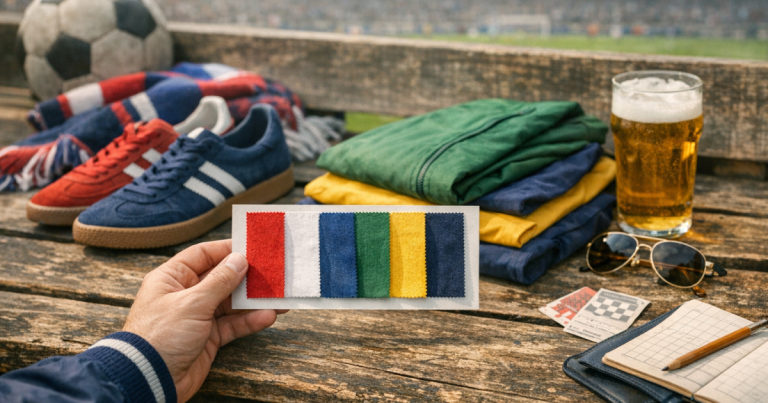
Colour is where many outfits slip from reference into parody. Terrace clothing has always had room for boldness, but the strongest looks usually have a base colour and one accent rather than five competing statements.
- Navy: reliable, understated and easy with white, grey, burgundy or forest green.
- Stone: good for jackets and trousers, but better with darker layers so it does not look washed out.
- Burgundy: strong as an accent on polos, knits or trainers, especially with navy or off-white.
- Green: works well in outerwear, track panels and knitwear when balanced with neutral basics.
- White: sharp in small doses, risky when every item is box-fresh and bright.
If colour is the part you tend to overdo, the terrace style colour guide is a useful next step because it focuses on wearable combinations rather than loud nostalgia.
Respect logos without building a billboard
Branding is central to the look, but it needs editing. Old terrace culture was partly about recognising labels, cuts and foreign sportswear, yet modern outfits can quickly look like a costume rail if every visible piece is shouting for attention.
A good rule is to keep one dominant logo zone. Chest badge? Keep the cap plain. Big sleeve branding? Choose low-key trainers. Branded track pants? Avoid another oversized mark on the top half. If you want a deeper approach to this, the guide to balancing logos in a terrace outfit covers the difference between a considered nod and a label pile-up.
Also watch for brand clashes that feel too deliberate. Mixing Italian sportswear, British casual outerwear and a classic trainer can look natural. Wearing every famous terrace name at once can look like you are trying to prove you know the references.
Use footwear to ground the outfit
Trainers can either make the look feel authentic or tip it into imitation. The safest move is a clean, low-profile pair that suits the era you are hinting at without overpowering everything else. Gum soles, suede uppers, white leather, navy panels and retro running shapes all have a place, but the trainer should support the outfit rather than announce the whole concept.
A pair like the Diadora B. Elite can bring an Italian sportswear note without needing a full Serie A costume around it. Equally, a plain white trainer or dark suede pair can work if the track top or jacket is already doing the cultural heavy lifting.
Avoid the trap of brand-new-from-head-to-toe shine. Terrace style has always had pride in appearance, but a slightly worn-in outfit often looks more convincing than one that appears assembled in a single afternoon.
Dress for where you are actually going
The outfit should make sense in its setting. A loud track top that works at a gig might feel too performative for a quiet Sunday pub. A full tracksuit may be fine for a casual day out, but less convincing if everything else about the plan calls for a jacket, denim and normal layers. Dressing well here is not about watering the look down; it is about reading the room.
British weather helps, oddly enough. A practical outer layer, decent knit, waterproof shell or overshirt can make retro sportswear feel part of a real wardrobe. Layers also stop the outfit looking like a single flat costume. A track top under a neutral jacket is often easier to wear than the same track top presented as the entire statement.
Make condition part of the look
Creased polyester, tired ribbing and dirty collars make retro pieces look neglected rather than authentic. You do not need everything pristine, but you do need it looked after. Steam synthetic track tops carefully, follow the care label, air garments properly and store knits and jackets so they keep their shape.
Vintage pieces deserve extra caution. Old zips, printed logos and delicate panels may not respond well to aggressive washing or heat. When in doubt, take the gentler route. Looking after the clothes is part of respecting the culture rather than treating it as a costume.
Main lessons
- Do not copy a whole archive photo; take one useful idea from it.
- Balance sportswear with ordinary modern clothing: denim, plain tees, knitwear, simple jackets.
- Keep the colour story tight and avoid too many accents.
- Let one logo or one brand reference lead, then reduce the rest.
- Choose trainers that suit the outfit, not trainers that fight to be the headline.
- Wear the clothes in a way that fits your day, your city and your actual social setting.
FAQ
Can a full tracksuit ever avoid looking like fancy dress?
Yes, but keep everything around it restrained. Plain trainers, minimal accessories and a relaxed fit usually work better than adding caps, scarves and extra branded layers.
Is terrace dressing only about football?
No. Football is central, but the look also draws from music, travel, club culture, streetwear and British casual dressing. That wider mix helps it feel wearable rather than staged.
Are vintage pieces better than modern reissues?
Not automatically. Vintage can have character, but modern reissues are often easier to size, care for and wear regularly. The better choice depends on fit, condition and how often you will use it.
How many logos are too many?
If more than one part of the outfit is demanding attention, simplify. One visible logo focus is usually enough; two can work if the colours and shapes are quiet.
What is the quickest fix if an outfit looks too costume-like?
Remove one obvious reference. Swap a matching track pant for jeans, change a loud cap for a plain one, or put a neutral jacket over the track top.